Importance of Regular Baler Inspections
Worker Safety
- Frequent baler inspections verify critical safety systems including guarding integrity, emergency stops, proximity switches, and lockout/tagout functionality, protecting workers from crushing injuries, caught-between hazards, and equipment malfunctions. Regular inspection prevents accidents in high-risk recycling environments.
Equipment Reliability
- Daily and weekly inspections catch hydraulic leaks, worn components, electrical issues, and operational problems before they cause breakdowns, preventing costly downtime in continuous recycling operations and ensuring balers remain productive.
Regulatory Compliance
- OSHA requires documented safety inspections and proper equipment maintenance. Regular inspection programs demonstrate due diligence, satisfy regulatory requirements, provide defensible safety records, and protect organizations during compliance audits.
Operational Efficiency
- Systematic inspection identifies developing issues allowing planned repairs during scheduled downtime rather than emergency shutdowns, maintains bale quality consistency, prevents damage to material being processed, and optimizes baler performance through early problem detection.
Baler - Inspect Often—Weekly and Daily
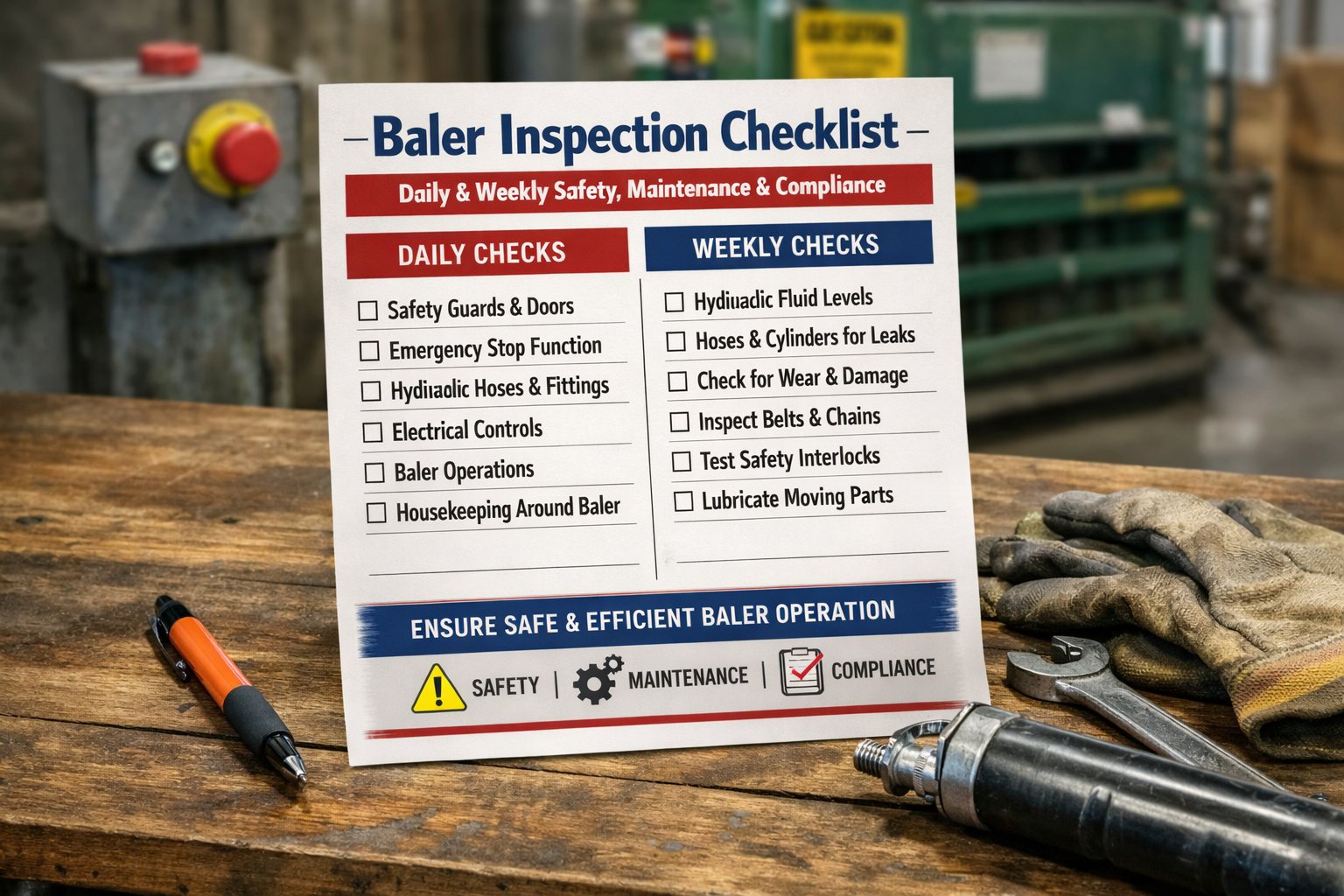
Comprehensive inspection covering critical safety systems, hydraulic components, electrical controls, and operational condition - frequent inspection is essential for preventing baler accidents and maintaining reliable operation. Daily checks verify immediate safety while weekly inspections provide deeper system verification. Schedule a 30-minute demo to see how digital inspection platforms automate daily and weekly baler checks with scheduled reminders, mobile checklists accessible from production floors, photo documentation capabilities, and automatic escalation of critical safety issues to management.
Why Use Digital Fleet Management for Baler Inspections?
HVI App Benefits for Industrial Baler Safety Programs:
- ✓ Scheduled daily and weekly inspection reminders ensuring consistent safety verification
- ✓ Mobile checklists accessible from production floor without paper documentation
- ✓ Photo documentation of damaged guards, hydraulic leaks, or safety hazards
- ✓ Immediate alerts to supervisors when critical safety issues are identified
- ✓ Automated equipment lockout preventing operation until defects are resolved
- ✓ Complete inspection history for OSHA compliance audits and incident investigations
Frequently Asked Questions About Baler Inspections
1. How often should industrial balers be inspected?
Industrial balers require daily pre-shift inspections covering safety guarding, emergency stops, proximity switches, and obvious hazards before each operating shift. Weekly inspections provide more comprehensive verification of hydraulic systems, electrical components, wire tier operation, filters, and structural condition. Monthly or quarterly maintenance inspections by qualified technicians address deeper system checks and preventive maintenance requirements.
2. What are the most critical safety items to inspect on balers?
Critical safety items include safety guarding integrity ensuring operators cannot access pinch points during operation, emergency stop functionality, proximity switches preventing operation when guards are open, lockout/tagout systems, hydraulic system condition preventing sudden releases, bale wire covers protecting from sharp edges, and electrical component condition preventing shock hazards. These items directly prevent serious injuries.
3. Who should conduct baler inspections?
Trained baler operators should conduct daily pre-shift safety inspections before operating equipment. Maintenance personnel or qualified technicians should perform weekly comprehensive inspections requiring deeper technical knowledge. Supervisors oversee inspection programs ensuring consistent completion, defect resolution, and documentation. All personnel conducting inspections must receive training on baler hazards and proper inspection procedures.
4. What should operators do if they identify a safety issue during baler inspection?
Operators must immediately report safety defects to supervisors, tag equipment as out-of-service using lockout/tagout procedures, ensure no one can operate the baler until repairs are completed, document the defect in inspection records, and not attempt repairs unless qualified and authorized. Critical safety defects like damaged guarding or failed emergency stops require immediate action before any operation.
5. How does digital inspection software improve baler safety programs?
Digital inspection software ensures inspections occur on schedule through automated reminders, provides standardized checklists ensuring consistent verification, enables photo documentation of safety hazards for maintenance teams, creates immediate supervisor alerts for critical issues, prevents equipment operation until safety defects are resolved, maintains permanent inspection records for regulatory compliance, and generates reports identifying recurring problems requiring corrective action. Sign up for a free trial and get instant access to customizable baler inspection checklists, mobile capabilities for production floor use, and automated safety compliance tracking - no credit card required for your 14-day trial period.
6. What are common baler inspection deficiencies that cause accidents?
Common deficiencies include damaged or missing safety guards allowing access to pinch points, bypassed proximity switches permitting operation with guards open, non-functional emergency stops, deteriorated hydraulic hoses creating leak hazards, worn wire tier cutters causing jams, inadequate lockout/tagout procedures, and poor housekeeping creating slip/trip hazards around equipment. Most baler accidents are preventable through systematic inspection identifying these issues before they cause injuries.
Take Action: Implement Systematic Baler Inspection Programs
Download our FREE Baler Inspection Checklist and establish consistent daily and weekly inspection protocols that protect workers and maintain equipment reliability. Digital safety management ensures inspections occur on schedule, provides immediate hazard reporting, maintains compliance documentation, and creates a culture of safety in recycling operations. Protect your workforce from baler hazards.
Protect Workers with Frequent Baler Safety Inspections
Complete coverage: safety guarding, hydraulic systems, electrical controls, proximity switches, wire tier components, cooling systems—all verified daily and weekly with digital inspection tracking.