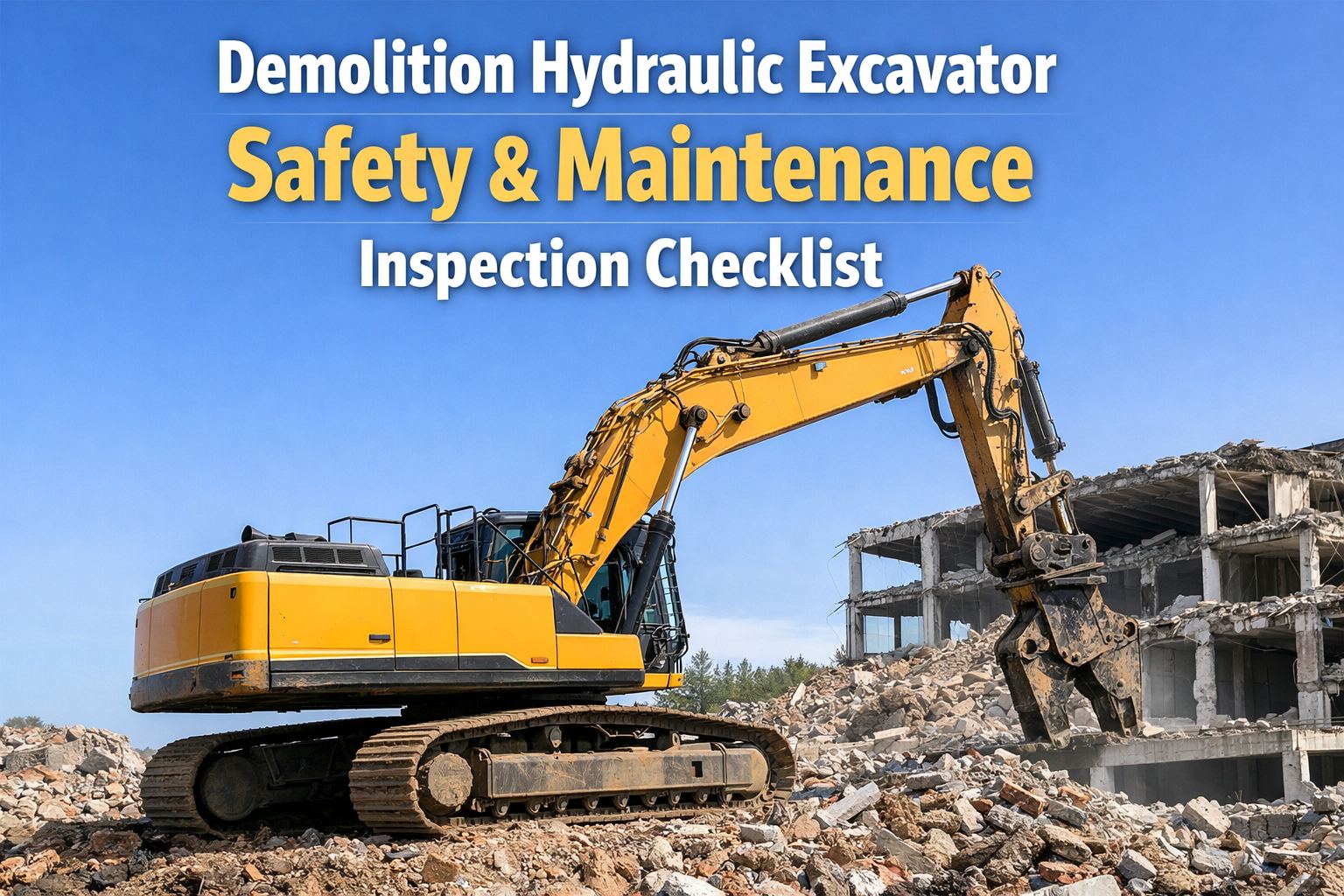
Importance of Demolition Hydraulic Excavator Inspections
Operator Safety
- Demolition excavator inspections protect operators from falling debris, structural collapses, and equipment failures during high-risk demolition operations. Systematic checks of falling object guards, protective systems, boom assemblies, and hydraulic components prevent catastrophic accidents and ensure operator protection in hazardous demolition environments.
Equipment Reliability
- Regular inspections identify wear, damage, and hydraulic system deficiencies before they cause equipment breakdowns during critical demolition operations. Early detection of boom cracks, cylinder leaks, undercarriage wear, and attachment problems maintains operational readiness and prevents costly downtime on demolition sites.
Regulatory Compliance
- OSHA demolition safety standards require comprehensive equipment inspections to verify structural integrity and protective system functionality. Documented inspections demonstrate compliance with 29 CFR 1926 Subpart T requirements, prevent citations, and ensure demolition operations meet federal safety regulations.
Project Success
- Systematic excavator inspections prevent unexpected equipment failures that delay demolition schedules and increase project costs. Well-maintained excavators with verified protective systems, functional hydraulics, and reliable work tools complete demolition projects safely, on schedule, and within budget.
Sign up to track demolition excavator inspections automatically
1. ENGINE COMPARTMENT
Engine and cooling system inspection. Prevent engine failures during demolition operations—sign up now to automate engine compartment inspection tracking across your demolition fleet.
2. FROM THE GROUND
External structural and undercarriage inspection. Ensure structural integrity before demolition work—schedule a demo to see how digital inspections prevent structural failures.
3. INSIDE THE CAB
Operator protection and control systems verification:
4. ON THE MACHINE, OUTSIDE THE CAB
External systems and safety equipment inspection:
Why Use Digital Demolition Excavator Inspection Management?
HVI App Benefits for Demolition Excavator Inspections:
- ✓ Automate daily pre-shift inspection schedules for all demolition equipment
- ✓ Track operator compliance with mandatory safety inspections
- ✓ Document falling object guard integrity with photos and timestamps
- ✓ Generate professional inspection reports for OSHA compliance
- ✓ Create work orders automatically for structural defects and hydraulic leaks
- ✓ Maintain complete inspection history for demolition fleet safety audits
Demolition operations demand the highest safety standards. Start your free trial to implement digital excavator inspections today, or schedule a demo to see how automated tracking protects your operators.
Frequently Asked Questions About Demolition Hydraulic Excavator Inspections
1. Why are demolition excavator inspections critical for safety?
Demolition excavators operate in extremely hazardous environments with falling debris, unstable structures, and high-impact forces. Inspections verify falling object guard integrity, boom and stick structural soundness, hydraulic system functionality, and protective equipment readiness, preventing catastrophic equipment failures and protecting operators from serious injuries or fatalities during demolition operations.
2. What are the key components inspected on demolition excavators?
Critical components include falling object guards (FOGS), boom and stick assemblies, implement cylinders, work tools and attachments, swing bearings, undercarriage systems (tracks, idlers, rollers, sprockets), engine compartment (oil, coolant, filters, belts, hoses), hydraulic oil tanks, seat belts, backup alarms, fire extinguishers, and all structural members subject to demolition impact forces.
3. How often should demolition excavators be inspected?
OSHA requires daily pre-shift inspections by competent operators before demolition work begins. Additionally, comprehensive structural inspections should occur weekly or after any significant impact event. Boom, stick, and attachment points require frequent inspection due to extreme demolition stresses. Maintenance inspections follow manufacturer schedules based on operating hours and conditions.
4. How does the HVI App help manage demolition excavator inspections?
The HVI App automates daily inspection scheduling, sends pre-shift reminders to operators, provides specialized demolition equipment checklists, captures photos of structural damage and protective system defects, generates OSHA-compliant reports, creates automatic work orders for critical repairs, and maintains complete inspection documentation for safety audits. Protect your demolition crew—sign up free or schedule your demo.
5. What OSHA regulations apply to demolition excavator inspections?
OSHA 29 CFR 1926 Subpart T (Demolition) requires equipment inspections before each shift to ensure safe operating condition. 29 CFR 1926.602 covers equipment safety standards including falling object guards, backup alarms, and seat belts. 29 CFR 1926.20 mandates accident prevention programs including regular equipment inspections and operator training for demolition operations.
6. What happens if defects are found during demolition excavator inspection?
Any defect affecting safe demolition operation must be documented immediately, and the excavator must be removed from service until repairs are completed by qualified technicians. Critical deficiencies include falling object guard damage, boom or stick cracks, hydraulic cylinder leaks, seat belt failures, non-functional backup alarms, or structural damage to undercarriage components requiring immediate corrective action before resuming demolition work.
Take Action: Implement Systematic Demolition Excavator Inspections
Download our FREE Demolition Hydraulic Excavator Safety & Maintenance Inspection Checklist and start implementing rigorous pre-shift inspection protocols. Integrating digital inspection management streamlines OSHA compliance tracking, ensures operators perform thorough safety checks, and maintains complete documentation for regulatory requirements. Experience the power of automated inspection tracking to enhance demolition site safety and protect your equipment operators from serious hazards.
Protect Demolition Operators with Comprehensive Excavator Inspections
Perform systematic safety inspections: falling object guards, boom and stick assemblies, hydraulic systems, work tools, protective equipment, and structural components—all tracked automatically with digital demolition equipment management.