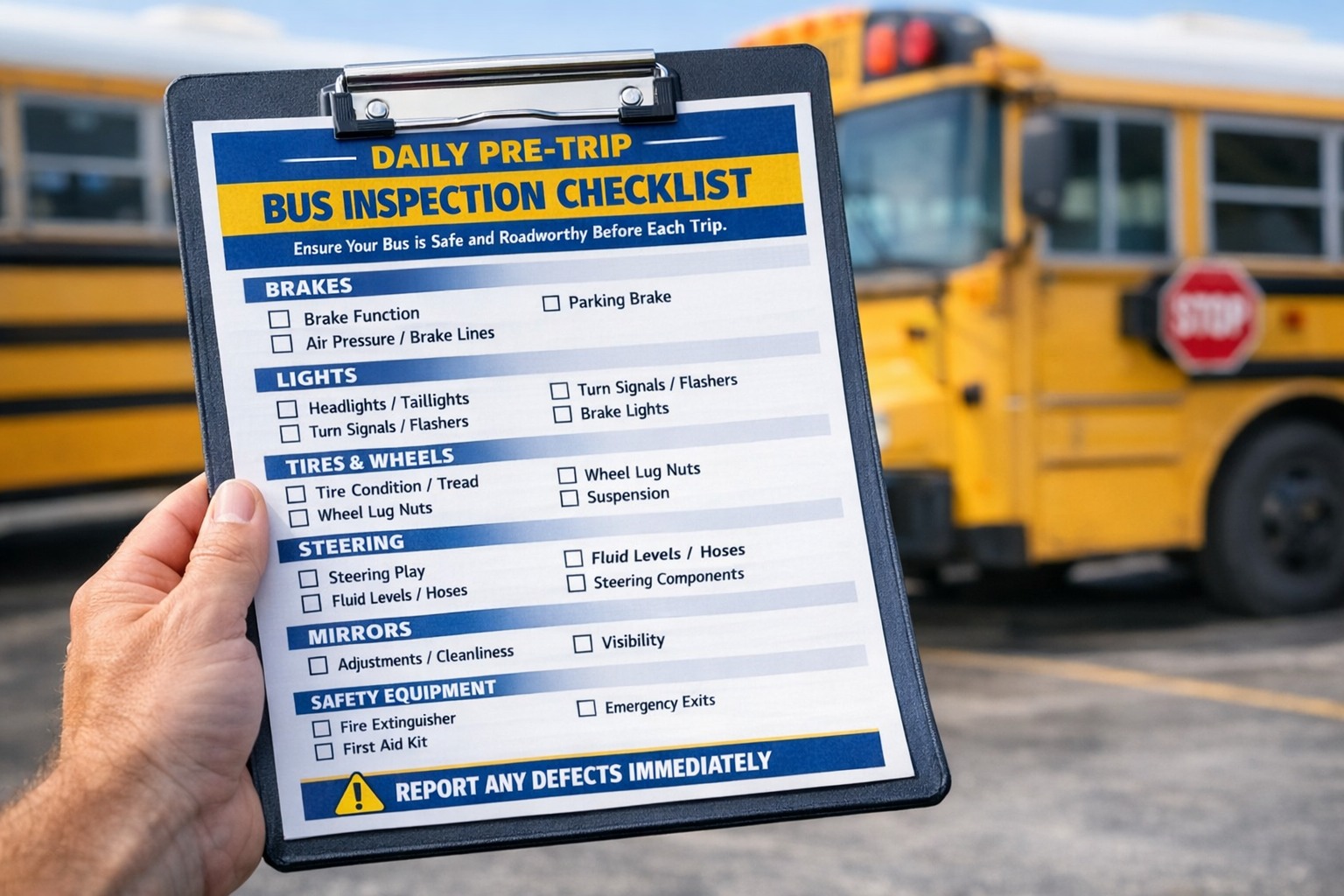
Importance of Daily Pre-Trip Bus Inspection
Passenger Safety
- Identifies mechanical issues, brake defects, and safety risks before transporting passengers.
Early Defect Detection
- Daily inspections prevent roadside breakdowns and service disruptions.
Regulatory Compliance
- Supports DOT and state-level passenger vehicle safety compliance.
Fleet Safety Compliance
- Creates inspection records demonstrating due diligence and operational accountability.
1. Inside Bus
Inside bus inspection points:
2. Left Front Wheel/Area (Driver side)
Left front wheel/area inspection points:
3. Left Rear Wheel (Driver Side)
Left rear wheel inspection points:
4. Passenger Area Inside Bus
Passenger area inside bus inspection points:
5. Rear of Bus
Rear of bus inspection points:
6. Right Rear Wheel (Entrance Door Side)
Right rear wheel inspection points:
7. Start at Right Front Wheel
Right front wheel inspection points:
8. Under Bus (Driver Side)
Under bus inspection points:
9. Final Checks
Final checks inspection points:
10. Front of Bus
Front of bus inspection points:
11. Front of Bus (Continued)
Front of bus continued inspection points:
12. Fuel Area
Fuel area inspection points:
Why Use Digital Fleet Management?
HVI App Benefits for Bus Inspections:
- ✓ Automated pre-trip inspection schedules
- ✓ Digital walk-around guidance for drivers
- ✓ Photo-based defect reporting
- ✓ Real-time compliance visibility
- ✓ Audit-ready inspection records
Frequently Asked Questions About Daily Pre-Trip Bus Inspection
1. Why is pre-trip bus inspection important?
Pre-trip inspections ensure passenger safety by identifying mechanical issues, brake problems, and safety equipment concerns before departure. They help prevent breakdowns and ensure safe, reliable transportation.
2. What should be inspected during a pre-trip bus inspection?
A pre-trip inspection should cover the inside bus, all four wheels (brakes, tires, suspension), passenger area, rear of bus, under bus, front of bus engine compartment, fuel area, and final operational checks.
3. How long does a pre-trip bus inspection take?
A thorough pre-trip bus inspection typically takes 20-30 minutes depending on the bus size and condition. This walk-around inspection covers all critical safety and mechanical components.
4. How does the HVI App help manage bus pre-trip inspections?
The HVI App provides digital inspection forms with walk-around guidance, automates inspection schedules, enables instant defect reporting with photos, and creates audit-ready records for compliance.
5. What happens if I skip pre-trip bus inspections?
Skipping pre-trip inspections can lead to passenger safety risks, mechanical failures during operation, regulatory citations, and liability concerns. Pre-trip inspections are required by DOT regulations.
6. Who should perform pre-trip bus inspections?
Pre-trip bus inspections should be performed by qualified, trained drivers before each trip. Drivers must document any defects found and ensure they are addressed before operating the bus with passengers.
Take Action: Implement Complete Pre-Trip Bus Inspections
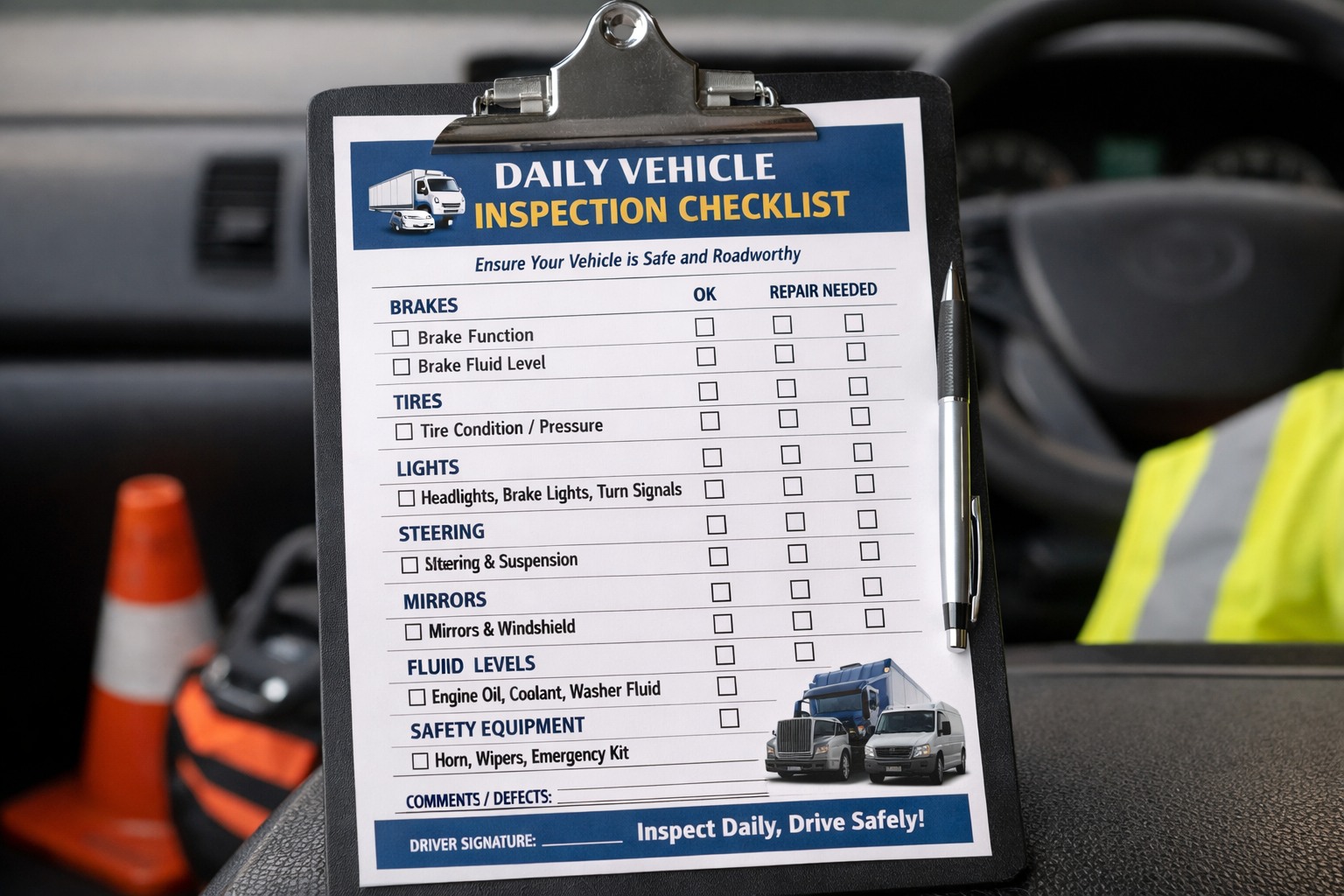
Download our FREE Daily Pre-Trip Bus Inspection Checklist and start implementing thorough walk-around inspections. Integrating digital fleet management with your inspection process streamlines compliance—ensuring your buses are safe, roadworthy, and properly documented before each trip. Experience the power of automated inspection tracking to protect your passengers and drivers.
Keep Your Buses Safe for Every Trip
Follow a proven pre-trip walk-around process: inside, wheels, passenger area, engine, and fuel—all tracked automatically with digital fleet management.