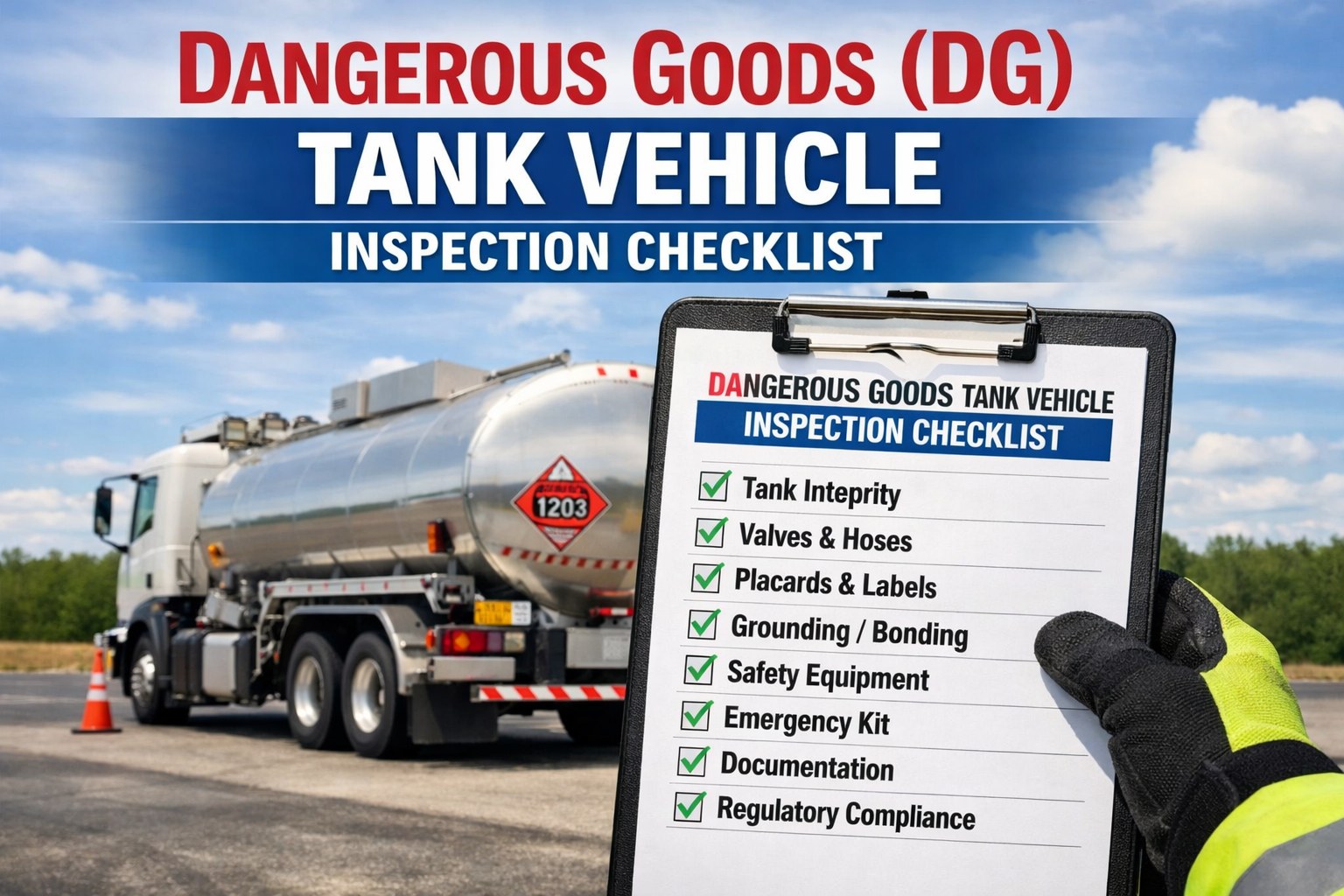
Importance of Dangerous Goods Tank Vehicle Inspections
Public Safety
- DG tank vehicle inspections prevent catastrophic accidents involving hazardous materials that could cause explosions, fires, toxic releases, and mass casualties. Systematic checks of tank integrity, valve systems, emergency equipment, and safety devices protect drivers, emergency responders, and communities from dangerous goods incidents.
Regulatory Compliance
- AS 2809 standards and dangerous goods transport regulations require rigorous tank vehicle inspections to ensure compliance with safety requirements. Documented inspections prevent violations, fines, operating license suspensions, and legal liability while demonstrating commitment to hazardous materials transport safety.
Environmental Protection
- Thorough inspections prevent hazardous material leaks and spills that cause environmental contamination and costly cleanup operations. Early detection of tank corrosion, valve failures, hose deterioration, and seal defects protects waterways, soil, and air quality from dangerous goods contamination.
Fleet Integrity
- Regular tank vehicle inspections maintain equipment reliability, extend service life, and reduce catastrophic failure risks. Systematic inspection programs ensure hydrostatic testing compliance, verify structural integrity, and maintain safety system functionality for hazardous materials transport operations.
GENERAL
Comprehensive tank vehicle safety and compliance inspection:
Why Use Digital DG Tank Vehicle Inspection Management?
HVI App Benefits for Dangerous Goods Tank Vehicle Inspections:
- ✓ Automate pre-transport inspection schedules for all DG tank vehicles
- ✓ Track compliance with AS 2809 standards and dangerous goods regulations
- ✓ Document critical safety checks with photos and digital signatures
- ✓ Generate professional inspection reports for regulatory compliance
- ✓ Create work orders automatically for identified safety deficiencies
- ✓ Maintain complete inspection history including hydrostatic test records
Book a demo to see automated DG tank vehicle inspection tracking
Frequently Asked Questions About DG Tank Vehicle Inspections
1. Why are DG tank vehicle inspections critical for safety?
DG tank vehicle inspections prevent catastrophic accidents involving hazardous materials that could cause explosions, fires, toxic releases, and environmental contamination. Systematic inspections verify tank integrity, valve functionality, emergency equipment readiness, and compliance with AS 2809 standards, protecting drivers, communities, and the environment from dangerous goods incidents.
2. What are the key components inspected on DG tank vehicles?
Critical components include AS 2809 compliance plates, hydrostatic test plates, internal and external tank condition, closures and securing systems, valve interlocks and protective caps, transfer hoses, pressure vacuum vents, emergency information panels, battery protection, exhaust shielding, drive-away protection, roll stability systems, and all safety equipment required for hazardous materials transport.
3. What are AS 2809 requirements for tank vehicles?
AS 2809 (Australian Standard for Road Tank Vehicles for Dangerous Goods) specifies design, construction, testing, and inspection requirements for tank vehicles transporting hazardous materials. Compliance includes proper tank construction, hydrostatic testing, emergency equipment, placarding, valve systems, grounding provisions, and regular inspections by qualified personnel.
4. How does the HVI App help manage DG tank vehicle inspections?
The HVI App automates pre-transport inspection scheduling, provides standardized digital checklists for dangerous goods compliance, captures photos of defects and compliance plates, tracks hydrostatic test due dates, generates regulatory-compliant reports, creates automatic work orders for safety deficiencies, and maintains complete inspection history for all DG tank vehicles.
5. How often must DG tank vehicles undergo hydrostatic testing?
Hydrostatic testing frequency depends on tank construction, materials transported, and regulatory requirements. Generally, tanks require testing every 2.5 to 10 years depending on the dangerous goods class and tank design. Testing must be performed by qualified facilities, and current hydrostatic test plates must be displayed on vehicles.
6. What happens if defects are found during DG tank vehicle inspection?
Any defect affecting safe dangerous goods transport must be documented immediately, and the vehicle must be removed from service until repairs are completed by qualified personnel. Critical deficiencies include tank structural damage, valve failures, hose deterioration, missing emergency equipment, expired hydrostatic tests, or non-compliant placarding. All repairs must be verified before returning to hazardous materials service.
Take Action: Implement Systematic DG Tank Vehicle Inspections
Download our FREE Dangerous Goods Tank Vehicle Inspection Checklist and start implementing rigorous pre-transport inspection protocols. Integrating digital inspection management streamlines AS 2809 compliance tracking, ensures drivers and technicians perform comprehensive safety checks, and maintains complete documentation for regulatory requirements. Experience the power of automated inspection tracking to enhance hazardous materials transport safety and protect your community.
Ensure Hazardous Materials Transport Safety with Rigorous Tank Vehicle Inspections
Perform comprehensive DG tank vehicle inspections: tank integrity, valves, hoses, emergency equipment, AS 2809 compliance, hydrostatic testing, safety systems—all tracked automatically with digital hazmat fleet management.