Every 10°F drop in temperature costs your tires 1 PSI. A truck that leaves the yard at 100 PSI in September hits 90 PSI by December — without a single leak. That 10% pressure loss increases rolling resistance, accelerates edge wear, raises blowout risk, and costs 1% in fuel economy per tire. Multiply that across a fleet operating through a five-month winter season and the compounding cost is enormous. But pressure loss is only one piece of the winter tire challenge. Chain law violations in Colorado now reach $1,000 for blocking a highway. Oregon fines start at $880 for non-compliance. Worn tread that passed inspection in October becomes a hydroplaning hazard on November slush. Valve stem moisture freezes and causes undetected slow leaks. Recapped drive tires shed treads on cold-hardened rubber. This guide covers everything a fleet manager needs for winter tire operations: cold weather pressure management, tire selection and changeover timing, chain law requirements by state, pre-trip inspection adjustments, and how HVI's digital inspection platform tracks tire condition through the entire winter season. Book a demo to see winter tire tracking in HVI, or start your free trial.
Cold weather pressure loss, chain law compliance, seasonal tire changeover, and pre-trip inspection adjustments — the complete playbook for keeping your fleet safe and compliant from October through April.
Cold Weather Tire Pressure: The Silent Fleet Killer
Cold-induced pressure loss is the most underestimated winter tire risk. It does not require a puncture, a valve failure, or a leak. It happens automatically to every tire on every vehicle in your fleet the moment temperatures drop.
Winter Tire Selection: When and What to Change
Winter tires are not just about snow traction. Below 45°F, standard all-season rubber compounds harden and lose grip even on dry pavement. Winter tires use a softer compound with deeper siping that maintains flexibility in cold temperatures.
Effective range: Above 45°F
Compound: Hardens below 45°F, reducing wet and dry grip
Best for: Fleets in mild climates or summer-only operations
Winter risk: Increased stopping distance 30-40% on cold wet roads vs winter tires
Effective range: Below 45°F — designed for cold
Compound: Stays flexible in freezing temperatures for better grip
Best for: Fleets operating where temps regularly drop below 45°F
Advantage: 25-50% shorter stopping distance on snow and ice
Effective range: Ice and hard-packed snow only
Compound: Metal studs grip ice but damage dry pavement
Best for: Routes with frequent black ice or extreme mountain passes
Restriction: Banned or seasonally restricted in many states
Chain Law Requirements by State
Chain laws vary dramatically by state. Some require carriers to carry chains for months even if roads are clear. Others only enforce when conditions deteriorate. Fines range from $50 to over $1,000. No exemptions exist for commercial vehicles with snow tires in most states.
Chain law requirements change frequently. Always verify current state regulations before dispatching. Max speed with chains installed: 30-35 mph.
Winter Pre-Trip Tire Inspection: What Changes
Standard pre-trip inspections are not sufficient for winter operations. Cold weather introduces failure modes that do not exist in warmer months. Here is what your drivers must add to every winter pre-trip:
Visual inspection is not enough in winter — a tire can look normal and be 15 PSI low. Use a calibrated dual-headed gauge at every pre-trip. Adjust to manufacturer spec for current load, not the number from last week.
Moisture in valve stems freezes and causes slow leaks that are undetectable by ear. Check for cracked, bent, or damaged stems. Apply valve caps with seals. Replace any questionable stems before they fail on the road.
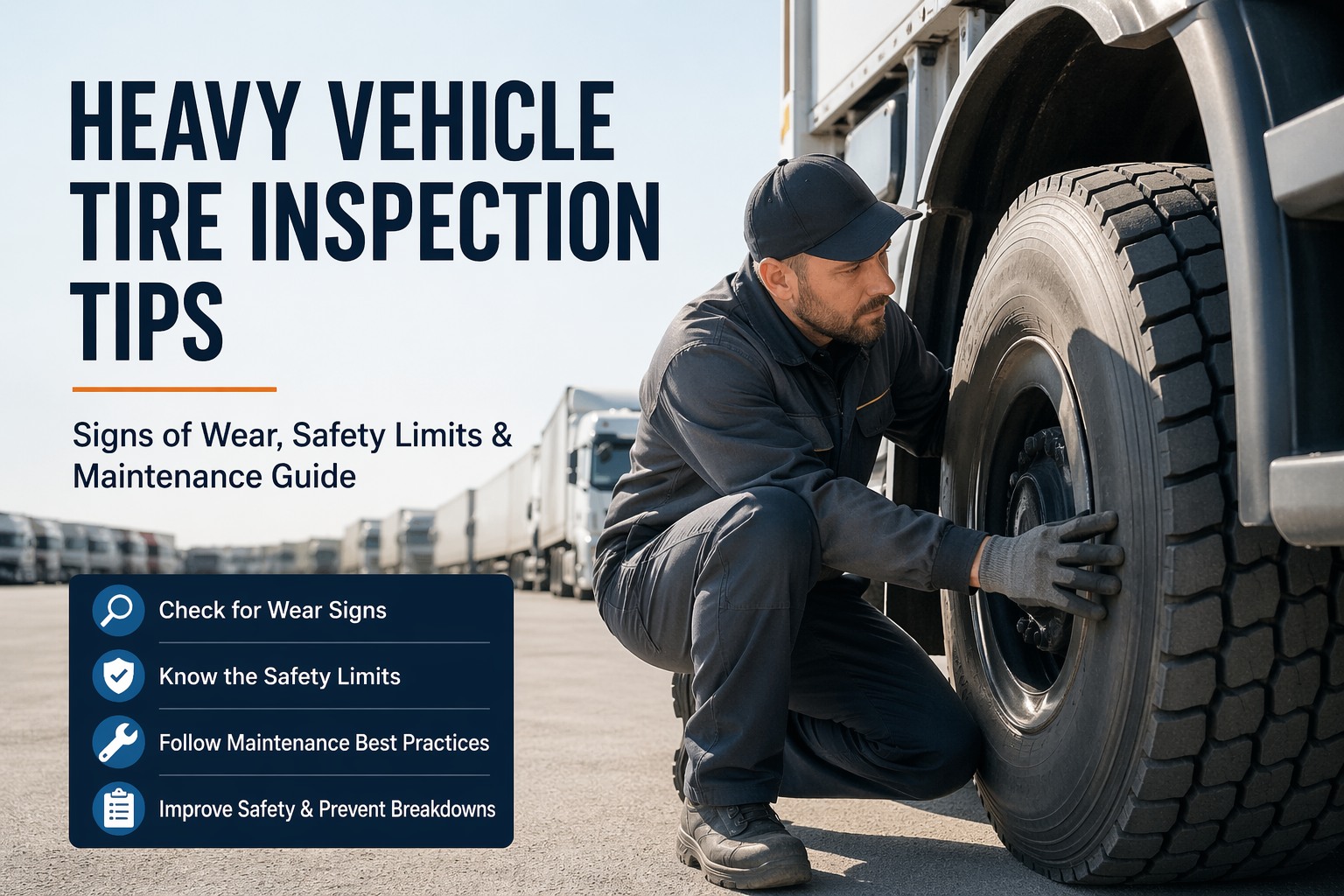
DOT minimum (4/32" steer, 2/32" drive/trailer) is dangerously thin for winter. Industry recommendation: replace steer tires at 6/32" and drive/trailer at 4/32" before winter season. Thin tread on wet, cold roads multiplies stopping distance.
Cold rubber is brittle rubber. Cracks and cuts that were stable in summer can propagate in freezing temperatures. Recapped tires are more likely to shed treads when compounds harden. Inspect sidewalls thoroughly — bulges in cold weather are urgent.
Verify chains are present and match vehicle configuration. Check for broken cross-links, missing hooks, and damaged tighteners. Drivers must be trained on installation — 10 minutes practice saves hours on a frozen mountain pass.
Mismatched duals (different tread depths, sizes, or inflation) cause the smaller tire to drag. In winter, this creates unpredictable handling and accelerated wear. Check dual assemblies for matching and verify both tires are inflated equally.
How HVI Manages Winter Tire Compliance
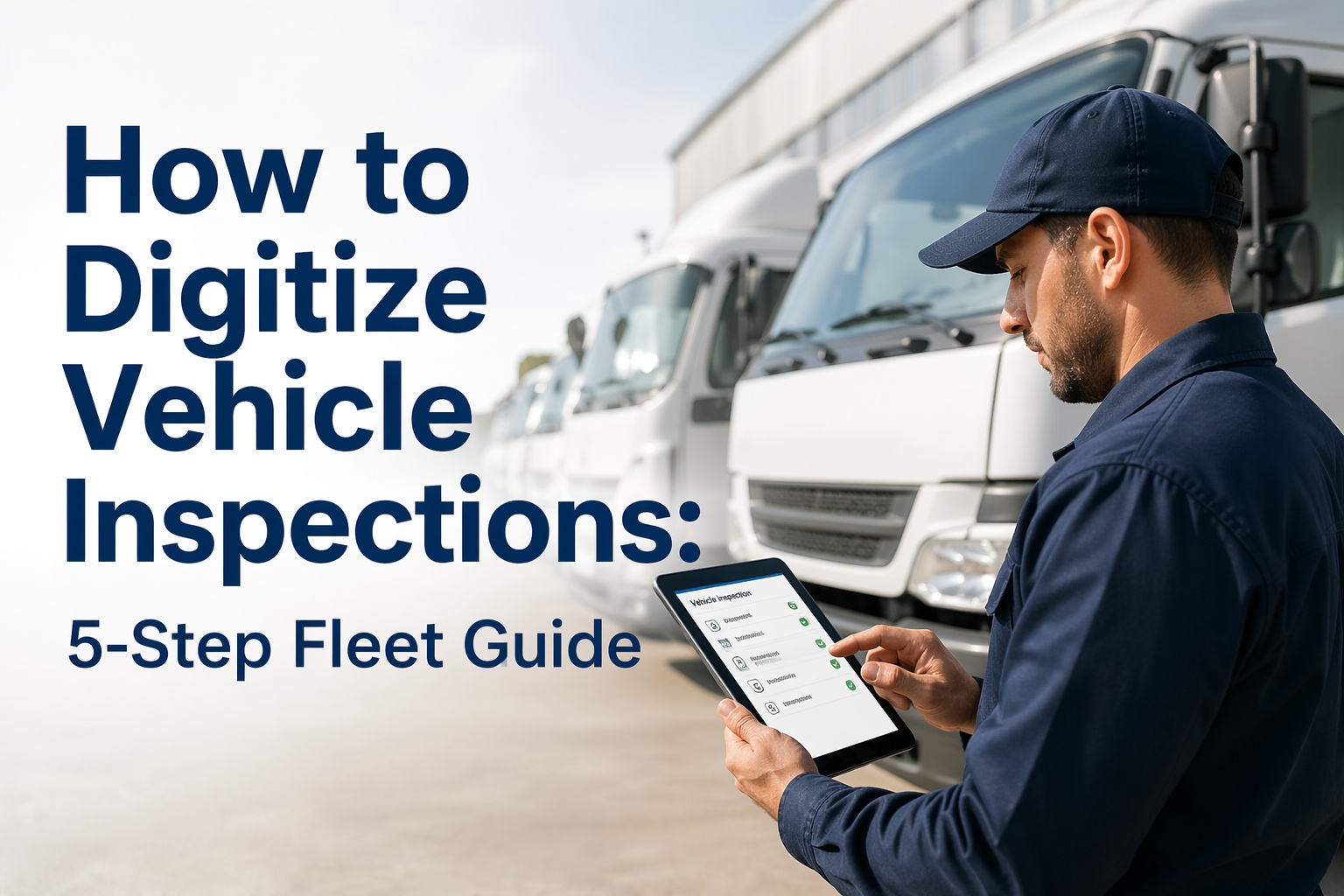
Add winter-specific checkpoints to pre-trip inspections: pressure gauge reading (required field), valve stem condition, chain presence and condition, winter tire installed confirmation. Drivers complete in 2 minutes on their phone.
Log tread depth readings at every tire inspection. HVI tracks wear rate per tire position and alerts when tires approach winter-safe thresholds (6/32" steer, 4/32" drive) — well above DOT minimums. Replace proactively before the cold hits.
Driver flags winter tire defect → photo attached → maintenance notified instantly → work order generated with urgency flag → mechanic documents repair → digital sign-off. Complete chain from defect to resolution in one linked record.
See at a glance: which vehicles have winter tires installed, which have chains on board, which have overdue tread readings, and which drivers completed winter pre-trip training. One dashboard for total winter preparedness visibility.
Frequently Asked Questions
Switch when overnight temperatures consistently drop below 45°F. Below this threshold, standard all-season rubber compounds harden and lose grip even on dry pavement. For most northern U.S. fleets, this means October changeover and March/April switch-back. Schedule tire vendor appointments in September to avoid rush-season delays. HVI tracks which vehicles have been switched and which are still pending. Start your free trial.
Daily — at every pre-trip inspection during winter months. Cold weather causes 1 PSI loss per 10°F temperature drop. A tire that was correctly inflated last week can be significantly underinflated after a cold front. Use a calibrated dual-headed gauge and adjust to manufacturer spec for the current load. TPMS systems provide continuous monitoring and are recommended for fleets over 25 vehicles.
No — in most states, there is no snow tire exemption for heavy-duty commercial vehicles over 6,500 lbs GVWR. When chain controls are posted, commercial vehicles must install chains regardless of tire type. Snow tires may satisfy Level 1 chain law requirements for lighter commercial vehicles in some states (Colorado, Washington), but heavier trucks and semis must chain up. Always carry enough chains to comply with the strictest state on your route.
DOT minimums (4/32" steer, 2/32" drive/trailer) are dangerously thin for winter operations. Industry best practice: 6/32" or deeper for steer tires, 4/32" or deeper for drive and trailer tires during winter months. Tread depth has a direct correlation with braking distance on wet and snowy surfaces — the difference between 4/32" and 6/32" can mean 20+ additional feet of stopping distance at highway speed. Book a demo to see how HVI tracks tread depth trends.
Store tires indoors in a cool, dry, dark location away from direct sunlight and heat sources. Stack horizontally (not standing) or hang on racks. Mark each tire with vehicle ID, position, and tread depth at removal. Clean tires before storage to remove road chemicals. Inspect stored tires before reinstallation — sidewall cracking, dry rot, or flat spots may develop during storage. HVI tracks tire inventory including stored tires and their condition at removal.
HVI adds winter-specific fields to digital DVIRs (pressure gauge readings, chain inventory verification, winter tire confirmation), tracks tread depth trends with alerts above DOT minimums, logs seasonal tire changeover per vehicle, generates work orders for tire defects with urgency flags, and provides a fleet-wide winter readiness dashboard showing which vehicles are compliant and which need attention. All data captured with timestamps, GPS, and photos — audit-ready and fully offline-capable. Start your free trial.
Digital winter pre-trips with pressure fields, tread depth tracking, chain inventory verification, seasonal changeover logging, and fleet-wide readiness dashboards — one platform built for every season.
No credit card • No hardware • Works offline • FMCSA-compliant DVIRs