Wheel loaders work harder than most machines on a job site — cycling between loading, carrying, and dumping thousands of pounds every few minutes. That constant stress hits tires, articulation joints, bucket pins, and hydraulic systems simultaneously. One tire alone on a large loader costs $3,000-$8,000 to replace, and a set of four can exceed $25,000. The articulation joint — the pivot that lets the machine steer — is a critical inspection point unique to loaders: excessive play here means loss of steering control with a fully loaded bucket. OSHA requires pre-shift inspections for all earthmoving equipment under 29 CFR 1926.20 and 1926.602, with penalties up to $16,550 per serious violation and $165,514 for willful offenses. This guide covers every wheel loader inspection point: tires and wheels, bucket and cutting edge, boom and linkage, articulation joint, hydraulic system, engine, and cab safety — with daily, weekly, and monthly PM intervals written for Cat, Komatsu, Volvo, and John Deere loaders. Book a demo to see HVI's loader-specific digital checklists, or start your free trial.
Tires, Bucket, Boom, Articulation Joint, Hydraulics, Engine & Cab — for Cat, Komatsu, Volvo & John Deere Loaders
Daily Pre-Shift Inspection Checklist
Complete before every shift with the engine cold. Follow the same clockwise pattern every time — consistency catches what random checks miss. A thorough loader walk-around takes 10-15 minutes.
See HVI's Wheel Loader Checklists in Action
Pre-built templates covering tires, bucket, boom, articulation joint, hydraulics, and cab safety. Operators complete inspections in under 12 minutes on their phone with photo verification, GPS stamps, and instant defect alerts.
Preventive Maintenance Intervals
Brand-Specific Notes
Cat loaders use Product Link / VisionLink telematics. Cross-reference overnight fault codes during daily checks. Cat's S·O·S fluid analysis program detects wear before symptoms appear. Cat's Payload System (if equipped) requires scale calibration verification. Cat 980/966/950 series have different axle configurations — confirm which inspection points apply to your model.
KOMTRAX telematics monitors fuel, hours, location, and alerts remotely. Komatsu's KOWA oil analysis provides component health data. Komatsu loaders feature Ecot3 engine technology (Tier 4) requiring DEF monitoring. WA470-8 and larger models use hydrostatic transmission — different shift test protocol than torque converter models.
Volvo's CareTrack telematics for remote monitoring. Volvo loaders feature the OptiShift transmission with Torque Parallel linkage — verify linkage pin condition during daily checks. Volvo's Load Assist system (if equipped) requires sensor and display verification. Volvo's Reverse By Braking feature should be tested during operational checks.
JDLink telematics integrates with dealer service networks. Deere loaders feature Final Tier 4 engines requiring DEF level checks. Deere's Payload Weighing system (if equipped) needs calibration verification. 644L-944K models have ZF transmissions — follow ZF-specific fluid intervals and shift quality checks.
Frequently Asked Questions
The articulation joint (center pivot). This is the structural connection between the front and rear halves of an articulated loader — it is what allows the machine to steer. Excessive play in the articulation joint means loss of steering control, especially when carrying a full bucket. Check for up-and-down movement during daily inspections, and have a knowledgeable second person observe during operational checks. Beyond the articulation joint, tires are the highest-cost consumable ($3,000-$8,000 each), making tire condition the highest-cost daily check.
A thorough daily inspection covering all 6 sections (walk-around, tires, bucket/attachment, boom/articulation, engine/hydraulics, cab/controls) takes 10-15 minutes. With a digital checklist app, experienced operators complete the full inspection in under 12 minutes with photo evidence. Use all senses: look for visual cues, listen for unusual sounds, feel for excessive heat, and smell for burning odors.
Wheel loaders fall under 29 CFR 1926.602 (material handling equipment) and 29 CFR 1926.20 (general safety). Key requirements: audible horn distinguishable from surrounding noise on all bidirectional machines; reverse signal alarm or spotter when obstructed rear view; seat belts meeting SAE J386-1969 standards; service brakes capable of stopping and holding the machine fully loaded (SAE J237); ROPS for machines manufactured after 1972. Pre-shift inspection by a competent person is required before each use.
Tag out of service for: ROPS damage or modified mounting, seat belt failure, tire sidewall cut/bulge (blowout risk), excessive articulation joint play, hydraulic hose leak, brake failure, non-functional horn or backup alarm, steering malfunction, boom structural crack, and quick coupler that does not fully lock. Document with photos and notify maintenance before the machine returns to service.
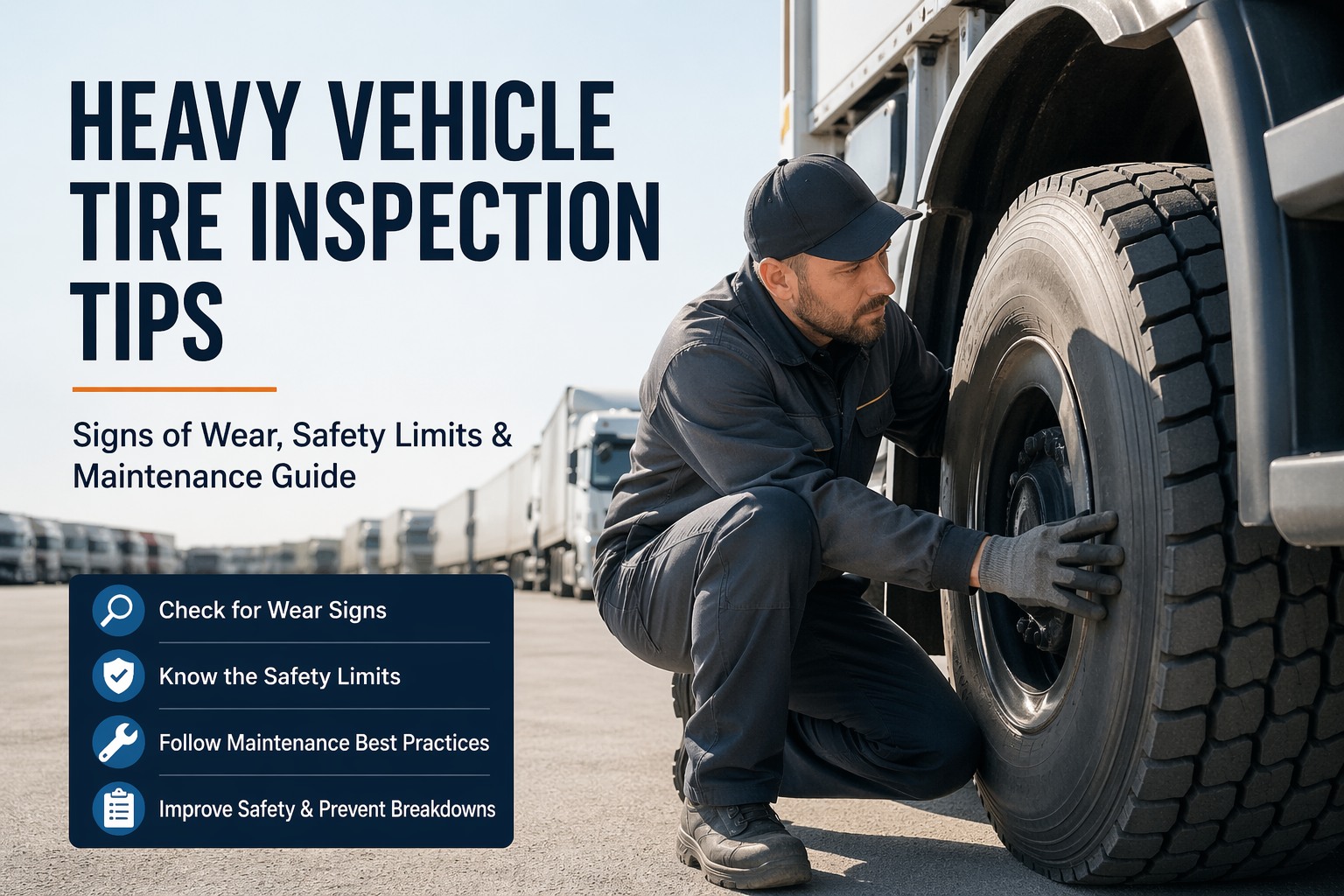
Maintain proper inflation (check with gauge daily — never visual). Avoid spinning tires in hard material. Approach stockpiles straight-on (avoid side-loading). Avoid sharp turns on hard surfaces. Inspect sidewalls daily for cuts and embedded objects. Rotate tire positions if uneven wear develops. In severe applications (demolition, rock handling), consider foam-filled tires to eliminate flats — though they still wear and cost more upfront. A well-maintained loader tire lasts 3,000-6,000+ hours depending on application.
Yes. Digital inspection records are fully OSHA-compliant and actively favored during audits. Paper forms achieve only 73% audit pass rates vs 96% for digital systems. Digital platforms provide timestamped, GPS-tagged records with photo evidence — exactly the documentation OSHA's 2025-2026 enforcement priorities demand. Digital tools also provide automatic defect routing, missed-inspection alerts, and searchable inspection history.
Digitize Your Wheel Loader Inspections — See HVI in Action
Pre-built loader checklists covering tires, bucket, boom, articulation, hydraulics, and cab safety. Operators complete inspections on their phone. Defects auto-generate work orders. Audit-ready records from day one.
No credit card • No hardware • Setup in under 10 minutes • OSHA compliant