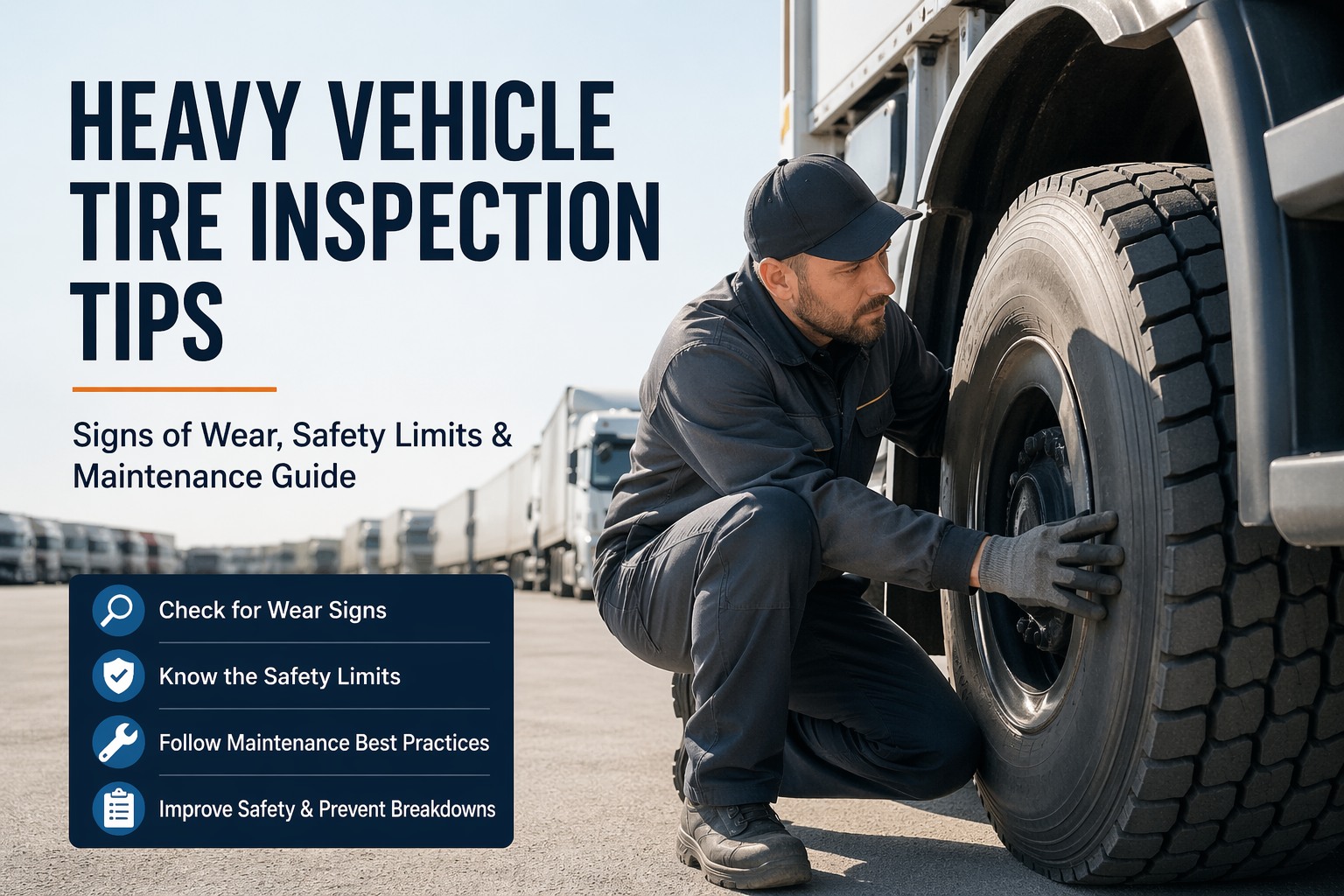
A mechanic looks at a tire the way a doctor looks at an X-ray — the tread is not just rubber, it is evidence. Every wear pattern tells you exactly what is wrong with the vehicle underneath: feathering means alignment, cupping means suspension, shoulder wear means inflation or axle problems. Tires are typically a fleet's third-largest expense behind labor and fuel, and improper tire management costs the average commercial fleet $2,500-$4,000 per vehicle annually through premature replacements, wasted fuel, and avoidable breakdowns. Yet most carriers look at tread depth and call it a day. Professional carriers treat every tire like a report card on their maintenance system. This guide covers the 8 most common wear patterns on commercial truck tires — what each looks like, what causes it, what to fix first, and how to prevent it from happening again. Train your drivers and technicians to read these patterns and you will catch problems weeks before they become roadside failures. Start your free HVI trial to digitize tire inspections with photo evidence and tread-depth tracking, or book a demo to see fleet tire analytics.
8 Wear Patterns, Root Causes, Position-Specific Diagnosis & Corrective Actions
Quick Reference: Pattern → Cause → Fix
The 8 Wear Patterns: Detailed Diagnosis
How to Read Tire Wear During Inspections
Feathering and early cupping can be felt before they are visible. Train drivers and technicians to rub their hands across the tread surface — smooth one direction and rough the other means feathering. Scalloped dips mean cupping. This 10-second hand check catches problems weeks before they show up visually.
Check tread depth at the inner shoulder, center, and outer shoulder. A 2/32" or greater difference between any two points indicates a wear pattern problem. Record all three readings — the comparison over time reveals developing issues before they become critical.
A photo of a wear pattern is worth 1,000 words on a paper checklist. Digital inspection platforms with photo capture let technicians document exactly what they see, creating a visual history that tracks pattern progression over time.
Record which pattern, which tire position, which vehicle. Over time, recurring patterns on specific vehicles expose chronic issues (bad alignment specs, route problems, driver habits). Recurring patterns across the fleet expose systemic issues (wrong tire spec, fleet-wide inflation practices).
If a driver reports humming, rumbling, or vibration: take it seriously. Humming typically indicates cupping or irregular wear that is already well-established. Vibration at speed often points to balance issues or flat spots. Do not dismiss driver complaints as "road noise."
Prevention: 6 Practices That Extend Tire Life
Check cold pressures weekly. Use load-rated inflation charts — not a fleet-wide single PSI. A tire 20% underinflated looks normal but loses 15% of tread life and wastes 3-5% more fuel. TPMS provides continuous monitoring for critical assets.
Align at least annually and after any significant impact (curb strikes, pothole damage, component replacement). Misalignment by just 1/16" toe causes a tire to drag sideways 8 feet per mile — that is relentless, invisible wear.
Rotate tires at intervals recommended by the manufacturer or every 5,000-8,000 miles for on-road trucks. Rotation evens out position-specific wear patterns. Do not rotate tires just to hide a problem — diagnose the cause first, then rotate.
Include shocks, struts, bushings, and wheel bearings in every PM. Worn shocks are the #1 cause of cupping — the most destructive wear pattern. Replace shocks on a schedule, not just when they obviously fail.
Drivers cause tire wear through hard braking, aggressive cornering, curb strikes, and jackrabbit starts. Train drivers that tires expose their habits — and that smooth driving extends tire life by 15-25%. Include tire awareness in pre-trip inspection training.
Paper tire checklists get filed and forgotten. Digital inspections with photo evidence, tread-depth measurements, and pattern documentation create a searchable, trackable history. Trends across vehicles and time reveal problems that individual inspections miss.
HVI: Tire Inspections That Catch Problems Early
HVI captures tread depth at every inspection, stores photo evidence of wear patterns, and tracks trends across vehicles and time. Defects auto-generate maintenance work orders. Tread-depth trending forecasts replacement dates weeks in advance. Train drivers to document what they feel and see — HVI turns those observations into fleet-wide tire intelligence.
Frequently Asked Questions
Improper inflation pressure is the single most common cause. Underinflation causes both-edge shoulder wear and generates excessive heat (leading to blowouts), while overinflation causes center wear. The second most common cause is alignment issues (toe, camber), which produce feathering and one-sided edge wear. Regular pressure checks and annual alignments prevent the majority of irregular wear.
Run your hand across the tread. Feathering feels smooth in one direction and sharp/rough in the other — like stroking the edge of a bird's feather. Cupping feels like scalloped dips or waves — alternating high and low spots. Feathering = alignment problem (toe). Cupping = suspension problem (shocks, bearings, balance). Both can be felt before they are visible.
No — do not rotate to hide the pattern. Diagnose and fix the root cause first (alignment, inflation, suspension), then rotate. Rotating a feathered or cupped tire without fixing the underlying problem just moves the damage to a different position and can accelerate wear on the "new" position. Once the cause is fixed, rotation helps even out remaining tread.
Under 49 CFR 393.75: Steer axle tires require minimum 4/32" tread depth. All other positions (drive, trailer) require minimum 2/32". However, anything above 6/32" provides better confidence in wet or snow conditions. NHTSA recommends replacing tires every 6-10 years regardless of tread depth, as rubber compounds degrade with age even in storage.
At every pre-trip and post-trip inspection, drivers should include a visual and tactile tire check. Full tread-depth measurements with a gauge should occur at every PM service interval. Document patterns with photos and three-point depth readings (inner, center, outer). Between formal inspections, any driver complaint of vibration or humming should trigger an immediate tire check.
Often yes, if the casing is structurally sound. Michelin's irregular wear guide recommends: feathered tires can be rotated or retreaded. Cupped tires can continue running or be retreaded if the cause is corrected. Diagonal wear tires can be reversed in rotation direction or retreaded. Flat spot (brake skid) tires can be retreaded if the casing is undamaged. Always have the retreader inspect the casing with shearography before processing.
Your Tires Are Talking — Start Listening
Every wear pattern is a diagnosis. HVI gives your drivers and technicians the tools to document what they see and feel, track patterns over time, and catch problems before they cost you tires, fuel, and safety.
No credit card • No hardware • Setup in under 10 minutes