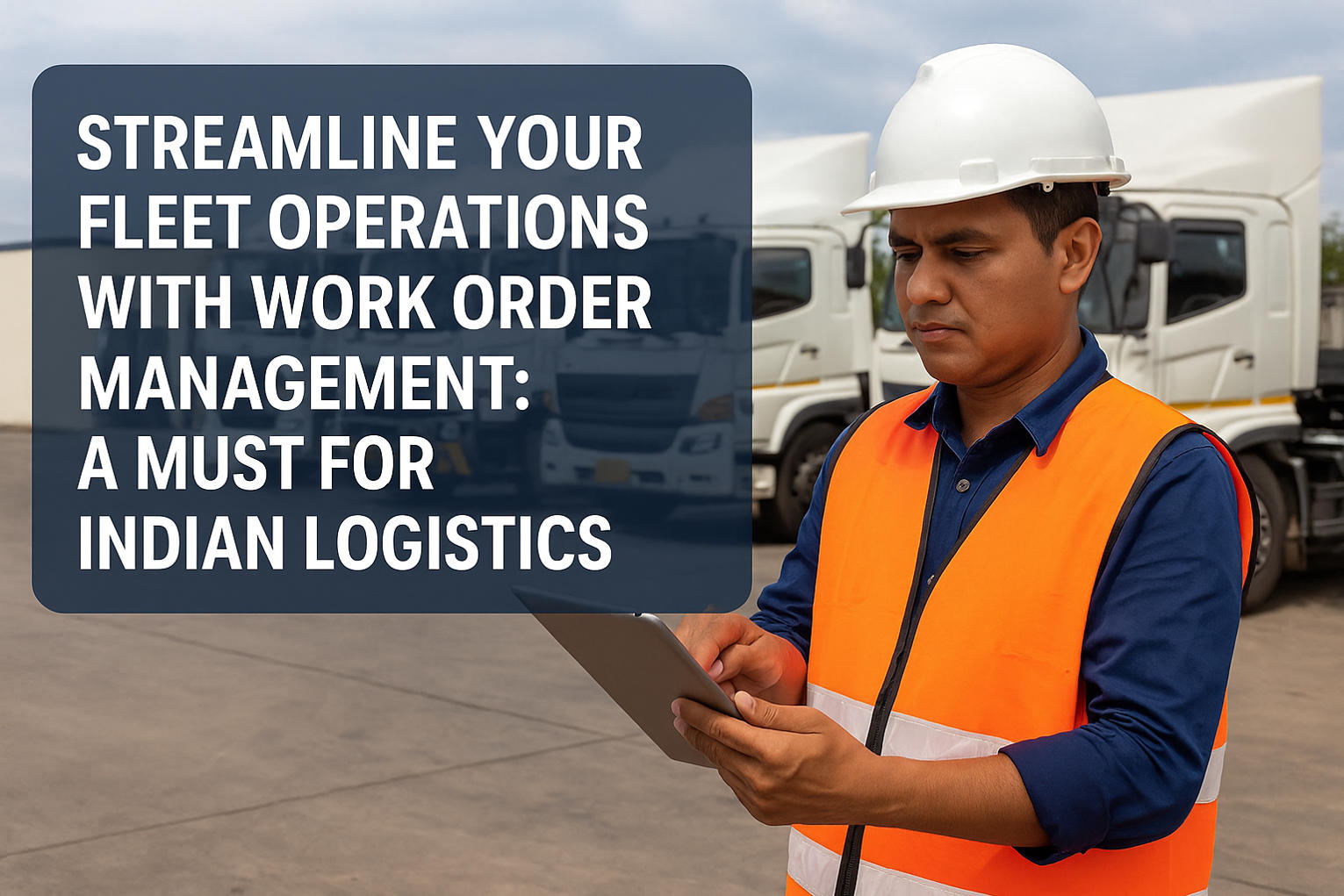
Managing fleet operations in India presents unique challenges that can make or break the success of US manufacturing companies expanding into this dynamic market. With over 12 million commercial vehicles navigating India's diverse terrain and complex regulatory environment, efficient work order management has become the cornerstone of successful logistics operations. For American manufacturers, implementing robust work order systems isn't just about maintaining vehicles—it's about ensuring seamless supply chain operations across one of the world's most demanding logistics environments.
The Indian logistics sector, valued at $215 billion and growing at 10.5% annually, offers tremendous opportunities for US companies willing to master its complexities. However, the key to unlocking this potential lies in sophisticated fleet management strategies that can handle everything from monsoon-related delays to multi-state regulatory compliance requirements.
The Complexity of Indian Logistics: Why Standard Fleet Management Isn't Enough
India's logistics landscape differs dramatically from US operations in ways that directly impact fleet management effectiveness. The country's infrastructure includes everything from world-class highways to rural roads that challenge even the most robust vehicles. Work order management systems must account for this diversity, enabling proactive maintenance scheduling based on route conditions, weather patterns, and regional service availability.
Critical Indian Fleet Statistics: Fleet downtime costs average $500-800 per vehicle per day, while unplanned maintenance can cost 3-4 times more than scheduled services. Effective work order management reduces these costs by 40-60%.
US manufacturing companies operating in India report that traditional fleet management approaches fail to address local challenges such as driver availability during festival seasons, varying fuel quality across regions, and the need for specialized documentation for inter-state transport. A comprehensive work order management system bridges these gaps by providing localized scheduling, compliance tracking, and vendor management capabilities.
Digital Transformation: From Reactive to Predictive Fleet Management
Modern work order management systems leverage IoT sensors, GPS tracking, and predictive analytics to transform fleet operations from reactive maintenance to proactive optimization. In India's challenging operating environment, these technologies provide critical advantages: real-time vehicle health monitoring, automated compliance documentation, and intelligent route optimization that considers local traffic patterns and infrastructure limitations.
For US manufacturers, digital work order systems offer particular value in managing multi-location operations across India. Centralized dashboards provide visibility into fleet performance across different regions, while automated work order generation ensures consistent maintenance standards regardless of local operational variations. This digital approach is essential for maintaining US-standard operational excellence while adapting to Indian market realities.
Compliance and Documentation: Navigating India's Regulatory Maze
India's complex regulatory environment requires meticulous documentation for vehicle permits, driver certifications, route approvals, and environmental compliance. Work order management systems automate much of this documentation burden, ensuring that all vehicles maintain current permits and certifications while alerting managers to upcoming renewal requirements.
The system's ability to track and manage compliance is particularly crucial for US companies that must meet both Indian regulations and their own corporate governance standards. Automated compliance tracking reduces the risk of operational disruptions due to expired permits or missed inspections, while providing audit trails that satisfy both local authorities and US parent company requirements.
Cost Optimization Through Strategic Vendor Management
Effective work order management in India requires sophisticated vendor relationship management that goes beyond simple cost comparison. The system must evaluate vendors based on response times, parts availability, service quality, and regional presence. For US manufacturers, this means building partnerships with reliable Indian service providers while maintaining quality standards that meet international expectations.
Advanced work order systems enable companies to negotiate better rates through volume commitments while ensuring service availability across their operational footprint. This strategic approach to vendor management can reduce fleet maintenance costs by 20-30% while improving service reliability and vehicle uptime.
Integration with Supply Chain Operations
Fleet operations don't exist in isolation—they're integral to broader supply chain performance. Work order management systems must integrate seamlessly with inventory management, production scheduling, and customer delivery systems. This integration becomes even more critical in India, where logistics challenges can quickly cascade into broader operational disruptions.
For US manufacturing companies, integrated work order management provides the visibility and control needed to maintain supply chain reliability despite India's logistical complexities. Real-time fleet status updates enable proactive rescheduling of deliveries, while predictive maintenance alerts help prevent service disruptions that could impact customer relationships.
Conclusion: Work Order Management as Competitive Advantage
In India's rapidly evolving logistics landscape, work order management systems represent more than operational efficiency tools—they're strategic assets that enable US manufacturing companies to compete effectively while maintaining their quality and service standards. Companies that invest in comprehensive work order management consistently achieve better fleet utilization, lower operational costs, and higher customer satisfaction rates.
The key to success lies in choosing systems that combine proven fleet management capabilities with the flexibility to adapt to Indian market requirements. By embracing digital work order management, US manufacturers can transform their Indian logistics operations from cost centers into competitive advantages that drive long-term business success.
Transform your fleet operations today with advanced work order management
Getting StartedBook a Demo