Modern fleet management costs US construction companies an average of $125,000 per machine annually across fuel, maintenance, and operational expenses, with fragmented management systems contributing to 35% higher operational costs and 45% more administrative inefficiencies. With over 850,000 commercial construction vehicles operating across American infrastructure projects, implementing centralized fleet management software isn't just about operational oversight—it's about transforming chaotic multi-system management into unified command and control that can swing profit margins by $35,000-$65,000 per machine annually.
Modern fleet management software eliminates 78% of administrative inefficiencies, reduces operational costs by 42%, and generates annual savings of $48,000 per machine through systematic implementation of centralized monitoring and optimization protocols. More importantly, it transforms reactive fleet management culture into predictive operational excellence that ensures project delivery, regulatory compliance, and maximum equipment utilization.
Annual Fleet Management Impact
Ready to Transform Your Fleet Management Strategy?
Discover centralized fleet management that unlocks significant cost savings and operational efficiency.
The Evolution of Fleet Management: From Fragmentation to Command Excellence
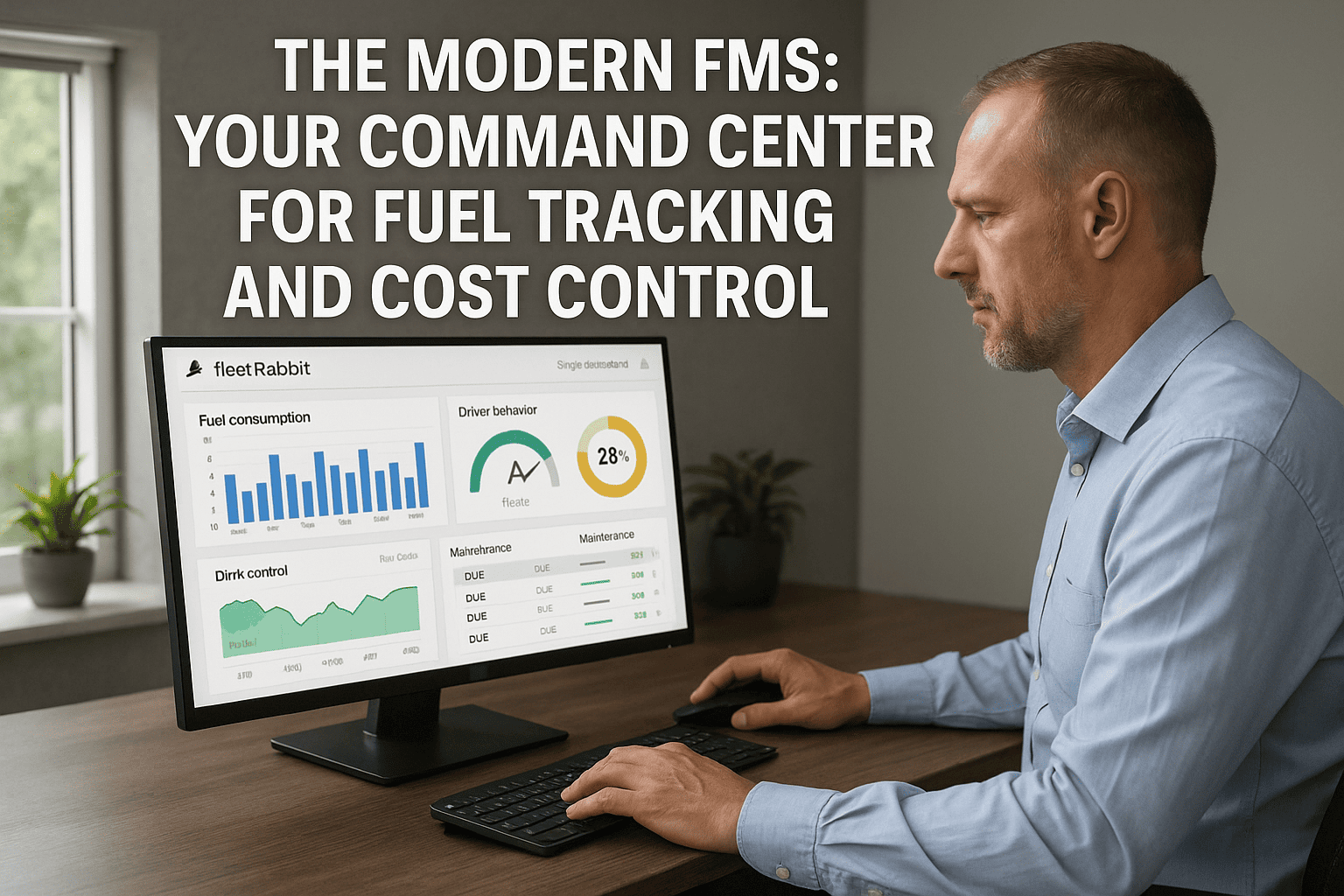
Modern fleet management software represents a paradigm shift from fragmented, reactive oversight to centralized command and control systems that provide real-time visibility into every aspect of fleet operations. Unlike traditional approaches that rely on multiple disconnected systems and manual processes, contemporary FMS platforms like fleetRabbit integrate fuel monitoring, maintenance scheduling, driver behavior analysis, and cost optimization into unified dashboards that enable proactive decision-making and strategic optimization.
Core Command Center Capabilities and Architecture
The modern FMS command center integrates multiple data streams and operational systems to create comprehensive fleet intelligence that enables informed decision-making and proactive optimization. Advanced platforms like fleetRabbit combine IoT sensors, telematics data, maintenance records, and financial information into unified analytics engines that identify patterns, predict problems, and recommend optimal actions.
Cloud-based architecture ensures accessibility from any location while providing scalable performance that grows with fleet expansion. Real-time data synchronization enables immediate response to developing situations while historical analytics support strategic planning and performance optimization across all operational dimensions.
- ✓ Real-Time Fleet Dashboard providing instant visibility into equipment status, location, and performance
- ✓ Fuel Management Module with consumption tracking, theft detection, and efficiency optimization
- ✓ Maintenance Command Center with predictive scheduling and work order management
- ✓ Driver Performance Analytics including behavior monitoring and coaching systems
- ✓ Cost Control Center with budget tracking and financial analytics
- ✓ Compliance Management with regulatory tracking and documentation systems
Implementation Strategy for Maximum Command Center ROI
Successful FMS command center implementation requires strategic deployment approaches that minimize operational disruption while maximizing immediate benefits and long-term optimization capabilities. The recommended timeline spans 4-8 months with priority given to high-impact modules that demonstrate immediate value before expanding to comprehensive fleet-wide coverage.
Investment in centralized fleet management technology provides immediate visibility improvements while enabling long-term optimization through integrated analytics and predictive capabilities. Total cost of ownership calculations strongly favor early adoption, with payback periods typically ranging from 12-18 months through operational efficiency gains, cost reductions, and improved asset utilization.
- ✓ Deploy basic dashboard and monitoring systems with $15,000-$25,000 platform investment
- ✓ Implement fuel tracking and consumption monitoring for immediate theft detection
- ✓ Establish real-time location tracking and equipment utilization monitoring
- ✓ Configure alert systems for critical events and performance thresholds
- ✓ Train management team on dashboard utilization and data interpretation
- ✓ Integrate with existing accounting and project management systems
- ✓ Deploy predictive maintenance modules with advanced scheduling and optimization
- ✓ Implement driver behavior monitoring and performance improvement programs
- ✓ Activate advanced fuel analytics and efficiency optimization algorithms
- ✓ Deploy comprehensive reporting and analytics for strategic decision-making
- ✓ Establish performance benchmarking and continuous improvement protocols
- ✓ Create custom workflows and automation for routine fleet management tasks
Measuring Success: Essential KPIs for Command Center Excellence
Effective command center implementation requires continuous measurement and optimization based on quantifiable performance indicators that demonstrate operational improvement and financial returns. Modern FMS platforms provide comprehensive analytics that enable data-driven decision-making and justify continued investment in fleet management excellence programs.
Investment in centralized fleet management technology provides immediate visibility into previously hidden inefficiencies while enabling long-term optimization through integrated analytics and predictive planning capabilities. Comprehensive measurement frameworks enable continuous improvement and maximize the value of fleet management investments.
- ✓ Fleet Utilization Rate targeting 85%+ improvement over baseline performance levels
- ✓ Fuel Efficiency Optimization achieving 20-35% consumption reduction through systematic monitoring
- ✓ Maintenance Cost Control optimization achieving $25,000-$45,000 annually per machine savings
- ✓ Driver Performance Improvement of 25-40% through behavior monitoring and coaching
- ✓ Administrative Efficiency score achieving 75% reduction in manual fleet management tasks
- ✓ Response Time optimization reducing problem resolution to less than 2 hours from detection
Regulatory Compliance and Future-Proofing Strategies
American construction fleet operations face increasing regulatory requirements regarding safety documentation, emissions reporting, and driver compliance under DOT and OSHA standards. Modern FMS command centers not only improve operational efficiency but also ensure compliance with evolving regulatory requirements while providing comprehensive documentation for audits and inspections.
Future regulations regarding autonomous vehicles, emissions monitoring, and safety tracking will require enhanced data collection and reporting capabilities. Early implementation of comprehensive FMS platforms provides competitive advantage and avoids costly retrofit expenses while positioning operators for future regulatory requirements and technological advancement opportunities.
Maximizing ROI Through Command Center Excellence
The implementation of modern FMS command center technology represents more than operational improvement—it's a strategic investment in fleet intelligence and competitive advantage that positions American contractors for significant operational superiority in an increasingly complex market. The financial benefits extend beyond immediate cost savings to encompass improved decision-making capabilities and enhanced operational agility.
Construction companies who embrace centralized fleet management achieve measurable improvements in efficiency, cost control, and operational reliability. Conservative estimates suggest total ROI exceeding 350% within three years of full implementation, with immediate benefits visible within the first quarter following deployment.
The construction industry's digital transformation demands proactive adaptation and investment in proven management technologies. Fleet operators who implement comprehensive FMS command centers today will be best positioned to capitalize on emerging opportunities while avoiding the costly consequences of fragmented management approaches that plague traditional operations.
Transform Your Fleet Command Strategy Today
Start implementing centralized fleet management and join the ranks of America's most successful contractors.
Book a Demo