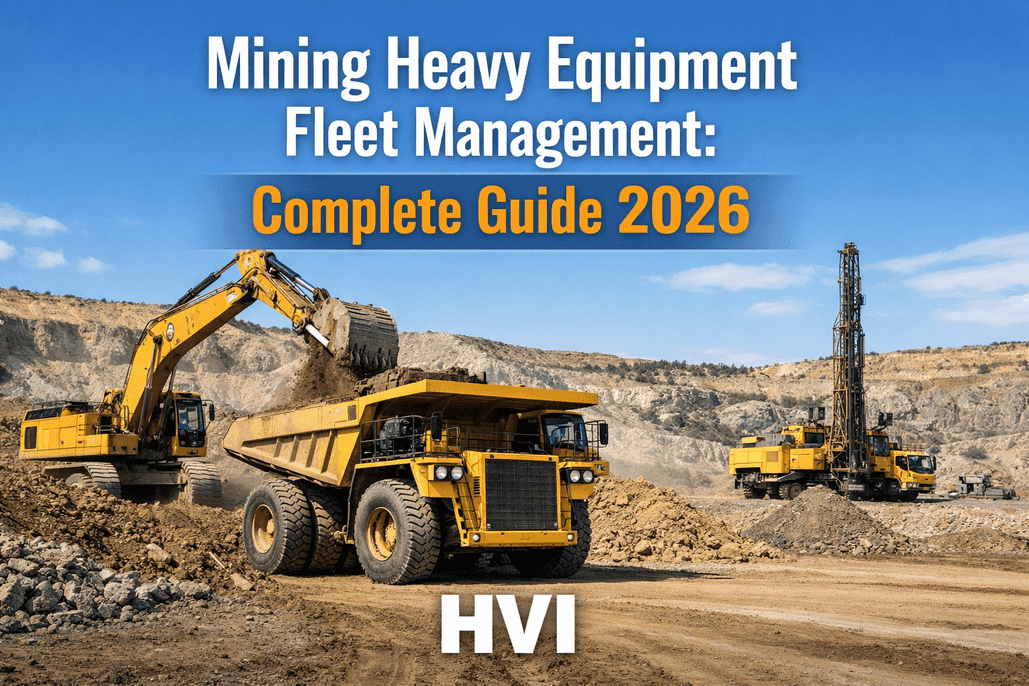
Mining equipment operates under the harshest conditions on earth — extreme temperatures from -50°C to 50°C, abrasive dust, continuous heavy loads, and 5,000-7,000 operating hours per year. A typical haul truck runs 600+ hours per month — equivalent to two years of average driving compressed into a single month. Downtime costs $5,000-$20,000 per hour for ultra-class haul trucks, with major breakdowns costing up to $2 million per day when factoring in lost production and cascading delays. Engine rebuilds alone run approximately $400,000 for large haul trucks. Yet world-class mines achieve 92-94% availability on haul trucks and 90-92% on shovels — proving that the difference between profit and loss is not the equipment itself, but how it is managed. The operations leading the transformation are reducing unplanned downtime by 50% and extending equipment life by 20-30% through systematic digital maintenance programs. With 3,832 autonomous trucks operating globally as of July 2025, the technology layer is mature. What most mines still lack is the operational foundation: systematic inspections, disciplined PM scheduling, parts availability, and compliance documentation that keeps every machine running and every regulator satisfied. This guide covers the unique challenges of mining fleet management, critical equipment types, inspection frequencies, downtime economics, and how HVI provides the inspection and maintenance platform that mining operations need. Book a demo to see HVI's mining fleet capabilities, or start your free trial.
Remote Site Operations, 24/7 Uptime, Inspection Workflows, PM Scheduling & Fleet Software Built for Mining Conditions
Unique Mining Fleet Challenges
Mining runs around the clock. There are no "overnight" maintenance windows like construction or trucking. Every hour a machine is down is an hour of lost production measured in tonnes of ore. PM scheduling must fit into shift changes, planned shutdowns, and blasting windows — not arbitrary calendar dates. Your maintenance system must understand mining shift patterns.
Mine sites are often hours from the nearest town, with satellite-only communications and no cell signal. Parts that take 3 days to arrive in a city take 2-3 weeks at a remote mine. Every inspection, work order, and parts request must work offline and sync when connectivity returns. Parts inventory management is life-or-death for uptime — running out of a $200 filter can idle a $5 million truck for weeks.
Dust, vibration, temperature extremes, and corrosive materials accelerate component wear 20-40% beyond normal rates. High dust environments require air filter changes 50% more frequently. Arctic conditions need special fluids and increased bearing lubrication. High altitude reduces cooling efficiency. Standard construction PM intervals are too long for mining — site-specific adjustments are mandatory.
The Mine Safety and Health Administration (MSHA) conducts inspections at every mine site — surface mines quarterly, underground mines at least four times per year. Unlike OSHA, MSHA has mandatory inspection frequencies and zero-tolerance enforcement on equipment safety deficiencies. Pre-shift inspections are legally required. Maintenance records must demonstrate systematic care. Digital documentation with timestamps and photos is the audit standard.
A large haul truck costs $5,000-$20,000 per hour idle. When a primary shovel goes down, every haul truck behind it stops — cascading losses reach $180,000 per hour at large operations. A single major breakdown can cost $2 million per day in lost production. The financial case for preventive maintenance in mining is not theoretical — it is measured in millions of dollars per year per operation.
Remote mine sites experience higher workforce turnover. New operators and technicians need to perform inspections correctly from day one — not after months of tribal knowledge transfer. Digital checklists with guided prompts, required photo capture, and built-in pass/fail criteria ensure consistent inspection quality regardless of who performs them.
Critical Heavy Equipment Types in Mining
The backbone of surface mining. Operating 600+ hours/month carrying 300-400 metric tonnes at 55% load factor. Critical systems: engine (rebuild at ~$400K), drivetrain (electric wheel motors or mechanical), suspension (nitrogen-oil), tires ($40K-$70K each, 4,000-6,000 hr life), brakes (retarder + service), and hydraulic steering. Pre-shift inspection: engine fluids, tire condition/pressure, brake function, hydraulic steering, body condition, electrical systems.
Primary loading equipment. Hydraulic system failures cause 45% of major breakdowns — contaminated fluid causes 75% of hydraulic component failures. Critical items: hydraulic hoses/fittings (high vibration = accelerated wear), boom/stick/bucket structural integrity, undercarriage (tracks, rollers, sprockets), swing bearing, and engine. Pre-shift: hydraulic fluid level and condition, boom/bucket visual, track tension, swing operation.
Blast hole drilling directly impacts production scheduling. Drill mast assemblies, rotary drives, compressors, and drill steel are high-wear items. Downtime on a drill rig delays blasting which delays loading which delays hauling — cascading impact across the entire operation. Pre-shift: mast alignment, hydraulic system, compressor, drill steel condition, safety interlocks, dust suppression system.
Bench preparation, road maintenance, and waste dump management. Undercarriage is 50% of dozer maintenance cost in mining environments — abrasive ground conditions accelerate wear dramatically. Track shoe, sprocket, and idler wear measurements must be tracked over time to predict replacement timing. Road graders maintain haul roads — poor road condition increases tire wear and structural stress on every haul truck in the fleet.
Load-haul-dump (LHD) units, underground haul trucks, jumbos, bolters, and shotcrete rigs operate in confined spaces with ventilation constraints. Diesel particulate matter is a primary health concern — emission system maintenance is safety-critical. Underground equipment typically achieves 5-7% lower availability than surface equipment due to access constraints and ventilation shutdowns. Battery-electric underground equipment is growing rapidly.
Water trucks (dust suppression, road compaction), fuel/lube trucks (field servicing), light vehicles (personnel transport, supervision), generators, pumps, and mobile cranes. Often overlooked in maintenance programs, but a broken water truck means dusty roads that destroy haul truck air filters and reduce visibility — cascading impact on the entire operation.
Inspection Frequencies for Mining Machinery
Downtime Cost Data — The Business Case
Haul trucks: 92-94%. Shovels: 90-92%. Drills: 88-90%. Loaders: 91-93%. Underground: 5-7% lower. These targets assume planned maintenance windows of 8-10%, leaving less than 8% for unplanned downtime. Autonomous trucks achieve 15% higher availability (92% vs 80%) with zero lost-time injuries across 90+ million autonomous miles.
Reduced unplanned downtime: 60% of savings. Lower emergency repair costs: 20%. Optimized parts inventory: 10%. Extended equipment lifespan: 7%. Reduced insurance premiums: 3%. A mining operation with 215 units achieved $3.2M annual savings (42% downtime reduction) with a $910K investment — 352% ROI, 3.4-month payback.
HVI Mining Industry Features
Pre-built digital checklists for haul trucks, excavators/shovels, drill rigs, dozers, underground LHDs, graders, water trucks, and support equipment. Each template covers the inspection points specific to that machine type in mining conditions — not adapted from construction. MSHA pre-shift requirements built into every template. Photo capture mandatory for defects. Works fully offline in remote pit locations.
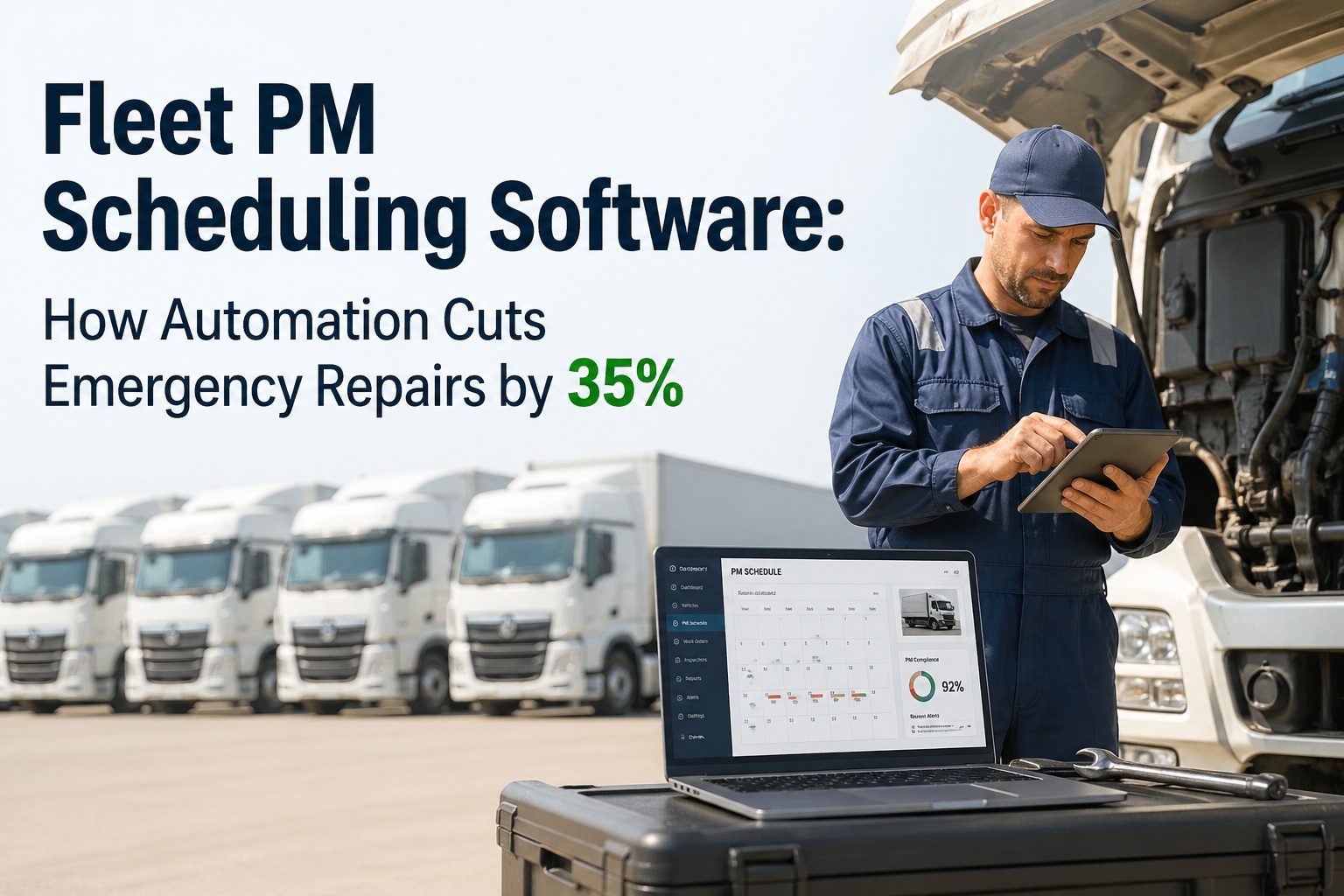
Tiered PM scheduling (250/500/1,000/2,000 hrs) with site-specific adjustments for severe conditions. Integration with Cat MineStar, Komatsu KOMTRAX, Volvo CareTrack, and other OEM telematics for automatic hour updates. Calendar fallback for low-utilization support equipment. Shift-aware scheduling that fits PM into planned shutdowns and shift changes — not arbitrary calendar dates.
Min/max stock levels calibrated for remote mine logistics — longer lead times = higher safety stock. Auto-reorder alerts before stockouts. Every part consumed logged against specific equipment and work order. Multi-pit inventory visibility: check if the part exists at another location before ordering. PM-driven forecasting calculates parts needed for upcoming services across the entire fleet.
Pre-shift inspection records with timestamps, GPS location, operator identity, and photo documentation — producing exactly what MSHA auditors demand. Defect-to-repair chain of custody: defect reported → work order generated → repair documented → equipment returned to service. All records retained digitally and accessible instantly during inspections. Zero paper gaps that trigger citations.
Track every downtime event by equipment, cause, duration, and cost. Utilization rates by machine and by pit. Cost per operating hour (maintenance + parts + downtime + fuel). Equipment performance benchmarking — identify which machines consistently underperform. Repair vs replace decision support. Production impact analysis: correlate equipment downtime with tonnes moved.
Every feature works without internet — inspections, work orders, parts lookups, PM schedules, photo capture. Data syncs automatically when the device reconnects via satellite, cellular, or Wi-Fi. GPS timestamps and photos captured at inspection time, not sync time. Built for the reality that most pit locations have zero cell signal. This is not a "limited offline mode" — it is full functionality, always.
Case Study: 42% Downtime Reduction — 215-Unit Mining Fleet
Operation: Arizona copper mine, 215 heavy equipment units operating 24/7 in extreme conditions.
Challenge: Reactive maintenance culture with high unplanned downtime, emergency repair costs, and parts shortages causing extended equipment idle time.
Solution: Implemented systematic digital maintenance program: pre-shift inspections, tiered PM scheduling, parts inventory management, and defect-to-work-order workflow.
Results after 18 months: Reduced unplanned downtime ($1.95M saved), lower emergency repair costs ($680K), optimized inventory ($285K), extended equipment lifespan ($195K), reduced insurance premiums ($90K). Total annual savings: $3.2M on a $910K investment.
Frequently Asked Questions
Mining equipment runs 5,000-7,000 hours per year vs 1,500-2,500 for construction. This means PM intervals hit faster — a 250-hour service comes due every 2-3 weeks instead of every 2-3 months. Mining conditions (dust, heat, vibration, load) accelerate wear by 20-40%, often requiring shorter-than-OEM intervals. Additionally, 24/7 operations mean there are no natural downtime windows — PM must be scheduled around shift changes and planned shutdowns, not just "when the machine is not in use."
MSHA requires pre-shift equipment inspections before each operating shift — this is legally mandatory, not optional. Surface mines are inspected by MSHA at least quarterly; underground mines at least four times per year. Equipment deficiencies must be corrected before the equipment is used. Maintenance records must demonstrate a systematic maintenance program. Digital documentation with timestamps and photos meets MSHA's documentation standard and is far more defensible than paper records during inspections.
Yes — full offline capability is a core feature. Inspections, work orders, parts lookups, and PM schedules work entirely offline. Photos and GPS timestamps are captured at the time of inspection. Data syncs automatically when the device reconnects via satellite, cellular, or Wi-Fi. This is not a "limited offline mode" — every feature functions identically offline and online. Built specifically for the reality that most pit locations have zero cellular connectivity.
The case study documents 352% ROI with a 3.4-month payback on a $910K investment that returned $3.2M annually. Industry benchmarks show 30-40% unplanned downtime reduction within the first year. The largest immediate gains come from pre-shift inspections catching defects earlier and PM completion rates increasing from ~60% to 95%+. For a fleet where a single haul truck costs $5,000-$20,000 per hour idle, preventing even one major unplanned failure covers the annual software cost many times over.
HVI integrates with OEM telematics: Cat MineStar/Product Link, Komatsu KOMTRAX/FrontRunner, Volvo CareTrack, and other major platforms via API. Real-time data exchange for engine hours, equipment health, and fault codes. HVI focuses on the inspection, maintenance, and compliance layer — complementing (not replacing) dispatch and production systems like Wenco, Modular Mining, and Hexagon FMS. The integration ensures maintenance data flows into your existing operational ecosystem.
Yes — HVI supports underground-specific equipment types (LHD units, underground haul trucks, jumbos, bolters, shotcrete rigs) with templates covering the unique inspection requirements including emission system checks, ventilation-related items, and confined-space safety equipment. Underground equipment typically operates at 5-7% lower availability than surface equipment due to access constraints — making systematic inspection and PM even more critical to maximize the available uptime window.
Your Mining Fleet Runs 24/7 — Your Maintenance System Should Too
HVI delivers mining-specific inspections, hours-based PM scheduling, offline capability for remote sites, MSHA compliance documentation, parts management, and downtime analytics. 42% proven downtime reduction. 352% ROI. Works where cell signal does not.
No credit card • No hardware • Full offline capability • MSHA compliant