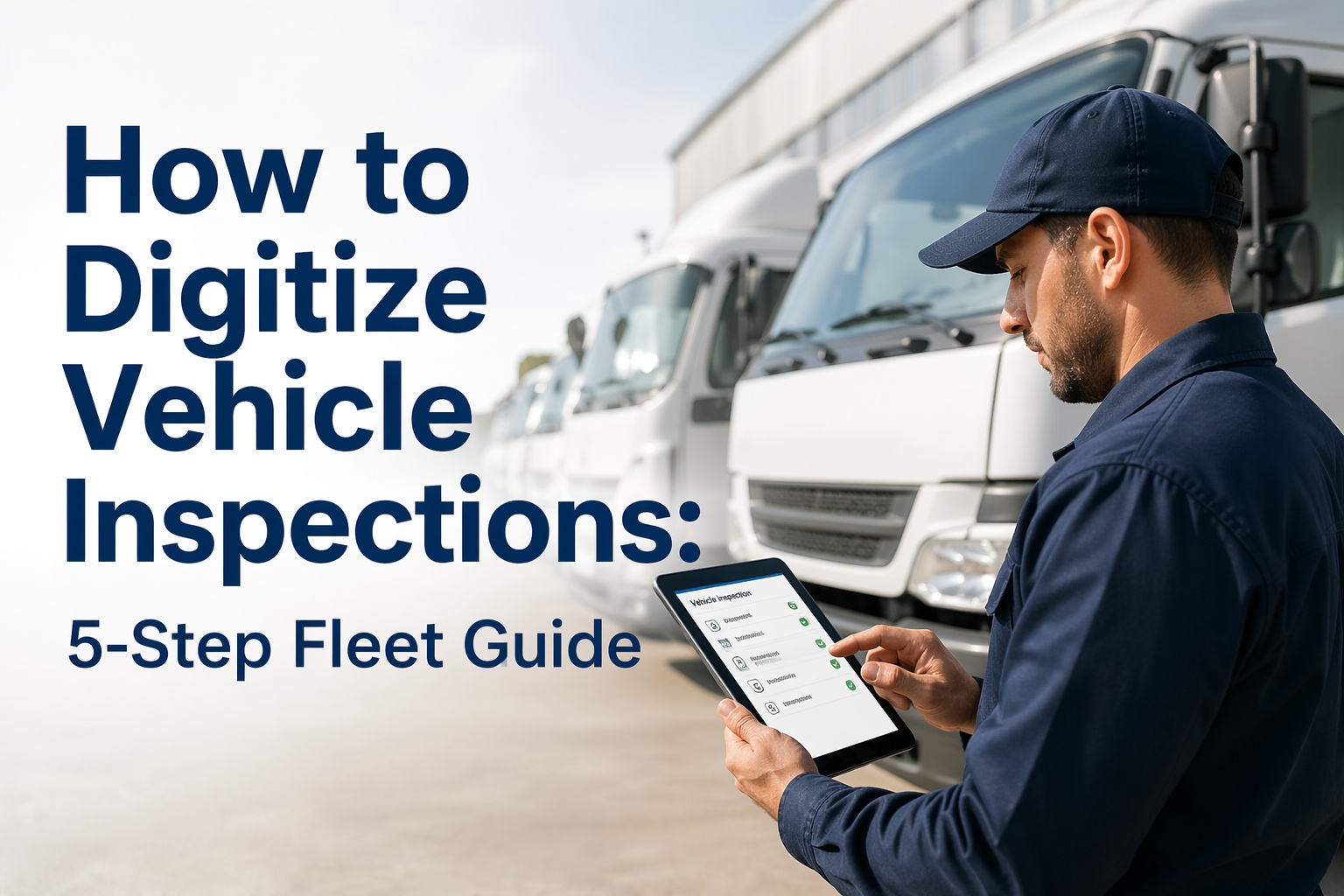
Every roadside inspection, every repair order, every preventive maintenance interval — they are only as valuable as your ability to prove they happened. The DOT does not just want to know that your fleet is maintained; it wants documented evidence, properly linked, instantly retrievable. A maintenance logbook that connects inspection records, repair completions, and PM schedules into a single, searchable compliance trail is not optional for a professional fleet operation — it is the foundation that protects your vehicles, your drivers, and your business when an auditor, an attorney, or a roadside officer asks for proof. Start your free HVI trial to build your digital compliance logbook today, or book a demo to see how HVI links every inspection, repair, and PM record automatically.
What DOT actually requires — and what most fleets get wrong
49 CFR Part 396 is the federal regulation that governs fleet maintenance record-keeping. Most fleet managers know it exists. Far fewer understand exactly what it requires — and the gap between "we maintain our trucks" and "we can prove it under audit" is where compliance violations live.
Every motor carrier must systematically inspect, repair, and maintain all vehicles. Records must identify the vehicle, show dates, describe the work, and be retained for a minimum of 1 year — or 6 months after the vehicle leaves your fleet.
Drivers must complete a DVIR at the end of each day for every vehicle operated. If defects are reported, the carrier must certify that repairs were made — or that repair was unnecessary — before the vehicle returns to service.
Every commercial motor vehicle must pass a full annual inspection. The inspection report must be retained for 14 months. Carriers must carry proof that the vehicle has passed its annual inspection — either on the vehicle or immediately accessible.
FMCSA safety investigators may inspect vehicles and maintenance records at any time. Out-of-service orders — and the repairs that cleared them — must be documented and retained. Failure to produce records is itself a violation.
The 3-record link that DOT auditors look for
A DOT compliance audit is not just a file check. An auditor traces a chain of evidence: was this defect reported? Was it repaired? Was the vehicle cleared before returning to service? That three-link chain — inspection to repair to return-to-service — must be documentable for every reported defect. Here is what each link requires and how HVI connects them automatically.
- Vehicle ID & date
- Driver signature
- Defects reported (or "no defects")
- Photo evidence of condition
- Odometer/engine hours at inspection
- Work order number & date
- Description of repair performed
- Mechanic name / certification
- Parts replaced with part numbers
- Reference to triggering inspection
- Carrier/manager certification
- Statement: repaired OR not needed
- Date cleared for service
- Acknowledging driver signature
- Cross-reference to repair work order
5 types of records your maintenance logbook must contain
A compliant fleet maintenance logbook is not a single document — it is a linked system of five distinct record types. HVI maintains all five automatically, cross-referenced by vehicle and searchable by date, driver, or defect type.
Daily Driver Vehicle Inspection Reports (DVIR)
Pre-trip and post-trip inspection reports, driver-signed, with specific defect descriptions or a certified "no defects found" statement. Required every operating day for every vehicle under § 396.11. HVI generates and stores these automatically from mobile inspection submissions.
Maintenance & Repair Work Orders
Records of all maintenance performed — scheduled PM, unscheduled repairs, and defect clearances. Must identify the vehicle, describe the work, list parts, name the technician, and cross-reference the triggering inspection or fault code. HVI auto-generates work orders from both DVIR defects and telematics fault codes.
Annual Periodic Inspection Records
The full annual vehicle inspection report required under § 396.17, signed by a qualified inspector. Must be carried on the vehicle or produced immediately upon request. HVI stores annual inspection records with vehicle profiles and surfaces upcoming expiry dates on the compliance dashboard.
Preventive Maintenance (PM) Schedule Records
Documentation that each vehicle is on a systematic PM program — oil changes, brake inspections, tyre rotations, filter replacements — triggered by mileage, engine hours, or calendar intervals. HVI tracks PM intervals against real odometer and engine hours data synced from telematics, generating work orders automatically at each threshold.
Out-of-Service (OOS) & Roadside Inspection Records
Documentation of any roadside inspection results, out-of-service orders received, and the repairs made to clear OOS violations before the vehicle returned to service. Auditors specifically look for OOS repair trails — HVI stores all OOS events with linked repair records and clearance certifications.
Paper logbook vs. digital compliance logbook — the real difference
Most fleets still rely on paper DVIRs, clipboard repair orders, and spreadsheet PM schedules. Here is what that costs versus what a digital maintenance logbook like HVI delivers — across every dimension that matters for compliance and operations.
| Capability | Paper / Spreadsheet | HVI Digital Logbook |
|---|---|---|
| DVIR creation | Manual handwritten form, filed physically | Mobile app, photo-verified, auto-archived |
| Defect-to-repair link | Manual cross-reference — often missed | Auto-linked — defect creates work order instantly |
| PM tracking | Calendar reminders — misses actual usage | Triggered by real engine hours & odometer |
| Audit retrieval | Hours searching filing cabinets | Any record searchable in seconds by date or VIN |
| Annual inspection tracking | Manual calendar — easily missed | Expiry alerts 30/60/90 days out per vehicle |
| OOS repair trail | Separate paper file — gaps common | Full OOS event, repair, and clearance linked automatically |
| Multi-vehicle visibility | One binder per truck — no fleet-wide view | Real-time compliance status for every vehicle on one dashboard |
| Record loss risk | Fire, flood, misfiling — unrecoverable | Cloud-backed, redundant, always accessible |
How HVI builds your compliance logbook automatically
HVI does not ask your team to remember to file records, cross-reference documents, or chase down signatures. The platform builds your complete DOT maintenance logbook as a natural by-product of your daily inspection and maintenance workflow. Here is the sequence.
Pre-trip or post-trip DVIR completed on the HVI app — guided checklist, photo capture for defects, driver signature. Automatically creates a timestamped, vehicle-linked DVIR record meeting § 396.11.
Any reported defect instantly creates a maintenance work order with the photo, defect description, vehicle ID, and DVIR reference — routed to your maintenance team automatically. No manual handoff.
Technician records repair details, parts used, and time on the digital work order. On closure, HVI auto-generates the § 396.11(c) return-to-service certification linked to the original DVIR defect.
Engine hours and odometer synced from telematics every 15 minutes. When a vehicle hits its PM threshold, HVI creates the scheduled work order and flags the vehicle on the compliance dashboard.
Frequently asked questions about DOT maintenance logbooks
Your DOT compliance logbook should build itself — not burden your team.
HVI turns every daily inspection, every repair, and every PM service into a linked, searchable compliance record that satisfies 49 CFR Part 396 automatically. Start free today and have your complete compliance logbook running before your next roadside check.
No credit card required · All record types included · Audit-ready from day one