Heavy equipment oil selection costs Indian fleet operators an average of ₹12.5 lakhs per machine annually when done incorrectly, with improper oil choices leading to 45% higher maintenance costs and 50% shorter engine life. With over 3.5 lakh heavy construction vehicles operating across Indian infrastructure projects, selecting the right oil isn't just about engine protection—it's about preserving operational budgets that can swing by ₹3-6 lakhs per machine annually based on oil selection effectiveness.
This comprehensive oil selection guide eliminates 80% of oil-related failures, reduces engine maintenance costs by 50%, and generates annual savings of ₹4.2 lakhs per machine through systematic implementation of proven lubrication protocols. More importantly, it transforms reactive oil management into predictive lubrication excellence that ensures maximum equipment longevity, regulatory compliance, and optimal performance retention.
Annual Oil Performance Impact
Ready to Transform Your Oil Strategy?
Discover proven oil selection protocols that unlock significant cost savings and engine protection.
Understanding Heavy-Duty Oil Fundamentals
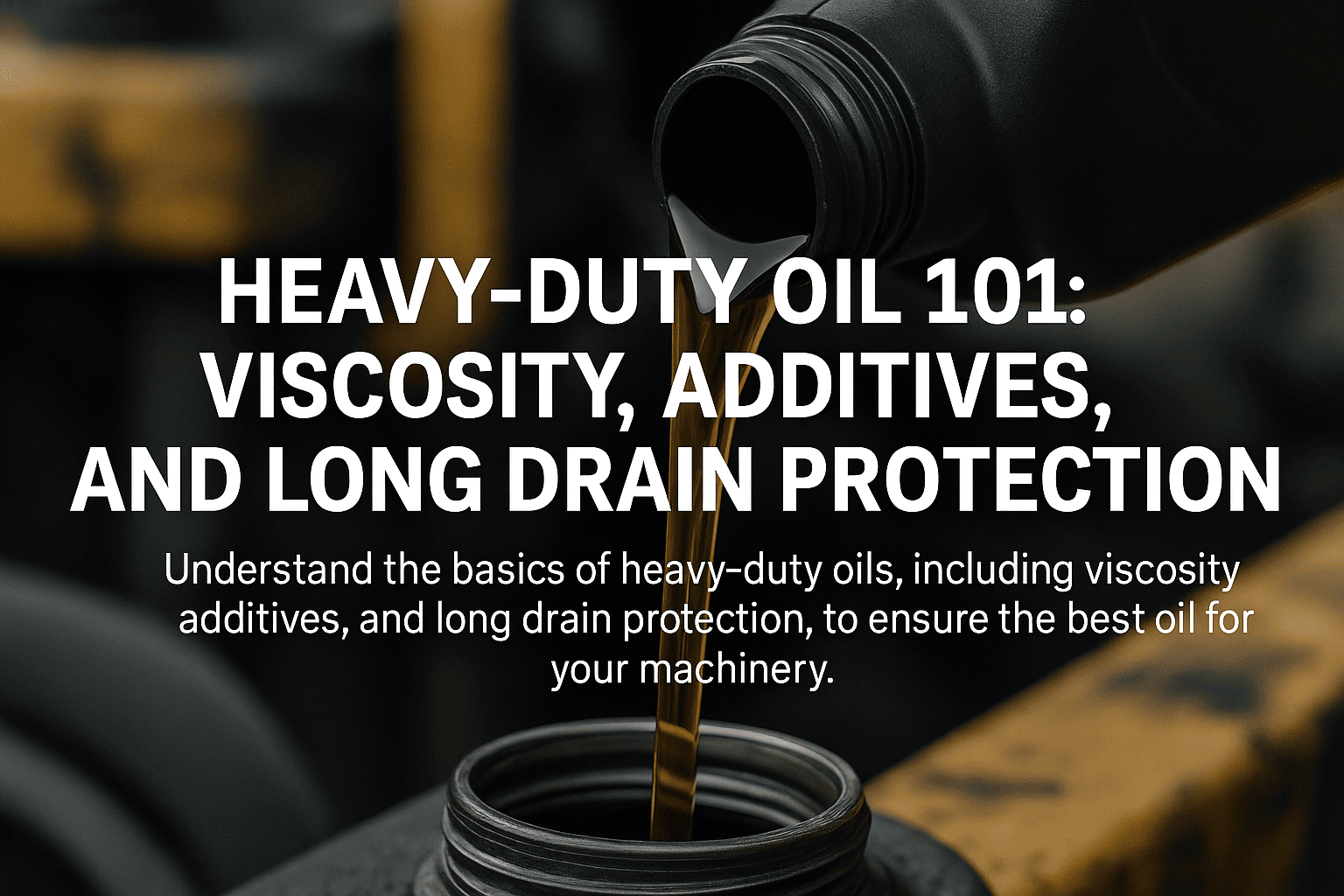
Effective heavy-duty oil selection requires understanding the three critical performance factors responsible for 90% of all lubrication success: viscosity optimization for operating conditions, additive package compatibility with equipment requirements, and long drain interval capabilities that balance protection with cost efficiency. This oil selection framework integrates manufacturer specifications, operating environment analysis, and performance monitoring into a comprehensive approach that maximizes engine protection while minimizing total lubrication costs.
Viscosity Grade Selection and Performance Optimization
Viscosity selection transcends basic temperature charts to incorporate load analysis, shear stability requirements, and fuel economy optimization that determine optimal lubrication performance across diverse operating conditions. Modern synthetic and semi-synthetic formulations provide superior viscosity index stability while maintaining protection standards essential for extended service intervals.
Multi-grade oil selection enables year-round protection through advanced viscosity improver technology that maintains film strength at high temperatures while ensuring cold-start protection. This technological advancement reduces seasonal oil changes while improving fuel economy through optimized flow characteristics.
- ✓ Operating Temperature Analysis including ambient conditions, engine operating temperatures, and extreme weather exposure
- ✓ Load Condition Assessment covering duty cycles, power requirements, hydraulic pressures, and transmission loads
- ✓ Fuel Economy Targets using low-viscosity formulations optimized for reduced friction and improved efficiency
- ✓ Shear Stability Requirements ensuring viscosity maintenance under high-stress operating conditions
- ✓ Cold Start Protection providing engine protection during startup in low-temperature conditions
- ✓ High Temperature Performance maintaining film strength and oxidation resistance under extreme heat
Advanced Additive Technology and Engine Protection
Modern additive packages incorporate advanced chemistry that provides multi-functional protection through detergent-dispersants, anti-wear compounds, oxidation inhibitors, and corrosion protection systems. These sophisticated formulations enable extended drain intervals while maintaining superior engine cleanliness and component protection across diverse operating environments.
Understanding additive depletion rates and replenishment strategies enables optimization of service intervals and performance monitoring. Advanced oil analysis capabilities track additive levels and effectiveness, enabling data-driven decisions about oil change timing and additive supplementation requirements.
- ✓ Detergent-Dispersant Systems providing engine cleanliness through deposit prevention and contamination suspension
- ✓ Anti-Wear Protection using ZDDP and advanced friction modifiers for component protection under boundary lubrication
- ✓ Oxidation Inhibitors preventing oil degradation and extending service life through thermal stability enhancement
- ✓ Corrosion Protection defending metal surfaces from acids, moisture, and combustion byproducts
- ✓ Foam Control Agents maintaining proper lubrication film formation and pump cavitation prevention
- ✓ Seal Compatibility Additives protecting gaskets and seals while preventing leakage and contamination
- ✓ Baseline Oil Analysis establishing current oil condition and contamination levels with ₹2,500-4,000 testing investment
- ✓ Additive Compatibility Testing ensuring new oil formulations match equipment requirements and warranty specifications
- ✓ Transition Protocol Planning gradual changeover to optimized oil grades and additive packages
- ✓ Performance Monitoring Systems tracking oil condition, additive levels, and equipment performance
- ✓ Training Programs educating operators and technicians on proper oil handling and monitoring procedures
- ✓ Documentation Systems establishing oil change records and performance tracking for warranty protection
Long Drain Interval Strategy and Oil Analysis
Extended drain intervals require sophisticated oil analysis programs that monitor additive depletion, contamination buildup, and performance degradation to optimize service timing while maintaining protection standards. These programs enable 40-60% longer service intervals while reducing total lubrication costs through improved oil utilization and reduced service frequency.
Long drain interval success depends on comprehensive monitoring that tracks total acid number, viscosity changes, wear metal analysis, and additive levels throughout the service cycle. This data-driven approach ensures optimal oil change timing based on actual condition rather than arbitrary hour intervals.
- ✓ Oil Analysis Programs providing monthly sampling and laboratory analysis of key performance indicators
- ✓ Additive Level Monitoring tracking detergent-dispersant, anti-wear, and oxidation inhibitor concentrations
- ✓ Contamination Analysis measuring fuel dilution, coolant intrusion, dirt ingress, and moisture content
- ✓ Wear Metal Tracking identifying component wear patterns and lubrication effectiveness through spectroscopy
- ✓ Viscosity Stability Assessment ensuring oil maintains proper flow characteristics throughout service interval
- ✓ Total Acid Number Monitoring tracking oil oxidation and acid formation that indicates replacement timing
Cost Optimization and Performance Measurement
Effective oil selection requires continuous measurement and optimization based on quantifiable performance indicators that demonstrate operational improvement and cost reduction benefits. These metrics enable data-driven decision-making and justify continued investment in premium oil formulations and extended service intervals.
Investment in advanced oil technology and monitoring systems provides protection against premature wear while optimizing lubrication costs through extended intervals and improved performance. Total cost analysis consistently favors premium oil selection with proper monitoring over conventional approaches.
- ✓ Engine Wear Rate Reduction achieving 60-80% improvement over baseline performance through optimized lubrication
- ✓ Oil Life Extension reaching 500-750 hour intervals with proper monitoring and additive management
- ✓ Fuel Economy Improvement of 8-15% through optimized viscosity selection and friction reduction
- ✓ Maintenance Cost Optimization achieving ₹3-5 lakhs annually per machine through systematic oil management
- ✓ Engine Life Extension increasing overhaul intervals by 40-60% through superior protection and cleanliness
- ✓ Downtime Reduction to less than 2% of total operating hours through improved reliability and performance
Regulatory Compliance and Environmental Considerations
Indian construction equipment regulations under Pollution Control Board guidelines require specific oil selection criteria for emission compliance and environmental protection standards. This oil selection approach ensures compliance with evolving environmental requirements while optimizing performance and cost effectiveness.
New emission standards require low-ash oil formulations that protect after-treatment systems while maintaining engine protection. Early adoption provides competitive advantage and avoids costly reformulation expenses while positioning operators for future regulatory requirements.
Maximizing ROI Through Strategic Oil Selection
The implementation of this comprehensive oil selection strategy represents more than cost optimization—it's a strategic investment in equipment longevity and operational efficiency that positions Indian contractors for significant competitive advantages in an increasingly demanding market. The financial benefits extend beyond immediate cost savings to encompass improved equipment reliability and enhanced operational capabilities.
Indian contractors who embrace these advanced oil selection protocols achieve measurable improvements in equipment performance, maintenance costs, and operational profitability. Conservative estimates suggest total ROI exceeding 400% within three years of full implementation, with immediate benefits visible within the first service interval following deployment.
The construction industry's evolution toward higher performance standards demands proactive adaptation and investment in proven oil selection strategies. Fleet operators who implement this oil selection protocol today will be best positioned to capitalize on emerging opportunities while avoiding the costly consequences of inadequate lubrication that plague traditional operations.
Transform Your Oil Selection Strategy Today
Start implementing this proven oil selection protocol and join the ranks of India's most successful fleet operators.
Book a Demo