Over 100,000 FMCSA violations were reported in 2025. The average audit turned up 6 violations per carrier. Penalties exceeded $125,000 in some cases. The most common findings were not brake failures or blown tires — they were missing maintenance records, incomplete driver qualification files, and gaps in drug and alcohol documentation. Vehicle Maintenance is the single largest violation category by volume, and in 2026 it is being split into two separate compliance categories under the new CSA scoring system. The regulatory pressure is intensifying: SMS scores now update monthly (not quarterly), only the last 12 months count, and 950+ violation codes have been consolidated to 116 weighted groups. Meanwhile, the eDVIR rule effective March 23, 2026 explicitly endorses electronic inspection records, and the Clearinghouse now requires 24-hour reporting of positive test results. For heavy fleets operating Class 6-8 trucks, construction equipment, or mixed vehicle types, compliance is not a one-time setup — it is a daily operational discipline that either runs on digital systems or breaks down under paper. This guide covers every Part 396 requirement, the documentation FMCSA expects to see during an audit, the violations that cost the most, and how compliance software eliminates the gaps that generate citations. Book a demo to see HVI's FMCSA compliance platform, or start your free trial.
Part 396 Maintenance, DVIR Documentation, HOS Records, Driver Qualification, CSA Scoring & Audit Readiness
FMCSA Part 396: Maintenance Requirements
Part 396 is the foundation of vehicle compliance. Every motor carrier must systematically inspect, repair, and maintain all CMVs under its control. This is not advisory — it is legally binding, and every violation is documented in your CSA record.
What Heavy Fleet Operators Must Document
Pre-trip and post-trip inspection reports for every vehicle, every trip. Defects documented with description, severity, and photo evidence. Repair records linked to each defect showing what was done, when, and by whom. Driver acknowledgment that repairs were completed. Retention: 3 months minimum.
Complete maintenance history for every vehicle: PM schedules, service orders, parts replaced, dates, mileage/hours at service, technician identity. Must demonstrate a "systematic" program — not reactive-only maintenance. Records retained for vehicle's service life + 6 months post-disposal.
Appendix A inspection report for every vehicle within the last 12 months. Inspector name, qualifications, date, vehicle ID, all items inspected, findings, and pass/fail status. Inspection decal affixed to vehicle. Inspector qualifications on file per 396.19.
Application (3-year history, 10-year for safety-sensitive), MVR from every state (updated annually), current DOT medical certificate (electronic as of June 2025), road test certification, prior employment verification, drug/alcohol testing records. DQFs must be accessible within 48 hours for remote audits. Retained 3 years post-separation.
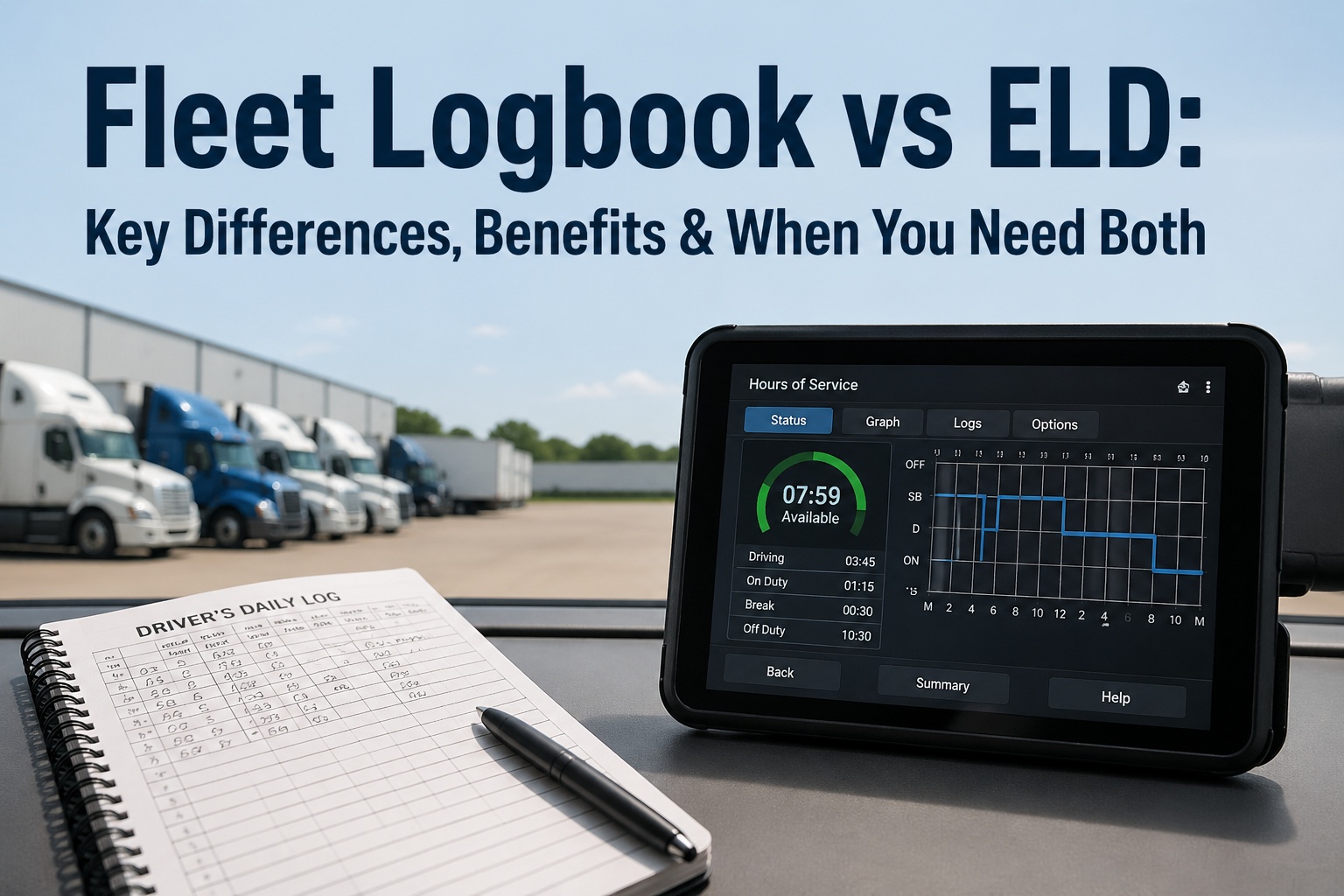
Electronic logging device data for all CMV drivers. Records of Duty Status (RODS) retained 6 months. Supporting documents: bills of lading, fuel receipts, toll records. ELD must be on the FMCSA registered list — as of December 2025, PSS ELD, Black Bear ELD, and RT ELD Plus were removed; carriers had until February 7, 2026 to replace.
Pre-employment full Clearinghouse query for every driver. Annual limited query for all current drivers. Positive results and refusals reported within 24 hours (tightened in 2026). Over 190,000 CDL drivers under "prohibited status" as of November 2025. Violations: up to $5,833 per occurrence for missed queries.
Common FMCSA Violations in Heavy Fleets
The #1 finding in FMCSA audits. Missing PM records, incomplete repair documentation, no systematic maintenance program. Vehicle Maintenance is the largest violation category by volume and is now split into two categories under the 2026 CSA overhaul. Penalty: $13,300-$53,203 for maintenance violations.
Driver reports a defect but no repair documentation exists. Or the repair was performed but not documented. Or the driver did not review and sign the previous DVIR before operating. Every noted defect must have corresponding corrective action proof — no exceptions. FMCSA estimates DVIRs prevent approximately 14,000 accidents annually.
DQF issues accounted for over 62,000 violations in the past five years — nearly 12% of all FMCSA violations. Common gaps: expired medical certificates, missing prior employment verification, no annual MVR update, incomplete drug/alcohol records. DQFs must be accessible within 48 hours during remote audits.
Over 7,000 violations in 2025 alone for missed pre-employment or annual limited queries. As of November 2025, over 190,000 CDL drivers are in "prohibited status" — hiring one without checking the Clearinghouse exposes the carrier to immediate disqualification and fines up to $5,833 per occurrence.
Every CMV must have a current annual inspection per 396.17 covering all Appendix A items — brakes, coupling, frame, steering, suspension, lighting, and more. Operating a vehicle with an expired annual inspection is an immediate out-of-service violation. Maximum fine for operating an OOS vehicle: $19,277.
Using an unregistered ELD after the grace period triggers HOS violations and out-of-service orders. Three devices were removed in December 2025 with a February 2026 replacement deadline. ELD data must be retained 6 months and transferable via web service or local transfer. Malfunction protocol requires paper logs within 24 hours and repair within 8 days.
2026 CSA Scoring Changes: What Fleet Managers Must Know
The familiar BASIC categories are renamed to "compliance categories." Vehicle Maintenance — the largest category by violation volume — is being split into two separate categories, making maintenance violations more impactful. This is the most significant CSA overhaul since the system launched in 2010.
950+ violation codes have been reduced to 116 weighted groups, each assigned a severity weight of 1 or 2 points. This simplification changes which violations carry the most weight and may shift your percentile scores significantly. Fleets should review their violation history against the new groupings.
Only the last 12 months of data count toward your SMS score (previously 24 months). Scores update monthly, not quarterly. This means recent violations hit harder and drop off faster — but it also means immediate improvement efforts show results sooner. Fleets with proactive SMS monitoring improved percentiles by an average of 15% post-update.
Amazon Relay announced new driver and vehicle violation rate metrics based on roadside inspections, effective February 2026 — adding inspection-based OOS rates on top of existing SMS scores. This means your CSA performance now directly affects revenue, not just regulatory standing. Other major shippers are expected to follow.
How Compliance Software Reduces Audit Risk
The #1 audit failure is missing documentation. Digital compliance platforms ensure every DVIR is completed (no blanks, required fields enforced), every defect generates a work order, every repair is documented with photos and timestamps, and every record is retained for the required period. Paper systems achieve 73% audit pass rates — digital systems achieve 96%. The gap is entirely about documentation completeness.
Medical certificates, annual inspections, CDLs, ELD registrations, insurance — each has a different expiration cadence. Software tracks every date and fires alerts before expiration. Fleets using automated alerts report 30% fewer out-of-service violations because nothing expires unnoticed. The alternative: a spreadsheet someone forgets to update, discovered during an audit.
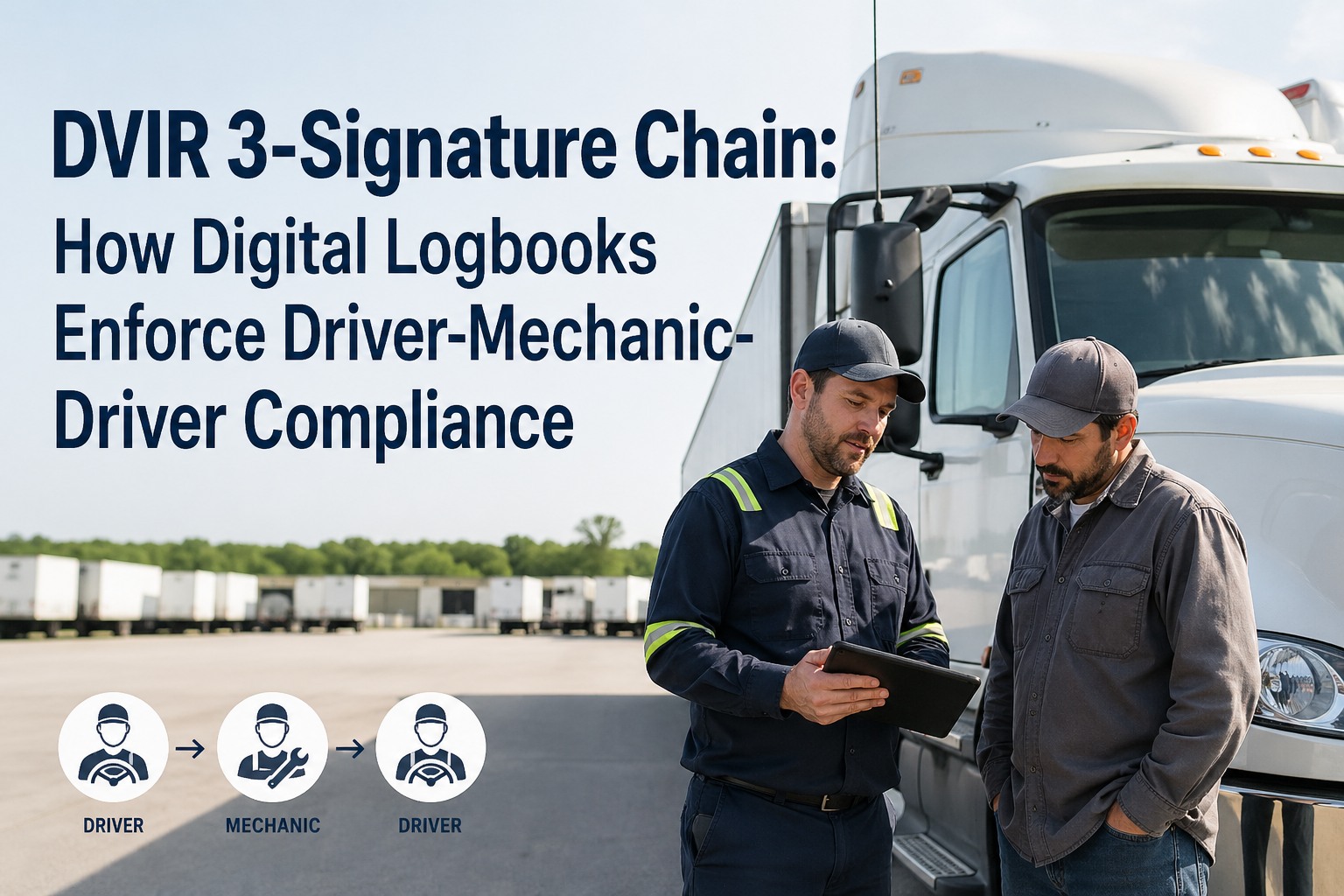
FMCSA does not just want to see that a defect was reported — they want to see the complete chain: defect reported (with description and photo) → repair assigned → repair completed (with parts used, technician, date) → driver acknowledged → vehicle returned to service. Digital platforms create this chain automatically. Paper requires manual linking across three separate documents.
When an auditor requests maintenance records, DVIR history, or driver files, you produce them instantly — not after hours of searching filing cabinets. Digital platforms generate per-vehicle inspection histories, per-driver qualification summaries, and fleet-wide compliance dashboards exportable as PDF. "Readily accessible" means producible on request — digital systems deliver this by definition.
HVI FMCSA Feature Walkthrough
HVI satisfies FMCSA 49 CFR Part 391 (Driver Qualifications), Part 395 (Hours of Service), Part 396 (Inspection, Repair and Maintenance), and Part 382 (Drug and Alcohol Testing) requirements through a single digital platform.
Mobile-friendly pre-trip and post-trip inspection forms with required fields, photo capture, GPS timestamp, and driver signature. Fully compliant with the March 23, 2026 eDVIR rule (FMCSA-2025-0115). Customizable templates for Class 6-8 trucks, construction equipment, and specialty vehicles.
Driver flags a defect → maintenance team gets immediate notification with photos, severity, and vehicle ID. Critical defects auto-tag vehicles out of service per 396.7. Repair completion documented with parts used, technician, and timestamp. Complete defect→repair→return-to-service chain for every item.
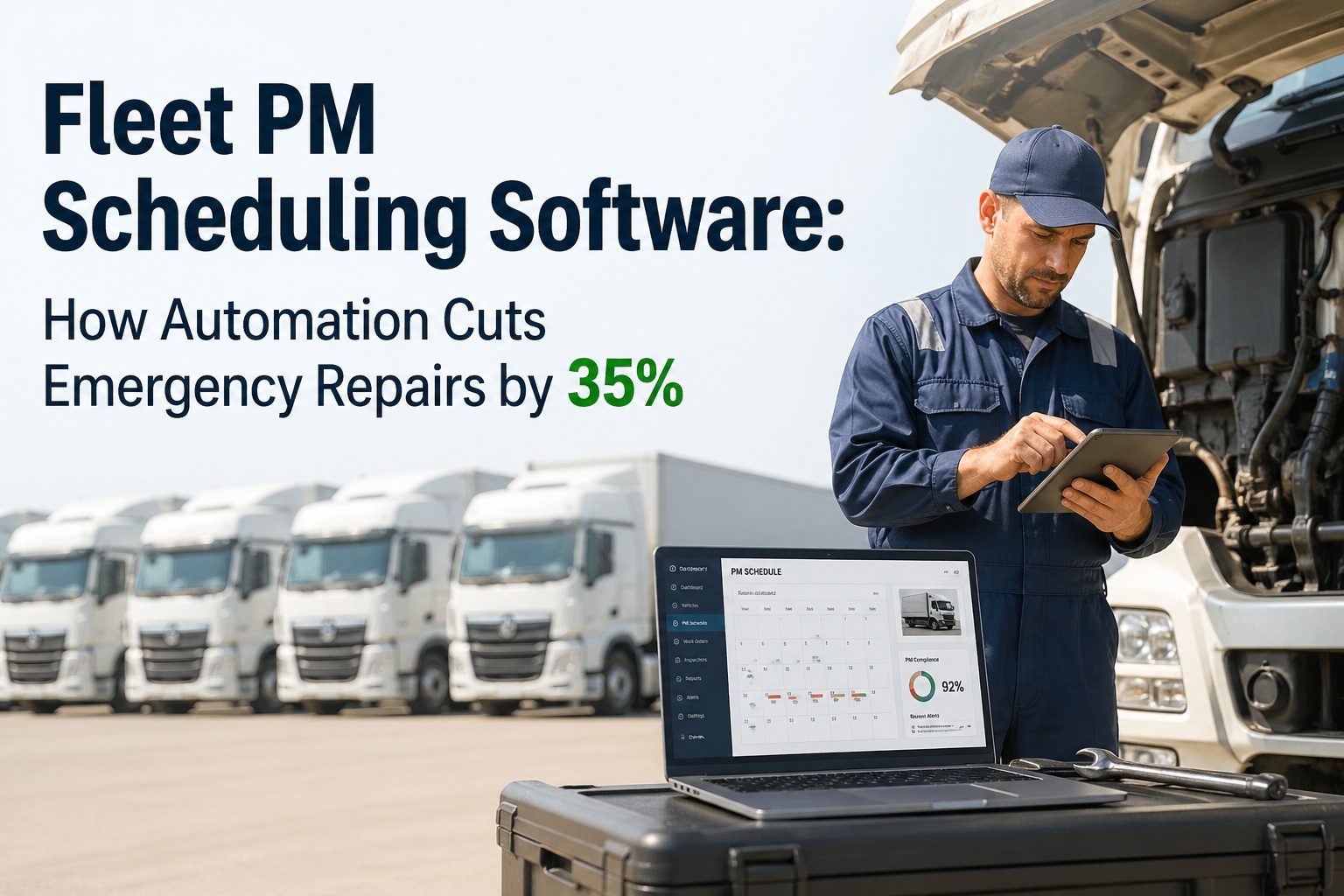
Automated preventive maintenance schedules by mileage, engine hours, or calendar intervals. Annual inspection due-date tracking with alerts at 60, 30, and 7 days before expiration. Never miss a 396.17 deadline. Track inspector qualifications (396.19) in the same system.
Green/yellow/red status for each driver: license, medical certificate, MVR, drug/alcohol, HOS compliance. Automated alerts before expirations. Centralized DQF accessible within 48 hours for remote audits. Complete driver history exportable as audit-ready PDF.
Generate compliance reports in seconds: per-vehicle inspection history, per-driver qualification summary, fleet-wide maintenance compliance, defect resolution tracking, and PM completion rates. Export as PDF or submit directly to FMCSA portal. 96% audit pass rate vs 73% for paper-based fleets.
If a driver skips a pre-shift DVIR, management is alerted immediately — before a roadside inspector discovers the gap. Track DVIR completion rates by driver, vehicle, and site. Identify compliance trends before they become CSA-impacting violations.
Document Retention Quick Reference
Frequently Asked Questions
Maintenance record gaps — specifically, missing or incomplete documentation showing systematic inspection, repair, and maintenance per 49 CFR 396.3. Vehicle Maintenance is the largest violation category by volume. The second most common finding is incomplete driver qualification files, which accounted for over 62,000 violations in the past five years. The pattern is clear: fleets fail audits on documentation, not mechanical failures.
The most significant overhaul since 2010: BASICs are renamed "compliance categories," Vehicle Maintenance is split into two categories, 950+ violation codes are consolidated to 116 weighted groups (1 or 2 points each), only the last 12 months count (previously 24), and scores update monthly instead of quarterly. Full enforcement began February 2026. Additionally, Amazon and other shippers now factor inspection-based OOS rates into carrier selection — making CSA a revenue issue, not just regulatory.
FMCSA's final rule (FMCSA-2025-0115, effective March 23, 2026) explicitly clarifies that Driver Vehicle Inspection Reports may be completed electronically. While electronic DVIRs were already permitted in practice, this rule removes all ambiguity in the regulatory language. The practical impact: fleets can confidently adopt digital inspection platforms knowing FMCSA explicitly endorses electronic completion. For heavy fleets with complex vehicle types, digital DVIRs with required fields and photo capture ensure consistency across all vehicles.
Maintenance violations (396.3): $13,300-$53,203 per violation. Operating an out-of-service vehicle (396.7): up to $19,277 per instance. Failing to maintain systematic maintenance records is a violation even if your vehicles are mechanically sound — the records must prove the program exists. Beyond direct fines: CSA score impact affects insurance premiums, shipper access (Amazon Relay scores), and intervention risk. Some 2025 audit penalties exceeded $125,000 total.
FMCSA expects records to be "readily accessible" — produced on request during an on-site audit or within 48 hours for remote/desk audits (particularly driver qualification files). "Somewhere in a filing cabinet" does not meet this standard. Digital systems produce records instantly, which is why they achieve 96% audit pass rates vs 73% for paper. The gap widens for heavy fleets with large vehicle counts and multiple locations — digital centralizes everything, paper fragments it.
HVI covers Part 396 (Inspection, Repair, and Maintenance) comprehensively — digital DVIRs, defect-to-repair workflow, PM scheduling, annual inspection tracking, and maintenance record management. It also supports Part 391 (Driver Qualifications) through driver compliance dashboards with expiration tracking, and integrates with HOS/ELD data for Part 395 compliance visibility. For Part 382 (Drug/Alcohol), HVI tracks Clearinghouse query dates and flags missed queries. The platform is designed as a centralized compliance hub for the entire fleet operation.
Stop Failing Audits on Paperwork
HVI digitizes DVIRs, links defects to repairs, tracks PM schedules, monitors driver credentials, and generates audit-ready reports in seconds. 96% audit pass rate. FMCSA eDVIR compliant. 500+ fleet operators already on platform.
No credit card • No hardware • Setup in under 10 minutes • 49 CFR 390-399 compliant