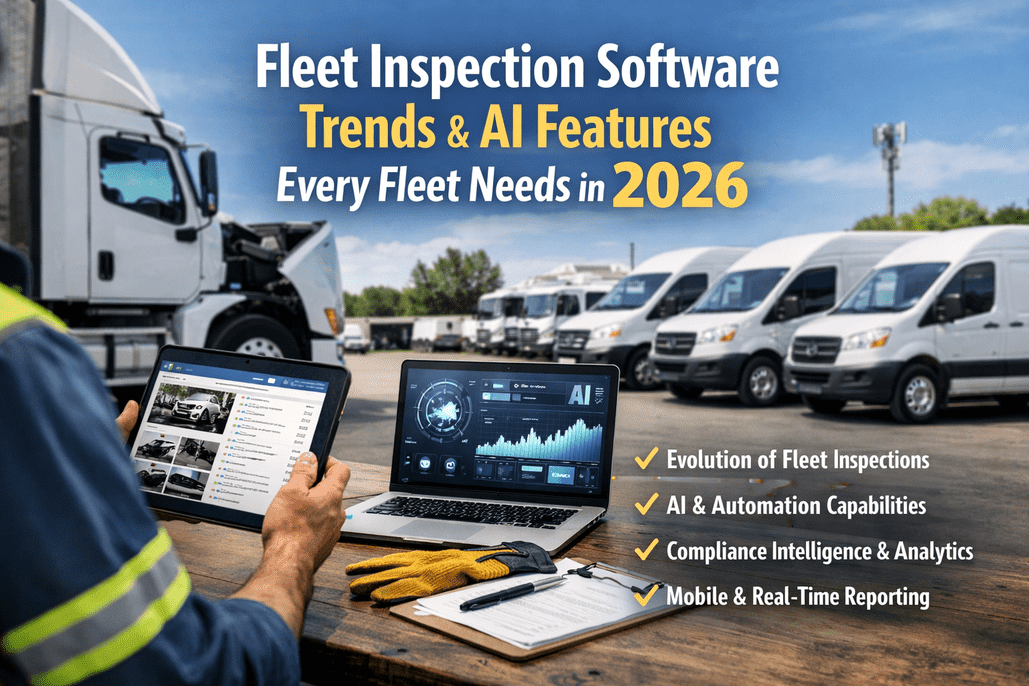
Fleet inspection software is evolving faster than ever. AI-powered defect detection, predictive maintenance integration, and compliance intelligence are transforming how fleets manage safety and regulatory requirements. In 2026, the gap between fleets using modern inspection technology and those stuck on paper or basic systems continues to widen—with leading adopters seeing 40% fewer violations, 67% faster inspections, and real-time visibility that prevents problems before they occur. This guide explores the key software trends shaping fleet inspections in 2026 and what features forward-thinking fleet managers should prioritize. HVI's platform incorporates these cutting-edge capabilities to keep your fleet ahead of the curve. Schedule a demo to see the future of fleet inspections in action.
The Evolution of Fleet Inspection Technology
Fleet inspections have transformed dramatically over the past two decades—from paper clipboards and carbon copies to sophisticated digital systems with artificial intelligence. Understanding this evolution helps contextualize where the technology is heading and why certain features matter more than others for compliance-focused fleets in 2026.
Why Software Trends Matter for Fleet Compliance
The fleet inspection software landscape is rapidly consolidating around platforms that combine mobile-first design, AI-powered analytics, and seamless integration with maintenance systems. Fleets that adopt these capabilities gain competitive advantages in compliance, uptime, and operational efficiency—while those using outdated tools face increasing audit risk and higher operating costs.
Fleet Inspection Technology Timeline
Handwritten forms, filing cabinets, manual compliance tracking. High error rates, lost documents, zero real-time visibility into fleet status.
PDF forms, spreadsheet tracking, early mobile apps. Reduced paper but limited integration between systems and minimal analytics capability.
Cloud platforms, mobile-first design, workflow automation, basic reporting dashboards, ELD integration, and photo documentation.
AI defect detection, predictive analytics, compliance intelligence, real-time risk scoring, automated regulatory updates, and voice-enabled inspections.
AI & Automation Capabilities
Artificial intelligence is no longer futuristic—it's becoming standard in fleet inspection software. AI capabilities reduce human error, catch defects that might be missed during manual inspection, and automate routine tasks that previously required significant manual attention from fleet managers and safety directors.
Photo Analysis & Defect Detection
AI algorithms analyze inspection photos to identify potential defects that drivers might miss or underestimate during their walk-around inspections.
Automated Compliance Monitoring
Continuous monitoring of compliance status across your entire fleet with automatic alerts when issues emerge or deadlines approach.
Workflow Automation
Eliminate manual tasks with intelligent automation that routes information to the right people at the right time without human intervention.
Experience AI-Powered Fleet Inspections
HVI's platform incorporates intelligent automation to catch more defects, streamline workflows, and maintain continuous compliance. See these capabilities in action with a personalized demo.
Predictive Analytics & Maintenance Integration
The most valuable fleet inspection platforms don't just document current conditions—they predict future problems. By analyzing inspection history, telematics data, and maintenance records, predictive analytics help fleets move from reactive to proactive maintenance strategies.
Component Failure Prediction
Machine learning models analyze patterns in inspection data to predict when components are likely to fail—before they cause roadside breakdowns or violations.
- Brake wear trending based on usage patterns
- Tire replacement forecasting by position and route
- Battery and electrical system health scoring
- Hydraulic and pneumatic system degradation tracking
Maintenance Optimization
Move beyond fixed-interval maintenance to condition-based scheduling that optimizes both uptime and maintenance costs.
- Dynamic PM scheduling based on actual condition
- Parts inventory forecasting and auto-reorder
- Technician workload balancing and scheduling
- Seasonal pattern recognition for proactive planning
Risk Scoring & Prioritization
Not all vehicles and drivers carry equal risk. Advanced analytics help prioritize inspection attention where it matters most.
- Vehicle risk scores based on age, history, and usage
- Driver risk profiling from inspection patterns
- Route-based risk assessment for load planning
- CSA score impact prediction by vehicle
Key Integration Points for 2026
Modern fleet inspection software must integrate seamlessly with your existing technology ecosystem. The most valuable platforms offer bidirectional data flow with these systems:
Engine hours, fault codes, location data, and driver HOS status enrich inspection context and trigger automated workflows
Two-way sync between inspection findings and work order management ensures nothing falls through the cracks
Connect inspection compliance to driver scorecards, training assignments, and performance management
Link inspection data to maintenance costs for accurate TCO analysis and ROI measurement
Mobile & Real-Time Capabilities
Inspection software lives or dies by its mobile experience. If drivers can't complete inspections easily from any device, anywhere, adoption suffers and compliance gaps emerge. The mobile capabilities expected in 2026 go far beyond basic form completion.
Complete inspections without cell signal—data syncs automatically when connectivity returns. Critical for remote job sites, rural trucking routes, and areas with poor coverage.
Hands-free operation using voice commands for drivers who need to keep hands on equipment or are working in challenging environmental conditions.
Automatic location capture verifies where inspections occur. Geofencing triggers inspection reminders when vehicles enter or exit terminals and job sites.
Scan equipment tags to auto-populate unit information and ensure inspections are correctly assigned to the right vehicles every time.
Fleet managers see inspection status fleet-wide in real-time—who's completed, who hasn't, what defects are open, and which vehicles are ready to dispatch.
Instant alerts for inspection reminders, defect assignments, repair completions, and compliance warnings delivered directly to mobile devices.
Compliance Intelligence & Reporting
Raw inspection data is worthless without insights. Modern inspection software transforms compliance data into actionable intelligence that drives decisions, demonstrates value to stakeholders, and protects your fleet during audits.
Automated Reporting
- Scheduled compliance reports delivered to stakeholders automatically
- Custom report builders for specific organizational needs
- One-click audit documentation packages
- Trend reports showing compliance trajectory over time
- Exception reports highlighting items requiring attention
CSA Score Management
- Projected CSA score impact from current inspection patterns
- DataQs challenge identification and tracking workflow
- Comparison of internal findings vs. roadside inspection results
- Targeted improvement recommendations by BASIC category
- Peer group benchmarking against similar carriers
Insurance & Customer Reporting
- Insurance-ready safety documentation packages
- Customer compliance verification reports
- Carrier qualification documentation
- Safety program evidence for premium negotiations
- Broker and shipper compliance portal access
Operational Analytics
- Inspection time analysis by driver, terminal, equipment type
- Defect trending by category, unit, and time period
- Maintenance cost correlation with inspection findings
- Driver performance comparisons and rankings
- ROI dashboards showing program impact
Looking for a platform that delivers comprehensive compliance intelligence? Sign up for HVI to access real-time dashboards and audit-ready reporting, or schedule a demo to see the reporting capabilities firsthand.
Preparing Your Fleet for 2026
Technology adoption requires planning. Here's how to evaluate your current state and develop a roadmap for implementing modern inspection capabilities that will keep your fleet competitive and compliant.
Assess Current State
- Are inspections consistently completed on schedule?
- Is documentation organized and audit-ready?
- How quickly are defects identified and resolved?
- What's your current violation rate?
- What systems are currently in use?
- What's the integration landscape?
- What's driver comfort with technology?
- What IT resources are available?
- Where are the biggest compliance gaps?
- What causes the most inspection failures?
- What takes too much time or manual effort?
- What information is hard to access?
Prioritize Features
- Mobile inspection completion
- Photo documentation capability
- Automated defect routing
- Basic compliance reporting
- Offline functionality
- FMCSA-compliant DVIRs
- ELD/telematics integration
- Maintenance system sync
- Advanced analytics dashboard
- Driver scorecards
- Custom checklists by asset type
- Work order management
- AI-powered photo analysis
- Predictive maintenance alerts
- Voice-enabled inspections
- Advanced risk scoring
- API for custom integrations
- White-label capability
Implementation Approach
Deploy to 10-20 drivers, refine workflows, validate integrations, and establish baseline metrics for comparison.
Roll out to additional terminals and divisions, train champions who can support peers, and establish KPIs.
Complete deployment across all operations, retire legacy systems, and optimize processes based on learnings.
Add advanced features incrementally, refine analytics and reports, pursue continuous improvement.
Frequently Asked Questions
Ready to Modernize Your Fleet Inspections?
HVI's platform delivers the AI automation, predictive analytics, and compliance intelligence that leading fleets need in 2026. Start with a pilot and see measurable results in weeks, not months.
No credit card required • No hardware needed • Setup in under 10 minutes