Every fleet manager believes they're compliant — until the audit letter arrives. FMCSA data from 2025 shows that 94% of audited carriers received at least one violation, with auditors uncovering an average of six violations per review. The average settlement cost? $7,155 per case. For a fleet with multiple violations, penalties can easily exceed $19,000 in a single audit cycle. The good news: the five violation categories responsible for the overwhelming majority of these citations are entirely preventable. This complete fleet inspection checklist guide covers the exact documentation, inspection procedures, and compliance checkpoints that separate the 6% of fleets that pass clean audits from the 94% that don't. Whether you're preparing for a scheduled compliance review, responding to a CSA score alert, or building an audit-ready operation from the ground up, use this guide as your blueprint. Sign up for HVI to digitize your entire inspection and compliance workflow, or book a demo to see how fleets are eliminating audit violations with digital DVIRs and automated documentation.
Pass Every DOT Audit: The 94% Failure Rate Fix
01 The 94% Audit Failure Reality
If you think your fleet is audit-ready, the numbers say you're probably wrong. FMCSA conducted over 8,340 investigations through mid-2025, uncovering more than 50,000 violations across 865 different violation codes. But the pattern is clear: a small group of violations appears again and again, and they share one root cause — gaps in documentation and monitoring, not deliberate safety failures.
02 Top 5 DOT Violation Categories
These five categories account for the vast majority of audit citations. Each violation below includes the FMCSA regulation code, the 2025 average penalty, and the documentation fix that prevents it:
5,746 violations in 2025. Auditors check whether carriers enforce corrective action when drivers receive citations. Missing documentation of coaching, discipline, or follow-up is the trigger.
2,471 violations in 2025. Carriers must run a limited query on every CDL driver at least once every 365 days. If the query shows a "hit," a full query with driver consent must follow within 24 hours.
2,241 violations in 2025. Investigators compare ELD data with GPS records, fuel receipts, and bills of lading. Any discrepancy between logged status and actual activities triggers citations for both driver and carrier.
Cited when maintenance schedules aren't tracked, inspection records are incomplete, or DVIRs are missing. Brake system violations alone account for 24.4% of all out-of-service orders (2025 CVSA Roadcheck).
Missing or incomplete DQF documents account for nearly 12% of all FMCSA violations. Common issues: expired medical certificates, failure to verify prior employment, no drug/alcohol testing documentation.
And this doesn't include operational disruption, increased insurance premiums, or the CSA score damage that triggers additional audits.
Don't wait for an audit letter to discover compliance gaps. Start your free HVI trial and digitize your inspection documentation today — setup takes under 10 minutes.
03 Complete 37-Point Vehicle Inspection Checklist
This checklist mirrors CVSA Level I inspection criteria — the same standards DOT inspectors use during roadside checks and compliance reviews. Cover every item during pre-trip and post-trip inspections:
Digitize this entire 37-point checklist with HVI's mobile inspection app. Drivers complete photo-verified inspections in under 5 minutes — with defects automatically escalated to work orders.
04 DVIR Documentation Requirements (49 CFR 396.11)
Driver Vehicle Inspection Reports (DVIRs) are among the most scrutinized documents during any audit. FMCSA estimates DVIRs help prevent approximately 14,000 accidents annually through early defect identification. Here's exactly what compliant DVIR documentation requires:
Vehicle unit number or license plate, date, carrier name, driver signature, condition of each equipment category listed in 396.11, defect description (if any), and driver's certification that the vehicle is safe (or unsafe) to operate.
DVIRs must be retained for a minimum of 3 months. Carriers must certify repairs before dispatching the vehicle. All records must be searchable and producible within 48 hours of auditor request.
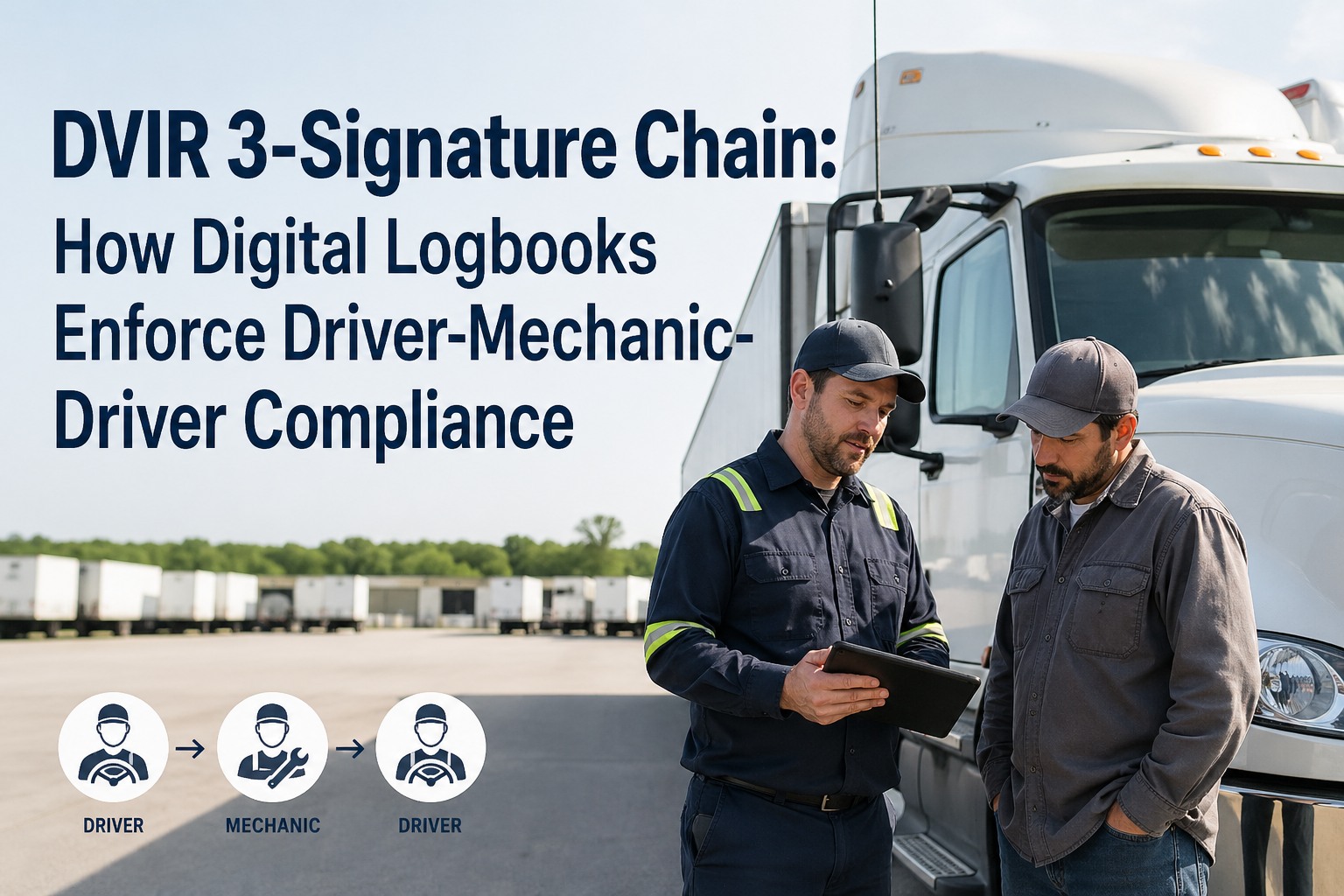
When a driver reports a defect: carrier must acknowledge and schedule repair, mechanic must certify repair completion, driver must review and sign-off before next dispatch. This chain must be fully documented.
"Pencil whipping" (checking boxes without actual inspection), missing driver signatures, no repair certification, DVIRs not completed for every driver every day, and paper records that are illegible or lost.
05 Driver Qualification File Checklist (13 Required Documents)
DQF deficiencies account for nearly 12% of all FMCSA violations. Every motor carrier must maintain a complete DQF for each CDL driver, including owner-operators. Files must be accessible within 48 hours for remote audits and retained for 3 years after a driver leaves employment.
| # | Required Document | Update Frequency | Common Failure |
|---|---|---|---|
| 1 | Driver Application (with employment history) | Initial hire | Missing 10-year employment history |
| 2 | Previous Employer Safety Performance History | Initial (within 30 days) | Failure to contact all DOT employers |
| 3 | Motor Vehicle Record (MVR) | Annually | Expired or missing annual review |
| 4 | Annual Review of Driving Record | Every 12 months | No signed supervisor certification |
| 5 | Medical Examiner's Certificate (MEC) | Per certificate (up to 2 years) | Expired certificate on file |
| 6 | NRCME Registry Verification | Per physical exam | Using non-registered examiner |
| 7 | Valid CDL Copy (with endorsements) | Upon hire + changes | CDL doesn't match vehicle class |
| 8 | Road Test Certificate (or equivalent) | Initial hire | No documented road test |
| 9 | Drug & Alcohol Clearinghouse Queries | Pre-employment + annual | Missed annual limited query |
| 10 | Pre-Employment Drug Test Results | Initial hire | Driver started before results received |
| 11 | Random Drug/Alcohol Testing Records | Ongoing per schedule | Incomplete testing documentation |
| 12 | Violations & Corrective Action Records | As violations occur | No documented corrective action |
| 13 | Entry-Level Driver Training Certificate | Drivers after Feb 2022 | Missing ELDT certification |
Tracking 13 documents per driver across your entire fleet is where compliance breaks down. Book a demo to see how HVI automates expiration alerts, audit-ready reports, and centralized DQF management.
06 Maintenance Records Template (49 CFR 396.3)
Auditors expect a systematic maintenance program with clear documentation showing when each vehicle's next inspection, maintenance, or repair is due. Missing or disorganized records are cited under 396.3(a)(1) — one of the most common vehicle maintenance violations:
Unit number, VIN, year/make/model, license plate, fleet assignment
Every PM service with date, mileage, description of work, parts used, technician signature
All repairs with date, nature of defect, corrective action taken, parts replaced, completion certification
Current annual inspection certificate, inspector credentials, detailed inspection report, repair documentation
Every DVIR-reported defect linked to corresponding work order and repair certification (complete chain of documentation)
Clear tracking of upcoming PM dates, annual inspection expiration, tire rotation schedule, brake inspection intervals
07 Digital vs. Paper: Audit Trail Comparison
The shift from paper to digital documentation isn't just about convenience — it directly impacts your audit outcomes. Here's how the two approaches compare when auditors arrive:
| Audit Factor | Paper-Based | Digital (HVI Platform) |
|---|---|---|
| Document Retrieval | Hours to days to locate records across filing cabinets | Instant search by vehicle, driver, date, or defect type |
| DVIR Integrity | Handwritten, often illegible, easy to fabricate or backdate | Timestamped, GPS-tagged, photo-verified, tamper-evident |
| Defect-to-Repair Chain | Manual tracking with phone calls and sticky notes | Automatic work order generation with repair certification flow |
| Retention Compliance | Records lost, damaged, or accidentally destroyed | Cloud-stored with automatic retention scheduling |
| 48-Hour Access | Requires physical file location, shipping, or scanning | Instant export and email directly to auditors |
| Completeness | Missing signatures, incomplete fields, lost pages | Required fields prevent submission until complete |
| Audit Prep Time | 40+ hours scrambling when notice arrives | Always audit-ready — zero preparation needed |
Fleets using digital inspection platforms report 90% fewer documentation violations and 75% faster audit preparation. Sign up for HVI to make your fleet permanently audit-ready.
08 Frequently Asked Questions
Audits are triggered by poor CSA Safety Measurement System scores, high crash rates, high-profile accidents, citizen complaints, or random selection. In 2025-2026, FMCSA is increasingly using focused audits that target specific compliance areas where data shows problems — making it harder to pass because auditors arrive already knowing your weak spots.
Three possible ratings: Satisfactory (you met minimum requirements and can operate normally), Conditional (you have compliance problems that must be fixed — this is a red flag for brokers, shippers, and insurers), and Unsatisfactory (operations must cease until corrective action is filed and rating is upgraded). About 20% of compliance reviews result in conditional or unsatisfactory ratings.
DOT violations typically remain on a driver's or carrier's record for 3-5 years. Under the updated SMS methodology, FMCSA now considers violations from the past 24 months (though only 12 months will count under the newer methodology being phased in). CSA scores update monthly based on this rolling window.
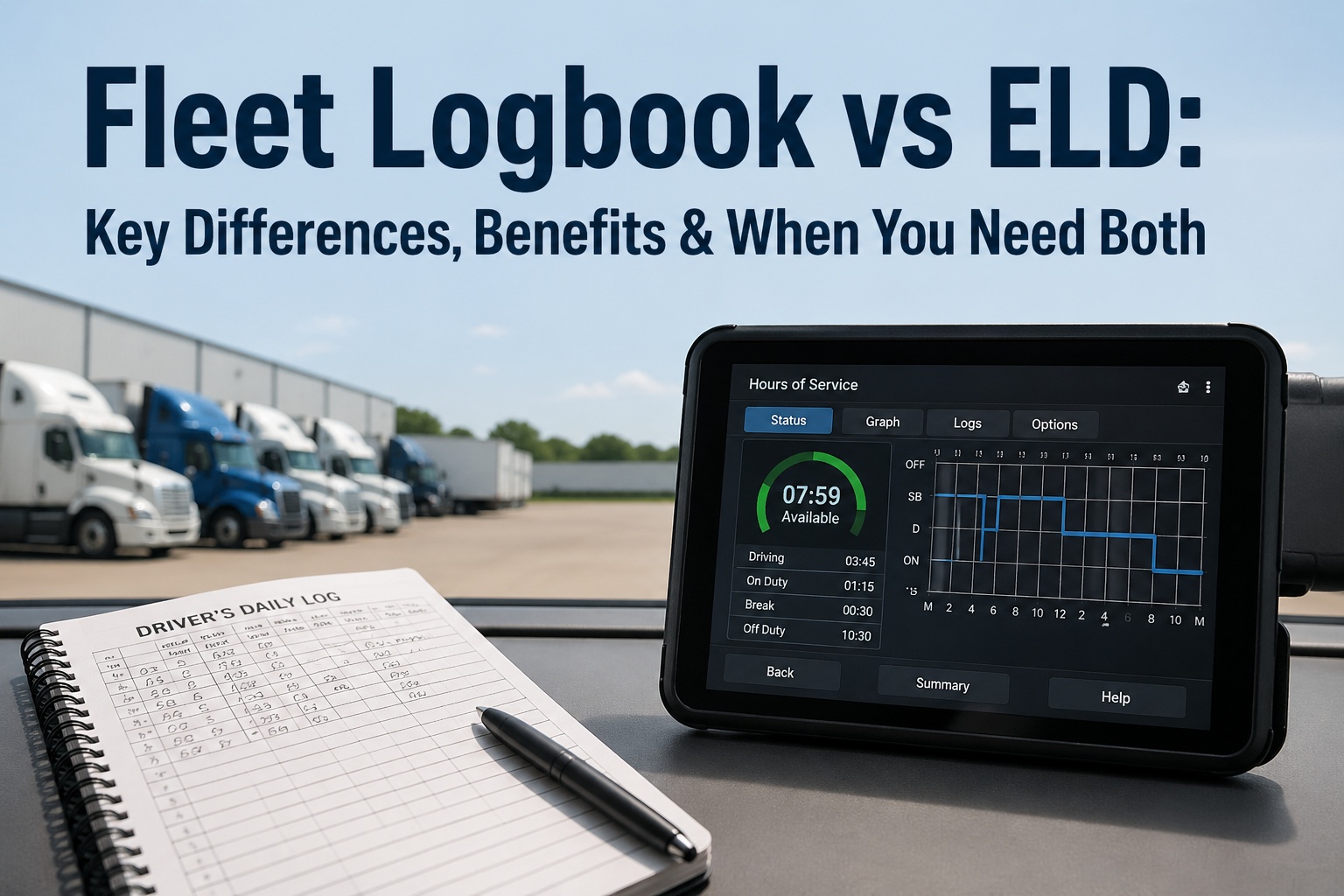
DVIRs must be retained for a minimum of 3 months per 49 CFR 396.11. However, best practice is to retain them for at least 12 months since CSA scores consider violations from the past 24 months. Driver qualification files must be maintained for 3 years after a driver leaves. ELD records of duty status must be retained for 6 months.
In the 2025 CVSA International Roadcheck, 22.6% of inspected vehicles were placed out of service. Brake systems were the number one reason (24.4% of all vehicle OOS orders), followed by tire/wheel issues and lighting defects. On the driver side, hours-of-service violations and expired medical certificates are the most common OOS triggers. All of these are items covered in the 37-point inspection checklist above.
Yes. FMCSA accepts digital DVIRs as long as they meet all requirements of 49 CFR 396.11 and 396.13 — including driver identification, vehicle identification, condition reporting, defect descriptions, and driver certification signatures. Digital platforms like HVI actually exceed paper requirements by adding GPS timestamps, photo verification, and tamper-evident audit trails.
Build an Audit-Proof Fleet — Starting Today
The 94% audit failure rate isn't about safety culture — it's about documentation gaps. Every violation in the top 5 list is preventable with the right systems. HVI was built specifically for heavy fleet compliance: FMCSA-compliant digital DVIRs, photo-verified inspections, automated defect-to-work-order workflows, and instant audit-ready reporting that eliminates the documentation failures auditors look for first.
Join the 6% of Fleets That Pass Clean Audits
Digitize your inspection documentation, automate compliance tracking, and eliminate the documentation gaps that account for 94% of audit violations.
No credit card required • No hardware needed • Operational in under 10 minutes