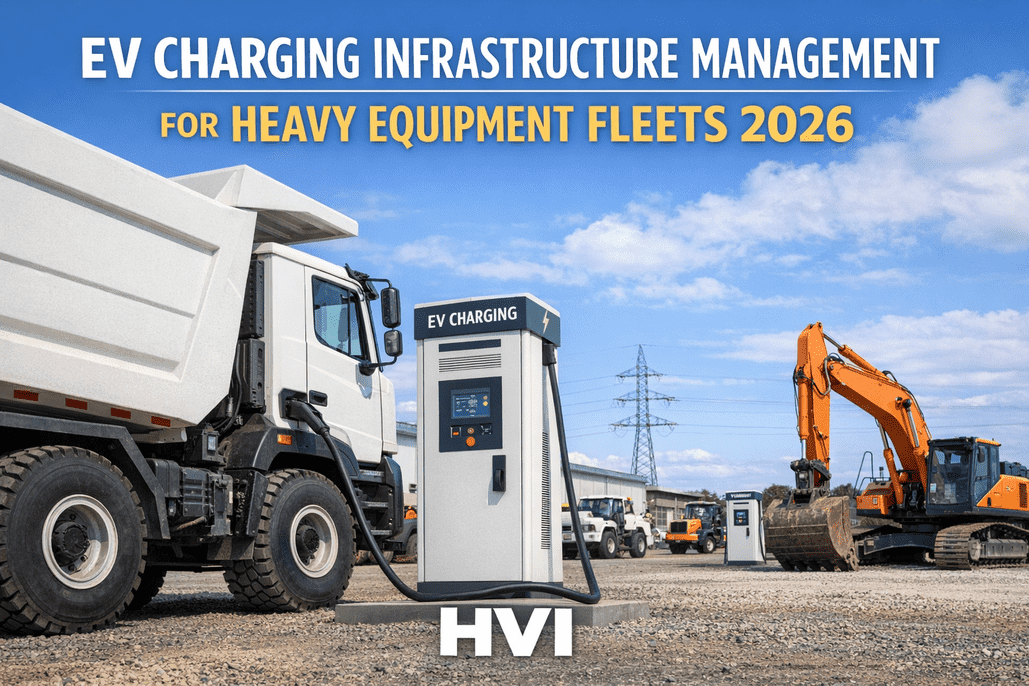
The machine is ready. The operator is ready. But the battery is at 12% because nobody managed the charging schedule overnight. This is the new failure mode for electric heavy equipment — and it is entirely an infrastructure and planning problem, not a machine problem. Heavy equipment batteries range from 200-600+ kWh, drawing power equivalent to an entire big-box store when charging. Unmanaged charging creates demand charge spikes that can double electricity costs, while inadequate grid capacity means chargers simply cannot deliver the power needed during peak operations. Fleets using smart charging management report up to 40% reduction in electricity costs and 38% improvement in charger utilization. The DOE invested $68 million in SuperTruck Charge in January 2025 specifically to solve heavy-duty charging infrastructure — signaling that this is the #1 barrier to fleet electrification, not the machines themselves. This guide covers depot vs on-site charging for construction, grid capacity planning, scheduling optimization, cost analysis, and how to integrate charging data into your fleet maintenance workflow. Book a demo to see how HVI integrates charging and battery data with fleet maintenance, or start your free trial.
Depot Planning, Grid Capacity, Schedule Optimization, Cost Analysis & Maintenance Integration
Why Charging Infrastructure Is Critical for EV Heavy Fleets
A single electric excavator or truck battery (200-600+ kWh) draws the same power as an entire big-box retail store during charging. Scale that to 10-50 machines at a depot and you need megawatts of capacity — more than most commercial sites have available without major grid upgrades. This is not a "plug it in and forget it" situation.
Without smart scheduling, every machine charges the moment it plugs in — creating a demand spike that triggers utility demand charges. Demand charges can account for 50-70% of a commercial electricity bill. Smart charging management that staggers loads and charges during off-peak hours reduces electricity costs by up to 40%.
Grid upgrades, utility coordination, permitting, and electrical construction take 12-18 months from planning to energization. If you wait until your first EV arrives to start infrastructure planning, you will have expensive machines sitting idle for a year or more. Start planning 12-18 months before your first electric machine delivery.
Unlike depot-based trucking fleets, construction equipment moves between job sites. On-site charging requires portable or mobile solutions, generator backup, and site-by-site electrical assessments. The depot-vs-site charging decision fundamentally shapes your infrastructure strategy and cost structure.
Depot Charging vs On-Site Charging for Construction
Grid Capacity Planning for Heavy Equipment Chargers
Sum the simultaneous charging load for your planned EV fleet. Each DC fast charger draws 50-350 kW. Level 2 chargers draw 7-19 kW each. 10 machines on DC fast chargers simultaneously = 500 kW to 3.5 MW. You likely will not charge all machines at once — diversity factor (typically 0.6-0.8) reduces the peak, but utilities plan for worst-case scenarios.
Contact your utility before ordering equipment. Request a load study to determine if your site can support the planned demand. If transformer or feeder upgrades are needed, utility-side work takes 6-18 months. Many utilities offer "make-ready" programs that cover a portion of electrical infrastructure costs — ask before paying for everything yourself.
Install conduit capacity for your 5-year fleet plan, not just today's needs. Running conduit during initial construction costs a fraction of re-excavating later. A 4-inch conduit today costs marginally more than a 2-inch — but re-trenching to add capacity later costs 5-10x as much. This is the single most common infrastructure mistake.
Battery energy storage systems (BESS) buffer peak charging loads — drawing from the grid during off-peak hours and releasing during peak charging windows. This reduces demand charges by 30-50%, provides grid resilience during outages, and enables solar integration. Multi-technology depot campuses (EV charging + solar + BESS) deliver the strongest long-term ROI.
Electric construction equipment market is growing at 20.7% CAGR. Your 5-machine pilot today may be a 30-machine fleet in 3 years. Electrical panel capacity, transformer sizing, and conduit routing should accommodate your growth plan — not just current needs. Phased infrastructure deployment reduces upfront cost while preserving scalability.
Charging Schedule Optimization to Maximize Uptime
Electricity costs 2-5x more during peak hours (typically 4-9 PM) than off-peak (typically 10 PM - 6 AM). Smart charging software automatically schedules charging to off-peak windows, reducing per-kWh cost by 40-60%. For a fleet consuming 500+ kWh/day, this translates to thousands of dollars monthly in savings.
Utilities charge a monthly fee based on your highest 15-minute power draw — even if it only happened once. Smart charging staggers machine connections to avoid simultaneous peak loads. Instead of 10 machines at 150 kW each (1.5 MW spike), the system sequences them: 3 machines charge, finish, then the next 3 start. Same total energy, fraction of the demand charge.
Not all machines need 100% charge every morning. A mini excavator running 4-hour shifts on a 30-kWh battery needs less charge than a 20-tonne excavator running 8 hours on a 300-kWh battery. Smart scheduling prioritizes machines by next-day dispatch schedule, ensuring the machines needed first are charged first — and the rest charge during cheaper windows.
Construction equipment has natural idle periods — lunch breaks, concrete curing, material delivery waits. DC fast chargers (150-350 kW) can add 2-4 hours of operation in a 30-45 minute charge window. Planning opportunity charging into the work schedule extends effective range without requiring larger (more expensive) batteries.
Cost Analysis: Charging Infrastructure ROI
Charging Data Integration with Fleet Maintenance
Charging data is maintenance data. Battery charge cycles, temperature during charging, charge/discharge patterns, and energy consumption per machine are all health indicators that predict failures and optimize asset utilization. Keeping charging data in a silo — separate from inspections and work orders — wastes its value.
Track state of charge (SOC), state of health (SOH), charge cycles, and charging temperature over time. Declining SOH triggers proactive maintenance scheduling before the battery fails on-site. Integrate battery data into the same dashboard as hydraulic, undercarriage, and engine health.
When scheduling equipment for tomorrow's work, the system checks current SOC and charging schedule to confirm each machine will be ready. If a machine cannot reach sufficient charge by dispatch time, the system flags it and suggests alternatives — preventing the "12% battery at 6 AM" scenario.
Track kWh consumed by each machine — combined with operational hours from daily inspections, this calculates true energy cost-per-hour for every asset. Compare across machines to identify efficiency outliers. Feed this data into total cost of ownership calculations for repair-vs-replace decisions.
If charging temperatures exceed normal ranges, the system generates an alert before the next shift — potentially catching thermal management issues or early thermal runaway indicators. This bridges the gap between daily pre-shift inspections and real-time monitoring.
A broken charger is the same as a broken fuel pump — it takes machines out of operation. Track charger uptime, maintenance needs, and utilization rates alongside your equipment fleet. Schedule charger PM (firmware updates, connector cleaning, electrical checks) just like equipment PM.
Generate fleet reports that combine diesel and electric equipment — utilization, maintenance costs, energy/fuel costs, inspection compliance — in one dashboard. As your fleet transitions from mixed to fully electric, a single platform prevents the data fragmentation that comes from running separate systems for ICE and EV machines.
Implementation Guide for Fleet Operators
Which machines are you electrifying first? When do deliveries arrive? Work backward from delivery dates — infrastructure must be energized and tested before machines arrive. A 12-18 month planning horizon is standard for permanent depot installations.
Engage a licensed electrical contractor and your utility to assess existing site capacity. Determine: current available power, transformer capacity, panel space, and distance from utility feed to planned charger locations. This assessment reveals the true cost of infrastructure — before you commit to machine purchases.
Install infrastructure for your pilot fleet (3-5 machines) but size conduit, transformer, and panel for your 5-year plan. The marginal cost of oversizing at construction time is 10-20% — the cost of retrofitting later is 5-10x. Include provisions for solar and battery storage even if you do not install them immediately.
Do not treat charging management as a future upgrade. Even with 3-5 machines, smart scheduling establishes the operational patterns, data collection, and cost optimization that scale with your fleet. Choose a platform that integrates with your fleet maintenance system — or use a maintenance platform like HVI that includes charging data integration natively.
Run your pilot for 6-12 months. Measure: actual energy consumption vs projections, charging utilization rates, demand charge impact, equipment uptime, and total cost of operation vs diesel equivalents. Use real data — not manufacturer projections — to justify and plan your next phase of electrification.
Frequently Asked Questions
Heavy equipment batteries range from 30 kWh (mini excavators) to 600+ kWh (large trucks and excavators). A DC fast charger at 150-350 kW draws the same power as a commercial building. A depot charging 10 machines simultaneously may require 1-3.5 MW of power — equivalent to a small industrial facility. This is why utility engagement and grid capacity assessment must happen 12-18 months before your first EV arrives.
Under-sizing conduit during initial construction. Running 2-inch conduit when your 5-year plan needs 4-inch saves a few hundred dollars today but costs $50,000-$100,000+ to re-excavate and re-run later. The second biggest mistake: starting utility conversations after ordering machines instead of 12-18 months before delivery. Grid upgrades have the longest lead time of any infrastructure component.
Demand charges are based on your highest 15-minute power draw in a billing period — even if it only happened once. Without smart charging, plugging in 10 machines simultaneously after a shift creates a massive demand spike that triggers charges accounting for 50-70% of the monthly electricity bill. Smart charging management that staggers loads and shifts charging to off-peak hours reduces total electricity costs by up to 40%. Battery energy storage can further buffer peaks, reducing demand charges by an additional 30-50%.
The incentive landscape shifted after the One Big Beautiful Bill Act (July 2025) ended many federal vehicle credits. However, several programs remain active: utility make-ready programs (often the largest incentive), state fleet electrification programs (California HVIP up to $60,000/truck, plus NY, CO, OR, WA programs), the 30C infrastructure credit (30% up to $100K — check current 2026 IRS guidance), NEVI corridor funding, and EV-specific utility rate structures. State and utility programs survived most federal changes — contact your utility and state energy office first.
Most depot operations should use a mix. Level 2 (7-19 kW) for overnight charging — lowest cost per kWh, gentlest on batteries, sufficient for equipment returning to depot daily. DC fast (50-350 kW) for rapid turnaround — when a machine needs to go back to work within 1-2 hours, or for opportunity charging during breaks. The ratio depends on your operations: if most machines return nightly, 80% Level 2 / 20% DC fast is typical. If you run multiple shifts, the DC fast ratio increases.
HVI treats charging infrastructure as part of your fleet ecosystem — not a separate silo. Battery SOC and SOH data feeds into dispatch-readiness checks. Charging temperatures are compared against normal ranges, generating alerts for thermal anomalies. Energy consumption per machine is tracked alongside operational hours from daily inspections to calculate true cost-per-hour. Charger uptime and maintenance are tracked alongside equipment PM. The result: one platform for your mixed diesel + electric fleet, from pre-shift inspections through charging management to work order completion.
Plan Your Charging Infrastructure — With Maintenance Integration from Day One
HVI manages your mixed fleet — diesel and electric — with unified inspections, battery health monitoring, charging data integration, and maintenance workflows. One platform from pre-shift check to work order completion.
No credit card • No hardware • Diesel + Electric in one system