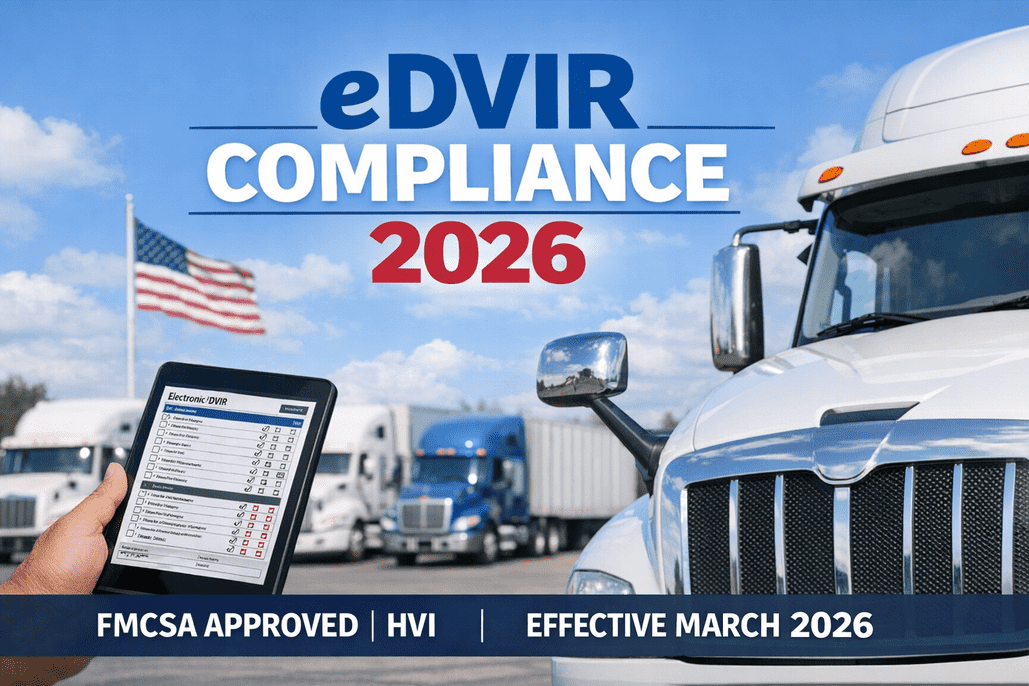
On February 19, 2026, FMCSA published a final rule that changed everything for fleet inspections. Docket FMCSA-2025-0115 explicitly authorizes electronic Driver Vehicle Inspection Reports — removing every last shred of ambiguity about whether digital DVIRs are legal. Effective March 23, 2026, the language in 49 CFR 396.11 and 396.13 now clearly states that DVIRs may be completed, signed, and stored electronically. The American Trucking Associations, Owner-Operator Independent Drivers Association, and National Tank Truck Carriers all supported this rulemaking. FMCSA specifically noted that electronic DVIRs encourage cost-saving methods and streamlined compliance — especially when integrated with ELD platforms. Yet the enforcement reality is stark: only 7% of motor carriers pass a DOT audit without a single violation. FMCSA estimates DVIRs prevent approximately 14,000 accidents annually through early defect identification. A fleet of 50 trucks with systematic DVIR failures could face $63,500+ in fines from a single audit. Paper DVIRs achieve 73% audit pass rates. Digital DVIRs achieve 96%. The gap is not about technology preference — it is about documentation completeness, defect routing speed, and audit accessibility. This page explains what the eDVIR rule actually changes, how paper and digital compare on every metric that matters, what HVI's eDVIR platform does, and why fleets that have not yet transitioned are running out of time. See how eDVIR works — free 15-min walkthrough, or start your free trial.
Electronic Driver Vehicle Inspection Reports are now explicitly, unambiguously federally authorized. Paper is not illegal — but it is losing.
What Is eDVIR? The Rule Change Explained
eDVIR stands for Electronic Driver Vehicle Inspection Report — the same federally mandated post-trip (and sometimes pre-trip) inspection, completed on a phone or tablet instead of a clipboard.
FMCSA Docket FMCSA-2025-0115, published February 19, 2026, adds explicit language to 49 CFR 396.11 and 396.13 confirming that DVIRs may be created, signed, maintained, and transmitted electronically. While electronic DVIRs were technically permitted since 2018 under 49 CFR 390.32, many carriers and enforcement officers interpreted the regulations' paper-centric language as ambiguous. That ambiguity is now gone.
What the rule does NOT do: It does not mandate eDVIRs. Paper remains legal. It does not reinstate no-defect DVIR requirements (even though eDVIRs make them faster). It does not change what must be inspected — the 11-item minimum inspection list is unchanged. What it does is remove every regulatory objection to going digital.
Paper vs Digital: The Complete Comparison
HVI eDVIR Features
iOS, Android, and tablet. Operators complete inspections in the field — guided prompts, required fields, and equipment-specific templates. No special hardware. No training manuals. If your driver can use a phone, they can use HVI.
Complete inspections, attach photos, and submit — all without cell signal. Data syncs automatically when connectivity returns. GPS timestamps captured at inspection time, not sync time. Built for truck stops, construction sites, and remote yards where signal is zero.
Every inspection is stamped with exact date, time, and GPS coordinates — automatically. Proves when and where the inspection happened. Cannot be backdated or fabricated. This is exactly what DOT auditors and roadside inspectors look for.
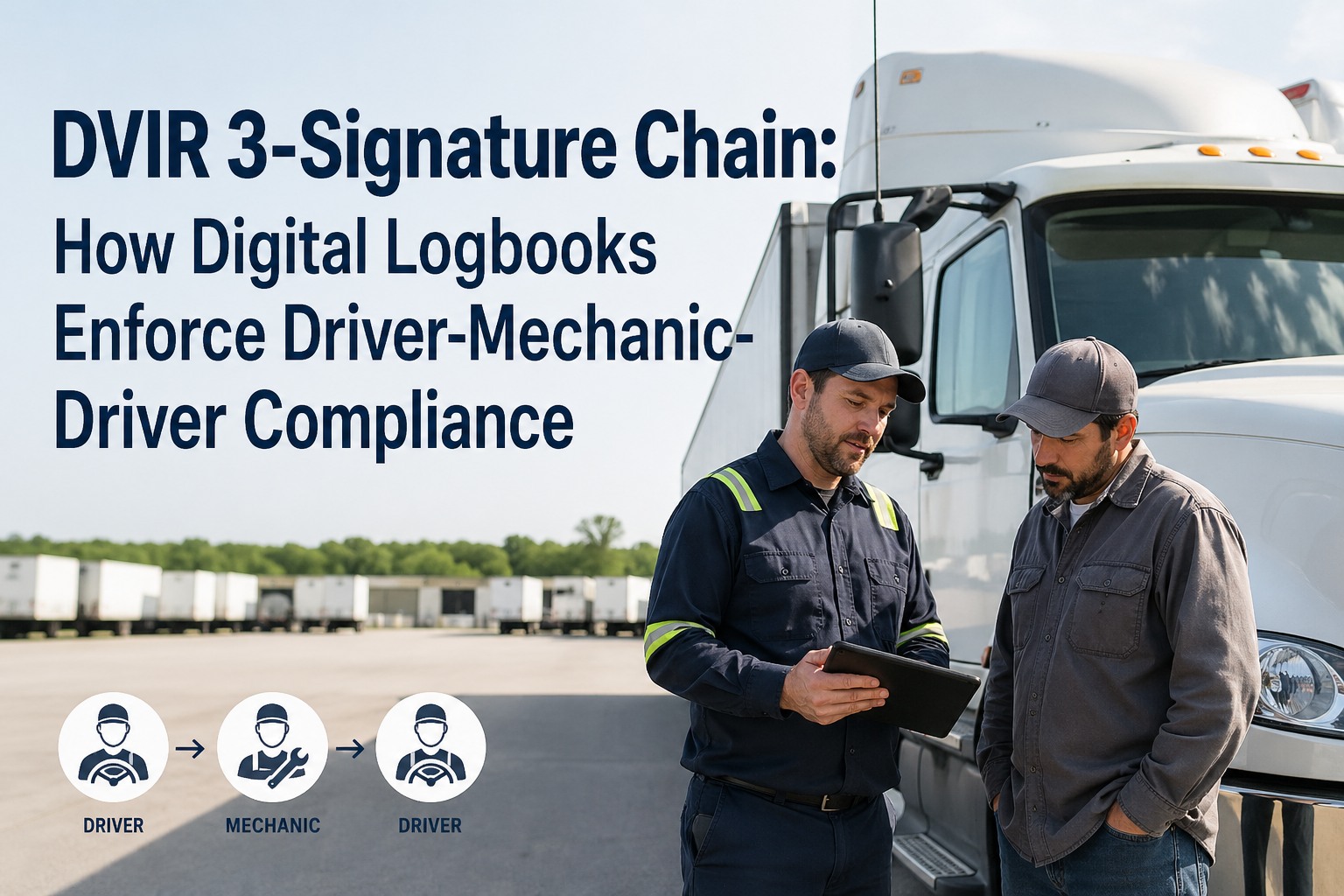
Driver signs the eDVIR on-screen. Mechanic signs repair certification digitally. Both signatures are timestamped and linked to the inspection record. FMCSA's 2026 rule explicitly confirms: no wet ink required. Digital signatures are fully compliant.
Every action is logged: who inspected, when, what was found, photos attached, who was notified, when the repair was completed, who signed off. Produce any vehicle's complete inspection history in seconds — sorted, filtered, and exportable as PDF. The 96% audit pass rate comes from this.
Driver flags a defect — photo + severity attached — maintenance team notified instantly — work order auto-generated — vehicle held from dispatch until repair is certified. Zero paper handoffs. Zero defects falling through cracks.
Compliance Timeline
The Numbers That Matter
What Fleet Managers Are Saying
— Fleet operations manager, 215-unit mining operation (Arizona)
Watch a 10-minute walkthrough of the complete eDVIR workflow: driver inspection, defect flagging, photo evidence, mechanic notification, repair certification, audit-ready report. No account needed. No sales pitch. Just the product.
Frequently Asked Questions
No — the rule clarifies that eDVIRs are explicitly authorized, not that paper is banned. Paper DVIRs remain legal. However, the regulatory direction is unmistakable: FMCSA is encouraging electronic methods, enforcement is increasingly data-driven, and auditors expect records to be instantly accessible. Fleets still using paper achieve 73% audit pass rates vs 96% for digital. The question is not whether eDVIRs are required — it is whether paper can keep up with modern enforcement expectations.
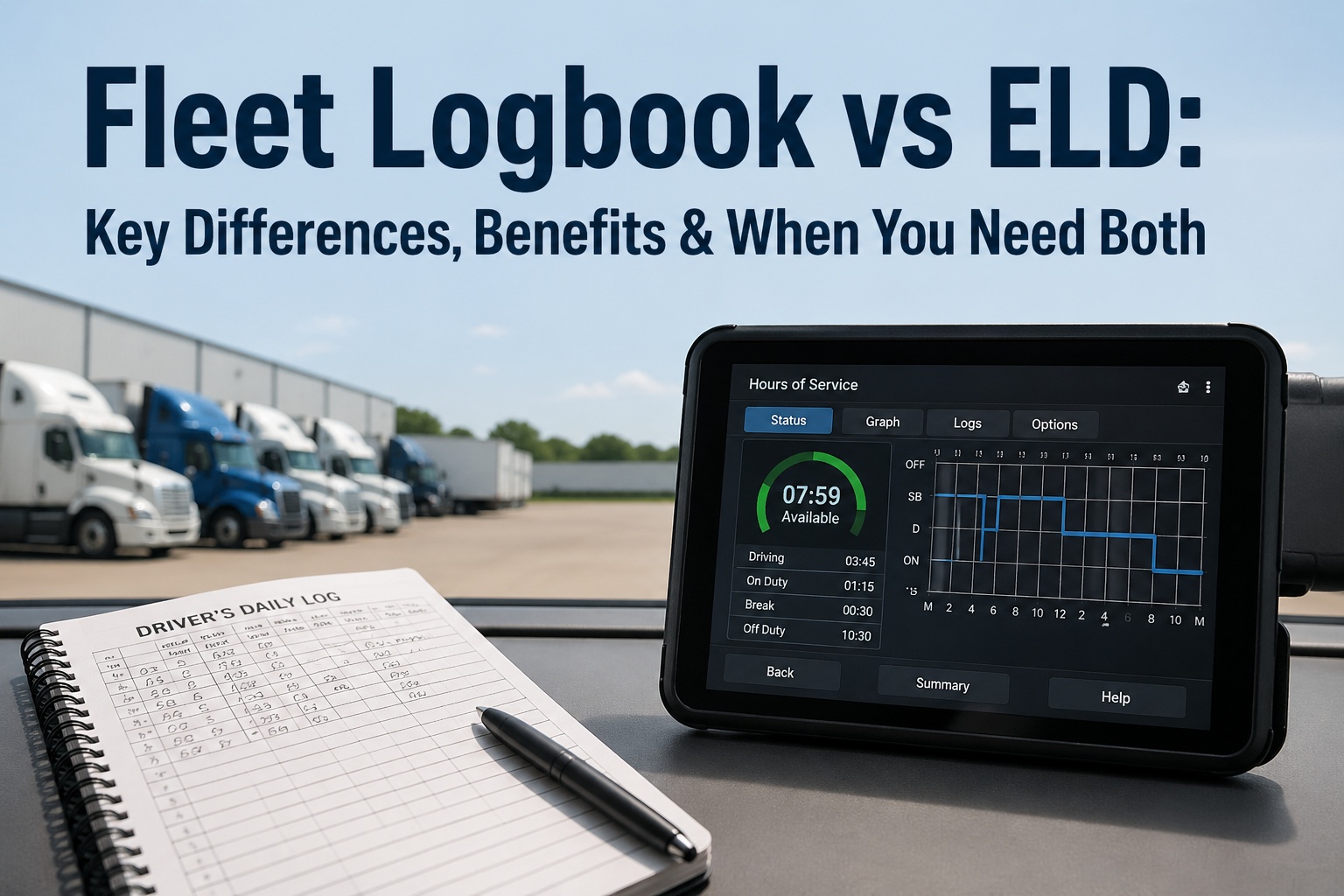
HVI operates alongside your existing ELD — it does not replace it. FMCSA specifically noted that streamlined compliance happens when DVIR and ELD systems connect. HVI handles the inspection, defect routing, and maintenance documentation side; your ELD handles hours-of-service logging. The combination creates a complete compliance picture: HOS data + inspection data + maintenance records in a unified audit-ready system.
Yes — HVI works on any iOS or Android phone or tablet. No special hardware required. Full offline capability for areas with no cell signal. The app guides drivers through the inspection with equipment-specific prompts, required photo capture for defects, and digital signature. Data syncs automatically when connectivity returns. GPS and time stamps are captured at the moment of inspection, not at sync time.
FMCSA requires DVIR records to be retained for a minimum of 3 months per 49 CFR 396.11. HVI stores records indefinitely in the cloud — far exceeding the minimum requirement. Records are accessible instantly during audits, searchable by vehicle, driver, date, or defect type, and exportable as PDF. You will never need to search a filing cabinet again.
Yes — this is the core purpose. Every eDVIR contains the driver name and signature, vehicle ID, date and time (server-verified), GPS location, all items inspected, defect descriptions with photos, mechanic sign-off, and repair documentation. This exceeds what FMCSA requires under 396.11 and 396.13. Reports can be produced in seconds during roadside inspections or formal audits. The 96% audit pass rate is a direct result of this documentation completeness.
Most fleets complete the transition in 2-4 weeks. Day 1: admin setup, vehicle database import, template configuration. Week 1: drivers begin using the app with guided prompts (average learning curve: under 15 minutes per driver). Week 2-3: defect routing and work order workflows established. Week 4: full deployment with analytics and compliance reporting active. No hardware to install. No consulting fees. No multi-month implementation. The fastest fleets go live on Day 1.
Download the free eDVIR Readiness Checklist — a 1-page PDF that scores your current DVIR process against the new 2026 standard. No signup required.
No credit card • No hardware • Setup in 10 minutes • FMCSA 2026 compliant