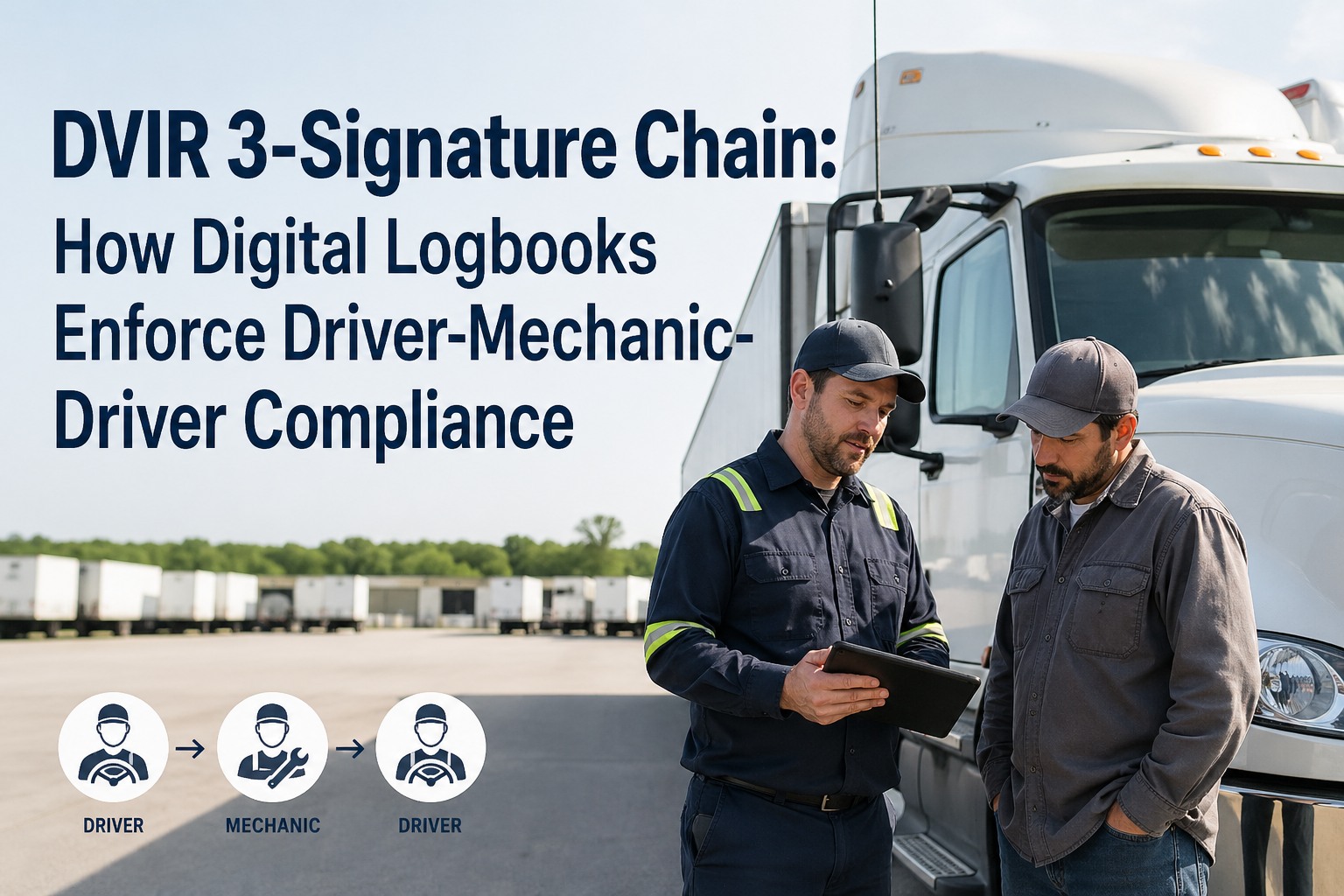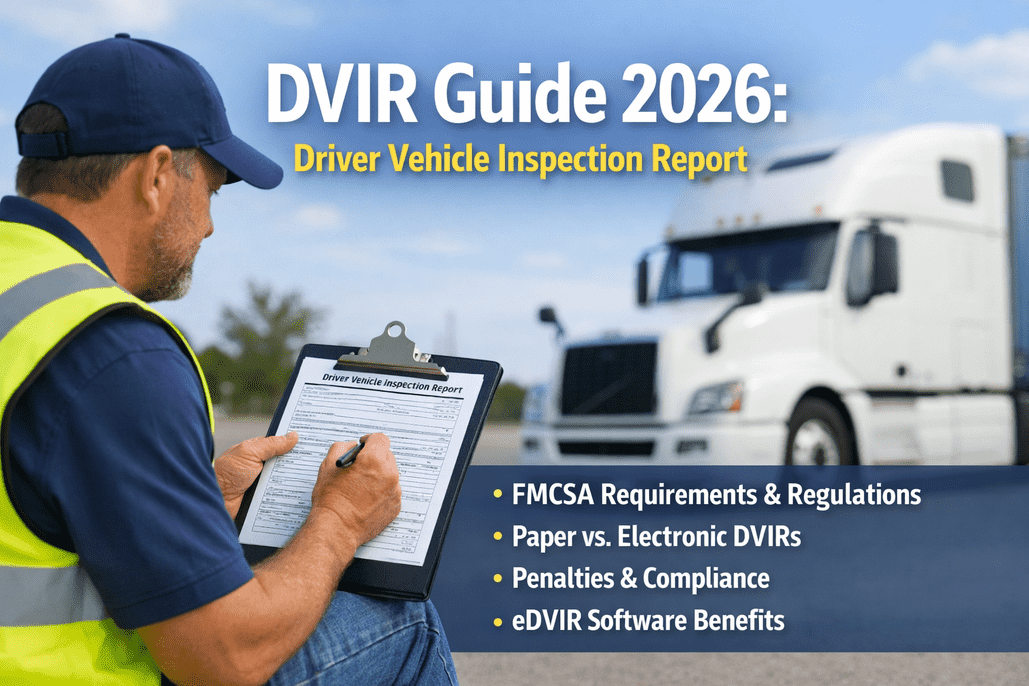
A DVIR — Driver Vehicle Inspection Report — is the federally mandated document that creates a chain of accountability between the driver who finds a defect, the carrier who repairs it, and the next driver who confirms the repair before operating the vehicle. Governed by 49 CFR 396.11 and 396.13, DVIRs are among the most frequently cited violations during DOT audits, with fines ranging from $1,270 to over $16,000 per occurrence. FMCSA estimates that proper DVIRs prevent approximately 14,000 accidents every year through early defect identification — yet only 7% of motor carriers pass a focused compliance review without a single violation. On February 19, 2026, FMCSA published a landmark final rule explicitly authorizing electronic DVIRs (eDVIRs), effective March 23, 2026 — removing any remaining ambiguity about digital inspection reports. This guide covers everything drivers and fleet managers need to know: requirements, the 11-item inspection checklist, penalties, the paper-to-digital transition, and how to stay audit-ready. Start your free HVI trial to digitize your DVIR workflow today, or book a demo to see eDVIR compliance in action.
FMCSA Requirements, Penalties, Electronic DVIRs & How eDVIR Software Saves Time and Money
Breaking: FMCSA Electronic DVIR Final Rule (February 2026)
FMCSA published final rule (Docket FMCSA-2025-0115) explicitly adding eDVIR language to 49 CFR 396.11 and 396.13. While electronic DVIRs were already permitted under 49 CFR 390.32 since 2018, this rule removes all ambiguity. The American Trucking Associations, Owner-Operator Independent Drivers Association, and National Tank Truck Carriers all supported the rulemaking.
Published: Federal Register Vol. 91, No. 33 — February 19, 2026The explicit eDVIR authorization is intended to encourage motor carriers still using paper to switch to electronic, cost-saving methods. FMCSA confirmed it will NOT reinstate no-defect DVIR requirements — even with eDVIRs making them faster to complete. Petitions for reconsideration must be filed by March 23, 2026.
Effective: March 23, 20261. What Is a DVIR? (Driver Vehicle Inspection Report Explained)
A DVIR is a formal inspection report that documents the condition of a commercial motor vehicle (CMV) at the end of each workday. Required under FMCSA regulation 49 CFR 396.11, the DVIR creates a legally binding chain of accountability that auditors and plaintiff attorneys examine closely:
2. The 11-Item FMCSA DVIR Inspection Checklist
49 CFR 396.11 specifies the minimum components that must be covered in every DVIR. These were harmonized with the pre-trip inspection list in 2014, meaning the same 11 categories apply to both. Your DVIR form — whether paper or digital — must address each of these areas:
3. DVIR Regulations: The Two Rules You Must Know
Two distinct federal regulations govern DVIRs. Understanding the difference between them prevents the most common compliance gaps that lead to audit failures:
4. DVIR Violation Penalties & Fines (2025-2026 Schedule)
DVIR violations carry serious financial and operational consequences. FMCSA updated civil penalty amounts in December 2024, and enforcement has intensified — offsite audits increased 400% in recent years, with carriers sometimes receiving as little as 48 hours notice to produce records digitally.
5. Paper DVIR vs. Electronic DVIR (eDVIR): Complete Comparison
With FMCSA's March 2026 final rule making electronic DVIRs explicitly authorized, the transition from paper to digital is now unambiguous. Here is how the two approaches compare:
Switch to eDVIR with HVI — Fully FMCSA Compliant
HVI digitizes your entire DVIR workflow: customizable pre-trip and post-trip checklists covering all 11 FMCSA components plus your company-specific items. Drivers complete inspections on their phone in under 5 minutes with photo capture, GPS tagging, and electronic signatures. Defects trigger instant notifications and auto-generated work orders. Mechanics certify repairs digitally. The next driver reviews and signs — completing the full FMCSA custody chain electronically.
6. Top DVIR Compliance Mistakes That Trigger Audit Failures
The carrier must sign/certify that reported defects were repaired or deemed unnecessary BEFORE the vehicle is dispatched again. Missing this step means both the carrier AND the next driver are in violation.
Under 396.13, the next driver must review the most recent DVIR and sign it before operating. Skipping this breaks the FMCSA custody chain and is a separate citable violation.
Marking all items as "pass" without actually inspecting constitutes falsification — a serious violation that can result in fines up to $16,000+ per incident and criminal penalties.
Motor carriers must keep every DVIR for at least 90 days. During audits, FMCSA may request records with as little as 48 hours notice. Missing records equal automatic violations.
Pre-trip inspection (392.7) and post-trip DVIR (396.11) serve different purposes. Pre-trip confirms the vehicle is safe before driving. DVIR documents condition at end of day. Both are required.
Every DVIR must include unit number, VIN, license plate, or other unique identifier. DVIRs that cannot be matched to a specific vehicle are treated as non-compliant.
7. The Complete DVIR Workflow (Step-by-Step)
Driver inspects all 11 FMCSA components before operating. Reviews most recent DVIR if one exists. Signs to acknowledge repair status. Confirms vehicle is safe to operate.
Driver inspects vehicle again after all driving is complete. Documents any defects or deficiencies on the DVIR form. Signs and dates the report. If no defects found on property-carrying CMV, no DVIR required (but recommended).
Maintenance team receives DVIR (instantly with eDVIR). Repairs all reported defects. Mechanic or carrier official certifies repairs completed on the original DVIR. Vehicle cleared for next dispatch.
Next driver reviews the certified DVIR before operating. Signs to confirm they reviewed repair status. Completes their own pre-trip inspection. Full FMCSA custody chain is now documented.
Frequently Asked Questions
DVIR stands for Driver Vehicle Inspection Report. It is a federally mandated document under FMCSA regulation 49 CFR 396.11 that requires commercial motor vehicle drivers to inspect and report the condition of their vehicle at the end of each workday.
For property-carrying CMVs: only when defects are found (since 2014). For passenger-carrying CMVs: yes, every day regardless of defects. However, most compliance experts and many carriers require daily DVIRs as company policy — it creates better documentation and catches defects earlier.
Yes — electronic DVIRs have been permitted under 49 CFR 390.32 since 2018. On February 19, 2026, FMCSA published a final rule (effective March 23, 2026) adding explicit eDVIR language to 396.11 and 396.13, removing any remaining ambiguity. FMCSA actively encourages carriers to adopt electronic, cost-saving methods.
Motor carriers must retain DVIRs for a minimum of 3 months (90 days) from the date of the inspection. Annual inspection reports must be retained for 14 months. Many carriers keep DVIRs longer as best practice — digital storage makes this effortless.
The motor carrier is prohibited from dispatching the vehicle until defects affecting safe operation are repaired and certified on the original DVIR. Dispatching with unrepaired defects can result in fines up to $23,048 per occurrence and potential out-of-service orders for the carrier.
A pre-trip inspection (49 CFR 392.7) is performed before driving to confirm the vehicle is safe to operate. A DVIR (49 CFR 396.11) is completed at the end of the workday to document the vehicle's condition. Both cover the same 11 components (harmonized in 2014), but serve different regulatory purposes. The pre-trip is about confirming safety before you drive; the DVIR is about documenting condition after you drive.
Yes — per FMCSA guidance, a driver may sign the repair certification as an agent of the motor carrier if they are satisfied the repairs have been performed. This is common in owner-operator situations where the driver also serves as the carrier.
Go Digital Before March 23, 2026
FMCSA's new eDVIR rule is effective March 23, 2026. There has never been a better time to switch from paper to electronic DVIRs. HVI gives your drivers guided, photo-verified checklists, instant defect alerts, automated work orders, and complete audit-ready documentation — all from their phone.
No credit card • No hardware • Setup in under 10 minutes • FMCSA compliant