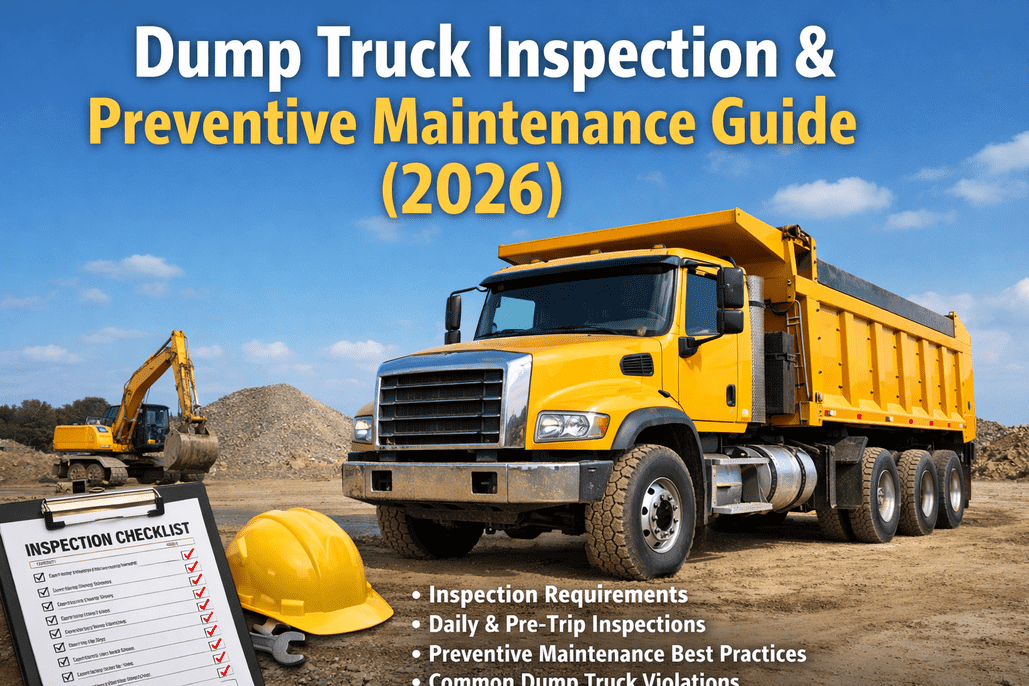
Dump trucks are the backbone of construction, mining, and aggregate operations - and among the most heavily regulated vehicles on the road. With DOT requiring annual inspections, FMCSA enforcing strict pre-trip requirements, and brake and tire violations topping roadside citations year after year, keeping your dump trucks compliant isn't optional. Add hydraulic systems that can sideline a truck for days when they fail, and you've got equipment that demands consistent, documented inspection and maintenance. This 2026 guide covers everything from federal inspection requirements to daily driver walkarounds to dump-specific PM tasks - so you can keep your trucks hauling instead of sitting in the shop or on the side of the road. Sign up for HVI to digitize your dump truck inspections, or schedule a demo to see how automated compliance tracking works.
Dump Truck Inspection Requirements
Dump trucks operating commercially fall under FMCSA regulations, which means mandatory inspection programs, documented maintenance, and driver qualification requirements. Understanding what's required - and what happens when you fail to comply - is the foundation of any fleet safety program.
Annual DOT Inspection
Requirement: Every commercial motor vehicle must pass a comprehensive inspection at least once every 12 months (49 CFR 396.17).
Who performs it: A qualified inspector meeting FMCSA requirements (49 CFR 396.19) - must understand inspection criteria and identify defective components.
Documentation: Proof of inspection must be kept on file AND in the vehicle at all times. Missing annual inspection documentation is the #2 most common vehicle violation cited.
Daily Pre-Trip Inspection
Requirement: Drivers must inspect their vehicle before each trip (49 CFR 392.7). This is the driver's responsibility - not the fleet manager's.
What's covered: Service brakes, parking brake, steering, lighting, tires, horn, windshield wipers, mirrors, coupling devices, wheels, and emergency equipment.
Documentation: Must be prepared and signed. Driver Vehicle Inspection Reports (DVIRs) required when defects are found.
Systematic Maintenance Program
Requirement: Motor carriers must have a systematic inspection, repair, and maintenance program for all vehicles (49 CFR 396.3).
What it means: You need documented procedures, schedules, and records. "We fix things when they break" is not a program - it's a violation waiting to happen.
Records: Must be retained for 1 year and include identifying info, date, nature of inspection/repair, and who performed the work.
CDL Requirements
Standard dump truck: Class B CDL required for single-unit vehicles with GVWR over 26,001 lbs.
With trailer: Class A CDL required if pulling a trailer with GVWR over 10,000 lbs.
2026 update: MC numbers eliminated - all vehicles now use USDOT numbers only. New SMS scoring splits Vehicle Maintenance into two categories.
FMCSA's Safety Measurement System now splits Vehicle Maintenance into two categories: standard "Vehicle Maintenance" for issues found during Level 1 inspections, and "Vehicle Maintenance: Driver Observed" for violations drivers should catch during pre-trip walkarounds. This means driver inspection quality directly impacts your carrier safety scores.
Daily and Pre-Trip Inspections
The pre-trip inspection is your first line of defense against breakdowns, violations, and accidents. For dump trucks, this means checking everything a standard CMV requires PLUS the hydraulic systems, PTO, and dump body that make these vehicles unique. A thorough inspection takes 15-20 minutes - time well spent compared to the cost of a roadside out-of-service order.
Engine Compartment
- Check engine oil level (cold)
- Check coolant level and condition
- Inspect belts for cracks/wear
- Check hoses for leaks/damage
- Verify transmission fluid level
- Inspect air filter indicator
- Check power steering fluid
- Look for any fluid leaks
Cab and Controls
- Test all gauges and warning lights
- Check mirrors adjustment/condition
- Test horn operation
- Test windshield wipers/washers
- Verify seatbelt condition
- Check fire extinguisher (charged, accessible)
- Verify emergency triangles present
- Test all PTO/dump controls
Brake System
- Check air pressure builds properly
- Test low air pressure warning
- Check parking brake holds
- Listen for audible air leaks
- Inspect brake drums/rotors visible
- Check brake adjustment (pushrod travel)
- Inspect brake lines and hoses
- Test service brake response
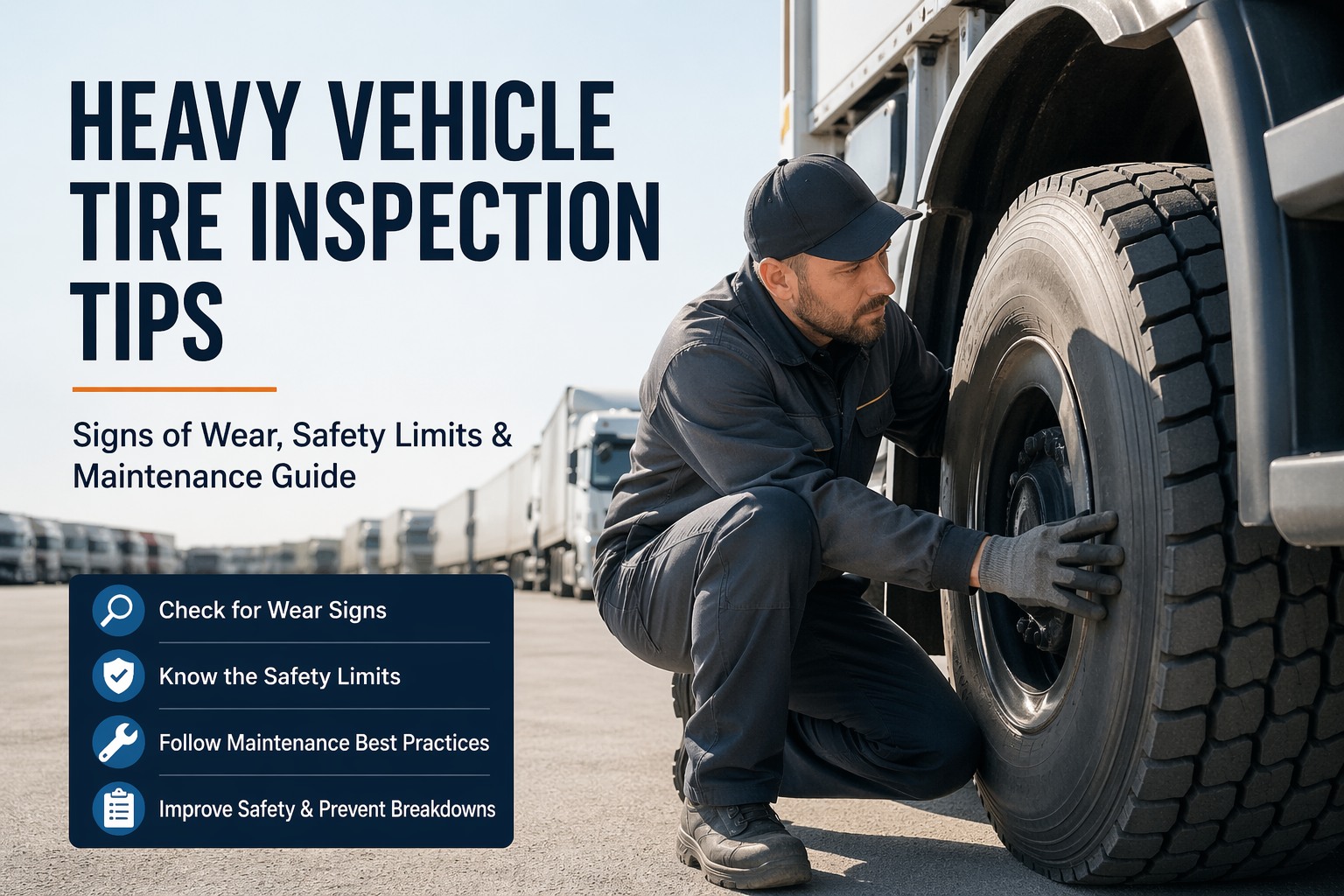
Tires and Wheels
- Check tire pressure (all positions)
- Inspect tread depth (4/32" minimum steer)
- Look for cuts, bulges, damage
- Check for proper inflation
- Verify lug nuts tight
- Inspect rims for cracks/damage
- Check valve stems and caps
- Look for mismatched tires
Lights and Reflectors
- Test headlights (high/low beam)
- Test brake lights
- Test turn signals (all sides)
- Check marker/clearance lights
- Verify hazard lights work
- Inspect all reflectors clean/present
- Test backup lights and alarm
- Check license plate light
Dump-Specific Systems
- Check hydraulic fluid level
- Inspect hydraulic lines for leaks
- Test PTO engagement
- Cycle dump bed (if safe/possible)
- Inspect dump body for damage/cracks
- Check tailgate operation and latches
- Verify bed prop/safety lock works
- Inspect cylinder rods for scoring
Preventive Maintenance Best Practices
Dump trucks face unique stresses: heavy loads, rough terrain, constant hydraulic cycling, and PTO wear. A PM program designed for these vehicles goes beyond standard truck maintenance to address the systems that keep the bed dumping and the material moving.
PTO and Hydraulic Maintenance: The Dump Truck Difference
Traditional PTOs require pump removal every 2-3 months to clean and re-grease mating shafts. Skip this, and you'll get "fretting" - metal particles destroying your pump connection. Newer wet-spline technology reduces this maintenance burden.
Contaminated hydraulic fluid causes 85% of pump failures. Regular fluid analysis catches problems early. Replace filters every 500-1000 hours and monitor fluid color/condition weekly.
Scored or damaged cylinder rods lead to seal failure and leaks. Inspect rods during every detailed service - catching a scratch early saves thousands in repairs.
Common Dump Truck Violations
Roadside inspections target the violations that cause crashes. For dump trucks, brake and tire issues top the list year after year - along with lighting problems that are completely preventable with proper pre-trip inspections. Understanding what inspectors look for helps you focus your maintenance efforts.
Digital Inspection Tools
Paper-based inspection programs worked when fleets were smaller and regulations simpler. In 2026, with SMS scoring, increased enforcement, and the need for real-time visibility, digital inspection tools aren't optional - they're how modern fleets stay compliant and competitive.
Dump truck-specific checklist guides inspection. Photo capture required for key items. Works offline at remote job sites.
Hydraulic leak found? System instantly notifies maintenance with photo, severity, and truck location.
No paper handoffs. Defect becomes tracked work order with vehicle ID, issue, photos, and history.
Every inspection, every repair, every PM service - searchable, auditable, ready for DOT review.
Why Construction Fleets Choose HVI for Dump Truck Inspections
Checklists built for dump trucks - hydraulics, PTO, dump body, plus all DOT requirements covered.
No more "looks good" checkboxes. Photos prove actual condition and create audit-ready records.
Job sites with no signal? Inspections complete anyway. Data syncs when connectivity returns.
PM due? Annual inspection expiring? Defect found? The right people know immediately.
Defects flow directly to work orders. No verbal reports forgotten, no paper lost in the cab.
Complete maintenance history for every truck. Prove your systematic program when auditors ask.
Frequently Asked Questions
Keep Your Dump Trucks Hauling - Not Parked
Every out-of-service order is lost revenue. Every missed PM is a breakdown waiting to happen. HVI gives you the digital inspection foundation that catches problems early, documents your compliance program, and keeps your trucks on the road where they belong.
No credit card required - No hardware needed - Setup in under 10 minutes