Tire violations caused 2,899 out-of-service orders during the 2025 CVSA International Roadcheck — accounting for 21.4% of all vehicle violations. Over the last five years, more than 456,000 tire-related DOT violations have been issued. Each out-of-service violation costs 8 CSA BASIC points, increases insurance premiums by 10-30%, and can trigger fines up to $19,277 per occurrence. None of these violations are exotic failures. They are bald tires, low pressure, exposed cord, sidewall damage — defects that a thorough pre-trip inspection catches every time. The problem is not that fleets do not inspect. The problem is that inspections are not documented, not consistent, and not traceable when an auditor or roadside inspector asks for proof. This guide covers every DOT and FMCSA tire regulation under 49 CFR 393.75, what inspectors actually look for, the difference between DOT minimums and CVSA out-of-service criteria, recapped and retreaded tire rules, and how HVI's digital inspection platform documents tire compliance automatically. Book a demo to see how HVI prevents tire violations, or start your free trial.
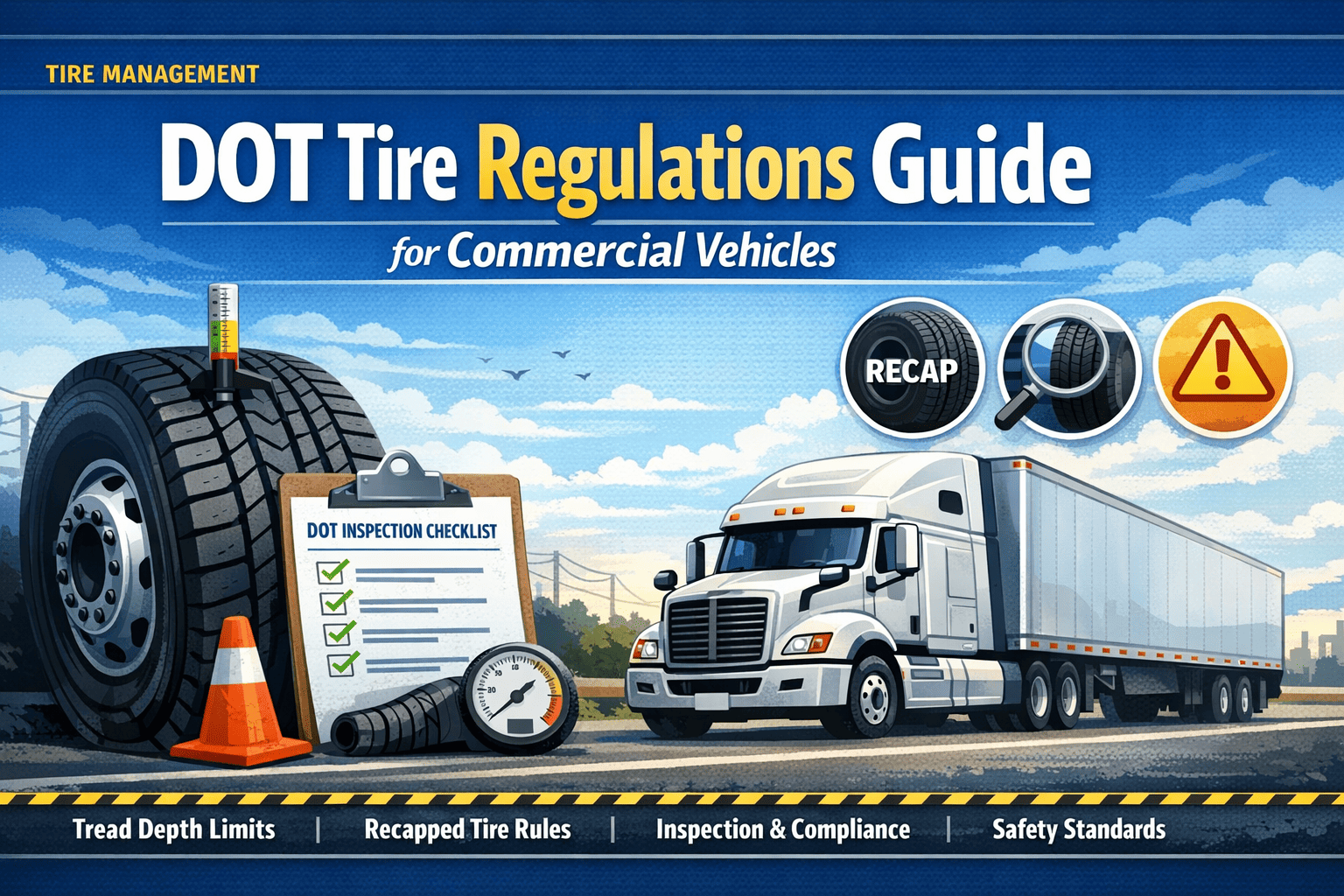
Every tread depth minimum, recapped tire rule, inflation requirement, and out-of-service criterion — plus how to document compliance digitally so your fleet passes every inspection.
Immediate Out-of-Service Conditions
Under 49 CFR 393.75, a commercial motor vehicle is immediately placed out of service — cannot move until the condition is fixed — if any tire has one of the following conditions:
Body ply or belt material visible through tread or sidewall. Any exposure = immediate OOS.
Any separation between tread and carcass, or sidewall delamination. Cannot be repaired — replace immediately.
393.75(a)(3) — the most common tire violation. Over 456,000 issued in the last 5 years. 8 CSA points each.
Any cut or damage deep enough to expose ply or belt material. Includes sidewall cuts and puncture damage.
CVSA criterion: tires inflated below 50% of maximum sidewall pressure are automatically out of service.
Tires labeled for off-highway use only, or speed-restricted tires operated above their rated limit per 393.75(f).
Tread Depth Requirements: DOT vs CVSA
DOT regulations set the minimum operational standard. CVSA out-of-service criteria are stricter — falling below CVSA thresholds during a roadside inspection means your vehicle cannot move. Smart fleets maintain tires well above both.
Measurements must be taken at any point in a major tread groove — not where tie bars, humps, or fillets are located. The lowest reading anywhere on the tire determines compliance.
Recapped, Retreaded & Regrooved Tire Rules
Retreaded and recapped tires are legal on most commercial vehicle positions — but not all. The rules depend on vehicle type and axle position. Getting this wrong is an instant violation.
What Inspectors Actually Check
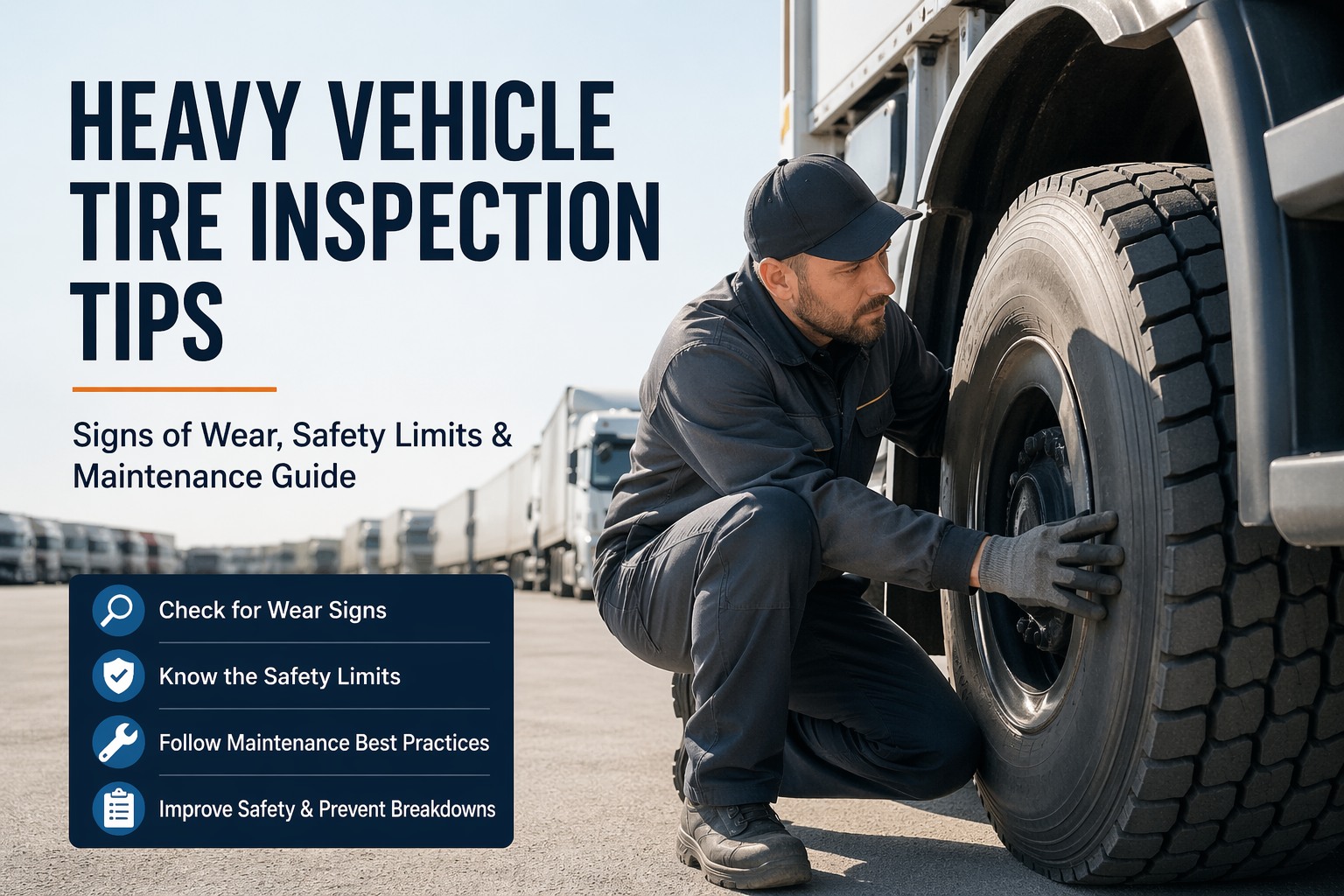
During a Level I or Level II roadside inspection, CVSA-certified inspectors evaluate every tire on the vehicle. Here is exactly what they check — and what triggers a violation:
Measured with a calibrated gauge in major tread grooves. Steer: 4/32" DOT minimum. Drive/trailer: 2/32". CVSA OOS thresholds are stricter (2/32" steer, 1/32" other). Measurement taken at the lowest point — not on wear indicators.
Must meet or exceed manufacturer spec for the load carried. Below 50% of maximum sidewall pressure = automatic OOS. DOT recommends weekly pressure checks with a dual-headed gauge. TPMS systems can monitor continuously.
Sidewall cuts, bulges, blisters, cracks, and puncture damage. Any bulge or blister = immediate replacement. Cuts exposing cord or ply = OOS. Excessive cracking indicates end-of-life regardless of remaining tread.
Per 393.75(g): no tire can carry weight exceeding the load rating marked on its sidewall. Each overloaded wheel end documented separately. Overloaded tires plus speed = catastrophic failure risk.
Inspectors verify retreaded or recapped tires are not in prohibited positions. Bus steers: no retreads/recaps/regrooving. Truck steers: no regrooved tires with load capacity ≥ 4,920 lbs.
Per 393.75(f): speed-restricted tires (55 mph or less per FMVSS No. 119) cannot exceed rated speed. "Not for Highway Use" tires cannot be on highway vehicles. Mismatched tires on dual assemblies are also flagged.
The True Cost of a Tire Violation
A tire violation is never just a fine. It is a cascade of costs that compounds across your entire operation.
Up to $19,277 for operating an OOS vehicle. Recordkeeping violations up to $1,584/day.
Each tire OOS violation adds 8 severity points. Multiplied by 3x time weight if within 6 months = 24 effective points.
Poor CSA scores increase premiums 10-30%. Some insurers refuse coverage for carriers with excessive violations.
Vehicle sidelined until repaired. Driver downtime. Missed loads. Shipper relationships damaged — 5 of 7 BASICs are public.
How HVI Prevents Tire Violations
Pre-trip and post-trip inspections include dedicated tire checkpoints: tread depth, inflation pressure, sidewall condition, and damage. Required fields prevent incomplete entries. Photos attached to every defect.
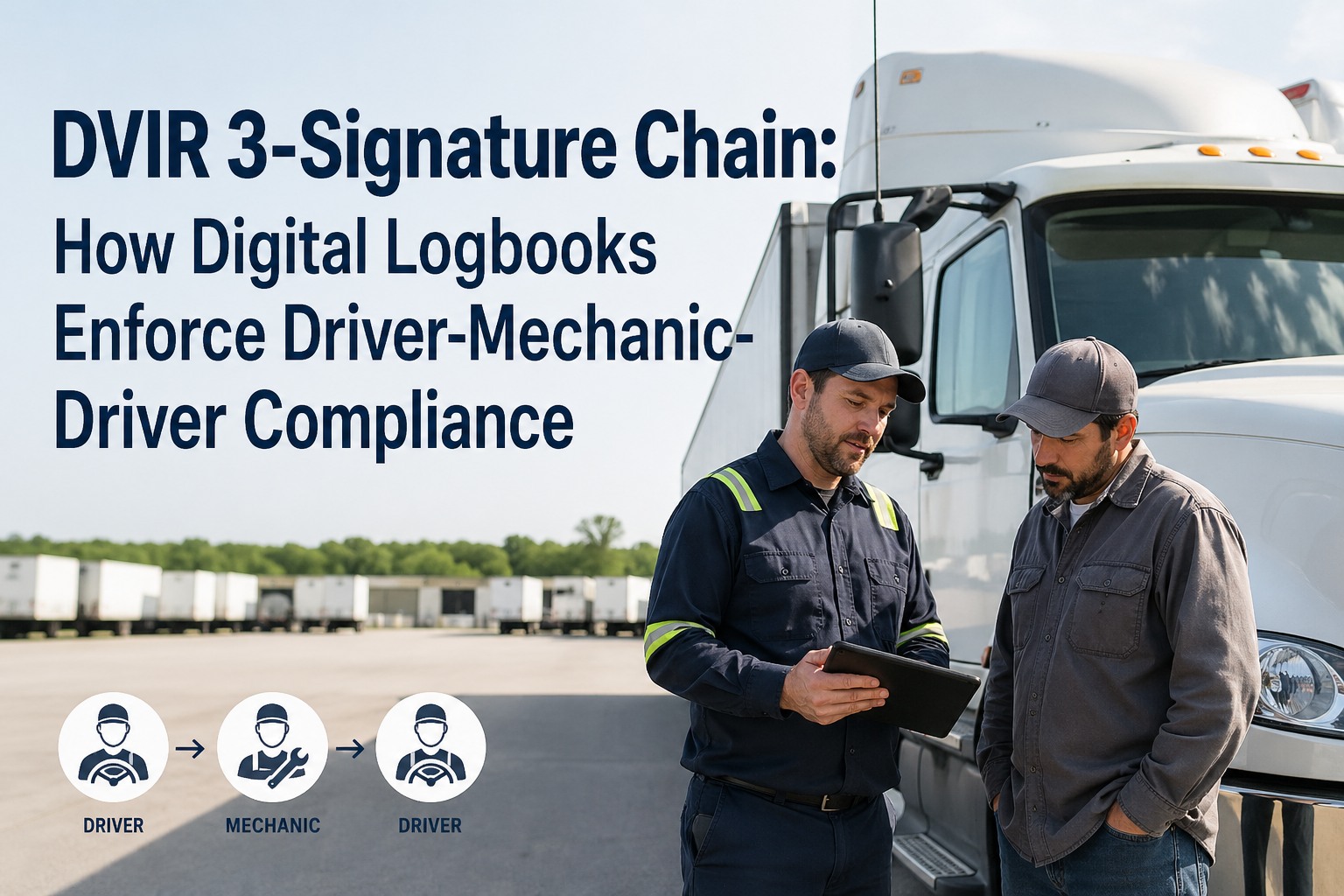
Driver flags tire defect during inspection → photo + severity auto-attached → maintenance notified instantly → work order generated → mechanic documents replacement with tire brand, DOT number, position → digital sign-off. One linked record. No paper gaps.
Log tread depth readings over time per tire position. HVI tracks wear rate and alerts when tires approach DOT minimums — before they become violations. Replace proactively, not reactively.
Fleet-wide tire compliance at a glance. Open tire defects, overdue tire replacements, approaching tread minimums, and inspection completion rates — all visible per vehicle. When FMCSA gives 48-hour notice, produce records in minutes.
Every inspection works without internet — built for yards, job sites, and remote locations. GPS confirms vehicle location. Server-side timestamps cannot be backdated. Audit trail shows who accessed or modified every record.
The 2026 "Driver Observed" BASIC split means tire defects a driver should have caught now create a separate, visible mark on your carrier profile. HVI's documented pre-trips prove your drivers inspect thoroughly — protecting your score.
Frequently Asked Questions
Under 49 CFR 393.75, steer tires (front axle of buses, trucks, truck tractors) must have at least 4/32" tread depth measured in any major tread groove. All other tires (drive and trailer positions) must have at least 2/32". CVSA out-of-service thresholds are stricter: 2/32" for steer tires and 1/32" for all others. Penske and other major fleets recommend replacing at 5/32" steer and 3/32" drive/trailer to maintain a safety margin. HVI tracks tread depth readings over time per vehicle to alert you before tires reach DOT minimums. Start your free trial.
It depends on the vehicle type. Buses cannot use retreaded, recapped, or regrooved tires on front wheels under any circumstance (49 CFR 393.75(d)). Trucks and truck tractors can use retreaded or recapped tires on steer positions — but regrooved tires with a load capacity of 4,920 lbs or more are prohibited on front wheels (393.75(e)). Retreads are permitted on all drive and trailer positions for all vehicle types. Always verify the retread has proper DOT markings and is rated for the load.
Federal regulations require pre-trip and post-trip inspections daily — tire condition is a mandatory DVIR item. DOT recommends checking tire pressure weekly at minimum. Annual inspections under 49 CFR 396.17 include comprehensive tire evaluation. Best practice: digital pre-trip inspection with tire-specific fields every shift, weekly pressure checks with calibrated gauge, and monthly tread depth measurements. HVI automates this schedule and documents everything with timestamps, GPS, and photos. Book a demo to see the tire inspection workflow.
Tire out-of-service violations carry 8 severity points in the Vehicle Maintenance BASIC. With the time weight multiplier (3x for violations within 6 months, 2x for 6-12 months, 1x for 12-24 months), a recent tire OOS violation effectively contributes 24 points. Under the 2026 CSA scoring changes, tire defects a driver should have caught during pre-trip now feed a separate "Driver Observed" category — making documented inspections even more critical for your carrier profile.
DOT auditors require evidence of a "systematic" maintenance program under 49 CFR 396.3 — including tire maintenance records. This means DVIRs (retained 3 months minimum), annual inspection reports (14 months), tire replacement records, pressure check logs, and proof that tire defects were corrected. HVI stores all tire inspection records indefinitely in the cloud with photos, timestamps, and digital signatures — producing audit-ready documentation in minutes. Start your free trial to build audit-ready tire records.
DOT regulations (49 CFR 393.75) set minimum operational standards: 4/32" steer, 2/32" other tires. CVSA out-of-service criteria are stricter thresholds at which vehicles are immediately removed from service during roadside inspection: 2/32" steer, 1/32" other. A tire can be "legal" under DOT minimums but still trigger an OOS order under CVSA criteria. Fleets should target replacement well above DOT minimums to avoid CVSA OOS orders entirely.
Digital tire inspections with photos, tread depth tracking, automated work orders, compliance dashboards, and audit-ready records — one platform. Stop tire violations before they happen.
No credit card • No hardware • Works offline • FMCSA-compliant DVIRs