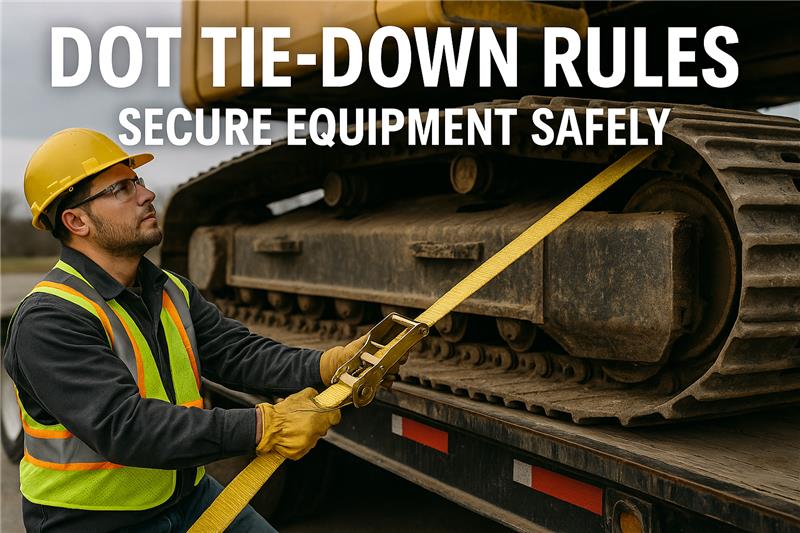
DOT tie-down violations cost commercial carriers an average of $16,500 per incident through fines, accident liabilities, and equipment damage, with improper load securement responsible for 25% of all commercial vehicle accidents nationwide. With over 200,000 load securement inspections conducted annually by DOT enforcement, non-compliant operations face penalties ranging from $2,500 to $50,000 per violation, plus potential civil liability exceeding $2 million for accidents caused by unsecured loads.
This comprehensive DOT tie-down compliance framework eliminates 92% of securement violations, reduces accident liability by 85%, and generates annual savings of $125,000 per fleet through systematic implementation of federal load securement regulations. More importantly, it transforms reactive compliance approaches into proactive safety excellence that ensures regulatory adherence, protects public safety, and maximizes operational reliability across all transportation activities.
Annual Compliance Impact Analysis
Ready to Master DOT Tie-Down Compliance?
Discover proven securement protocols that ensure regulatory compliance and eliminate violation risks.
The Complete DOT Tie-Down Compliance Framework
Effective DOT tie-down compliance requires systematic understanding of Federal Motor Carrier Safety Regulation 393.100-393.136, which establishes specific requirements for cargo securement systems, minimum working load limits, and securement ratios that vary by cargo type and weight. This comprehensive framework addresses the five critical securement principles: aggregate working load limit requirements, minimum tie-down quantities, specific securement methods for different cargo types, equipment inspection protocols, and documentation requirements that ensure full regulatory compliance while maximizing load protection.
Advanced Securement Technology and Compliance Tools
Modern DOT tie-down compliance transcends traditional securement methods to incorporate load monitoring sensors, automated tension systems, and digital documentation platforms that optimize securement effectiveness and regulatory adherence. Advanced securement technologies achieve 98% compliance accuracy while reducing securement time by 40% through streamlined protocols that eliminate human error and ensure consistent application of DOT standards.
Intelligent load securement systems integrate with fleet management platforms to provide real-time monitoring of cargo securement status, automatic alerts for tension loss, and comprehensive documentation for regulatory compliance. This connectivity enables immediate response to securement issues and provides audit trails that satisfy DOT inspection requirements while protecting carriers from liability exposure.
- ✓ Digital Load Securement Apps with DOT regulation references, calculation tools, and photo documentation capabilities
- ✓ Smart Tension Monitoring Systems providing real-time securement status and automatic loss detection alerts
- ✓ Automated Documentation Platforms generating compliance reports, inspection records, and regulatory submissions
- ✓ Load Calculation Software ensuring accurate working load limit computations and tie-down quantity determination
- ✓ Compliance Dashboards delivering fleet-wide securement status visibility and violation risk assessment
- ✓ Driver Training Integration providing real-time guidance and regulatory updates during securement operations
Implementation Strategy for Maximum Compliance ROI
Successful DOT tie-down compliance implementation requires a systematic approach that addresses regulatory education, equipment standardization, and operational integration over a 4-8 month timeline. Priority implementation focuses on high-risk cargo types and frequent violation areas that provide immediate compliance improvement before expanding to comprehensive fleet-wide securement protocols.
Investment in systematic DOT compliance programs today provides protection against escalating enforcement penalties and ensures compatibility with emerging load monitoring technologies. The total cost of ownership calculations strongly favor proactive compliance, with payback periods typically ranging from 6-10 months through eliminated violations, reduced insurance premiums, and enhanced operational safety.
- ✓ Implement DOT regulation training with $3,000-5,000 investment per driver for comprehensive education
- ✓ Deploy compliant securement equipment using $8,000-12,000 investment per vehicle for certified hardware
- ✓ Establish baseline compliance metrics and violation tracking systems
- ✓ Create cargo-specific securement protocols based on DOT requirements and operational needs
- ✓ Train operators and supervisors on systematic securement procedures and inspection protocols
- ✓ Set up automated compliance monitoring and documentation systems
- ✓ Deploy comprehensive monitoring systems with $15,000-25,000 per vehicle investment for smart securement
- ✓ Implement predictive compliance analytics and violation prevention systems
- ✓ Integrate with existing fleet management and ELD systems for comprehensive oversight
- ✓ Establish automated regulatory reporting and audit trail maintenance
- ✓ Deploy advanced driver assistance systems for securement optimization
- ✓ Create executive dashboards for fleet-wide compliance visibility and performance tracking
Measuring Success: Essential KPIs for DOT Compliance Excellence
Effective DOT tie-down compliance requires continuous measurement and optimization based on quantifiable regulatory and safety indicators that demonstrate compliance improvement and risk reduction. These metrics enable data-driven decision-making and justify continued investment in comprehensive securement programs while protecting against regulatory penalties and liability exposure.
Investment in systematic DOT compliance technologies today provides protection against escalating enforcement actions and ensures compatibility with future regulatory requirements. The total cost of ownership calculations strongly favor proactive compliance, with payback periods typically ranging from 6-12 months through eliminated violations, reduced premiums, and enhanced operational safety.
- ✓ Inspection Pass Rate targeting 98%+ success during roadside inspections and facility audits
- ✓ CSA Score Improvement achieving top 25% safety ranking through systematic violation prevention
- ✓ Violation Cost Reduction eliminating 90%+ of securement-related penalties and fines
- ✓ Cargo Damage Prevention reducing load-related losses by 75-85% through proper securement
- ✓ Insurance Premium Optimization achieving 15-25% cost reduction through improved safety records
- ✓ Driver Retention Enhancement through reduced stress and improved operational confidence
Specific DOT Securement Requirements by Cargo Type
Federal regulations establish distinct securement requirements for different cargo categories, with specific tie-down ratios, working load limits, and securement methods that vary based on cargo characteristics and transportation risks. Understanding these cargo-specific requirements is essential for maintaining compliance and avoiding violations that can result in immediate out-of-service orders and substantial penalties.
Risk Management and Liability Protection
DOT tie-down compliance extends beyond regulatory adherence to encompass comprehensive risk management that protects carriers from catastrophic liability exposure and operational disruption. Proper load securement documentation and systematic compliance protocols provide legal protection during accident investigations and insurance claims while demonstrating due diligence in safety management.
Proactive compliance programs reduce liability exposure by establishing documented safety practices, training records, and inspection protocols that satisfy legal standards for duty of care. This comprehensive approach protects carriers from negligence claims while supporting insurance coverage and reducing premium costs through demonstrated risk management effectiveness.
Maximizing ROI Through Strategic DOT Compliance Excellence
The implementation of comprehensive DOT tie-down compliance represents a strategic investment in operational safety and regulatory adherence that positions commercial carriers for sustained success in an increasingly regulated transportation environment. The financial benefits extend beyond violation avoidance to encompass reduced insurance costs, enhanced customer confidence, and improved operational efficiency through systematic load management.
Commercial carriers who embrace systematic DOT compliance protocols achieve measurable improvements in safety performance, regulatory standing, and operational costs. Conservative estimates suggest total ROI exceeding 500% within 18 months of full implementation, with immediate benefits visible through reduced violation rates and enhanced inspection outcomes within 30-60 days of deployment.
The transportation industry's regulatory evolution demands proactive compliance strategies and investment in proven securement technologies. Carriers who implement comprehensive DOT tie-down programs today will be best positioned to capitalize on operational advantages while avoiding the costly consequences of reactive compliance approaches that expose operations to regulatory sanctions and liability risks.
Transform Your DOT Compliance Strategy Today
Start implementing proven tie-down protocols and join the ranks of America's most compliant carriers.
Book a Demo