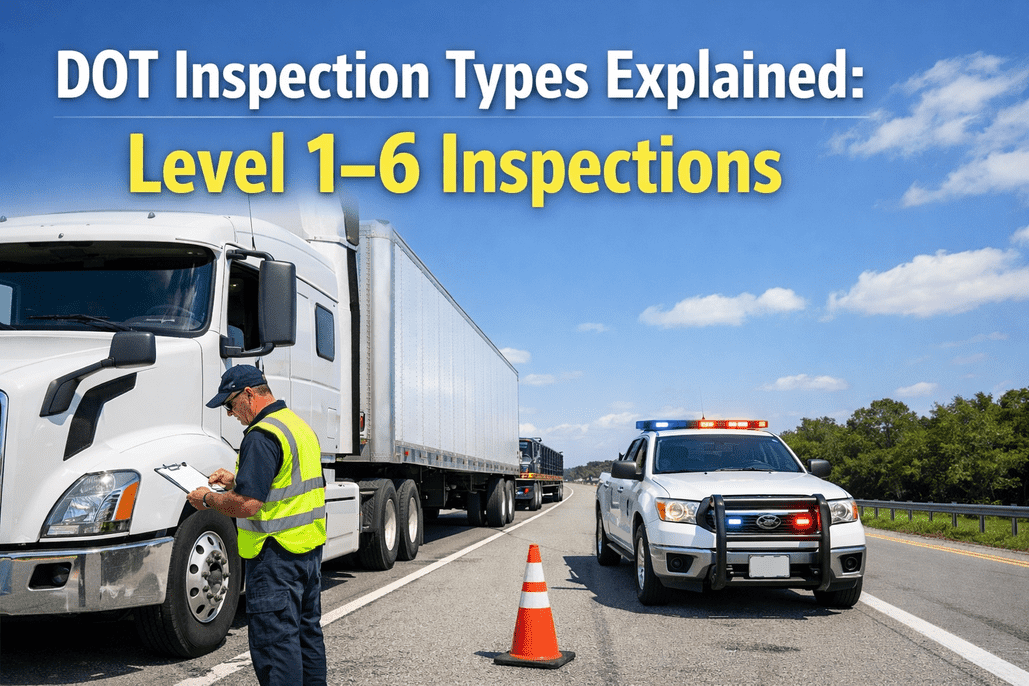
Every year, approximately 4 million commercial motor vehicle inspections are conducted across North America—and in 2025, 22.6% of inspected vehicles had violations serious enough to be placed out of service. Understanding the different DOT inspection levels isn't just regulatory knowledge—it's the difference between passing an inspection in 20 minutes or sitting roadside for hours while your CSA score takes a hit. The Commercial Vehicle Safety Alliance (CVSA) has established six primary inspection levels, ranging from the comprehensive 37-step Level 1 inspection to the specialized Level 6 for radioactive shipments. Each level has specific requirements, durations, and outcomes. This guide explains exactly what inspectors check at each level, why vehicles get selected for inspection, and how to prepare your fleet to pass every time. Start your free trial or book a demo to standardize your fleet inspections.
Overview of DOT Inspection Levels
DOT inspections are conducted by specially trained and certified inspectors operating under standards set by the Federal Motor Carrier Safety Administration (FMCSA) and the Commercial Vehicle Safety Alliance (CVSA). These inspections can occur at weigh stations, roadside locations, truck stops, or at a carrier's terminal facility—essentially anywhere commercial vehicles operate.
North American Standard
The most comprehensive inspection—37-step examination of both driver credentials and complete vehicle systems, including under-vehicle components.
Walk-Around Inspection
Similar to Level 1, but inspector doesn't go under the vehicle. Includes all driver credentials plus visual inspection of accessible vehicle components.
Driver-Only Inspection
Focuses solely on driver credentials, documentation, and Hours of Service compliance. No vehicle inspection performed.
Special Inspection
One-time examination of a specific vehicle component or feature, typically for research purposes or to verify/track violation trends.
Vehicle-Only Inspection
Complete vehicle inspection without driver present—same vehicle checks as Level 1. Often conducted at terminals or after incidents.
Radioactive Shipments
Enhanced inspection for vehicles transporting highway route-controlled quantities of radioactive materials. Includes full Level 1 plus radiological checks.
In practice, most drivers will only encounter Level 1, Level 2, or Level 3 inspections. Levels 1 and 2 are the most frequently conducted, with Level 1 being the most comprehensive. Level 3 inspections often occur in conjunction with traffic stops. Levels 4, 5, and 6 are reserved for specific situations and are relatively rare for typical fleet operations.
Level 1: North American Standard Inspection
The Level 1 inspection is the gold standard of DOT inspections—and the one most likely to result in out-of-service orders if you're unprepared. It's a comprehensive 37-step procedure examining both the driver and the entire vehicle, including components that require the inspector to physically get under the truck.
North American Standard Inspection
Most Comprehensive • 37-Step Procedure • 45-60 MinutesDriver Inspection Items
- Commercial Driver's License (CDL) and endorsements
- Medical Examiner's Certificate (MEC)
- Skill Performance Evaluation (SPE) Certificate (if applicable)
- Driver's record of duty status / ELD compliance
- Hours of Service (HOS) verification
- Drug and alcohol screening / Clearinghouse status
- Seat belt usage verification
- Vehicle inspection reports (DVIRs)
- Shipping papers and hazmat documentation (if applicable)
- Operating authority and carrier identification
Vehicle Inspection Items
- Brake system (including under-vehicle measurement)
- Brake adjustment and air brake components
- Steering mechanism and components
- Suspension system (springs, hangers, U-bolts)
- Tires (tread depth, condition, inflation)
- Wheels and rims
- All lighting devices and reflectors
- Frame and body integrity
- Fuel system
- Exhaust system
- Coupling devices (fifth wheel, kingpin)
- Cargo securement
- Emergency equipment (triangles, fire extinguisher)
- Windshield, wipers, and mirrors
Inspection Outcomes
Vehicle receives CVSA decal valid for up to 3 months. This decal significantly reduces the likelihood of being selected for another Level 1 inspection during that period.
Driver receives Driver Vehicle Examination Report (DVER) documenting violations. Must be corrected but vehicle can continue operating. No CVSA decal issued.
Critical violations found. Vehicle and/or driver cannot operate until defects are corrected. Recorded on CSA score for 24 months. Potential fines up to $19,277 per violation.
2025 Level 1 Inspection Statistics
Nearly 1 in 4 vehicles fail Level 1 inspections due to preventable issues. Sign up for HVI's digital inspection platform to catch brake, tire, and lighting defects before roadside enforcement does, or book a demo to see how fleets reduce their OOS rates.
Level 2–6 DOT Inspections Explained
While Level 1 is the most comprehensive, understanding all inspection levels helps you prepare for any situation. Here's what to expect from Levels 2 through 6:
Walk-Around Driver/Vehicle Inspection
Duration: 30-45 minutesAlso known as a "Walk-Around," Level 2 inspections include all driver credential checks plus a visual vehicle inspection—but the inspector doesn't go under the vehicle or trailer. This makes it faster than Level 1 while still being thorough enough to catch most visible defects.
- All driver documentation (same as Level 1)
- Hours of Service / ELD compliance
- Drug and alcohol Clearinghouse status
- Recent DVIRs
- All exterior lights and reflectors
- Tires (visible condition, tread depth)
- Visible brake components
- Steering and suspension (visual)
- Cargo securement
- Coupling devices
- Emergency equipment
- Under-vehicle brake measurements
- Components requiring creeper access
- Internal brake drum/rotor inspection
Driver-Only Inspection
Duration: 15-20 minutesLevel 3 inspections focus exclusively on the driver's credentials, documentation, and regulatory compliance—the vehicle itself is not inspected. These often occur during traffic stops or when inspectors want to verify driver compliance without conducting a full vehicle inspection.
- Commercial Driver's License (CDL)
- Required endorsements for cargo type
- Medical Examiner's Certificate
- Skill Performance Evaluation certificate (if applicable)
- Record of Duty Status / ELD logs
- Hours of Service compliance
- Drug and Alcohol Clearinghouse status
- Seat belt usage
- Signs of drug/alcohol impairment
- Hazmat endorsement and training (if applicable)
- Shipping papers (if applicable)
- Speeding (6-10 mph over most common)
- False report of duty status
- Form and manner ELD violations
- Operating without valid medical certificate
- Operating without required endorsements
Special Inspection
Duration: Varies by itemLevel 4 inspections are one-time examinations focusing on a specific vehicle component or feature. These are typically conducted at the request of CVSA or FMCSA to gather data for studies, verify trends, or investigate specific safety concerns. They're relatively rare for typical fleet operations.
- Research studies on specific components
- Tracking improvement in common violations
- Investigating manufacturer defect reports
- Verifying previous inspection claims
- Special enforcement initiatives
- Brake system components only
- Specific tire type or model
- ELD device functionality
- Cargo securement equipment
- Lighting system components
Vehicle-Only Inspection
Duration: ~45 minutesLevel 5 is the opposite of Level 3—it's a complete vehicle inspection performed when the driver is not present. This typically happens at carrier terminal facilities during compliance reviews, after incidents where the driver is unavailable, or during fleet audits.
- All vehicle components from Level 1
- Brake systems (including under-vehicle)
- Steering mechanism
- Suspension components
- Tires and wheels
- Lighting and electrical
- Frame and body
- Fuel and exhaust systems
- Coupling devices
- Emergency equipment
- Terminal inspections during compliance reviews
- After accidents (driver hospitalized/arrested)
- Fleet audits by FMCSA
- When vehicle is parked for extended maintenance
- Part of carrier safety investigations
Enhanced NAS for Radioactive Shipments
Duration: 60-75 minutesLevel 6 is a specialized inspection required for vehicles transporting highway route-controlled quantities (HRCQ) of radioactive materials. It includes everything from a Level 1 inspection plus enhanced radiological checks and documentation requirements.
- All items from Level 1 inspection
- Radiological shipment documentation
- Radioactive material placards
- Cargo securement (radiological-specific)
- Radiation detection readings
- Enhanced out-of-service criteria
- Driver radiological training certification
- Emergency response information
- Package and container integrity
- Inspection must occur BEFORE departure
- Vehicle, driver, and cargo must be defect-free
- Special nuclear symbol decal issued upon passing
- Decal valid for single trip only
- Decal removed at destination
Whether you're preparing for Level 1 comprehensive inspections or specialized Level 6 radiological checks, consistent pre-trip inspections are your first line of defense. Get started with HVI's inspection platform that covers all DOT inspection levels, or schedule a personalized demo for your fleet.
Common Reasons for DOT Inspections
Understanding why vehicles get selected for inspection helps you reduce selection frequency and prepare for the inevitable. Here's what triggers DOT inspections and how to minimize your risk:
Visual Defects
Inspectors are trained to spot visual signs of non-compliance while vehicles are in motion or parked. Obvious defects almost guarantee an inspection.
- Non-functional lights (brake, turn, clearance)
- Visible tire damage or low tread
- Smoke or fluid leaks
- Unsecured cargo or tarps
- Damaged body panels or mirrors
- Missing mud flaps or reflectors
ISS/PSP Scores
The Inspection Selection System (ISS) uses carrier and driver safety data to prioritize vehicles for inspection. High scores mean more frequent stops.
- CSA BASIC scores and violations
- Previous out-of-service orders
- Crash history
- Driver PSP (Pre-Employment Screening Program) record
- Carrier safety rating
- Time since last inspection
Traffic Violations
Traffic stops for moving violations frequently lead to Level 2 or Level 3 inspections, especially at weigh stations or during enforcement campaigns.
- Speeding (6-10 mph over most common)
- Lane violations (restricted lanes)
- Running red lights or stop signs
- Cell phone use while driving
- Improper following distance
- Failure to yield
Random Selection & Blitzes
Weigh stations conduct random inspections, and annual enforcement events like CVSA's International Roadcheck dramatically increase inspection volume.
- International Roadcheck (72-hour blitz, ~50,000 inspections)
- Operation Airbrake
- Brake Safety Week
- Operation Safe Driver
- State-specific enforcement campaigns
- Random weigh station selection
Top Out-of-Service Violations (2025)
Vehicle Violations
Driver Violations
Digital pre-trip inspections catch the brake, tire, and lighting issues that cause 60%+ of vehicle OOS violations. Start your free trial to see how guided inspection workflows reduce violations, or book a demo for a personalized walkthrough.
How to Prepare Your Fleet for DOT Inspections
The best way to pass DOT inspections is to be prepared before they happen. These practices help your fleet maintain inspection-readiness every day—not just during enforcement campaigns.
Implement Consistent Pre-Trip Inspections
A thorough daily pre-trip inspection catches most issues that cause OOS violations. Digital inspection apps with guided workflows ensure drivers check every critical component.
- Use standardized checklists covering all Level 1 items
- Require photo documentation of key components
- Ensure drivers actually perform inspections (prevent pencil-whipping)
- Create accountability through digital timestamps and signatures
Maintain Complete Driver Documentation
Missing or expired driver documentation is an immediate red flag. Build systems that track expiration dates and alert you before credentials lapse.
- Track CDL, medical certificate, and endorsement expiration dates
- Set automated alerts 30, 60, and 90 days before expiration
- Conduct quarterly Clearinghouse queries for all CDL drivers
- Ensure ELD compliance documents are readily accessible
Prioritize Brake and Tire Maintenance
Brakes (24.4%) and tires (23.4%) account for nearly half of all vehicle OOS violations. Proactive maintenance in these areas dramatically reduces inspection failures.
- Schedule regular brake adjustments and inspections
- Monitor tire tread depth, pressure, and condition
- Replace tires before reaching minimum tread (4/32" steer, 2/32" drive)
- Train drivers to identify and report brake/tire issues immediately
Keep Vehicles Clean and Well-Maintained
While cleanliness isn't an inspection criterion, a clean, well-maintained vehicle signals attention to detail—and reduces the visual cues that trigger inspector attention.
- Keep cab interior clean and organized
- Ensure all lights are functional (check daily)
- Clean license plates and reflectors for visibility
- Fix minor body damage before it draws attention
Train Drivers on Inspection Procedures
Drivers who understand the inspection process and behave professionally are more likely to have positive outcomes, even when minor issues exist.
- Educate drivers on all six inspection levels
- Train proper document organization (keep everything accessible)
- Coach professional, cooperative behavior with inspectors
- Review common violations and how to prevent them
Conduct Internal Mock Inspections
Quarterly internal inspections using the same criteria as DOT Level 1 inspections identify and correct issues before roadside enforcement finds them.
- Use CVSA-standard checklists for internal audits
- Document all findings and corrective actions
- Review patterns to identify recurring issues
- Correct deficiencies before vehicles return to service
Understanding the CVSA Decal
When a vehicle passes a Level 1 or Level 5 inspection with no critical violations, it receives a CVSA decal—essentially a "get out of inspection free" card for up to 3 months.
- Significantly reduces likelihood of Level 1 inspection selection
- Demonstrates vehicle passed comprehensive inspection
- Valid for up to 3 months from inspection date
- Scannable barcode allows weigh station cameras to verify
Frequently Asked Questions
Stay Inspection-Ready Every Day
The best DOT inspection strategy is consistent preparation—not last-minute scrambling. HVI's digital inspection platform helps your drivers complete thorough pre-trip inspections that catch issues before roadside enforcement does, keeping your fleet compliant and your CSA scores clean.
No credit card required • DOT-compliant templates included • Setup in under 10 minutes