Construction equipment generates data across dozens of disconnected systems — OEM telematics portals (Cat VisionLink, Komatsu KOMTRAX, Volvo CareTrack, John Deere JDLink, Hitachi ConSite), ERP platforms (SAP, Oracle, Sage, Viewpoint, Procore), accounting software (QuickBooks, Xero), fuel card systems (WEX, Comdata), HR and payroll tools, and inspection/maintenance platforms. Each system holds a piece of the operational picture. None holds the complete picture. The result: fleet managers toggle between 5-8 separate portals, manually re-enter data across systems, reconcile conflicting records, and make decisions based on incomplete information. A 200-truck fleet can spend 40+ hours per month on manual data reconciliation alone. The construction equipment telematics market is projected to grow from $7.76 billion in 2025 to $20.59 billion by 2034. The global installed base of active construction equipment OEM telematics systems reached 6.8 million units in 2023 and is expected to hit 12.1 million by 2028. The data is already flowing from the machines — the question is whether your systems talk to each other. ISO 15143-3 (AEMP 2.0) now standardizes data exchange across mixed-OEM fleets, meaning Cat, Komatsu, Volvo, Deere, and Hitachi equipment can feed the same platform using the same data standard. This guide covers the 7 essential integration categories for construction equipment software, what data flows in each direction, the standards and protocols involved, implementation best practices, and how HVI connects inspection and maintenance data with your existing tech stack. Book a demo to see HVI's construction equipment integration capabilities, or start your free trial of HVI's connected fleet inspection and maintenance platform.
Construction Equipment Software Integration Guide
Connect telematics, ERP, accounting, fuel, HR, and inspection systems into one unified data layer. Eliminate manual re-entry, data silos, and the 5-8 portal toggle that wastes hours every week.
7 Essential Integration Categories
Each integration category eliminates a specific data silo and automates a specific manual process. Prioritize by ROI: telematics and inspection platforms first (immediate operational value), then accounting and fuel (financial automation), then ERP and HR (enterprise consolidation).
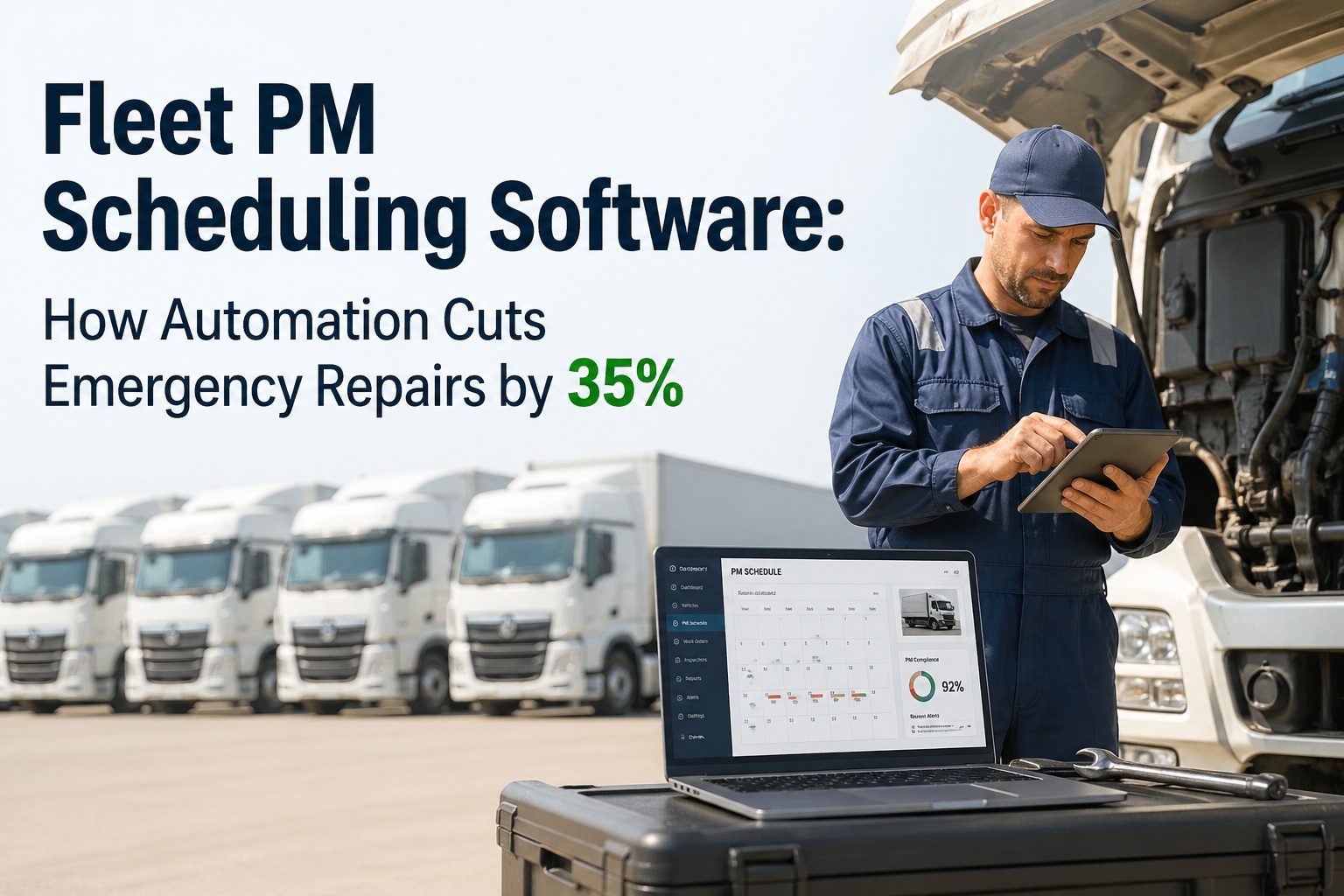
The foundation integration. Cat Product Link, Komatsu KOMTRAX, Volvo CareTrack, John Deere JDLink, Hitachi ConSite — all now support ISO 15143-3 (AEMP 2.0) standardized data exchange. Engine hours feed directly into PM scheduling — eliminating manual hour entry. Fault codes from the machine's ECU trigger inspection alerts or work orders automatically. GPS data supports multi-site equipment tracking. The telematics installed base reached 6.8 million units in 2023, growing to 12.1 million by 2028.
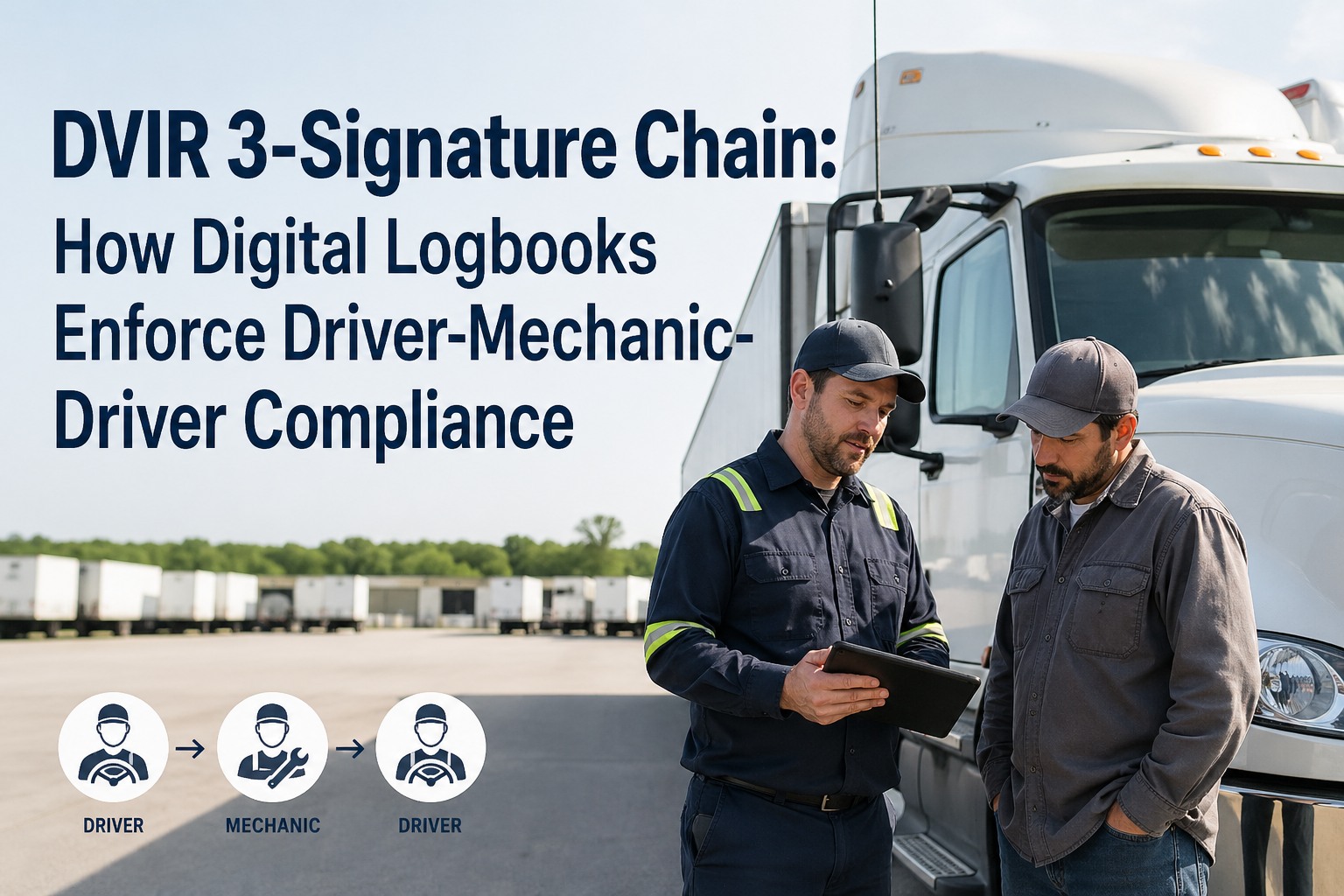
The critical bridge between what operators find and what mechanics fix. Digital inspection data flows to work orders in seconds (vs 1-3 days with paper). Photo evidence travels with the work order. FMCSA 3-signature DVIR chain enforced digitally. Under 2026 CSA rules, inspection-to-work-order speed is now a direct compliance score factor. 43% of vehicles have critical issues missed on paper checklists — digital integration closes this gap.
Connects equipment costs to specific projects and cost codes. SAP, Oracle, Sage 300, Viewpoint Vista, Procore — bidirectional data exchange ensures maintenance costs automatically post to the correct project budget. Equipment utilization data feeds project planning. Downtime hours allocate to the correct job. Without ERP integration, construction companies manually reconcile equipment costs against project budgets — a process that takes hours weekly and introduces errors.
QuickBooks, Xero, Sage, MYOB — maintenance costs flow automatically to the correct GL accounts. Parts purchase orders post to accounts payable. Labor costs allocate to the correct equipment category. No manual journal entries for maintenance expenses. A 200-truck fleet eliminates 40+ hours per month of manual cost reconciliation with accounting integration.
WEX, Comdata, Voyager, FleetCor — every fuel transaction automatically matches to a vehicle, validates against GPS location, calculates gallons-per-hour, flags exceptions (wrong fuel type, unusual volume, off-route purchase), and posts to accounting. Equipment idle time averaging 30% of operating hours is identified and addressed. Fuel savings of 10-15% from visibility into consumption patterns.
Samsara, Geotab, Motive (KeepTruckin), Teletrac Navman, CalAmp — aftermarket telematics for older equipment or light vehicles that lack factory telematics. Combines with OEM telematics data into a single dashboard. No more toggling between Cat VisionLink and Geotab and Samsara — one view of the entire fleet. AEMP 2.0 data standard makes cross-platform aggregation increasingly seamless.
Technician labor hours logged on work orders flow to payroll. Certification expiration dates (brake inspector, HV electrical, crane operator) trigger renewal alerts. Skill profiles support work order assignment matching. Training records satisfy OSHA competent person requirements. Without HR integration, technician certifications are tracked on spreadsheets — or not tracked at all.
Integration Standards and Protocols
Understanding the data standards that connect construction equipment systems ensures you choose platforms with genuine interoperability — not vendor lock-in disguised as "integration."
The Association of Equipment Manufacturers and Providers standard for mixed-fleet telematics data exchange. Defines a common data schema for equipment location, engine hours, fuel consumption, fault codes, and utilization across all OEM brands. Cat, Komatsu, Volvo, Deere, Hitachi, and most major OEMs now support AEMP 2.0. This is the standard that allows your Komatsu excavator and Cat dozer to feed the same dashboard. Demand AEMP 2.0 compliance from any platform you evaluate.
Modern web-based interfaces for real-time data exchange between cloud platforms. Most fleet management, ERP, and accounting platforms offer REST APIs for bidirectional data flow. JSON format. Authentication via API keys or OAuth 2.0. Real-time or near-real-time data synchronization. This is the most common integration method for connecting cloud-based systems in 2026.
Event-driven data pushes — when something happens in one system (work order created, inspection completed, fault code triggered), the system automatically notifies connected platforms. Faster than polling-based APIs for time-sensitive events like safety-critical defect notifications. Reduces API call volume and server load.
The fallback for systems without API capability. Scheduled file exports from one system imported to another. Works for legacy ERP, older accounting platforms, and one-time data migrations. Not real-time — batch processing at scheduled intervals (daily, weekly). Adequate for non-time-sensitive data like monthly cost reports or annual inventory audits.
Implementation Roadmap
Start with integrations that deliver immediate ROI — typically telematics and inspection platforms. Build momentum with quick wins before tackling complex enterprise integrations. Clean your data before connecting systems — integrations amplify both good and bad data quality.
Connect OEM telematics (engine hours, fault codes, GPS) to HVI. Deploy digital inspections. This single integration eliminates manual hour entry, auto-triggers PM scheduling, and creates the inspection-to-work-order pipeline. Immediate ROI from defects caught earlier and PM intervals tracked accurately. No hardware installation — API-based connection to existing OEM portals.
Connect accounting software (QuickBooks, Xero, Sage) for automatic cost posting. Connect fuel card system (WEX, Comdata) for transaction matching. Eliminates 40+ hours/month of manual reconciliation for a 200-vehicle fleet. Parts purchases, labor costs, and fuel transactions flow automatically to correct GL accounts and vehicles.
Connect ERP (SAP, Oracle, Viewpoint, Procore) for project-level cost allocation. Equipment maintenance costs post to correct project budgets automatically. Utilization data feeds project planning. This integration requires more configuration (mapping cost codes, project hierarchies) but delivers enterprise-level financial visibility.
Connect HR/payroll for technician labor tracking and certification management. Deploy advanced analytics: cost-per-hour trending, fleet lifecycle analysis, predictive maintenance modeling. By this phase, you have 3+ months of integrated data — enough for meaningful trend analysis and data-driven fleet decisions.
HVI Integration Capabilities for Construction Fleets
HVI serves as the unified data layer between your field equipment and your business systems. Inspection, work order, parts, and cost data flows bidirectionally — connecting the machines, the mechanics, the office, and the project budget.
Cat Product Link, Komatsu KOMTRAX, Volvo CareTrack, John Deere JDLink, Hitachi ConSite. Engine hours feed PM scheduling. Fault codes trigger alerts. GPS enables multi-site tracking. API-based — no additional hardware on the machine. AEMP 2.0 compliant for mixed-fleet data standardization.
Samsara, Geotab, Motive (KeepTruckin), PeopleNet, Teletrac Navman, CalAmp. For older equipment or light vehicles without factory telematics. Unified fleet view combining OEM and aftermarket data in one dashboard. No more toggling between separate telematics portals for different equipment brands.
QuickBooks, Xero, Sage, SAP, Oracle, Viewpoint Vista, Procore. Maintenance costs auto-post to correct GL accounts and project codes. Parts POs flow to accounts payable. Work order costs allocate to equipment categories. Budget vs actual tracking in real time. .
WEX, Comdata, Voyager, FleetCor. Every transaction matched to vehicle, validated against GPS, converted to gallons-per-hour metric. Consumption anomalies flagged automatically. Idle time identified — equipment idle averages 30% of operating hours. Fuel costs post to accounting automatically.
HVI's core strength: inspection defects generate work orders with photos, work orders consume parts from inventory, parts costs allocate to equipment and projects, compliance records satisfy OSHA/FMCSA/ASME. One data chain from field operator to boardroom report — no manual re-entry at any stage.
HVI provides a REST API for custom integrations with proprietary systems, industry-specific platforms, or niche tools unique to your operation. JSON format, OAuth 2.0 authentication, webhook support for event-driven notifications. Build exactly the data flow your operation needs — not what the software vendor decided you should have.
Frequently Asked Questions
Start with OEM telematics and digital inspections. This single integration eliminates manual engine hour entry, auto-triggers PM scheduling from real machine data, creates the inspection-to-work-order pipeline, and provides GPS-based multi-site equipment tracking. Immediate ROI from defects caught earlier and PM intervals tracked accurately. No hardware installation required — API connection to existing OEM portals. Book a demo to see telematics and inspection integration for your construction fleet.
Yes. ISO 15143-3 (AEMP 2.0) standardizes telematics data exchange across all major OEM brands — Cat, Komatsu, Volvo, John Deere, Hitachi, Liebherr, and others. This means your mixed-brand fleet feeds the same dashboard using the same data format. For older equipment without factory telematics, aftermarket devices (Samsara, Geotab) provide equivalent data. HVI ingests both OEM and aftermarket telematics into a unified view. Start your free trial of HVI's mixed-fleet construction equipment management platform.
Many fleet platforms include popular integrations at no additional charge. Custom API development typically costs $5,000-$50,000+ depending on complexity. Middleware platforms charge $200-$2,000+ monthly. However, ROI typically exceeds costs quickly — a single fuel card integration eliminating 10 hours of weekly manual work pays for itself within months. A 200-vehicle fleet eliminating 40+ hours/month of manual reconciliation recovers integration costs in weeks. Book a demo to discuss integration scope and ROI for your construction operation.
For standard integrations (telematics, accounting, fuel cards) — no. These use pre-built connectors with configuration-level setup. For enterprise ERP integration (SAP, Oracle) or custom API development — yes, IT involvement is recommended. HVI provides pre-built integrations for the most common construction fleet systems and a REST API with documentation for custom connections. Most standard integrations are configured in 1-2 weeks. See which integrations are pre-built for your systems.
HVI works fully offline. Inspections, work orders, parts lookups, and digital signatures are captured without internet connectivity. Data syncs automatically when connection returns. Telematics data buffers on the device and uploads when cellular coverage resumes. This is the make-or-break feature for construction — if it does not work in a cell dead zone, it does not work on your job sites. Start your free trial of HVI's offline-capable construction fleet platform.
Telematics integration auto-triggers PM scheduling from real engine hours — no missed intervals. Inspection integration creates the FMCSA 3-signature DVIR chain digitally. Work order integration documents every repair with parts, labor, and photos. Compliance records flow to audit-ready reports automatically. Under the 2026 CSA overhaul, integrated systems that demonstrate systematic inspection and maintenance programs directly protect your carrier safety score. Book a demo to see compliance integration for construction equipment fleets.
Your Equipment Already Generates the Data. Connect It.
6.8 million telematics units are already transmitting from construction equipment worldwide. Your Cat, Komatsu, Volvo, and Deere machines are broadcasting data right now. The question is whether that data reaches your maintenance team, your project budgets, and your compliance records — or disappears into separate portals nobody checks.
No credit card • AEMP 2.0 compliant • Pre-built OEM integrations • Full offline capability