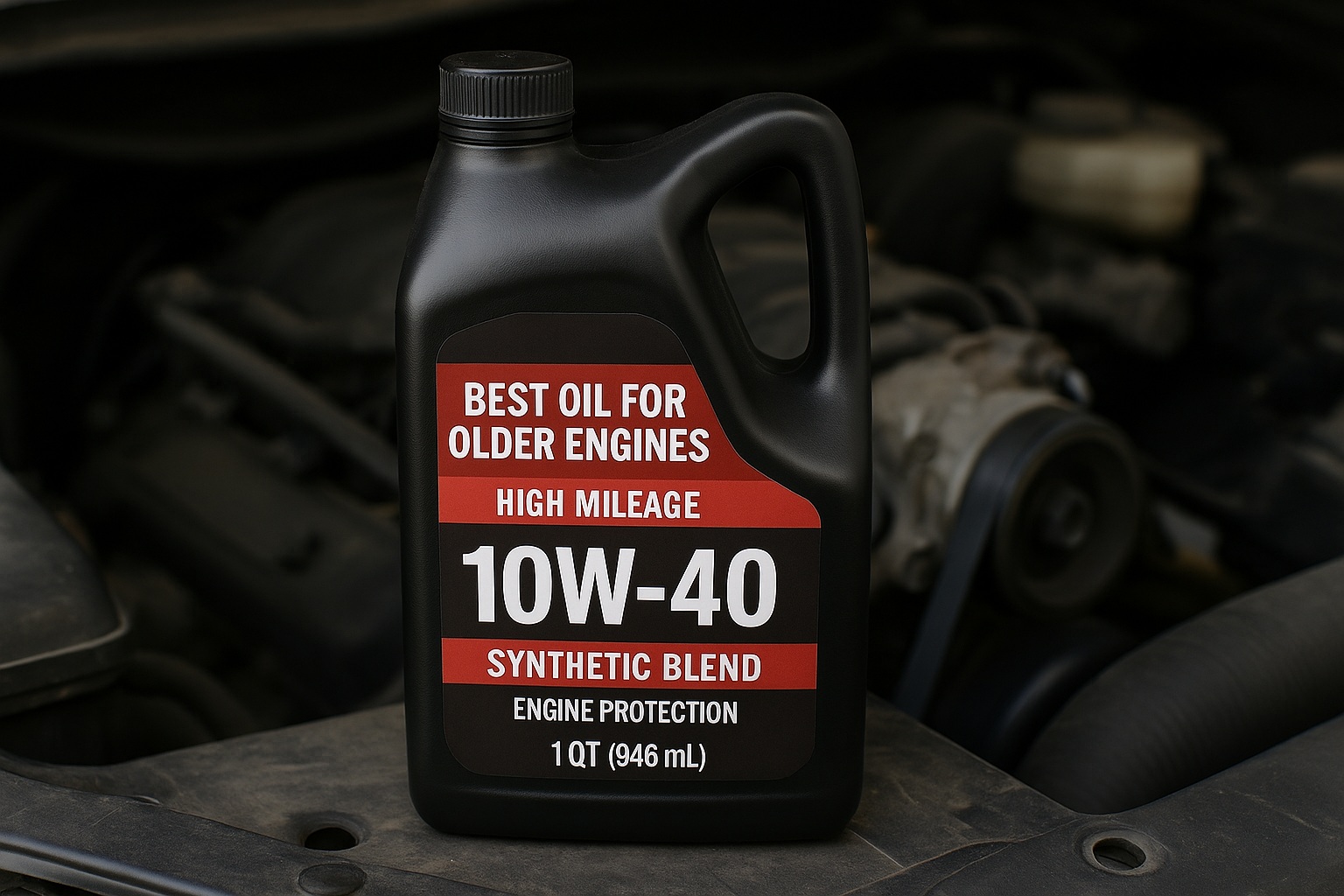
Selecting the best oil for older engines can mean the difference between a vehicle lasting 300,000 miles or facing catastrophic failure at 150,000. With over 278 million registered vehicles in America, the average car age reaching 12.5 years, understanding proper oil selection for aging engines has become critical for millions of drivers. High-mileage engines require specialized formulations that address wear patterns, seal degradation, and increased clearances—factors that can cost $3,500-$8,000 in engine repairs when ignored.
This comprehensive guide eliminates confusion around oil selection for older engines, revealing how the right oil choice can reduce wear by 75%, decrease oil consumption by 60%, and extend engine life by 40-50%. More importantly, it transforms reactive maintenance into proactive protection that preserves engine performance, reduces repair costs by $1,200-$2,500 annually, and maintains vehicle reliability well beyond 200,000 miles.
High-Mileage Engine Protection Impact
Ready to Protect Your High-Mileage Engine?
Discover proven maintenance strategies that extend engine life and reduce costly repairs.
Understanding Oil Requirements for Older Engines
Older engines face unique challenges that standard motor oils cannot adequately address. As engines accumulate miles, internal clearances increase, seals harden, and wear patterns develop that require specialized oil formulations. The best oil for older engines must compensate for these changes while providing enhanced protection against further deterioration.
Top 5 Best Oil Types for Older Engines
Selecting the best oil for older engines requires understanding different formulation types and their specific benefits for high-mileage applications. Each oil type addresses particular wear patterns and protection requirements, with costs ranging from $25-$85 per oil change depending on quality and specifications.
- ✓ Optimal balance of synthetic and conventional base stocks providing 45% better wear protection than standard oils
- ✓ Seal conditioners reduce leaks by 70-85% within 3,000 miles of use
- ✓ Cost-effective at $35-$45 per change, offering premium protection without full synthetic prices
- ✓ Viscosity stabilizers maintain film strength at operating temperature, reducing wear by 55%
- ✓ Enhanced detergents dissolve sludge gradually without clogging oil passages
- ✓ Superior molecular stability reduces oil breakdown by 80% compared to conventional oils
- ✓ Extended drain intervals up to 10,000 miles reduce maintenance costs by $150-$300 annually
- ✓ Premium at $65-$85 per change but delivers 65% better engine protection metrics
- ✓ Cold-start protection reduces wear during critical startup phase by 70%
- ✓ Maintains viscosity across temperature extremes, ideal for variable climate conditions
- ✓ Thicker formulation compensates for increased bearing clearances in worn engines
- ✓ Budget-friendly at $25-$35 per change, suitable for engines with 200,000+ miles
- ✓ Reduces oil consumption by 40-50% in engines with worn rings or guides
- ✓ Maintains oil pressure in hot conditions, preventing bearing damage
- ✓ Ideal for classic cars and vintage engines designed for heavier oils
- ✓ Higher detergent levels provide 55% better cleaning action for sludged engines
- ✓ Enhanced anti-wear additives extend cam and lifter life by 45%
- ✓ Moderately priced at $30-$45 per change with commercial-grade protection
- ✓ ZDDP levels protect flat-tappet camshafts in older engine designs
- ✓ Suitable for mixed fleets with both gasoline and diesel engines
- ✓ Maximum protection formulations reduce wear by 85% under extreme conditions
- ✓ High ZDDP content protects performance engines with aggressive cam profiles
- ✓ Premium pricing at $75-$120 per change justified by superior protection
- ✓ Maintains film strength at temperatures exceeding 300°F
- ✓ Ideal for modified engines, towing applications, or severe service conditions
Viscosity Selection Guide for Aging Engines
Choosing the correct viscosity represents the most critical decision when selecting the best oil for older engines. Viscosity requirements change as engines wear, with increased clearances demanding different flow characteristics than manufacturer specifications originally intended.
Understanding viscosity grades and their impact on older engine performance enables informed selection that balances protection, efficiency, and longevity. Modern multi-grade oils provide flexibility, but selecting the optimal range requires careful consideration of engine condition, climate, and usage patterns.
- ✓ 75,000-150,000 miles: Maintain manufacturer-recommended viscosity or increase one grade (5W-30 to 10W-30)
- ✓ 150,000-250,000 miles: Consider 10W-40 or 15W-40 to compensate for increased clearances
- ✓ 250,000+ miles: 20W-50 may be necessary for severely worn engines with low oil pressure
- ✓ Cold climate adjustment: Maintain lower winter rating (5W or 10W) for startup protection
- ✓ Hot climate consideration: Higher summer rating (40 or 50) prevents thermal breakdown
- ✓ Oil pressure monitoring: Adjust viscosity if pressure drops below 10 PSI per 1,000 RPM
Oil Additives and Treatments for Maximum Protection
While selecting the best oil for older engines provides foundation protection, targeted additives can address specific wear patterns and performance issues. Understanding which additives provide genuine benefits versus marketing hype saves money while maximizing engine protection.
Professional-grade additives cost $15-$45 per treatment but can extend engine life by addressing issues base oils cannot resolve alone. Strategic use of proven additives reduces repair costs by $500-$1,500 annually through targeted protection enhancement.
Implementation Strategy for Oil Selection Success
Transitioning to the best oil for older engines requires systematic implementation that considers current engine condition, usage patterns, and long-term protection goals. Successful transitions improve engine performance within 500 miles while establishing sustainable maintenance protocols.
Investment in proper oil selection and quality products typically ranges from $150-$400 annually but prevents repairs costing $2,000-$5,000. The return on investment through extended engine life and reduced failures exceeds 10:1 for most high-mileage vehicles.
- ✓ Compression testing to evaluate ring and valve seal condition ($75-$150 diagnostic cost)
- ✓ Oil analysis revealing wear metals and contamination levels ($30-$50 per test)
- ✓ Leak inspection identifying seal condition and replacement needs
- ✓ Oil pressure testing at operating temperature across RPM range
- ✓ Historical maintenance review determining previous oil usage patterns
- ✓ Initial oil change with selected high-mileage formulation ($35-$85 investment)
- ✓ Monitor consumption and leak rates for 1,000 miles
- ✓ Adjust viscosity if pressure or consumption issues persist
- ✓ Document performance improvements and operational changes
- ✓ Implement shorter initial change interval (2,000 miles) for cleaning action
- ✓ Establish optimal change intervals based on oil analysis results
- ✓ Fine-tune additive usage for specific protection needs
- ✓ Monitor wear trends through periodic oil analysis ($30-$50 quarterly)
- ✓ Adjust maintenance schedules based on usage patterns
- ✓ Document cost savings and performance improvements for ROI validation
Measuring Success: Performance Metrics and ROI
Quantifying the benefits of selecting the best oil for older engines requires systematic monitoring of key performance indicators that demonstrate protection effectiveness and financial returns. Professional monitoring typically costs $150-$300 annually but validates protection strategies.
Successful oil selection programs achieve measurable improvements within 3,000 miles, with full benefits realized over 12-month periods. Documentation enables optimization while proving return on investment through reduced repair frequency and extended engine life.
- ✓ Oil consumption rate: Target 50% reduction within 5,000 miles of proper oil selection
- ✓ Compression improvement: 5-15% increase possible through proper lubrication
- ✓ Fuel economy gains: 3-7% improvement from reduced internal friction
- ✓ Noise reduction: Measurable decrease in valve train and bearing noise
- ✓ Operating temperature: 10-20°F reduction indicating improved efficiency
- ✓ Maintenance cost tracking: Document 40-60% reduction in repair expenses
Common Mistakes to Avoid with Older Engine Oil Selection
Understanding common errors in selecting the best oil for older engines prevents costly mistakes that accelerate wear and increase repair expenses. These mistakes cost vehicle owners $500-$2,000 annually in unnecessary repairs and premature engine replacement.
Professional guidance helps avoid selection errors while maximizing protection benefits. Learning from others' mistakes saves money while ensuring optimal engine protection throughout the vehicle's extended service life.
2. Switching to thick oil too quickly can starve bearings during cold starts
3. Mixing incompatible oil types creates precipitation and filter clogging
4. Extending drain intervals beyond oil's protective capacity
5. Ignoring manufacturer specifications for API ratings and certifications
Future-Proofing Your High-Mileage Vehicle
The automotive industry continues evolving with new oil formulations specifically designed for aging vehicle fleets. Understanding emerging technologies and protection strategies positions owners for maximum vehicle longevity while minimizing maintenance costs.
Investment in advanced oil technologies today provides protection against future repair costs while maintaining vehicle reliability. Strategic planning for long-term vehicle ownership reduces total ownership costs by $5,000-$10,000 over extended service periods.
Maximizing Engine Life Through Strategic Oil Selection
Selecting the best oil for older engines represents a critical investment in vehicle longevity that pays dividends through reduced repairs, improved performance, and extended service life. The difference between proper oil selection and using standard products can mean 50,000-100,000 additional miles of reliable service.
Modern high-mileage oil formulations address the specific needs of aging engines, providing protection that wasn't available even five years ago. By understanding viscosity requirements, additive benefits, and implementation strategies, vehicle owners can achieve remarkable longevity from their investments.
The financial benefits of proper oil selection extend far beyond the $10-30 premium per oil change. Preventing a single major engine repair saves $3,000-$7,000, while extending engine life by 40-50% maximizes vehicle value and delays replacement costs. For the millions of Americans driving high-mileage vehicles, strategic oil selection represents the most cost-effective maintenance investment available.
Transform Your Vehicle Maintenance Strategy Today
Start implementing proven oil selection strategies for maximum engine protection and longevity.
Book a Demo