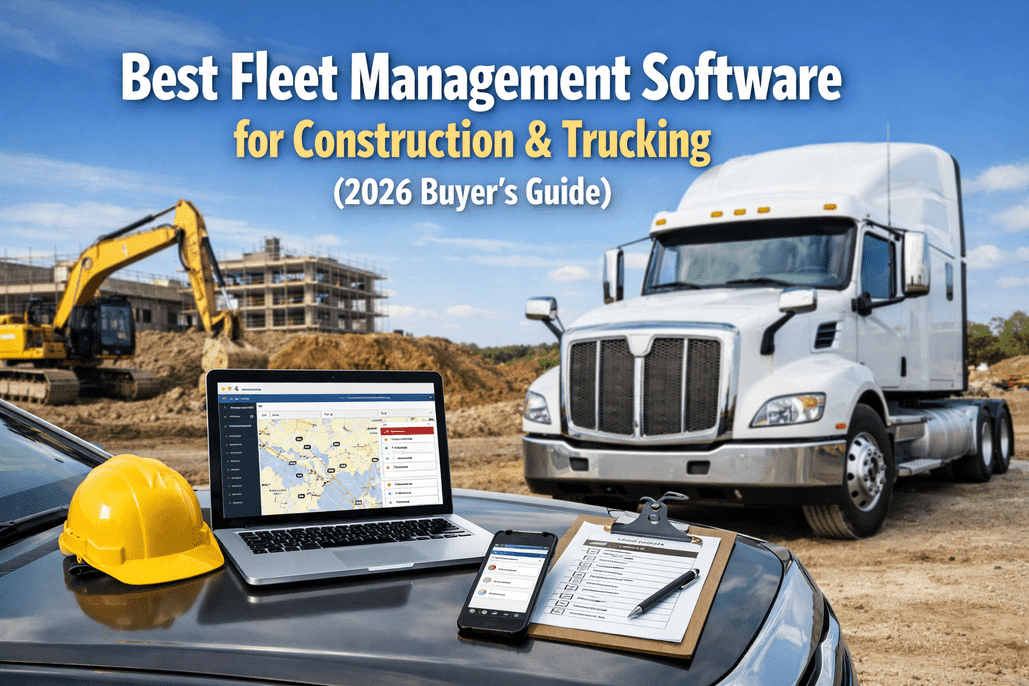
Managing a construction or trucking fleet means juggling vehicle inspections, preventive maintenance schedules, compliance documentation, fuel tracking, and real-time visibility across dozens or hundreds of assets—often from a mobile phone on a job site. The right fleet management software eliminates spreadsheets, paper forms, and guesswork, replacing them with digital workflows that keep vehicles compliant, maintenance on schedule, and operations visible in real time. But with hundreds of platforms available—each with different strengths, limitations, and target audiences—choosing the right one for heavy-duty fleets requires understanding which features actually matter for construction and trucking operations. This 2026 buyer's guide compares the best fleet management software platforms, evaluates critical features, and explains why inspection-first platforms outperform general-purpose tools for heavy fleets. Sign up for HVI to experience inspection-driven fleet management built for heavy vehicles, or book a demo to see it in action.
What Is Fleet Management Software?
Fleet management software is a digital platform that helps organizations track, maintain, and optimize their vehicle and equipment fleets. These systems combine hardware (GPS trackers, telematics devices, dash cams) with cloud-based software to provide real-time visibility into fleet operations—from vehicle location and driver behavior to maintenance status and regulatory compliance.
Core Functions of Fleet Management Software
Modern fleet management platforms serve as the central nervous system for fleet operations, connecting drivers, vehicles, maintenance teams, and management through a single digital ecosystem. For construction and trucking fleets specifically, these systems must handle the unique demands of heavy-duty vehicles, DOT compliance requirements, and harsh operating environments that general consumer-focused tools simply weren't designed for.
Real-time GPS location, geofencing, run hours, idle time, and utilization metrics for trucks, trailers, and heavy equipment.
Digital pre-trip/post-trip inspections, DVIR compliance, photo documentation, and automated defect-to-work-order workflows.
Preventive maintenance programs, work order management, service reminders based on mileage/hours/time, and repair tracking.
DOT/FMCSA regulatory compliance, ELD/HOS management, annual inspection tracking, audit-ready record retention.
Fuel card integration, consumption tracking, cost-per-mile analysis, total cost of ownership reporting by vehicle.
Driver scorecards, behavior monitoring, dash cam integration, safety coaching, and incident documentation.
Fleet Software Market at a Glance (2026)
Watch: Modern Fleet Management in Action
See how HVI transforms fleet operations with inspection-first management. This overview demonstrates:
- Digital Inspections: How drivers complete DVIRs in minutes.
- Maintenance Automation: The instant workflow from defect to work order.
- Real-Time Tracking: Visibility into every asset's location and status.
Discover why HVI is the top choice for construction and trucking fleets.
Key Features to Look For
Not all fleet management software is created equal—especially for construction and trucking operations. Heavy-duty fleets face unique challenges including DOT compliance requirements, harsh operating environments, mixed asset types (trucks, trailers, heavy equipment), and the need for inspection workflows that go beyond basic GPS tracking. Here are the features that matter most when evaluating platforms for heavy fleets:
Digital Inspection & DVIR
The foundation of fleet compliance. Look for guided inspection workflows, photo/video capture, GPS-stamped submissions, customizable checklists by vehicle type, and automatic DVIR generation that meets 49 CFR 396.11 requirements.
Defect-to-Work-Order Automation
When a driver reports a defect during inspection, the system should automatically generate a work order, notify maintenance, and prevent the vehicle from dispatching until repairs are certified.
Preventive Maintenance Scheduling
Automated PM scheduling based on mileage, engine hours, or calendar intervals. Should support different schedules for different vehicle types and send proactive reminders before service is due.
DOT/FMCSA Compliance Tools
Annual inspection tracking, ELD/HOS compliance, CSA score monitoring, document retention management, and audit preparation tools specifically designed for FMCSA regulatory requirements.
Mobile-First Driver App
A robust mobile app that works offline in remote areas, supports photo capture, provides guided inspection workflows, and requires minimal training for drivers to adopt.
Reporting & Analytics
Customizable dashboards, fleet health reports, cost-per-mile/hour analysis, inspection compliance rates, maintenance spend tracking, and exportable audit reports.
Quick Evaluation Checklist
- FMCSA-compliant DVIR workflows
- Photo-verified inspections
- Defect-to-work-order automation
- Offline mobile functionality
- DOT annual inspection tracking
- Multi-asset support (trucks + equipment)
- AI-powered dash cams
- Fuel card integration
- Route optimization
- Parts inventory management
- Telematics hardware integration
- API access for custom integrations
Looking for a platform that checks every box for heavy fleet inspections and compliance? Sign up for HVI to get started with inspection-first fleet management, or schedule a demo to see how it handles your specific fleet requirements.
Best Fleet Management Platforms Compared
We evaluated the leading fleet management platforms based on their capabilities for construction and trucking fleets—focusing on inspection depth, compliance tools, maintenance workflows, heavy-duty vehicle support, and overall value. Here's how the top platforms compare:
HVI (Heavy Vehicle Inspection)
Best for: Construction & Trucking Fleet InspectionsHVI is purpose-built for heavy vehicle fleets, delivering the most comprehensive inspection and compliance platform available for construction and trucking operations. Unlike general-purpose fleet tools that bolt inspections on as an afterthought, HVI was designed from the ground up around the inspection-to-maintenance workflow that heavy fleets depend on for DOT compliance and operational uptime.
- Industry-leading digital inspection workflows with photo verification
- FMCSA-compliant DVIR generation (49 CFR 396.11/396.13)
- Automated defect-to-work-order pipeline
- DOT annual inspection tracking and compliance alerts
- Custom inspection templates by vehicle/equipment type
- Offline mobile app for remote job sites
- CSA score protection through proactive inspection data
- Audit-ready documentation with 14-month retention
- Heavy equipment support (not just trucks)
- Fast setup—operational in under 10 minutes
- Construction fleets with mixed assets
- Trucking companies focused on DOT compliance
- Fleets needing inspection-first workflow
- Operations requiring offline mobile capability
- Companies preparing for FMCSA audits
Fleet Rabbit
Best for: Comprehensive CMMS + Fleet ManagementFleet Rabbit delivers a comprehensive Computerized Maintenance Management System (CMMS) that combines fleet management with deep maintenance capabilities. It excels at bridging the gap between inspection workflows and full-cycle maintenance management, making it particularly strong for fleets that need robust work order management alongside their inspection program.
- Full CMMS functionality with fleet-specific workflows
- Integrated inspection, maintenance, and compliance management
- Work order management with parts tracking
- Preventive maintenance scheduling (mileage/hours/calendar)
- Fuel tracking and cost analysis
- Multi-industry support (trucking, construction, transit, utilities)
- Compliance monitoring and document management
- Real-time fleet dashboard with KPI tracking
- Driver management and assignment tools
- API integrations with third-party telematics
- Fleets needing full CMMS + fleet management
- Operations with complex maintenance workflows
- Multi-industry organizations
- Companies needing parts inventory tracking
- Fleets scaling from basic to enterprise operations
Samsara
Best for: GPS Tracking & Telematics-First FleetsSamsara is a mature telematics platform with strong GPS tracking, AI-powered dash cams, ELD compliance, and real-time fleet visibility. It serves a wide range of industries and excels at driver safety monitoring and route optimization.
- Real-time GPS tracking with 1-second refresh
- AI-powered dual-facing dash cams
- ELD/HOS compliance with FMCSA certification
- DVIR workflows via mobile app
- Route optimization (100+ stops)
- Satellite connectivity for remote areas
- Extensive third-party integration marketplace
- Higher cost tier among fleet platforms
- Long-term contract commitment required
- Inspection tools are secondary to telematics
- Better for on-road trucks than off-road equipment
- Complex setup for large deployments
Fleetio
Best for: Budget-Friendly Maintenance TrackingFleetio offers a well-designed maintenance and fleet management platform at competitive pricing. It provides strong maintenance scheduling, cost tracking, and inspection logging with a clean, intuitive interface suitable for fleets of various sizes.
- Affordable entry-level plans available
- Strong maintenance scheduling and work orders
- Mobile inspection app (Fleetio Go)
- Fuel card and GPS integrations
- Cost-per-mile tracking and reporting
- Unlimited users on all plans
- Over 1M fleet assets managed globally
- No native GPS tracking (relies on integrations)
- 5-vehicle minimum requirement
- Advanced features locked to higher tiers
- Limited heavy equipment-specific workflows
- No 24/7 support
Motive (formerly KeepTruckin)
Best for: All-in-One Trucking OperationsMotive provides a comprehensive fleet platform with strong ELD compliance, AI dash cams, and fleet card integration. It's particularly well-suited for trucking operations that need a single platform for compliance, safety, and spend management.
- Competitive pricing for feature set
- Flexible contract terms (shorter than many competitors)
- AI dash cam with industry-leading detection accuracy
- Integrated Motive Card for spend management
- Quick implementation (~2.7 months avg.)
- 90% of support cases resolved within 2 hours
- Lifetime hardware warranty
- Inspection workflows less robust than inspection-first platforms
- Primarily designed for on-road trucking
- Device switching can cause log errors
- Driver scorecard depth could be improved
- Limited construction equipment support
Whip Around
Best for: DVIR-Focused Inspection ManagementWhip Around is a cloud-based DVIR and fleet inspection platform that emphasizes daily inspections, DOT compliance, and communication between drivers and mechanics. It's a focused tool for fleets that prioritize inspection workflows.
- Strong DVIR and daily inspection workflows
- Easy driver adoption with minimal training
- Customizable inspection forms
- Push notifications for defect alerts
- DOT compliance documentation
- Affordable entry plans available
- Maintenance module only available on higher-tier plans
- Limited reporting and analytics depth
- Mobile app functionality gaps for alerts
- No native GPS/telematics
- Less suited for complex maintenance workflows
Verizon Connect
Best for: Enterprise Fleet Tracking & RoutingVerizon Connect is a top-rated enterprise fleet management platform with comprehensive GPS tracking, route optimization, and fleet analytics. It's suitable for large, diverse fleets that need broad operational visibility.
- Fast GPS refresh rates and accurate tracking
- 24/7 phone support
- Comprehensive reporting suite
- Route planning and optimization tools
- Broad industry coverage
- Strong driver management features
- Premium pricing tier among fleet platforms
- Pricing not publicly listed
- Inspection workflows are basic compared to specialized tools
- Better for route-based fleets than construction
- Can be excessive for smaller fleets
Quick Comparison Table
| Platform | Inspections | Maintenance | GPS/Telematics | Compliance | Heavy Equipment |
|---|---|---|---|---|---|
| HVI | ★★★★★ | ★★★★★ | ★★★☆☆ | ★★★★★ | ★★★★★ |
| Fleet Rabbit | ★★★★★ | ★★★★★ | ★★★☆☆ | ★★★★★ | ★★★★☆ |
| Samsara | ★★★☆☆ | ★★★★☆ | ★★★★★ | ★★★★☆ | ★★★☆☆ |
| Fleetio | ★★★★☆ | ★★★★★ | ★★☆☆☆ | ★★★☆☆ | ★★★☆☆ |
| Motive | ★★★☆☆ | ★★★★☆ | ★★★★★ | ★★★★☆ | ★★☆☆☆ |
| Whip Around | ★★★★☆ | ★★★☆☆ | ★☆☆☆☆ | ★★★★☆ | ★★★☆☆ |
| Verizon Connect | ★★☆☆☆ | ★★★★☆ | ★★★★★ | ★★★☆☆ | ★★★☆☆ |
Ready to see why inspection-first platforms outperform general fleet tools for heavy vehicles? Start your free HVI trial today, or book a personalized demo to compare HVI against your current system.
Why Inspections Matter in Fleet Software
Most fleet management platforms were built around GPS tracking and then bolted on inspections as a checkbox feature. For construction and trucking fleets, this approach is backwards. Inspections are the foundation of fleet compliance, safety, and uptime—and the quality of your inspection system determines whether your fleet management software actually prevents problems or merely documents them after the fact.
Compliance Protection
FMCSA regulations require documented DVIRs (49 CFR 396.11), annual inspections (49 CFR 396.17), and repair certification before dispatch. Missing or incomplete inspections result in violations carrying 4-8 CSA points each—with recent violations weighted 3x. Digital inspections create automatic, timestamped compliance documentation that stands up to audits.
Preventive vs. Reactive Maintenance
Thorough daily inspections catch developing issues—worn brake pads, low tire tread, fluid leaks, cracked hoses—before they become roadside failures or OOS violations. When inspections automatically trigger work orders, maintenance shifts from reactive (fixing breakdowns) to proactive (preventing them).
CSA Score Protection
Clean roadside inspections actively improve your CSA percentile ranking. Fleets with consistent pre-trip inspection programs catch defects internally rather than having inspectors discover them roadside—keeping violation points off your record and insurance premiums under control.
Driver Accountability
Photo-verified digital inspections eliminate "pencil whipping"—the practice of checking every box without actually inspecting. When drivers must photograph specific components, inspection quality improves dramatically, and managers can verify thoroughness without being on-site.
GPS-First vs. Inspection-First: What's the Difference?
- Built around vehicle tracking and telematics
- Inspections added as secondary feature
- Basic checkbox-style DVIR forms
- Limited photo documentation
- Manual work order creation from defects
- Compliance reporting is afterthought
- Optimized for route-based delivery fleets
- Weaker offline mobile functionality
- Built around inspection-to-maintenance workflow
- Deep, guided inspection checklists by asset type
- Required photo/video documentation
- Automated defect-to-work-order pipeline
- Built-in FMCSA compliance (DVIR, annual, retention)
- Audit-ready documentation from day one
- Designed for heavy-duty & construction assets
- Robust offline capability for job sites
Why HVI Is Built for Heavy Fleets
Heavy Vehicle Inspection (HVI) was designed specifically for the fleets that general-purpose platforms underserve—construction companies managing mixed equipment fleets, trucking operations navigating DOT compliance requirements, and any organization where vehicle inspections aren't just a checkbox but the foundation of safe, compliant operations.
HVI's inspection templates are designed for commercial trucks, trailers, heavy construction equipment, buses, and specialized vehicles—not consumer cars. Every checklist item aligns with FMCSA Appendix A/G standards and industry-specific requirements, ensuring nothing is missed.
When a driver flags a brake issue during pre-trip inspection, HVI automatically generates a work order, notifies the maintenance team, and tracks the repair through completion and certification—all without manual intervention or paper handoffs.
DVIR compliance (49 CFR 396.11/396.13), annual inspection tracking (49 CFR 396.17), document retention management (3-month DVIR, 14-month annual), and audit preparation tools are native features—not paid add-ons.
Required photo documentation eliminates pencil whipping. GPS timestamps and device verification confirm that inspections happen at the right time, in the right location, on the right vehicle. This level of documentation is invaluable during audits.
Construction sites, remote job locations, and rural routes often lack reliable cell service. HVI's offline-capable mobile app ensures drivers can complete full inspections with photos regardless of connectivity—syncing automatically when signal returns.
Unlike enterprise platforms requiring months of implementation and dedicated IT resources, HVI is operational in under 10 minutes. Drivers need minimal training thanks to intuitive guided workflows, and fleet managers see value from day one.
Frequently Asked Questions
Find the Right Fleet Management Software for Your Fleet
For construction and trucking fleets, inspection quality determines compliance outcomes. HVI delivers the industry's most comprehensive inspection-to-maintenance workflow—purpose-built for heavy vehicles, operational in minutes, and designed to protect your CSA scores from day one.
No credit card required • No hardware needed • Setup in under 10 minutes