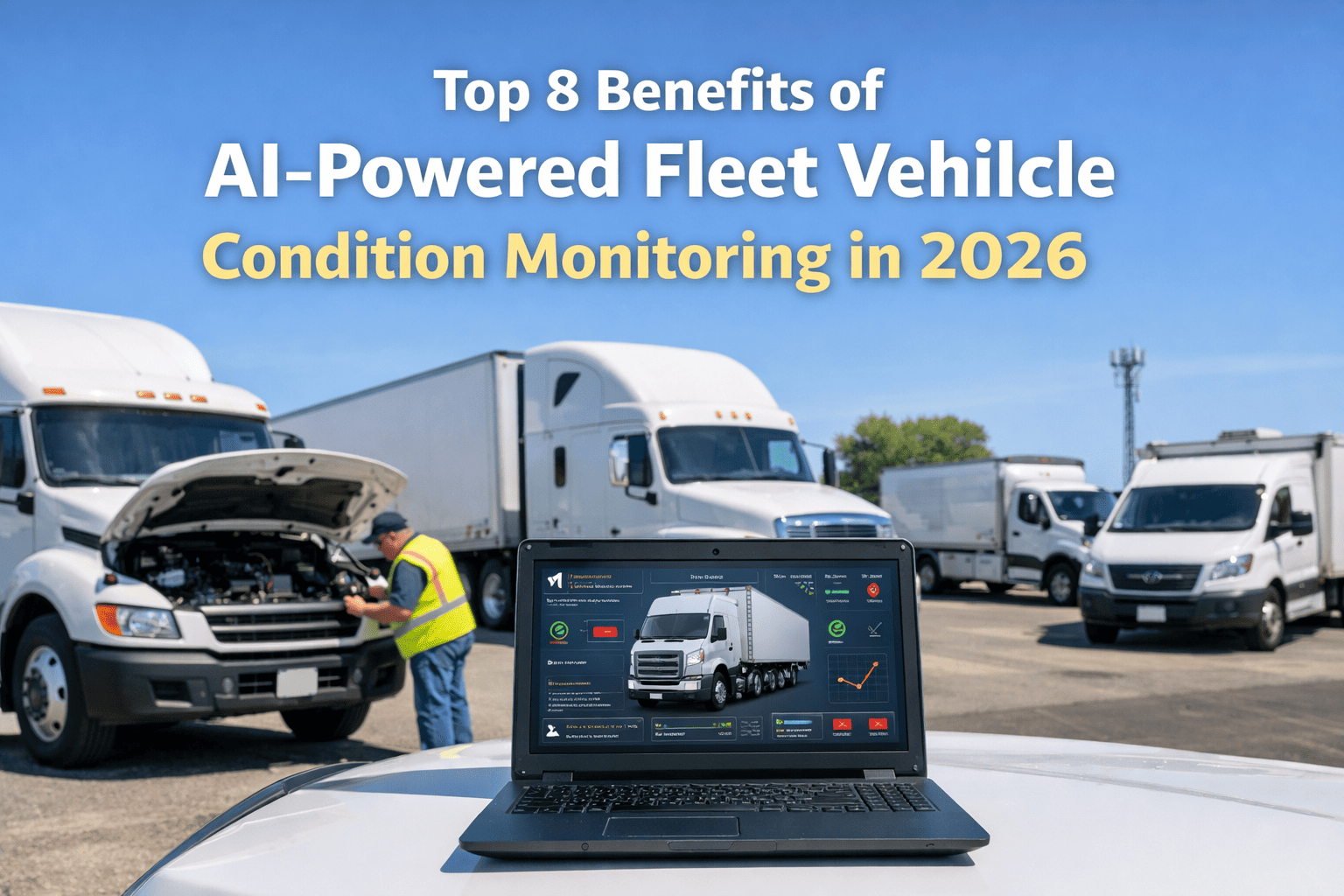
Your trucks generate 25,000+ data points every single day — engine temperature, brake pressure, vibration patterns, voltage readings. The data is already there. The problem? Nobody's reading it. A single unplanned breakdown costs your fleet $1,900+ when you add up towing, emergency repairs, missed deliveries, and driver downtime. Multiply that across 50 vehicles, and you're losing 11% of total operational hours annually to problems that AI can now predict weeks in advance. In 2026, fleets using AI-powered condition monitoring report 35% lower repair costs, 89% fewer preventable breakdowns, and full ROI within 60 days. Here are the top 8 benefits — and why the gap between AI-equipped fleets and paper-based operations is widening every quarter.
Predict Failures Before They Happen
Traditional maintenance works in two modes — fix it when it breaks (reactive) or service on a fixed schedule (preventive). Both are expensive. Reactive costs 3–5x more than planned repairs. Preventive replaces parts with thousands of miles of life remaining.
AI condition monitoring introduces a smarter third option: maintain based on actual vehicle health. Machine learning models analyze engine diagnostics, vibration patterns, fluid pressure, temperature trends, and historical repair data — flagging component failure risk 20 to 45 days before traditional diagnostics would catch it.
Fix when it breaks. Highest cost, maximum disruption. Emergency repairs run $8,000–$25,000.
Service on schedule. Over-maintains some trucks, under-maintains others. Wastes usable parts.
Right part, right truck, right time. 85–95% accuracy. Scheduled on your terms — not the highway's.
Slash Maintenance Costs by 25–35%
Emergency repairs carry premium labor rates, expedited parts shipping, and towing charges. A roadside breakdown adds $448–$760 per day in direct costs before you count missed deliveries and customer impact.
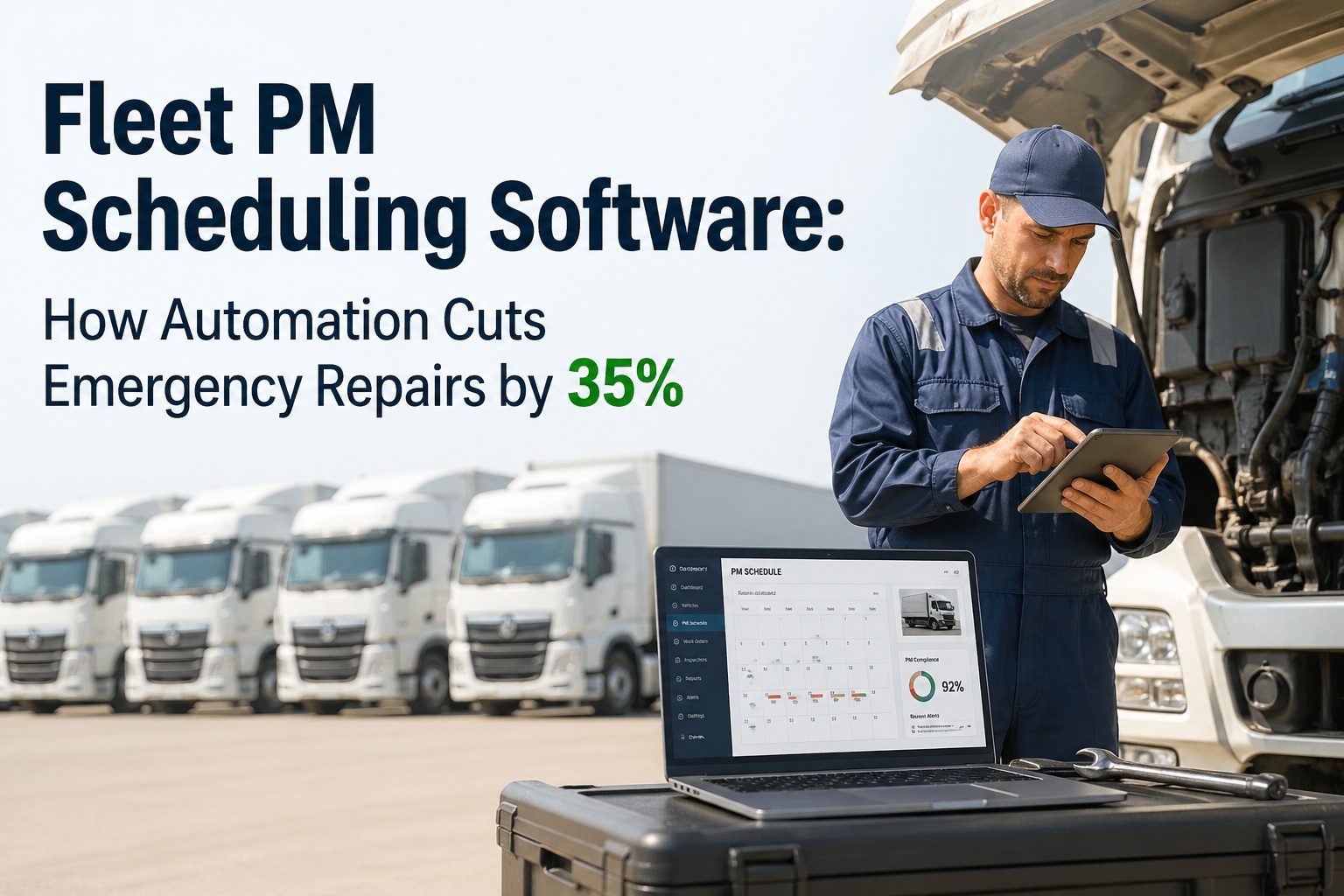
AI condition monitoring converts these expensive emergencies into planned shop-rate services. Fleets using predictive platforms consistently document 25–35% overall maintenance cost reduction and 70–85% fewer unplanned breakdowns.
How Much Is Unplanned Downtime Costing Your Fleet?
See AI-powered condition monitoring in action. Get failure predictions within 72 hours — no hardware required.
Real-Time Fleet Health Visibility
Managing a fleet without real-time condition data is flying blind. You know a truck left the yard — but is the brake system healthy? Is coolant temperature trending up? Are tires wearing unevenly?
AI condition monitoring provides a dynamic health score for every vehicle, updated continuously. Fleet managers see at a glance which trucks are healthy, which need attention, and which should be pulled immediately.
Every alert comes with severity classification, estimated time to failure, and recommended action. Your maintenance team stops firefighting and starts planning.
Strengthen DOT Compliance & CSA Scores
In 2026, FMCSA's Safety Measurement System overhaul split Vehicle Maintenance into two separate scoring categories — meaning maintenance gaps now hurt your CSA score in two places simultaneously. Roadside violations, out-of-service orders, and inspection defects all feed directly into your safety rating.
AI condition monitoring catches component issues that lead to violations before your truck reaches the inspection station. Every AI-identified issue generates timestamped, GPS-verified documentation that satisfies DOT audit requirements. Fleets using AI inspection tools report 15% insurance premium reductions from improved CSA scores.
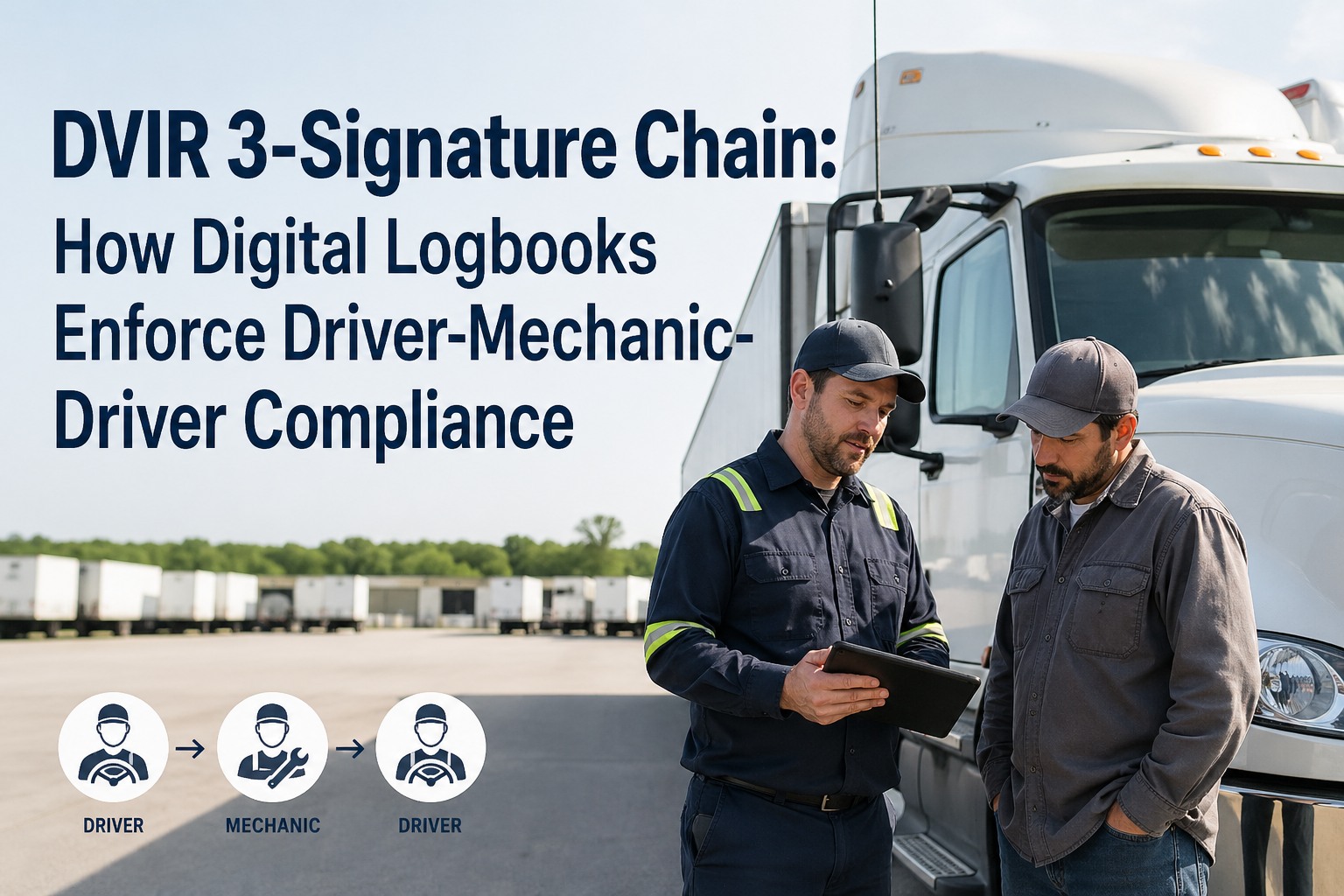
Need to strengthen your inspection and compliance workflow? AI condition data feeds directly into your DVIR process, ensuring developing issues are formally captured.
Extend Vehicle Lifespan & Maximize Asset ROI
Most fleets replace vehicles based on age or mileage thresholds — not actual condition. Some trucks get retired with years of useful life remaining, while others stay in service past economic viability.
AI tracks degradation patterns across every major system and calculates true remaining useful life for each vehicle. This transforms replacement decisions from arbitrary cutoffs to evidence-based analysis.
AI helps you keep trucks running in peak condition longer — and know exactly when to replace
For a 50-truck fleet at $150,000 each, extending average life by even one year defers $7.5 million in capital expenditure. That's a strategic financial advantage — not a marginal improvement.
Want to see how condition monitoring extends your fleet's productive life? Sign up for a free trial and start tracking vehicle health scores within 24 hours.
Eliminate Inspection Fraud & Pencil Whipping
Paper inspections have a fundamental problem: there's no way to verify they actually happened. A driver checking "all good" on 37 components in 3 minutes isn't inspecting — they're pencil whipping. When that unchecked tire blows on I-95, your fleet owns the liability.
AI-powered monitoring paired with computer vision inspection eliminates this gap. Systems detect altered images, duplicate photos, poor submissions, and "photo of a photo" fraud. Smart prompts prevent submission without required elements — drivers can't skip steps.
AI algorithms trained on millions of real-world images detect damage across 163+ vehicle parts with 95–99% accuracy — including micro-damages human inspectors consistently miss.
Improve Driver Retention & Satisfaction
The US trucking industry faces an 80,000+ driver shortage with 237,600 annual openings projected through 2034. The average driver is 46. Replacements aren't arriving fast enough. Keeping drivers is a survival strategy.
Drivers leave fleets where equipment breaks down constantly and paperwork is endless. They stay where trucks are reliable and apps are simple. AI condition monitoring directly improves the driver experience:
Fewer breakdowns = fewer frustrated, stranded drivers
AI cuts inspection time by 40%, saving 15+ min/driver/day
Digital DVIRs replace clipboard-based forms entirely
Proactive fixes build driver confidence and morale
Seamless Integration — No Rip-and-Replace
The biggest fear fleet managers have about AI isn't the technology — it's the disruption. New hardware? Weeks of training? An IT overhaul?
In 2026, the answer is no. Modern platforms work with your existing smartphones, telematics, and fleet management software. Drivers become proficient in 25–30 minutes. Most platforms connect with Geotab, Samsara, Verizon Connect — pulling data streams that already exist.
Connect existing telematics or smartphones
AI builds vehicle baselines in 24 hours
First failure predictions in 72 hours
Full ROI within 60 days
For fleets without telematics, affordable OBD-II devices ($50–$150 each) provide the necessary connectivity.
The ROI Snapshot: What Fleets Actually Report
Your Fleet Already Generates the Data. AI Just Reads It.
The gap between AI-powered fleets and paper-based operations widens every quarter. Lower costs, fewer breakdowns, better compliance, happier drivers. The technology works. The ROI is documented. The only question: how much longer will your fleet wait?
Frequently Asked Questions
Machine learning models begin building vehicle baselines within 24 hours and generate first failure predictions within 72 hours. Most fleets see measurable downtime reduction within 30 days.
Yes. Modern AI platforms integrate with existing telematics, ELDs, and CMMS. No rip-and-replace. Drivers use existing smartphones — no new hardware.
All commercial types — semi-trucks, trailers, straight trucks, refrigerated units, tankers, buses, construction equipment, and mixed fleets of any size.
Most fleets see positive ROI within 44–60 days. The first prevented breakdown often pays for the entire system. Documented outcomes: 25–35% maintenance cost reduction, 200–500% annual ROI.
Absolutely. FMCSA explicitly authorizes electronic DVIRs under 49 CFR 396.11 and 396.13 as of February 2026. Reports include timestamped photos, GPS locations, digital signatures, and full component checklists. Sign up to see compliant reporting in action.