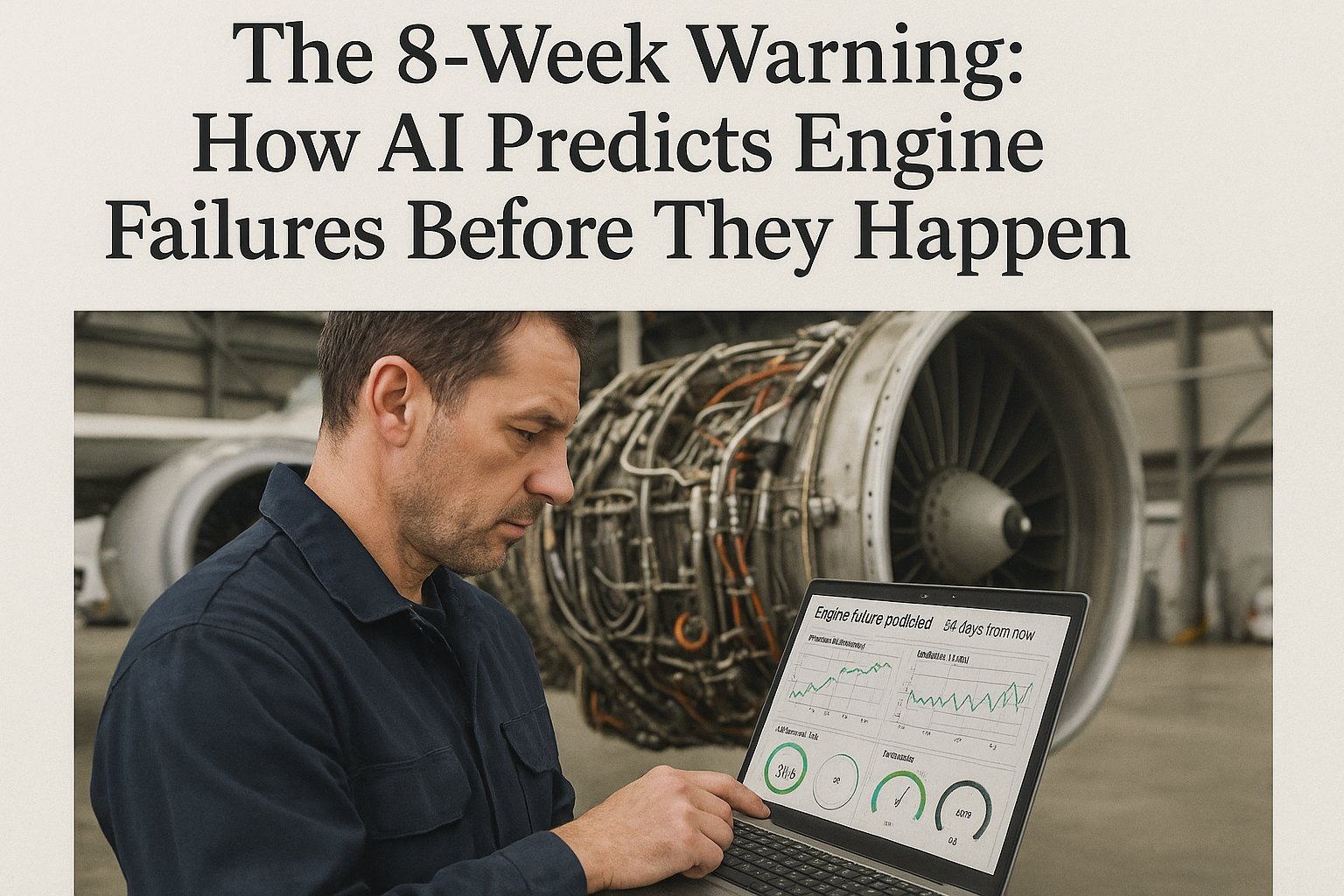
AI-powered predictive maintenance now identifies engine failures up to 8 weeks before they occur, preventing unexpected breakdowns that cost fleets $12,000-$35,000 per incident. Advanced machine learning algorithms analyze hundreds of data points from sensors, maintenance records, and operational patterns to detect subtle anomalies invisible to human observation. Fleet operators using AI prediction systems report 73% fewer emergency repairs and 82% improvement in equipment uptime. Start leveraging AI-powered diagnostics to transform reactive maintenance into proactive protection that saves thousands while extending equipment life.
The Power of AI in Predictive Maintenance
Stop Reacting to Breakdowns—Start Predicting Them
Implement AI-powered maintenance forecasting to catch failures before they happen and eliminate costly surprises.
How AI Predicts Engine Failures 8 Weeks Early
Traditional maintenance schedules operate on fixed intervals or react to obvious symptoms—by which time damage is already underway. AI prediction transforms this approach by continuously monitoring hundreds of variables, recognizing patterns that precede failure, and alerting maintenance teams weeks before problems become critical. This 8-week warning window provides time to schedule repairs during planned downtime, order parts economically, and prevent cascading damage that multiplies costs.
Sensor Data Integration & Real-Time Monitoring
AI systems collect data from dozens of engine sensors monitoring oil pressure, temperature variations, vibration patterns, fuel consumption rates, exhaust gas composition, and cooling system performance. Unlike traditional monitoring that triggers alerts only when values exceed thresholds, AI analyzes the relationships between multiple parameters—detecting subtle correlations that signal developing problems. A slight increase in oil temperature combined with minor pressure fluctuations and changing vibration frequency creates a signature pattern AI recognizes as early bearing wear.
Pattern Recognition from Historical Failures
Machine learning models train on thousands of actual engine failures, learning the specific sequences of changes that preceded each breakdown. The AI identifies that certain combinations of temperature drift, oil consumption increases, and pressure variations occurred 6-8 weeks before catastrophic failures. When current data matches these historical patterns, the system generates early warnings with confidence scores based on similarity to known failure progressions.
Operational Context Analysis
AI factors in operating conditions that accelerate or moderate wear patterns—load weight, terrain difficulty, ambient temperature, duty cycles, and driver behavior. An engine showing marginal temperature increases might be normal for extreme conditions but concerning for moderate operation. The system adjusts predictions based on whether the equipment operates in mining, long-haul trucking, or urban delivery—each generating different stress patterns and failure modes.
Maintenance History Correlation
The AI cross-references current sensor data with complete maintenance records—oil changes, part replacements, repairs, and inspections. Systems learn which maintenance actions extend equipment life and which interventions preceded improved performance. If an engine shows degradation patterns similar to units that failed shortly after specific repairs, the AI flags potential installation issues or defective parts before catastrophic failure occurs.
Fleet-Wide Anomaly Detection
Rather than analyzing each engine in isolation, AI compares performance across similar equipment in the fleet. When one unit begins deviating from fleet norms—even if values remain within acceptable ranges—the system flags it for investigation. This comparative analysis catches problems that individual monitoring would miss, especially useful for detecting defective parts, contaminated fuel batches, or operator issues affecting specific vehicles.
Progressive Degradation Tracking
AI establishes baseline performance for each engine when new or after major service, then tracks gradual degradation over time. The system models normal wear curves and identifies when degradation accelerates beyond expected rates. This distinguishes between healthy aging and abnormal deterioration that will lead to premature failure. The 8-week warning typically comes when degradation rate suddenly increases—a clear indicator that failure progression has begun.
Real-World Impact: AI Prediction vs Traditional Maintenance
- Responds after failures occur
- Emergency repairs cost 3-5x planned maintenance
- Unexpected downtime disrupts operations
- Parts ordered rush delivery at premium prices
- Cascading damage increases repair scope
- Limited visibility into fleet health
- Identifies issues 8 weeks before failure
- Scheduled repairs during planned downtime
- Parts ordered economically with time to source
- Early intervention prevents damage escalation
- Continuous fleet health monitoring
- Data-driven maintenance optimization
Typical ROI: 10-Vehicle Fleet Implementation
ROI achieved within first 6 months for most fleet operations. Larger fleets see proportionally greater benefits with economies of scale.
AI prediction requires quality sensor data and consistent maintenance record-keeping. Systems achieve maximum accuracy after 3-6 months of learning your specific fleet patterns. Begin with pilot implementation on critical equipment before fleet-wide deployment. Consult with predictive maintenance specialists to design implementation that maximizes ROI for your operation.
What AI Can't Predict (Yet)
While AI excels at detecting internal mechanical degradation and gradual wear progression, certain failure modes remain challenging to predict with 8-week accuracy:
Sudden External Damage
Catastrophic events like collisions, road debris impact, or vandalism occur without warning patterns AI can detect.
Manufacturing Defects
Hidden defects in new parts may not manifest until sudden failure. AI improves at identifying these as defect patterns emerge across fleets.
Contamination Events
Single instances of severe contamination (bad fuel, coolant ingestion) can cause rapid damage faster than the 8-week prediction window.
Extreme Operator Abuse
Intentional or negligent operation far outside parameters can accelerate damage beyond AI models trained on normal operating ranges.
These limitations affect less than 12% of failures in typical operations. AI successfully predicts the vast majority of failures related to wear, degradation, and progressive mechanical deterioration.
The Future of Maintenance is Predictive
The transformation from reactive to predictive maintenance represents the single largest operational improvement available to fleet operators today. AI systems providing 8-week failure warnings enable strategic parts inventory management, optimized maintenance scheduling, and dramatically reduced emergency repair costs. Early adopters report not just cost savings but fundamental operational improvements—predictable uptime, data-driven capital planning, and competitive advantages from reliable equipment.
The technology exists and has proven effective across thousands of implementations. The question isn't whether AI prediction works—it's how quickly you can implement it to capture these benefits for your operation. Start with basic diagnostic monitoring and scale toward full AI prediction as your data foundation builds.
Transform Your Maintenance Strategy with AI Prediction
Stop firefighting breakdowns and start preventing them with AI that sees failures weeks before they happen.