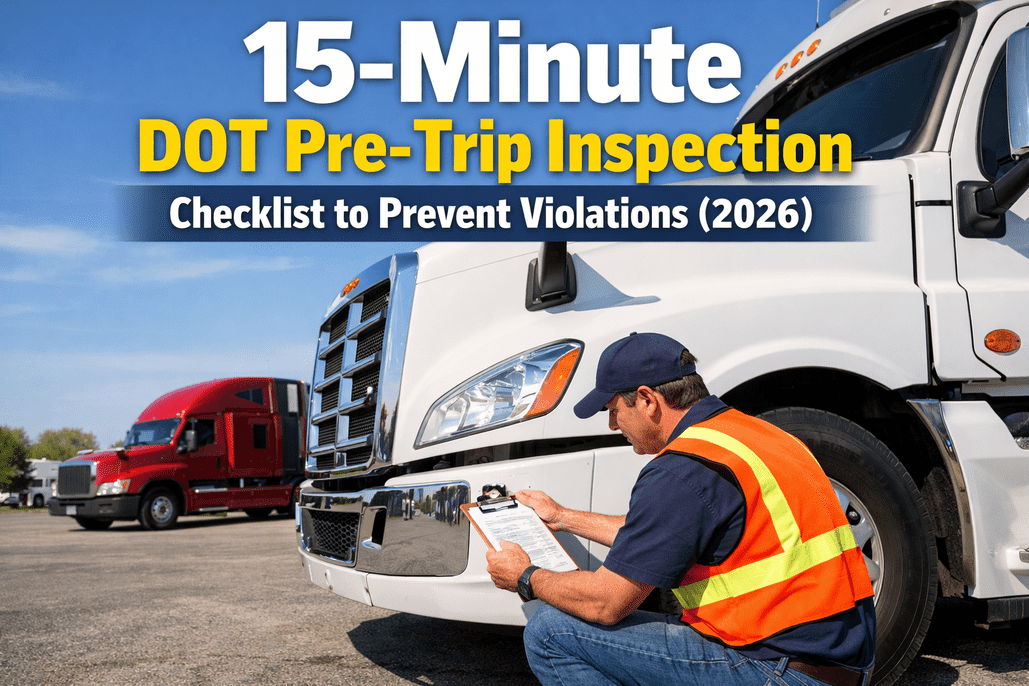
Every morning, commercial drivers face the same critical decision: complete a thorough DOT pre-trip inspection or risk violations, breakdowns, and roadside delays. The challenge? Industry data shows that 72% of fleets still struggle with time-consuming manual inspections that take 30-45 minutes per vehicle—eating into drive time, delaying deliveries, and frustrating drivers who view inspections as bureaucratic overhead rather than the safety-critical process they truly are.
In 2026, brake violations alone account for over 25% of all out-of-service orders, tire and wheel defects represent 63% of observable violations that trigger roadside inspections, and lighting failures cost carriers an average of $2,600 per citation. Every single one of these violations is preventable through effective pre-trip inspection—but only if drivers can complete checks efficiently without sacrificing thoroughness. This guide reveals exactly how top-performing fleets achieve 15-minute inspections while maintaining 100% DOT compliance and significantly reducing violation rates. Ready to transform your fleet's inspection process? Sign up for HVI to experience inspection workflows that drivers actually complete, or book a demo to see how digital inspections transform compliance from a time burden into a competitive advantage.
Why 15 Minutes Is the Perfect Inspection Window
The "30-45 minute inspection" myth persists because it's what happens when drivers lack structure, use paper checklists, and perform redundant checks. Research from fleet operations shows that experienced drivers can complete comprehensive DOT-compliant inspections in 15 minutes or less—but only when following an optimized sequence that eliminates backtracking and wasted motion.
The Science of 15 Minutes
A properly sequenced inspection covers approximately 45 checkpoints for the power unit and 15 for trailers. At an average of 12-15 seconds per checkpoint (including visual inspection and physical checks), this totals 12-15 minutes—leaving buffer time for documentation and any defect notation.
Why Manual Inspections Take Longer
Paper checklists require drivers to remember what to check, flip through pages, write notes, and often backtrack to components they missed. Manual processes lack guided workflows, result in inconsistent inspection depth, and add 10-15 minutes of pure administrative overhead with no safety benefit.
The Digital Inspection Advantage
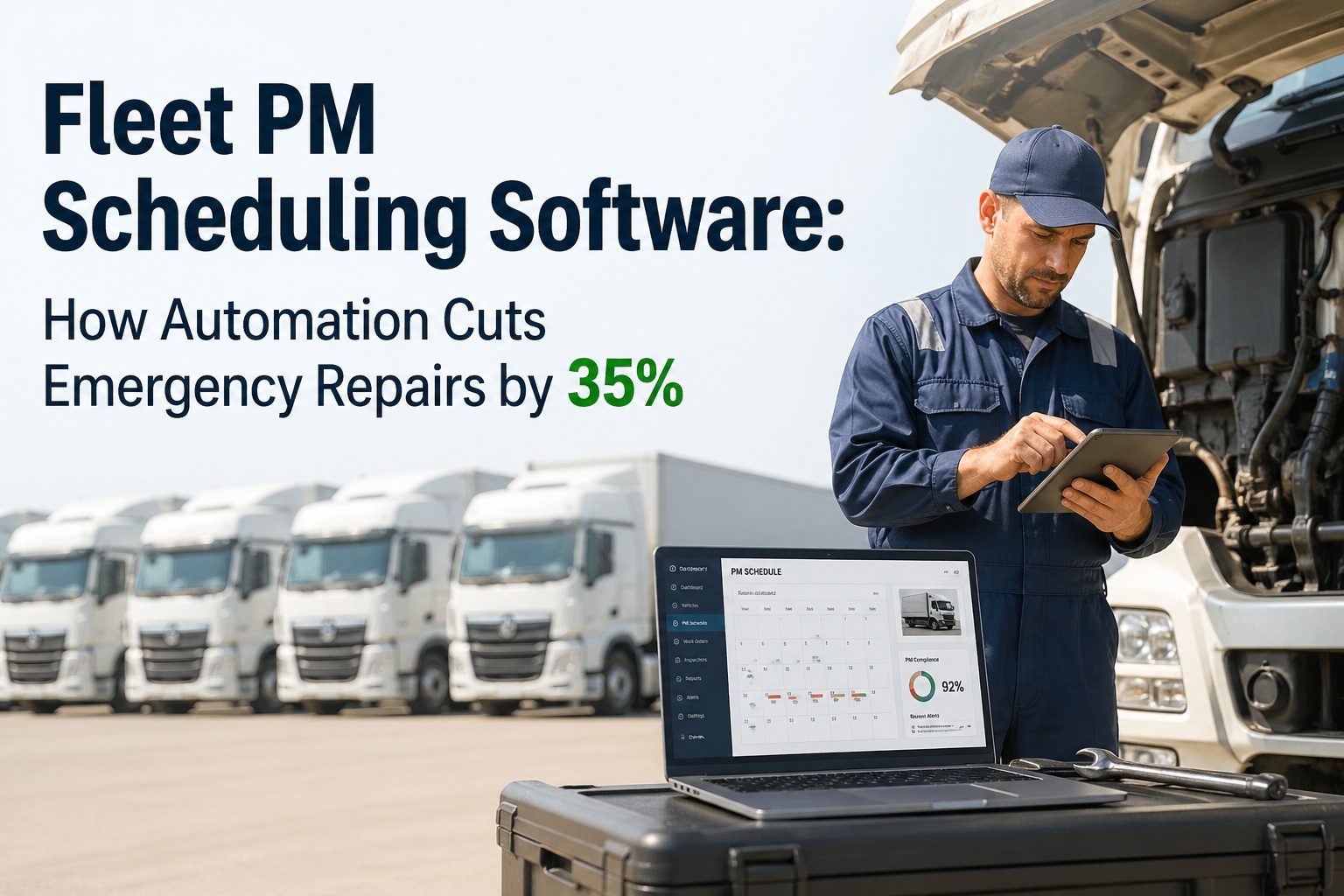
Mobile inspection apps guide drivers through optimized sequences, eliminate paperwork, provide photo documentation at the point of inspection, and auto-generate compliant DVIRs—reducing total inspection time by 40-65% while improving thoroughness and documentation quality. Want to see this in action? Schedule a demo to experience the difference.
What Top-Performing Fleets Know
Fleets with the lowest violation rates don't necessarily spend more time on inspections—they spend that time more effectively. A 2026 compliance study found that fleets using digital inspection tools with optimized workflows completed inspections 55% faster while catching 82% more defects compared to paper-based processes. The key: eliminating decision fatigue and ensuring every component gets checked systematically, every time.
The 15-Minute DOT Inspection Breakdown
Efficiency in pre-trip inspections comes from sequence optimization—checking components in a logical flow that minimizes walking, eliminates backtracking, and groups related systems together. Here's the exact 15-minute breakdown that DOT-compliant drivers use daily:
Cab & Engine Compartment
- Fluid levels: Engine oil, coolant, power steering, windshield washer (2 min)
- Belts & hoses: Look for cracks, fraying, leaks, proper tension (45 sec)
- Battery & electrical: Secure mounting, clean terminals, no corrosion (30 sec)
Driver's Side Exterior Walk
- Lights & reflectors: Headlights, turn signals, marker lights all functional (1 min)
- Steering components: No loose play, fluid leaks, or damaged linkage (1 min)
- Suspension & frame: Springs, shocks, u-bolts, crossmembers intact (1 min)
Brakes, Wheels & Tires (Both Sides)
- Air brake system: Pressure build, governor cut-in/out, no audible leaks (2 min)
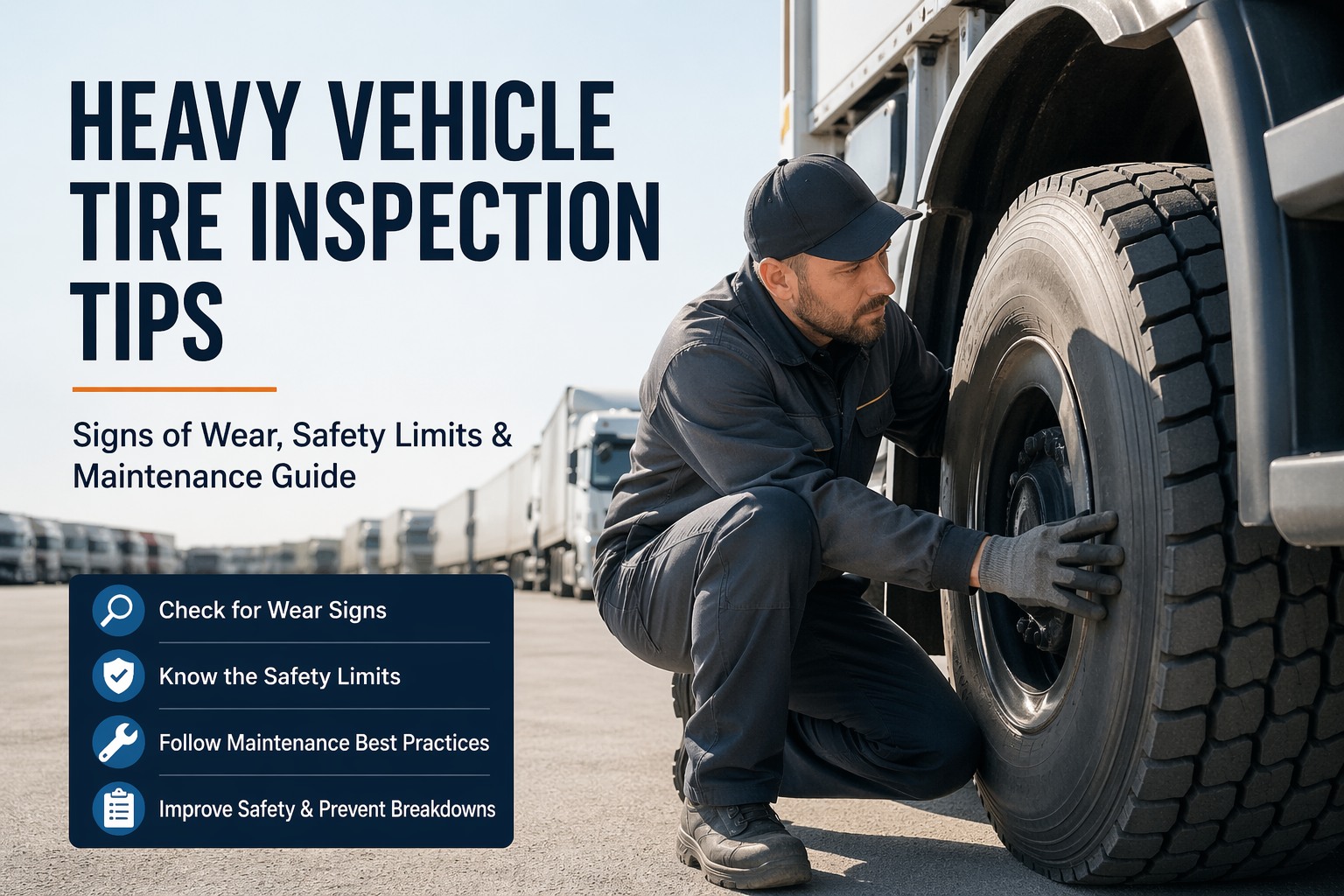
- Tire condition: Tread depth (4/32" minimum), inflation, sidewall damage (1.5 min)
- Wheels & lug nuts: No cracks, rust streaks, loose or missing nuts (30 sec)
Rear & Passenger Side
- Rear lights: Brake lights, tail lights, turn signals, clearance lights (45 sec)
- Cargo securement: Straps, chains, tie-downs properly rated and secured (1 min)
- Passenger-side walk: Mirror steering, suspension, tires (repeat driver side checks) (1.5 min)
Coupling & Trailer Inspection
- Fifth wheel: Properly locked, greased, no visible damage (30 sec)
- Air/electrical lines: Secure connections, no damage, proper routing (30 sec)
- Trailer condition: Doors, roof, landing gear, lights, brakes, tires (2 min)
Complete Your 15-Minute Inspection with Digital Guidance
HVI's mobile app walks drivers through this exact sequence with photo verification and automatic DVIR generation—eliminating paperwork while ensuring nothing gets missed. Start your free trial or book a demo to see the difference.
Critical Safety Components: What DOT Inspectors Actually Check
During roadside inspections, DOT officers focus on the components most likely to cause accidents or breakdowns. Understanding their priorities helps drivers focus inspection time on the items that matter most for compliance and safety. Here's what gets checked first—and what causes the most violations:
Brake Systems
27%What fails: Air pressure below 100 psi, audible air leaks, brake adjustment beyond limits, worn linings, contaminated brake components, malfunctioning valves.
Why it matters: Brake violations receive the highest CSA severity weights (8 points for OOS violations) and are the leading cause of commercial vehicle crashes.
Tires & Wheels
22%What fails: Tread depth below 4/32" (steering) or 2/32" (drive/trailer), flat spots, exposed cords, sidewall bulges, improper tire size mixing, loose or missing lug nuts.
Why it matters: Tire failures cause 40% of manual inspection violations and increase accident liability by 25-30%. Average penalty: $3,800 per violation.
Lighting & Signals
28%What fails: Inoperative headlights, turn signals, brake lights, clearance lights, reflective tape missing or damaged, cracked lenses allowing white light to show red.
Why it matters: Lighting defects detected manually only 42% of the time. Violations average $2,600, increase accident risk by 40% in low visibility.
Fluid Leaks
18%What fails: Oil dripping from engine, coolant leaks, hydraulic fluid pooling, air leaks at fittings, fuel leaks anywhere in system, power steering leaks.
Why it matters: Fluid leaks indicate imminent component failure and environmental hazards. Most progress from "seep" to "drip" to "failure" over 2-4 weeks—easily caught early.
DVIR & Records
15%What fails: Missing DVIRs, incomplete documentation, no repair certification, driver didn't review previous DVIR, retention requirements not met (3-month minimum).
Why it matters: Documentation violations carry 4-6 CSA points each. Manual inspection processes result in 40% missing or incomplete reports. Digital systems eliminate this entirely.
Annual DOT violation fines paid by US fleets—averaging $5,074 per case. Out-of-service orders add another $900+ in lost productivity per 10-hour delay. The cost of skipped or rushed pre-trip inspections far exceeds the 15 minutes invested in doing them right.
Avoiding Rushed Inspection Errors: The Pencil-Whipping Problem
The biggest threat to inspection effectiveness isn't time constraints—it's the natural human tendency to take shortcuts when processes feel burdensome. Industry research reveals that manual paper checklists lead to "pencil whipping" (checking every box without actually inspecting) in 68% of fleets, creating a compliance facade that crumbles under roadside scrutiny or audit.
The Paper Checklist Problem
Drivers confronted with 60+ checkbox items, no guidance on what to actually look for, and 5-10 minutes to "complete" inspection before dispatch learn quickly that thoroughness is punished with delays. Result: systematic checkbox-checking without meaningful inspection. Defects missed, violations accumulate, CSA scores deteriorate. Switch to digital inspections to eliminate this problem.
The Rush-and-Miss Pattern
When inspection processes take 30-45 minutes, dispatch pressure creates incentive to rush. Rushed inspections exhibit predictable failure patterns: lights not actually tested (just visually checked), tire pressure assumed based on appearance, brake checks skipped "because it was fine yesterday," and documentation completed retroactively.
Lack of Accountability
Manual processes provide no verification that inspections actually occurred. No timestamp, no GPS location, no photographic proof. During audits or post-accident investigations, paper DVIRs offer zero protection—just a signature that could have been added after the fact. Digital systems eliminate this risk entirely.
How Digital Inspection Eliminates Shortcuts
The inspection quality paradox: Fleets that reduce inspection time through digital optimization see higher defect detection rates and lower violation rates than fleets spending 2x longer on manual processes. Time efficiency and inspection thoroughness aren't competing goals—they're achieved together through proper tools and workflows.
Using Mobile Inspection Checklists: The Digital Transformation
The transition from paper-based to digital inspections isn't about technology for technology's sake—it's about eliminating the structural barriers that make 15-minute inspections impossible with manual processes. Here's why mobile digital inspection represents a fundamental upgrade for fleet compliance and operational efficiency:
Guided Inspection Sequences
Mobile apps present inspection items in optimized sequence, eliminating the need for drivers to remember what comes next or flip through clipboard pages. Each component includes visual guides showing exactly what to check and clear pass/fail criteria—transforming inspections from memory test to guided process. Ready to streamline your process? Sign up free and get started in minutes.
- Step-by-step walkthroughs customized by vehicle type
- Visual references for defect identification
- Smart skip logic (trailer-specific items only appear when trailer is connected)
- Progressive completion tracking so drivers always know how far along they are
Photo Documentation at Point of Inspection
Capture defects, damage, or unusual conditions immediately—no need to finish inspection, return to office, and try to remember what you saw. Photos embed GPS coordinates and timestamps, creating indisputable documentation for insurance claims, warranty disputes, or regulatory audits.
- Required photos for critical components (brakes, tires, lights)
- Optional photos for any component driver wants documented
- Before/after repair documentation built into workflow
- Photo history shows component degradation over time
Automatic DVIR Generation
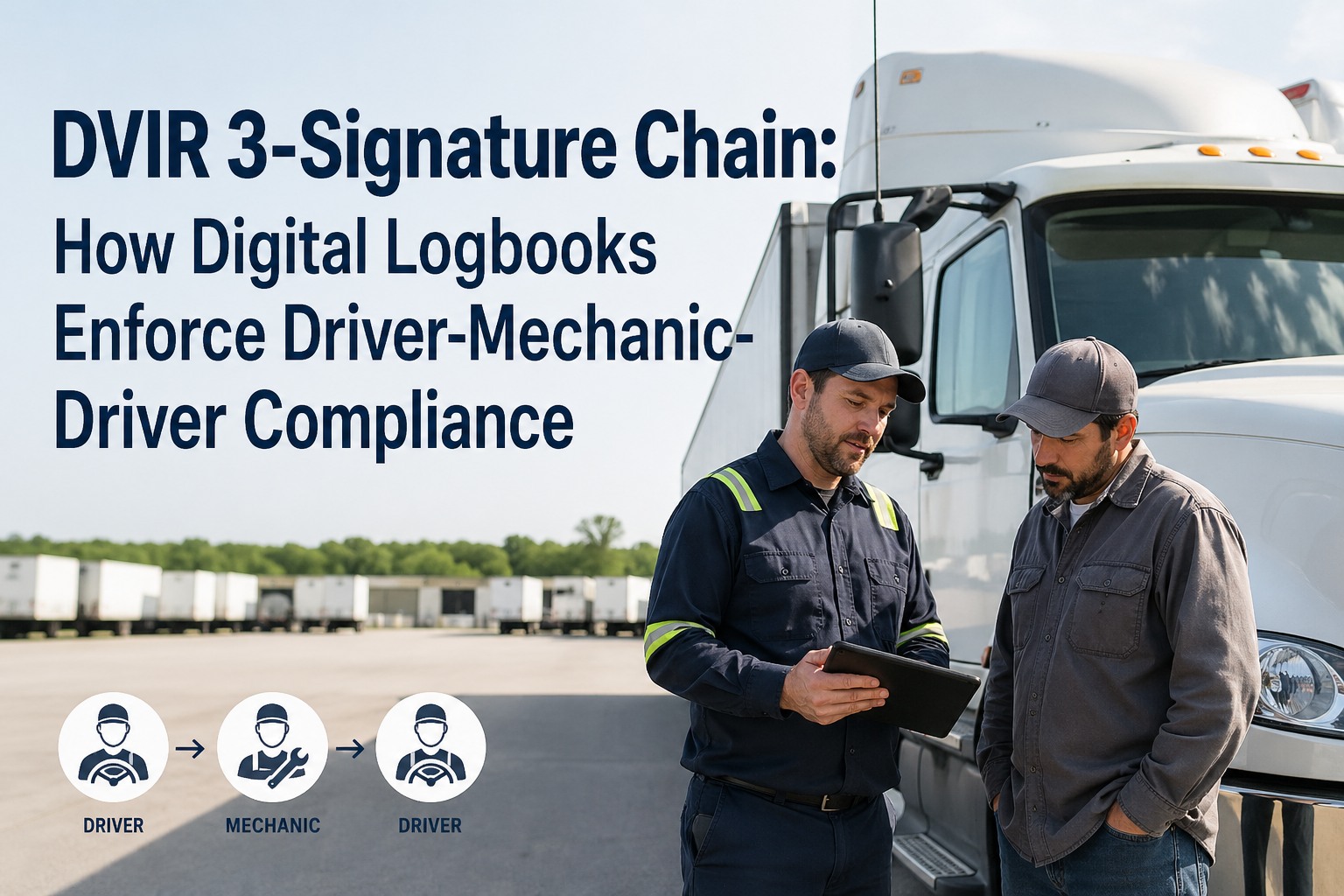
Completed inspections automatically generate FMCSA-compliant DVIRs with all required elements: driver identification, vehicle identification, inspection date/time, component conditions, defect descriptions, and electronic signature. No manual transcription, no lost paperwork, no compliance gaps.
- Meets 49 CFR 396.11 and 396.13 requirements
- Automatic 3-month retention with exportable records
- Driver review acknowledgment for previous DVIR defects
- Repair certification workflow before vehicle can be cleared
Defect-to-Work-Order Automation
When driver reports a defect during inspection, system automatically generates work order, notifies maintenance team, and flags vehicle as "do not dispatch" until repair is certified. Closes the gap between defect discovery and repair where most compliance failures occur.
- Real-time defect notifications to maintenance
- Severity classification (critical = immediate attention)
- Prevents dispatch of vehicles with unresolved defects
- Tracks repair completion and certification
Offline Capability for Remote Sites
Construction sites, rural routes, and remote job locations often lack reliable cellular coverage. Premium mobile inspection apps function fully offline, storing completed inspections locally and syncing automatically when connectivity returns—ensuring inspections happen regardless of signal.
- Full inspection functionality without internet connection
- Automatic cloud sync when connection restored
- No failed uploads or lost data
- Critical for construction fleets and rural operations
Fleet-Wide Inspection Analytics
Digital inspections create data that paper processes can never match. Fleet managers see which vehicles generate most defects, which drivers need additional training, which components fail most frequently, and whether inspections are being completed on schedule.
- Inspection compliance rates by driver and vehicle
- Defect trending to predict component failures
- Cost analysis: repair spend by vehicle and component type
- Audit-ready reports generated instantly
Paper vs. Digital Inspection: The 15-Minute Reality
- Find clipboard with correct checklist (2 min)
- Reference manual to remember what to check (ongoing)
- Walk around vehicle without systematic sequence (10-15 min)
- Return to clipboard to check boxes (5 min)
- Forget to check several items, backtrack to verify (5 min)
- Write defect descriptions by hand (3-5 min)
- Deliver paperwork to office (5 min)
- Office staff transcribes to digital system (10 min)
- Open app, select vehicle (15 seconds)
- Follow guided sequence with visual prompts (12-15 min)
- Photo capture integrated at point of inspection (included in time)
- Automatic DVIR generation (no additional time)
- Electronic signature (5 seconds)
- Submit—data instantly available to fleet managers (5 seconds)
- Defect work orders auto-generated (no driver action)
The ROI of Digital Inspection: Why 15-Minute Checks Save Money
For a 50-vehicle fleet, switching from 35-minute paper inspections to 15-minute digital inspections recovers 16.7 driver hours daily—over 4,000 hours annually. At $25/hour labor cost, that's $104,000 in recovered productivity, plus violation reduction and improved vehicle uptime.
Make 15-Minute DOT Inspections Your Fleet Standard
The transition from time-consuming manual inspections to efficient 15-minute digital workflows isn't a "nice to have" improvement—it's a competitive necessity in 2026's enforcement environment where CSA scores directly impact insurance rates, violation fines average over $5,000 per incident, and driver retention suffers when inefficient processes waste their time.
Implement Digital Inspection Tools
Replace paper checklists with mobile inspection apps that provide guided workflows, require photo verification, and auto-generate compliant DVIRs. HVI's platform is operational in under 10 minutes—no hardware installation, no complex IT project, no waiting. Start your free trial to experience inspection efficiency immediately.
Train Drivers on Optimized Sequences
Even with paper processes, training drivers to follow the cab→driver side→brakes→rear→passenger side→coupling sequence eliminates backtracking and wasted motion. Digital tools enforce this sequence automatically, but driver buy-in requires demonstrating that faster inspections come from better process, not cutting corners.
Make Defect Reporting Effortless
Drivers who know that reporting defects means 20 minutes of paperwork will skip reporting marginal issues. Digital systems where defect reporting takes 30 seconds (photo + 2-sentence description) dramatically increase reporting rates—catching problems before they become roadside violations or breakdowns.
Close the Inspection-to-Repair Loop
The gap between defect discovery and actual repair is where compliance failures happen. Automated work order generation from inspection defects, maintenance team notifications, and "do not dispatch" flags ensure reported problems get fixed before vehicles hit the road. HVI's defect-to-work-order automation closes this loop automatically.
By the Numbers: Why 15-Minute Inspections Work
Frequently Asked Questions
Transform Your Fleet's Pre-Trip Inspections
Stop wasting 30-45 minutes on paper-based inspections that drivers resent and often shortcut. HVI's digital inspection platform enables thorough 15-minute DOT-compliant inspections with photo verification, automatic DVIR generation, and defect-to-work-order automation—all operational in under 10 minutes from signup.
No credit card required • No hardware installation • Setup in under 10 minutes • Works offline at remote job sites