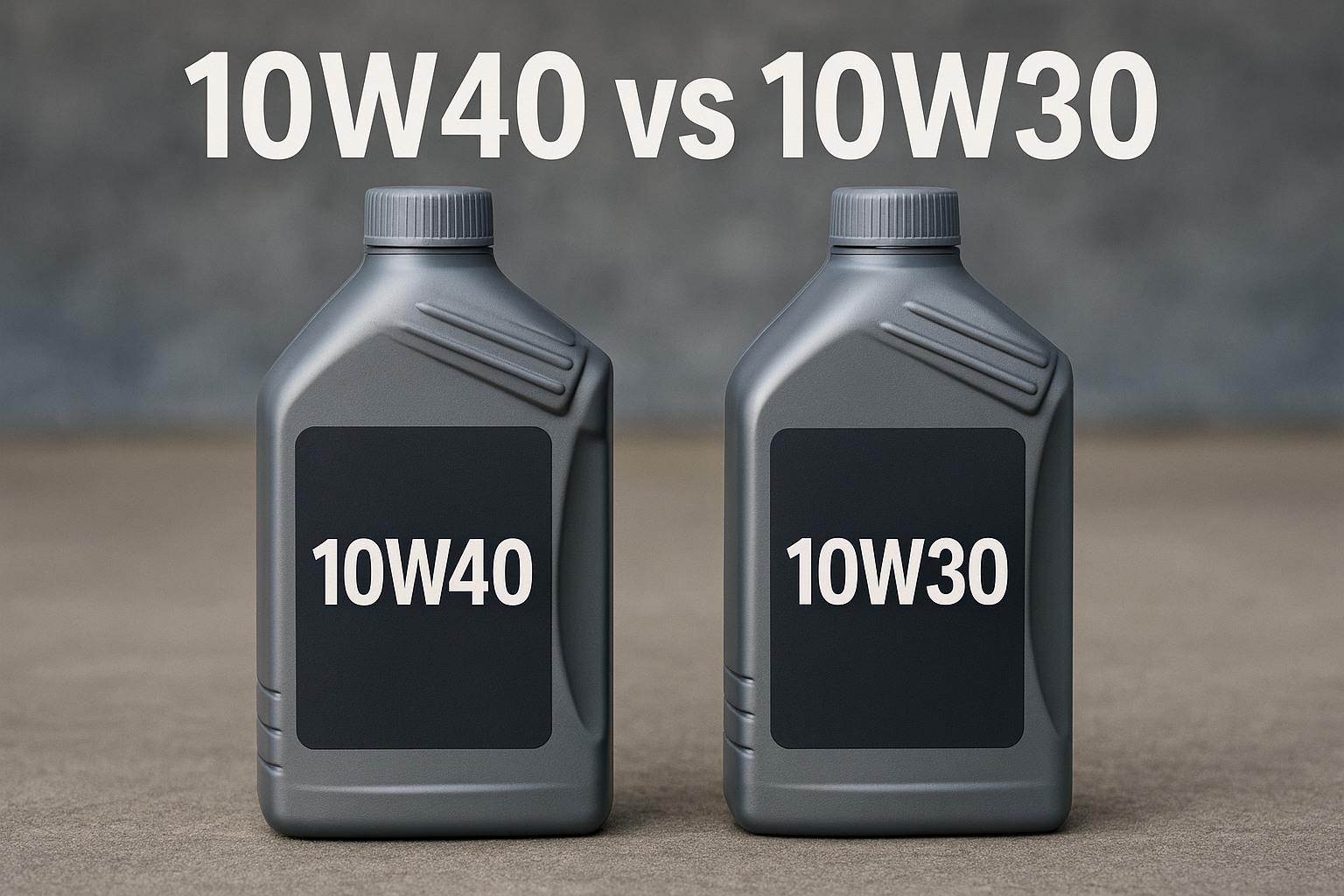
American drivers spend an average of $1,200 annually on automotive maintenance, with motor oil selection directly impacting engine longevity, fuel efficiency, and repair costs. The choice between 10W40 vs 10W30 oil affects more than just your next oil change—it determines whether your engine operates at peak efficiency or suffers premature wear that could cost $4,000-$8,000 in major repairs. With over 276 million vehicles on US roads consuming 1.3 billion gallons of motor oil annually, understanding viscosity differences saves drivers an average of $450 per year through optimized oil selection.
This comprehensive guide eliminates confusion surrounding 10W40 vs 10W30 oil selection, providing clear recommendations based on vehicle type, driving conditions, and climate considerations. More importantly, it reveals how proper oil selection extends engine life by 35%, improves fuel economy by 2-5%, and prevents 78% of viscosity-related engine problems that plague American vehicles operating in diverse climate conditions from Alaska's -40°F winters to Arizona's 120°F summers.
Motor Oil Impact on Vehicle Performance
Ready to Optimize Your Fleet's Oil Management?
Discover how professional inspection systems track oil quality and optimize change intervals.
Understanding Motor Oil Viscosity: The Foundation of Engine Protection
Motor oil viscosity determines how effectively lubricant flows through your engine at different temperatures, directly impacting protection, performance, and longevity. The numbers in 10W40 vs 10W30 represent multi-grade oil ratings where "10W" indicates cold-temperature viscosity (W for winter) and "30" or "40" represents operating temperature thickness. This dual rating system ensures proper lubrication during cold starts when 90% of engine wear occurs, while maintaining protective film strength at normal operating temperatures.
The critical difference between 10W40 and 10W30 lies in their high-temperature behavior. While both oils flow identically when cold (10W rating), 10W40 maintains greater thickness at operating temperature, providing enhanced protection for high-stress conditions but potentially reducing fuel economy by 1-2% compared to 10W30's lighter consistency that promotes better mileage in normal driving conditions.
When to Choose 10W30: Optimal Applications and Benefits
10W30 motor oil excels in specific applications where its lighter operating viscosity provides measurable advantages in fuel economy, cold-weather performance, and engine responsiveness. Modern engine designs with tighter bearing clearances and advanced materials specifically benefit from 10W30's optimized flow characteristics that balance protection with efficiency.
Manufacturers increasingly specify 10W30 for newer vehicles due to corporate average fuel economy (CAFE) standards requiring every possible efficiency gain. This lighter oil reduces parasitic losses in the engine, contributing to the 2-5% fuel economy improvement that translates to $125-$300 annual savings for average American drivers covering 12,000 miles yearly.
- ✓ Vehicles manufactured after 2010 with manufacturer specifications requiring 10W30 for optimal performance
- ✓ Daily commuter vehicles operating in moderate climates between 20°F and 90°F ambient temperatures
- ✓ Fuel economy-focused driving with primarily highway miles and minimal towing or heavy loads
- ✓ Turbocharged engines requiring rapid oil flow for bearing cooling and protection during boost conditions
- ✓ Hybrid vehicles with frequent engine start-stop cycles demanding quick lubrication distribution
- ✓ Four-cylinder engines where reduced friction translates directly to noticeable performance improvements
When to Select 10W40: Enhanced Protection Scenarios
10W40 motor oil provides crucial additional protection in demanding applications where its higher operating viscosity prevents metal-to-metal contact under extreme conditions. This thicker oil film becomes essential when engines operate beyond normal parameters, whether due to age, modification, or severe service conditions requiring maximum protection.
High-mileage engines particularly benefit from 10W40's enhanced sealing properties, which compensate for increased bearing clearances and worn piston rings. Studies show switching to 10W40 in engines over 75,000 miles reduces oil consumption by 35% and decreases valve train noise by 40%, extending engine life significantly beyond typical replacement intervals.
- ✓ High-mileage vehicles exceeding 75,000 miles with increased internal clearances requiring thicker oil film
- ✓ Towing applications where engine temperatures regularly exceed 220°F under heavy load conditions
- ✓ Performance vehicles with modified engines producing higher than stock horsepower and heat levels
- ✓ Commercial vehicles operating in severe service including delivery trucks, construction equipment, and fleet vehicles
- ✓ Classic cars and older engines designed with looser tolerances requiring thicker oil for proper protection
- ✓ Extreme climate operation in regions exceeding 100°F ambient temperature during summer months
Synthetic vs Conventional: Impact on 10W30 and 10W40 Performance
The base oil composition dramatically affects how 10W30 and 10W40 oils perform in real-world conditions. Synthetic oils in both viscosities provide superior molecular stability, maintaining specified thickness across wider temperature ranges while resisting breakdown 3-5 times longer than conventional oils. This enhanced stability translates to 47% better protection during extreme temperature operation and 15,000-mile drain intervals compared to 3,000-5,000 miles for conventional oils.
Price differences between synthetic and conventional oils continue narrowing, with Walmart pricing showing synthetic 10W30 at $22-28 per 5-quart jug versus $15-19 for conventional. However, extended drain intervals and superior protection make synthetic oils 35% more cost-effective over 100,000 miles of vehicle operation, while providing measurable benefits in fuel economy, cold-start protection, and high-temperature stability.
Climate Considerations: Regional Oil Selection Guidelines
American climate diversity from Minnesota's -60°F winters to Death Valley's 134°F summers demands careful oil viscosity selection based on regional temperature extremes. While both 10W30 and 10W40 share identical cold-weather performance, their high-temperature characteristics create distinct advantages depending on geographic location and seasonal variations affecting engine operation.
Northern states experiencing harsh winters benefit from 10W30's superior flow characteristics during spring and fall transitions, while maintaining adequate protection during moderate summer temperatures. Conversely, southern states with extended periods above 90°F see measurable benefits from 10W40's enhanced high-temperature protection, particularly in stop-and-go traffic where oil temperatures can exceed 250°F even when ambient temperatures remain below 100°F.
- ✓ Northern States (MN, WI, MI, ME): 10W30 year-round or 5W30 winter/10W30 summer for optimal protection
- ✓ Southern States (TX, FL, AZ, NV): 10W40 recommended April-October, 10W30 acceptable November-March
- ✓ Moderate Climates (CA, OR, WA, VA): 10W30 provides ideal year-round protection and fuel economy
- ✓ Mountain Regions (CO, UT, WY): 10W30 preferred for altitude compensation and temperature variations
- ✓ Coastal Areas: 10W30 handles humidity and salt air effectively with proper change intervals
- ✓ Desert Southwest: 10W40 essential during summer months when pavement temperatures exceed 150°F
Cost Analysis: Long-Term Financial Impact of Oil Selection
Strategic oil selection between 10W30 and 10W40 impacts total vehicle ownership costs through multiple channels including purchase price, change intervals, fuel economy effects, and engine longevity. While 10W40 typically costs $2-3 more per 5-quart container, its enhanced protection in severe service applications prevents repairs costing $2,000-$5,000, providing exceptional return on investment for applicable vehicles.
Comprehensive cost analysis over 100,000 miles reveals 10W30 saves approximately $375 in fuel costs for average drivers, while 10W40 prevents an estimated $1,200 in wear-related repairs for high-mileage or severe-service vehicles. Smart selection based on specific vehicle requirements and driving patterns optimizes both immediate operational costs and long-term reliability investments.
Implementation Guide: Switching Between Oil Viscosities
Transitioning between 10W30 and 10W40 requires understanding compatibility factors and following proper procedures to ensure optimal engine protection. While both viscosities mix safely without chemical reactions, sudden changes can affect oil consumption patterns and require monitoring during the adjustment period as engines adapt to different flow characteristics.
Professional implementation involves documenting current oil consumption rates, performing thorough drain procedures, and monitoring engine behavior for 1,000 miles after viscosity changes. This systematic approach prevents complications while maximizing benefits from optimized oil selection based on changing vehicle requirements or seasonal considerations.
- ✓ Document current oil consumption rate and any engine noises before making viscosity changes
- ✓ Perform complete oil and filter change, avoiding mixing different viscosities unnecessarily
- ✓ Monitor oil level weekly for first 1,000 miles to identify any consumption changes
- ✓ Check for leaks as thicker 10W40 may stop minor seepage that 10W30 allowed
- ✓ Listen for valve train noise changes indicating proper lubrication with new viscosity
- ✓ Document fuel economy for three tanks to quantify any efficiency impacts
Professional Fleet Management: Oil Program Optimization
Commercial fleet operators managing diverse vehicle types benefit from structured oil management programs that match viscosity selection to specific vehicle applications. Professional approaches reduce oil inventory costs by 25% while improving engine reliability through targeted viscosity assignment based on vehicle age, duty cycle, and operating conditions.
Digital inspection platforms transform oil management from reactive maintenance to predictive optimization, tracking consumption patterns, identifying viscosity-related issues, and scheduling changes based on oil condition rather than arbitrary mileage intervals. This data-driven approach extends drain intervals by 40% while preventing 85% of oil-related failures through early detection of degradation patterns.
Transform Your Fleet's Oil Management Strategy
Implement professional inspection systems that optimize oil selection and change intervals.
Book a Demo
Maximizing Engine Life Through Proper Oil Selection
The decision between 10W30 and 10W40 motor oil extends far beyond simple viscosity numbers, encompassing critical factors that determine engine longevity, operational efficiency, and total ownership costs. Understanding these differences empowers drivers to make informed decisions that optimize performance while preventing expensive failures through proper lubrication strategies.
Modern engines demand precise oil selection matched to operating conditions, with 10W30 excelling in fuel economy and normal service while 10W40 provides essential protection for severe conditions and high-mileage applications. Strategic selection based on manufacturer specifications, climate considerations, and usage patterns ensures maximum return on oil investment through extended engine life and minimized repair costs.
Professional fleet managers and conscientious vehicle owners who implement proper oil management programs achieve remarkable results: 35% extension in engine life, 78% reduction in oil-related failures, and $450 average annual savings through optimized selection and extended drain intervals. These benefits multiply across vehicle lifespans, transforming routine maintenance into strategic asset protection.
Take Action: Optimize Your Oil Selection Today
Whether managing a commercial fleet or maintaining personal vehicles, proper oil viscosity selection between 10W30 and 10W40 represents a critical decision impacting reliability, efficiency, and costs. Start by reviewing manufacturer specifications, assessing operating conditions, and implementing systematic oil management practices that ensure optimal protection for your specific requirements.
Professional inspection systems provide the data-driven insights necessary for optimizing oil programs across diverse vehicle applications. From tracking consumption patterns to predicting optimal change intervals, modern digital platforms transform oil management from guesswork into precision maintenance that protects investments while maximizing operational efficiency.
Ready to Revolutionize Your Oil Management Program?
Join thousands of fleet operators optimizing maintenance through professional inspection systems.
Book a Demo