Every experienced fleet safety manager knows the same truth: the pre-trip inspection gets the training spotlight, but the post-trip inspection is where the real maintenance value lives. Defects found at the end of a shift give technicians overnight to diagnose and repair, so trucks roll out clean the next morning instead of delaying departure or — worse — sending a defective vehicle back on the road. Under 49 CFR § 396.11, the post-trip is when drivers must prepare their Driver Vehicle Inspection Report (DVIR) — the written document that reports defects discovered during the day's operation and kicks off the three-signature repair chain that FMCSA auditors examine first. The regulatory stakes went up in 2026: FMCSA's eDVIR final rule took effect March 23, 2026, giving electronic inspections unambiguous legal authority, and the Feb 2026 CSA overhaul split Vehicle Maintenance into a standalone "Driver Observed" scoring category — meaning post-trip quality now appears directly on your CSA profile. FMCSA estimates DVIRs prevent approximately 14,000 accidents annually, yet 95% of all industry DVIRs report zero defects — raising serious questions about inspection quality across the industry. This guide covers the complete post-trip process, the 11 FMCSA-required components, the repair chain that protects your fleet, and the digital tools modern fleets use to make post-trip faster and more thorough. Start your free HVI trial to digitize your post-trip workflow, or book a 30-minute demo to see how eDVIRs work in practice.
What is a post-trip inspection and why does it matter?
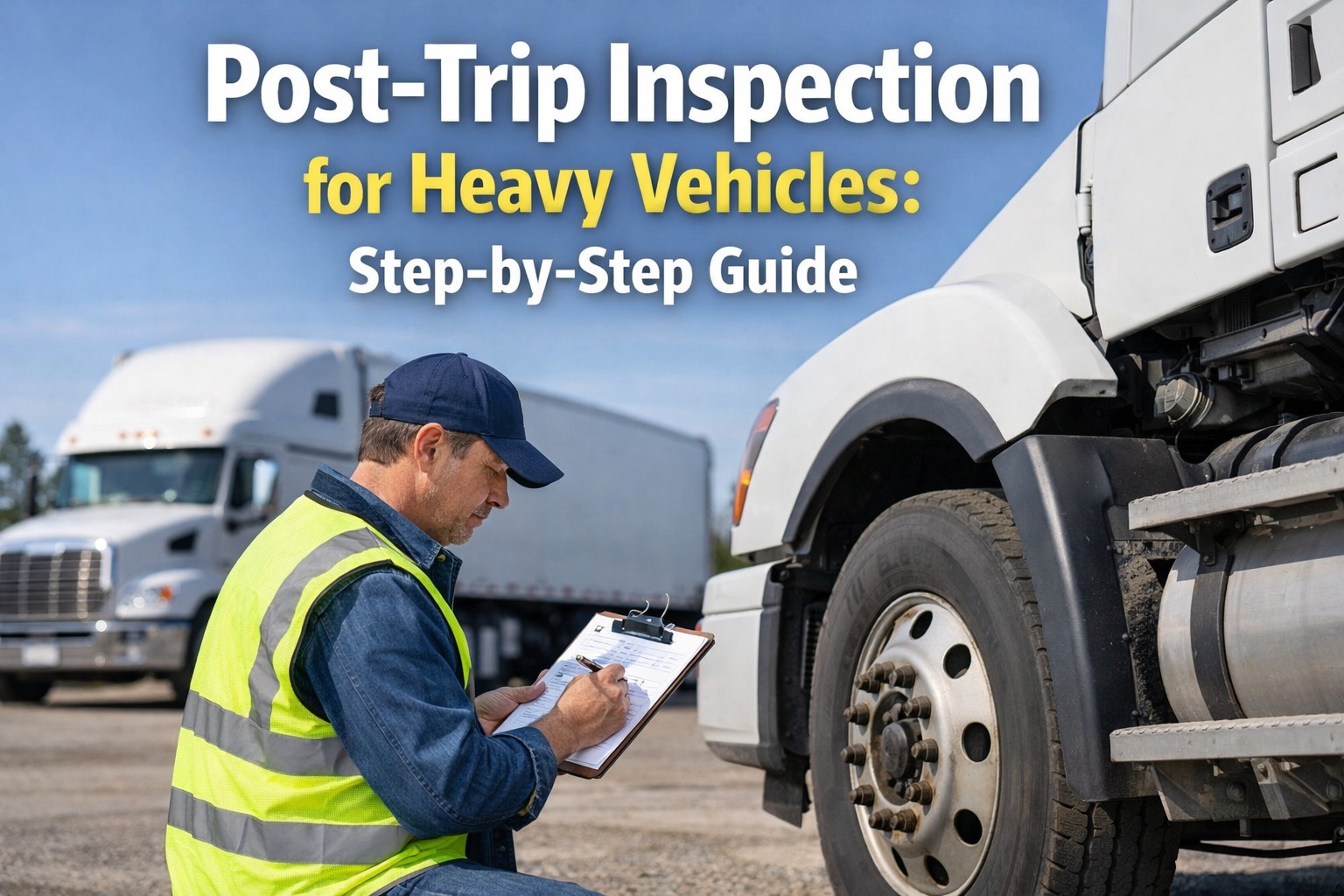
A post-trip inspection is the end-of-shift vehicle check a commercial driver performs to identify any defects that developed or emerged during the day's operation. The output is the DVIR — the legally binding document that starts the repair, certification, and review chain. Here is why post-trip matters operationally, legally, and financially.
Defects found at end of shift give mechanics 8–12 hours to diagnose and repair before the next dispatch. The truck rolls out clean the next morning instead of delaying departure.
The post-trip DVIR is the primary document auditors and plaintiff attorneys examine. It creates the chain of accountability: driver finds -> carrier repairs -> next driver confirms.
Consistent post-trip reports reveal defect patterns by vehicle, route, and driver — enabling predictive maintenance instead of reactive breakdown response.
In nuclear verdict cases, juries examine whether the fleet took safety seriously. Documented daily inspections prove active vehicle condition monitoring — a cornerstone defense asset.
What does FMCSA require for a post-trip inspection?
The regulatory foundation for post-trip inspections is 49 CFR § 396.11. Here is an important nuance most training programs miss: FMCSA does not technically mandate a formal "post-trip inspection" in the same way § 392.7 mandates the pre-trip. What it mandates is the DVIR — a written report of defects discovered during or after the day's operation. The practical output is the same; the regulatory distinction matters during audits.
DVIR required at end of each workday only when defects or deficiencies are found or reported to the driver. A no-defect DVIR is not federally required (since the 2014 rule change) — but filing one anyway creates a defensible documentation trail that many safety-first carriers still require.
DVIR required every single day regardless of whether defects were found. Buses, motorcoaches, and passenger carriers have no exemption from daily documentation.
If a driver operates more than one CMV during the day, a separate DVIR must be prepared for each vehicle operated. Combining reports is a citable violation.
Carrier must retain the original DVIR, the repair certification, and the next-driver review certification for a minimum of 3 months (90 days) from the report date.
What are the 11 components every post-trip DVIR must cover?
Under 49 CFR § 396.11(a)(1), every DVIR must cover 11 specific vehicle component categories at minimum. Missing any category is a documentation gap that shows up during audits. Here is the complete list every post-trip inspection covers.
What is the 3-signature DVIR chain and why does it matter?
The post-trip DVIR does not exist in isolation. It is the first link in a three-signature accountability chain that FMCSA requires to prove every defect was repaired before the vehicle went back on the road. Breaking this chain is one of the most common violations cited during DOT audits.
At the end of the workday, the driver inspects all 11 § 396.11 components and prepares the DVIR documenting any defects. Driver signs and dates the report. If no defects found on a property-carrying CMV, no DVIR required — but inspection still expected.
Motor carrier repairs all reported defects affecting safe operation. Mechanic or carrier official signs the original DVIR certifying that each defect was repaired, or that repair was unnecessary. Vehicle cannot be dispatched until this certification is complete.
Before operating the vehicle, the next driver reviews the most recent DVIR, confirms repair status, and signs acknowledgment. This completes the three-signature accountability chain — closing the loop from defect discovery to verified repair.
How does post-trip differ from pre-trip inspection?
Pre-trip and post-trip inspections cover the same component categories but serve different purposes in the compliance cycle. Understanding the distinction helps drivers and fleet managers allocate time appropriately.
What's the best way to digitize the post-trip workflow?
With FMCSA's eDVIR final rule effective March 23, 2026, every remaining regulatory ambiguity about digital post-trip inspections has been resolved. A well-designed digital workflow replaces paper checklists with a guided process that covers every § 396.11 component, captures photo evidence automatically, routes defects to maintenance in seconds, and enforces the three-signature chain digitally. Here's what a modern post-trip inspection looks like on the HVI platform.
Driver completes an 11-category inspection on their phone with pass/fail tap, severity rating on any defect, photo capture (timestamped and GPS-tagged), and optional voice-to-text notes.
Safety-critical defects trigger immediate push notifications and SMS to the maintenance manager. Scheduled defects generate work orders automatically with photos, severity, and defect location.
Mechanic repairs the defect, documents work performed, and signs digital certification on the original DVIR record. The work order is linked back to the DVIR automatically.
Before operating the vehicle, the next driver sees the repair status in the app and signs acknowledgment. The three-signature chain completes electronically with full timestamps.
Every inspection, defect photo, repair certification, and review signature is stored in a searchable, instantly exportable record. The 90-day retention requirement handled automatically.
Frequently asked questions — post-trip inspection
Run every post-trip inspection on one compliant digital platform.
HVI automates the complete FMCSA post-trip workflow — guided 11-component walk-around, photo-verified defect capture, instant maintenance routing, enforced three-signature chain, and indefinite audit-ready record retention. Cut inspection time by 50%, surface meaningful defects instead of rubber-stamped reports, and keep your CSA Driver Observed BASIC in the green.
No credit card required · Full post-trip workflow live in minutes · All 11 FMCSA components covered