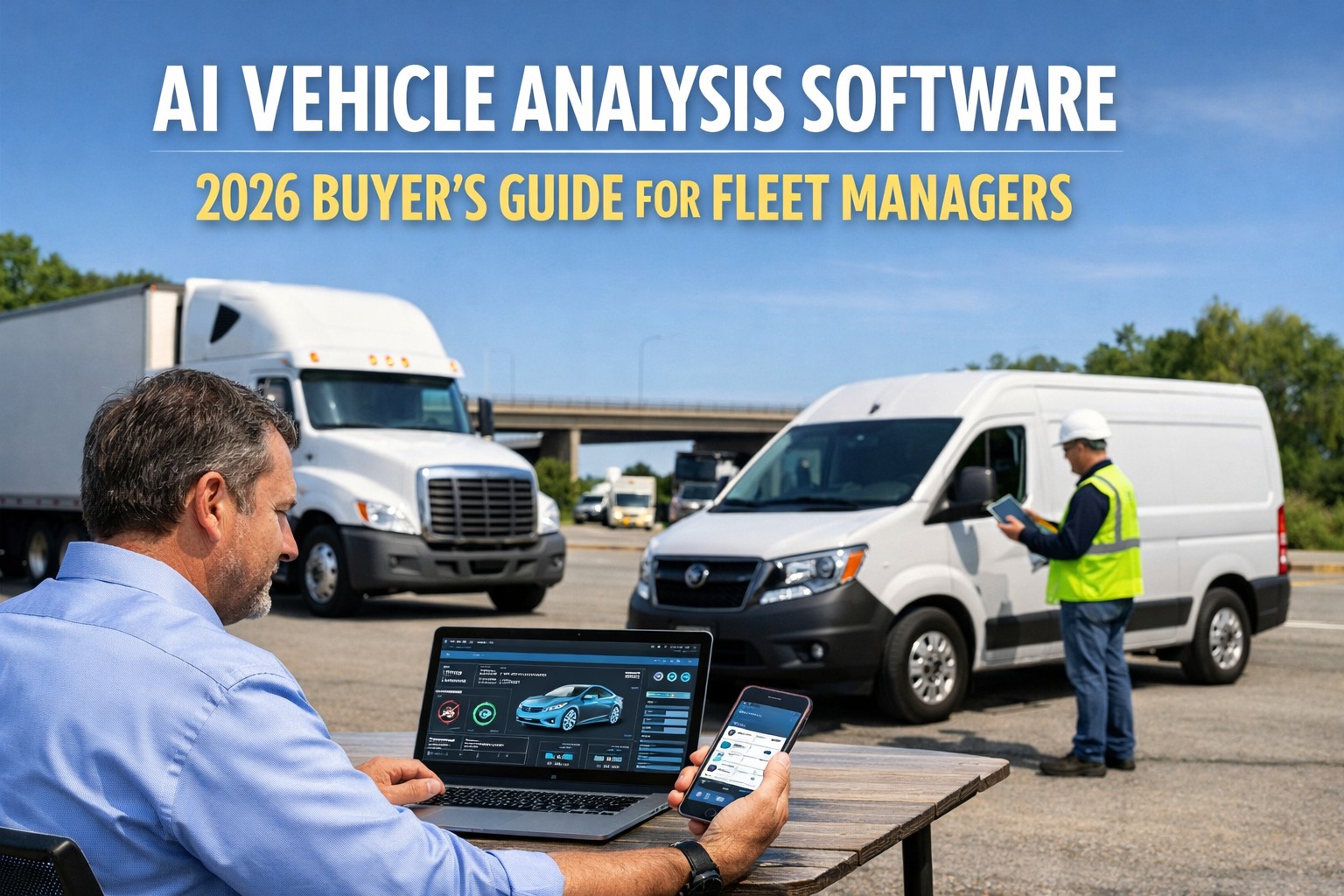
Every fleet manager knows that breakdowns don't just cost money—they cost time, safety, and customer trust. Structured preventive maintenance (PM) schedules labeled A, B, C, and D are the industry-proven system that keeps heavy vehicles running reliably, reduces unplanned downtime by up to 70%, and delivers 300–500% ROI on maintenance spend. Whether you run a 10-truck operation or a 500-vehicle fleet, understanding these four PM tiers is the difference between reactive chaos and proactive control. This guide breaks down exactly what each PM level covers, when to schedule them, and how digital tools turn PM scheduling from a headache into your fleet's biggest competitive advantage. Start digitizing your PM schedules with HVI today, or book a demo to see automated PM tracking in action.
What Are PM A, B, C, D Schedules?
PM schedules A through D represent a tiered system of preventive maintenance, each level progressively more comprehensive than the last. Think of them as layers of protection—PM-A catches the daily wear, while PM-D addresses the deep mechanical health of your fleet. Vehicles cycle through all four levels continuously based on mileage, engine hours, or calendar intervals, creating a complete maintenance safety net that catches issues at every stage before they become costly failures.
Your first line of defense. PM-A covers the essential safety systems that keep drivers safe and vehicles DOT-compliant every day on the road.
Goes deeper into the engine and drivetrain. PM-B builds on PM-A with more detailed fluid analysis, filter replacements, and component checks.
A full-system overhaul covering alignment, component replacements, transmission service, and DOT annual inspection prep.
The most extensive service level—major component rebuilds, complete brake system overhauls, structural inspections, and emissions diagnostics.
Want to build custom PM-A through PM-D templates for your exact fleet? Sign up for HVI free and launch digital PM checklists in under 10 minutes—no hardware required.
What Tasks Does Each PM Level Include?
Each PM tier builds on the one before it. When a vehicle comes in for PM-C, it also receives all PM-A and PM-B tasks, creating cumulative coverage that leaves nothing unchecked. Here is what your technicians should be doing at each level:
Brake operation and adjustment check
Tire pressure, tread depth, and condition
All lights, reflectors, and signals
Fluid levels — oil, coolant, power steering
Windshield wipers and washer fluid
Horn, mirrors, and seatbelts
Air system pressure and leaks
Exhaust system visual inspection
All PM-A tasks, plus:
Oil and filter change
Fuel filter replacement
Transmission fluid check and top-off
Coolant specific gravity and pH test
Drive belt tension and condition
Battery load test and terminal cleaning
Oil sample analysis
All PM-A + PM-B tasks, plus:
Full wheel alignment check
Brake pad, drum, and rotor replacement
Transmission service with fluid and filter
Differential and axle inspection
Hose and belt replacement as needed
Steering and suspension component check
DOT annual inspection preparation
All PM-A + B + C tasks, plus:
Complete brake system overhaul
Wheel bearing repack or replacement
Differential lubricant drain and refill
Extensive structural/frame inspection
Aftertreatment and emissions diagnostics
Complete electrical system test
Cab and body hardware inspection
Mileage vs. Hour-Based PM Scheduling
One of the most common mistakes fleet managers make is applying a one-size-fits-all PM trigger. Over-the-road trucks rack up miles fast, making mileage the natural trigger. But construction equipment, yard trucks, and vehicles with heavy idle time need hour-based scheduling to avoid being dangerously under-maintained. Choosing the right trigger for each asset type is critical for PM accuracy.
Best for: Over-the-road trucks, delivery vans, line-haul operations
How it works: PM is triggered at fixed mileage intervals (e.g., PM-A every 10,000 miles)
Advantage: Simple to track via odometer or telematics integration
Watch out: Misses maintenance needs on high-idle vehicles that accumulate engine wear without adding miles
Best for: Construction equipment, excavators, generators, yard trucks
How it works: PM is triggered at engine-hour intervals (e.g., PM-A every 250 hours)
Advantage: Accurately reflects actual engine wear regardless of distance traveled
Watch out: Requires engine hour tracking via telematics or operator logs
The best PM programs use whichever trigger comes first—mileage, hours, or calendar date. For example, schedule PM-A at 10,000 miles OR 250 engine hours OR 30 days, whichever arrives first. HVI's automated scheduling handles this logic automatically, so no vehicle slips through the cracks. Book a demo to see multi-trigger PM scheduling in action.
Reducing Downtime with PM Automation
Even the best PM schedule is useless if it lives in a spreadsheet that nobody checks. The fleets achieving 95%+ uptime in 2026 aren't just following PM schedules—they're automating the entire process from scheduling through work order completion. Here is how digital PM automation transforms fleet maintenance:
Automated PM triggers based on mileage, engine hours, or calendar. No missed services, no manual tracking.
Drivers complete guided PM checklists on mobile with photo verification — eliminating pencil whipping.
Found a bad brake pad during PM-A? A work order is auto-generated and sent to your maintenance team instantly.
Every PM service is timestamped, GPS-tagged, and stored — audit-ready and DOT-compliant from day one.
Stop chasing PM schedules on paper. Sign up for HVI to automate PM-A through PM-D scheduling, digital inspections, and work order generation — all from one platform. Setup takes under 10 minutes.
Why Fleets Are Switching to Digital PM Management
Reduction in unplanned breakdowns with consistent PM programs
Average maintenance cost savings with digital tracking and analytics
Time to set up HVI and launch PM schedules — no IT project required
Frequently Asked Questions
Take Control of Your Fleet's PM Schedules Today
Stop losing money to missed maintenance and reactive repairs. HVI gives you automated PM-A through PM-D scheduling, digital inspections with photo proof, instant defect-to-work-order workflows, and audit-ready compliance documentation—all in one platform built for heavy vehicles.
No credit card required • No hardware needed • Setup in under 10 minutes