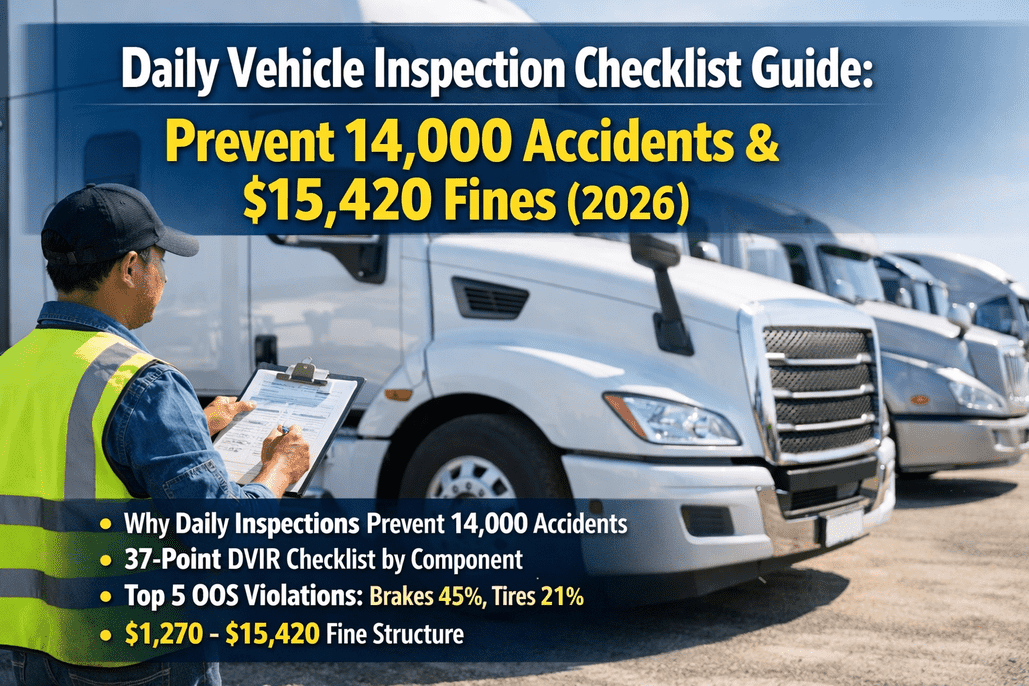
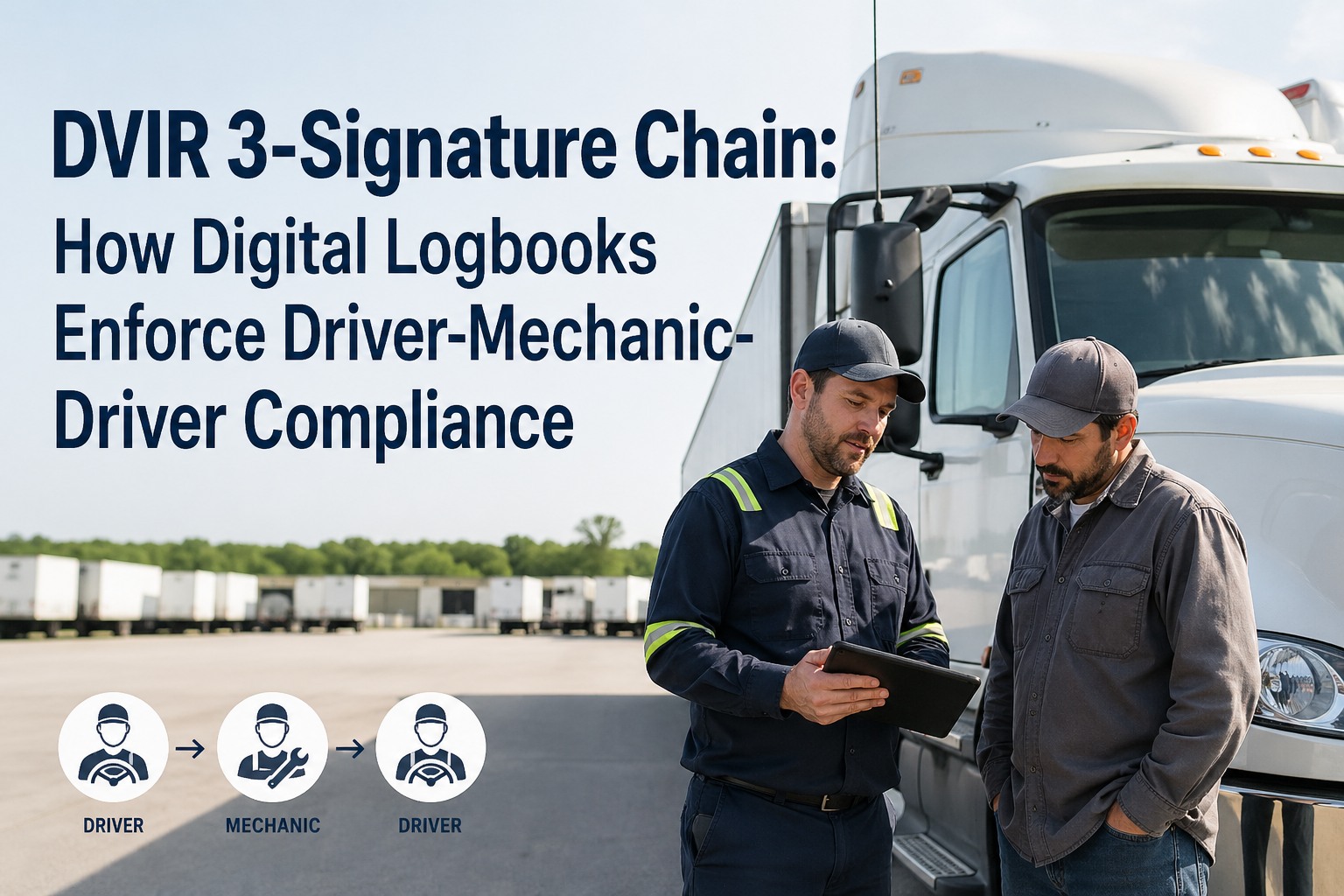
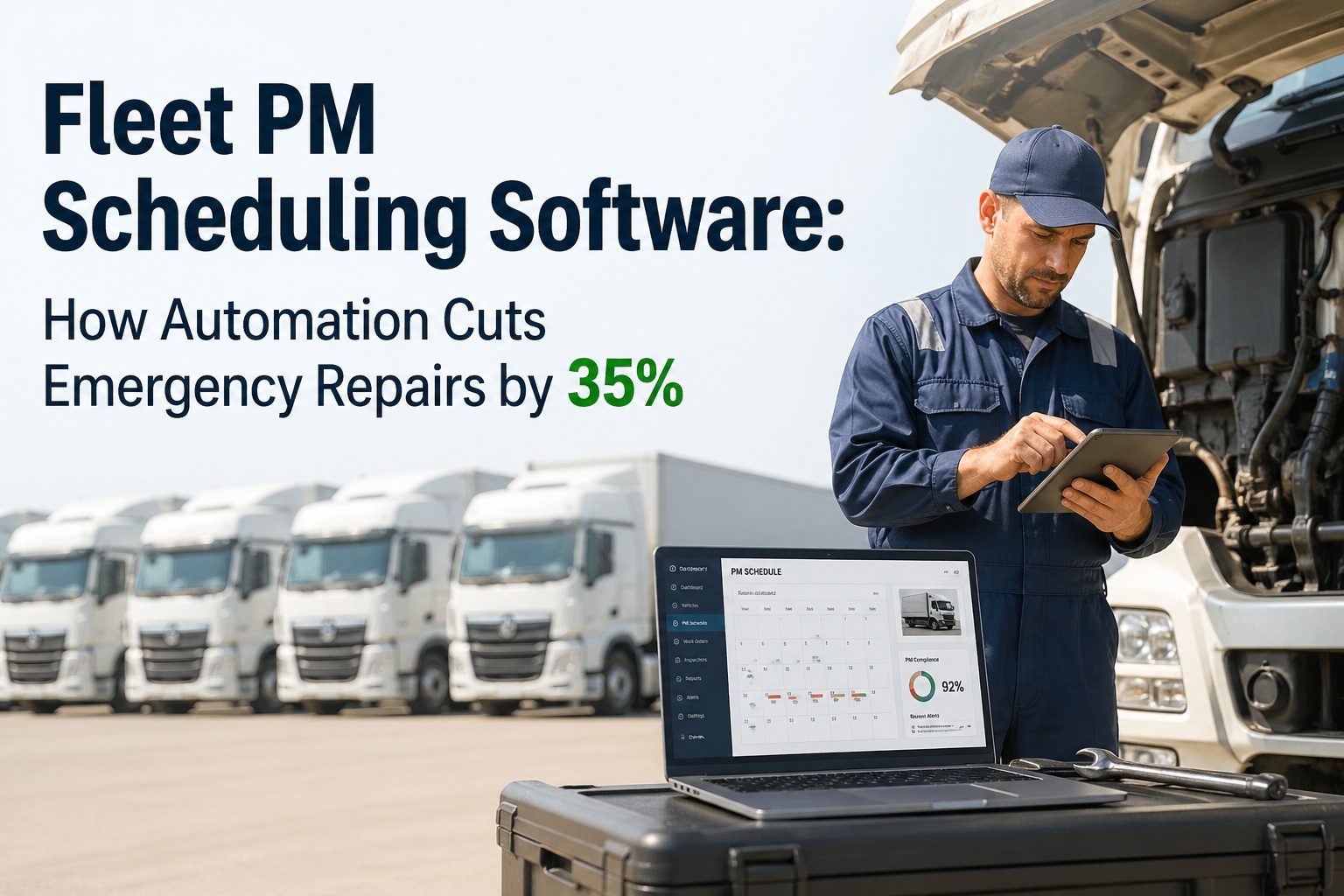
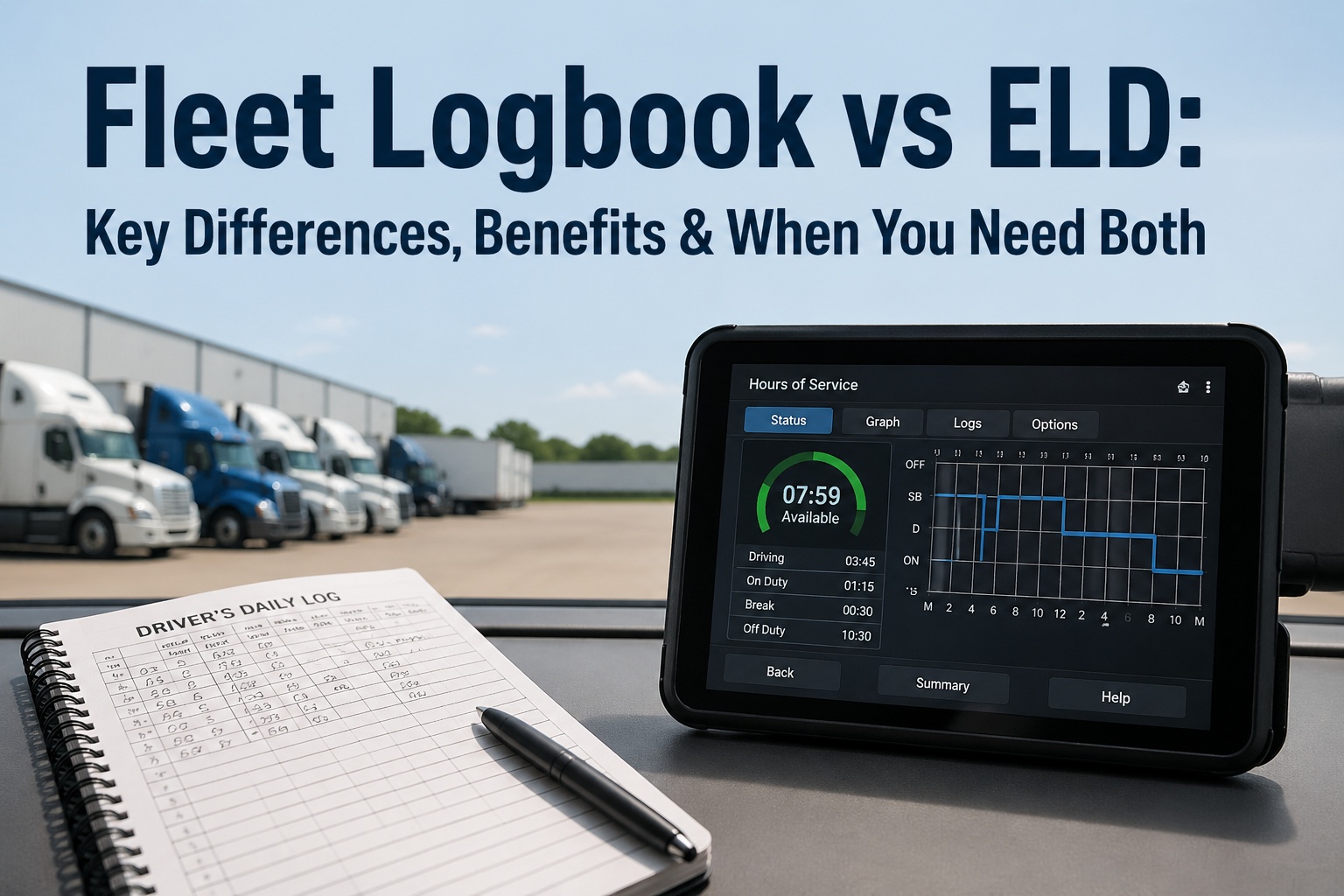
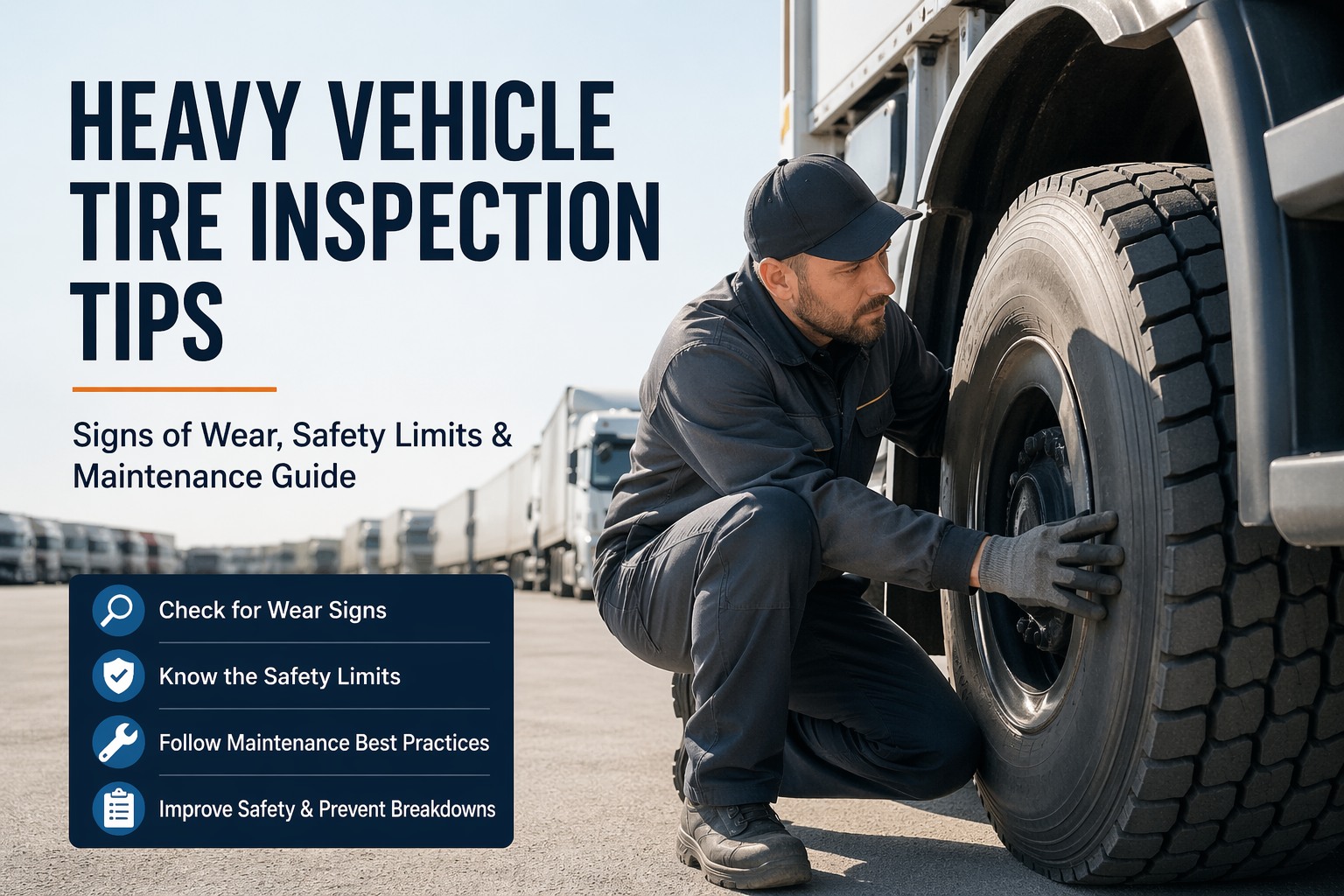
FMCSA's Roadside Intervention Effectiveness Model estimates that vehicle safety inspections prevent more than 14,000 crashes, 9,000 injuries, and 472 deaths annually. Yet during the 2025 CVSA International Roadcheck, 18.1% of trucks inspected were placed out of service — every one of those shutdowns involved defects a daily pre-trip inspection should have caught. The penalties are steep: $1,270 per day for failing to complete a DVIR, $12,700 for falsifying one, and <$15,420 for failing to repair a reported safety defect. This 37-point DVIR checklist covers the exact components FMCSA requires under 49 CFR 396.11, organized by the violation categories that generate the most out-of-service orders at roadside. Start your free trial to digitize this checklist with photo verification and automatic defect escalation, or book a demo to see HVI in action.
DVIR COMPLIANCE GUIDE • 2026
37-Point DVIR Checklist That Prevents 14,000 Accidents & $15,420 Fines
14,000+Crashes prevented annually by inspections (FMCSA RIEM)
18.1%Vehicle OOS rate at 2025 Roadcheck (10,148 shutdowns)
$15,420Max fine for failing to repair a reported safety defect
Why Daily Inspections Prevent 14,000 Accidents
The math behind FMCSA's estimate is straightforward: every safety violation found during a roadside inspection has an associated crash probability. When that violation is corrected — either at roadside or before departure through a daily pre-trip — the crash that would have resulted is prevented. Multiply across 3.5+ million annual inspections and the numbers add up to more than 14,000 crashes avoided, 9,000 injuries prevented, and nearly 500 lives saved every year.
56,178
Inspections conducted during 2025 CVSA Roadcheck in just 72 hours
45%
Of vehicle OOS violations are brake-related — the #1 defect a pre-trip catches
5%
Of fleets achieve near-perfect inspection compliance (Fleetio 2025 survey)
$7,000+
Average FMCSA penalty per violation — up from prior years
The Post-Accident Reality: The DVIR is the first document investigators and attorneys request after any accident. Weeks of identical checkmarks — or missing DVIRs entirely — become evidence of negligence rather than due diligence. In court, a carrier that can't produce genuine, timestamped inspection records for the accident date faces an inference that no real inspection occurred.
Top 5 OOS Violations a Daily Pre-Trip Catches
These five defect categories account for the vast majority of vehicle out-of-service orders at roadside. Every one of them is detectable during a thorough daily walk-around — no special tools required beyond a tire gauge and your eyes.
1
Brake SystemsAdjustment, air leaks, hoses, linings, drums — combined brake violations
2
Tires & WheelsTread depth, inflation, sidewall damage, missing lugs, duals contact
3
Lighting & VisibilityHeadlights, brake lights, turn signals, clearance lamps, reflectors — #1 most cited
4
Cargo SecurementLoad shifting, insufficient tiedowns, damaged securement devices
5
Steering & SuspensionSteering play, broken springs, cracked airbags, leaking shocks, frame cracks
Key insight: Brakes and tires alone account for 66% of all vehicle OOS violations. A driver who spends 5 minutes checking brake response, air pressure, pushrod travel, tire pressure, and tread depth eliminates two-thirds of the defects that shut trucks down at roadside.
37-Point DVIR Checklist by Component
This checklist covers every component required under 49 CFR 396.11 plus additional items based on the top violations found during 2025 CVSA enforcement. Items are numbered 1-37 and grouped by system.
45% OF OOS
A. Brake System
Items 1-8
1Service brake response — apply pedal, verify firm feel with no fade, pull, or spongy travel
2Parking brake — holds vehicle stationary on grade when fully engaged
3Air pressure build-up — compressor builds from 50 to 90 PSI within 5 minutes; governor cuts out at 100-125 PSI
4Air leak test — with full pressure, engine off: less than 3 PSI loss in 1 min (single), 4 PSI (combination)
5Low-air warning — buzzer/light activates before air pressure drops below 60 PSI
6Brake hoses & tubing — no chafing, cracking, kinking, or contact with hot exhaust surfaces
7Brake chambers & pushrods — no audible air leaks at chambers; pushrod travel within adjustment limits
8Trailer brake connections — gladhands sealed, no air leaks at connections, emergency line functional
Why 8 items for brakes: Brake violations account for 45% of all vehicle OOS orders. CVSA's 2025 Brake Safety Week found a 15.1% OOS rate during targeted enforcement — even when the industry knew inspectors were looking.
21% OF OOS
B. Tires & Wheels
Items 9-14
9Tire pressure — gauge check every position (steer, drive, trailer). Not a thump test.
10Tread depth — steer axle minimum 4/32", drive and trailer minimum 2/32". Measure at shallowest groove.
11Sidewall condition — no cuts exposing cord, bulges, or separation on inner or outer sidewalls
12Lug nuts & fasteners — all present, no cracks, rust streaks, or looseness
13Dual tire spacing — debris cleared between duals, no tire-to-tire contact, no mismatched sizes or types
14Valve stems & caps — intact, not cracked or leaking; caps present on all positions
2025 Roadcheck focus: Tires were a special emphasis area in 2025 Roadcheck. Tire pressure drops 1-2 PSI per 10°F temperature change, meaning a tire inflated in a 70°F shop can be 9 PSI low on a cold morning.
#1 MOST CITED
C. Lighting & Visibility
Items 15-22
15Headlights — high and low beam operational, lenses not cracked or clouded
16Brake lights / stop lamps — have someone press pedal while you verify from rear
17Turn signals — all four corners functional; check flash rate (rapid flash = bulb out)
18Clearance & marker lamps — all operational and correct color (amber front/side, red rear)
19Tail lamps & license plate lamp — functional
20Reflectors & reflective tape — intact, clean, not obscured by mud or damage
21Windshield — no cracks in wiper sweep area; wipers operational with adequate fluid
22Mirrors — both sides present, properly adjusted, no cracks impairing visibility
Citation vs. OOS: Lighting is the #1 most-cited roadside violation. Malfunctioning brake lights and turn signals increase accident risk by up to 30%. These are random failures — daily checks are the only defense.
LOSS-OF-CONTROL
D. Steering & Suspension
Items 23-27
23Steering wheel play — no excessive free play (max ~2" on a 20" steering wheel)
24Power steering — adequate fluid level; no leaks at pump, lines, or steering gear
25Suspension components — no broken or missing leaf springs, cracked airbags, or leaking shocks
26Frame & body — no visible cracks, loose cross-members, or sagging
27Coupling devices — fifth wheel locked, no cracks in mounting; pintle hook/drawbar secure if applicable
Severity factor: Steering and suspension failures cause sudden loss of vehicle control at highway speed — the highest-severity crash type.
BREAKDOWN RISK
E. Engine, Fluids & Exhaust
Items 28-33
28Engine oil — within operating range on dipstick; no visible leaks
29Coolant level — adequate in reservoir; no leaks at hoses, clamps, or water pump
30DEF level — sufficient for planned route (freezes at 12°F in cold weather)
31Under-vehicle leak check — new puddles, drips, or wet spots under engine, transmission, axles
32Belts & hoses — no cracks, fraying, glazing, or soft spots; proper tension
33Exhaust system — no leaks near fuel lines, cab, or sleeping area; secure mounting
Fire and breakdown prevention: Fluid leaks near hot exhaust are the #1 cause of truck fires. Low oil or coolant leads to engine seizure.
COMPLIANCE
F. Safety Equipment & Documents
Items 34-37
34Fire extinguisher — charged (check gauge), properly mounted, accessible
35Warning triangles / flares — 3 triangles minimum, in good condition
36Seatbelt — functional, properly latching, no cuts or fraying
37Horn, dashboard warnings & gauges — horn sounds, no active warning lights, all gauges reading normal
Audit readiness: Missing safety equipment won't cause an accident directly — but it escalates every incident and generates automatic violations at Level 1 inspections.
HVI's digital inspection app guides drivers through all 37 items with photo checkpoints at each category. Defects auto-generate work orders and flag vehicles as unsafe to dispatch until repairs are certified.
Setup takes under 10 minutes.
Pre-Trip vs. Post-Trip: What's Required
FMCSA regulations treat pre-trip and post-trip inspections differently. Understanding what's legally required — and what's operationally smart — prevents both fines and accidents.
Legal Requirement
49 CFR 396.13: Before operating a CMV, the driver must be satisfied the vehicle is in safe operating condition. Must review the last DVIR, verify any reported defects were repaired or deemed unnecessary, and sign off.
What to Check
All 37 items on this checklist. The pre-trip catches defects that developed overnight, during prior trips, or after maintenance.
Timing
Before the vehicle moves. Average: 12-15 minutes (paper), under 8 minutes (digital with HVI).
DVIR Required?
Only if defects are found. Best practice: complete a DVIR for every pre-trip to create a documentation trail.
Legal Requirement
49 CFR 396.11: At the end of each day's work, the driver must prepare a written DVIR — but only if defects or deficiencies were discovered or reported during that shift.
What to Check
Damage or deterioration that occurred during the trip: new tire damage, fluid leaks, light failures, cargo securement issues, brake performance changes.
Timing
At the end of the driver's work shift, before handing the vehicle off or parking for the night.
DVIR Required?
Property CMVs: Only if defects found. Passenger CMVs: Required even if no defects (the one exception).
New for 2026 — eDVIR Rule: Effective March 23, 2026, FMCSA's final rule (Docket FMCSA-2025-0115) explicitly confirms that DVIRs may be completed electronically, encouraging fleets to adopt digital platforms like HVI for faster, tamper-evident reporting.
$1,270 – $15,420 Fine Structure
DVIR violations aren't minor paperwork citations — the fine structure makes non-compliance more expensive than compliance:
$1,270/day
Failure to Complete a DVIR
Not preparing a required driver vehicle inspection report. Each day the vehicle operates without a required DVIR is a separate violation — costs accumulate rapidly for fleets running multiple vehicles.
$12,700
Falsifying a DVIR
Knowingly changing, destroying, or falsifying an inspection report to hide a safety defect. This includes "pencil-whipping" — checking boxes without performing an actual inspection.
$15,420
Failure to Repair a Reported Defect
Not repairing a safety defect documented on a DVIR. This is the highest vehicle maintenance penalty — it creates a paper trail showing the carrier knew about the defect and chose not to fix it.
Penalty multipliers: FMCSA average penalties now exceed $7,000 per violation. Through early 2025, FMCSA investigations found more than 50,000 violations. Penalties can reach $125,000 for pattern violations. Each day of continuing non-compliance is a separate offense.
FMCSA Documentation Requirements
Completing an inspection is only as valuable as its documentation. Here's exactly what the regulations mandate:
DVIR Contents
Driver name, vehicle number/unit ID, date, condition of each component, description of defects, driver certification signature
49 CFR 396.11(a)
When Required
Property CMVs: End of each day's work, only if defects found. Passenger CMVs: Every day, even with no defects.
49 CFR 396.11 & 396.13
Retention Period
Minimum 3 months. Producible within 48 hours. Best practice: Retain 12-24 months for litigation.
49 CFR 396.11(c)
Repair Certification
Qualified mechanic must repair and certify, or certify no repair needed. Driver reviews and signs before operating.
49 CFR 396.13(a)
Electronic DVIRs
Explicitly authorized March 23, 2026. Digital platforms add GPS, timestamps, photos, and tamper-evident audit trails.
FMCSA-2025-0115
Multi-Day Trips
DVIRs at end of each day's work (if defects). Reports submitted to carrier upon return to home terminal.
FMCSA Guidance Q&A
HVI automatically meets every documentation requirement — driver ID, vehicle ID, timestamps, GPS, photo evidence, defect descriptions, repair certification tracking, and 24-month cloud retention.
Frequently Asked Questions
14,000 Accidents Prevented. Make Your Fleet Part of That Number.
HVI turns your daily inspection into a guided, photo-verified, GPS-stamped 37-point process with automatic defect escalation and repair tracking.
No credit card required • No hardware needed • eDVIR compliant with FMCSA-2025-0115