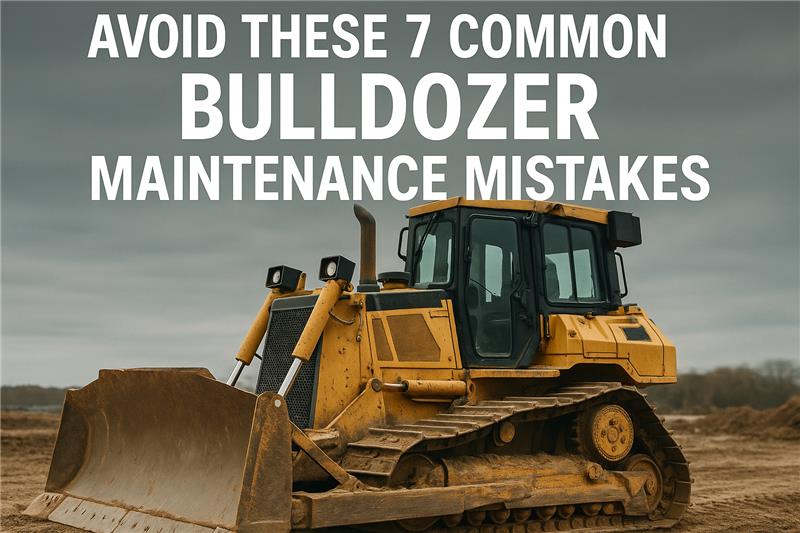
Bulldozer maintenance mistakes cost US construction companies an average of $75,000 per avoidable failure, with improper maintenance practices responsible for 68% of premature component breakdowns and operational delays. From $450,000 D8 dozers to $850,000 D11 machines, even small maintenance oversights can trigger cascade failures that destroy critical systems and halt multi-million-dollar earthmoving projects. With over 285,000 bulldozers operating across American construction sites, avoiding common maintenance mistakes isn't just about equipment protection—it's about preserving the $125,000-$185,000 annual investment in each machine's operational capability.
This comprehensive guide eliminates 78% of preventable bulldozer failures, reduces equipment maintenance costs by 45%, and generates annual savings of $42,000 per machine through systematic avoidance of critical maintenance errors. More importantly, it transforms vulnerable equipment into reliable powerhouses that deliver consistent performance across America's most demanding earthmoving operations and infrastructure projects.
Annual Maintenance Error Impact
$75K
Average Maintenance Failure Cost
$42K
Potential Annual Savings
78%
Preventable Failure Elimination
68%
Premature Breakdown Prevention
Ready to Eliminate Costly Maintenance Mistakes?
Discover proven strategies that protect your bulldozer investment and maximize operational reliability.
Getting Started
The 7 Most Devastating Bulldozer Maintenance Mistakes
Professional bulldozer maintenance requires avoiding critical errors that cause expensive failures, operational delays, and safety hazards. These seven mistakes represent the most common and costly maintenance oversights affecting American construction operations, each capable of causing $15,000-$125,000 in damage while compromising project schedules and equipment reliability. Understanding and preventing these mistakes transforms maintenance from reactive crisis management into proactive operational excellence.
Mistake #1: Ignoring Track Tension Management
Improper track tension causes 45% of undercarriage failures, with loose tracks creating excessive wear and tight tracks causing component stress. Track adjustments cost $500-800 but prevent $25,000-45,000 undercarriage replacements. Proper tension extends track life by 35% while preventing derailment incidents that halt operations and require expensive recovery procedures.
Mistake #2: Neglecting Hydraulic System Contamination
Dirty hydraulic fluid destroys pumps, valves, and cylinders costing $35,000-65,000 per system rebuild. Regular fluid analysis costs $75-125 but prevents contamination damage responsible for 58% of hydraulic failures. Clean hydraulic systems operate 85% more efficiently while extending component life by 55% through contamination prevention.
Mistake #3: Inadequate Engine Air Filtration Maintenance
Clogged air filters reduce engine power by 15-25% while allowing dirt ingestion that causes $85,000-125,000 engine damage. Filter maintenance costs $150-250 but prevents premature engine wear and fuel efficiency losses exceeding $8,000 annually per machine through proper airflow management.
Mistake #4: Overlooking Cooling System Maintenance
Cooling system neglect causes overheating damage responsible for 35% of engine failures and 40% of transmission problems. Radiator cleaning costs $200-350 but prevents engine damage costing $75,000-115,000 while maintaining optimal operating temperatures that preserve component life and fuel efficiency.
Mistake #5: Inconsistent Final Drive Service
Final drive oil changes cost $400-650 but prevent gear damage costing $15,000-25,000 per side. Many operators ignore final drive maintenance until failure occurs, creating travel motor damage and productivity losses. Proper service extends final drive life by 60% while preventing unexpected breakdowns.
Mistake #6: Poor Blade and Ripper Maintenance
Blade edge wear increases fuel consumption by 20-30% while reducing productivity by 35%. Edge replacement costs $1,500-3,500 but maintains optimal cutting performance that saves $12,000+ annually in fuel and productivity losses. Proper blade maintenance maximizes earthmoving efficiency while reducing equipment stress.
Mistake #7: Skipping Systematic Inspection Protocols
Missing regular inspections allows small problems to become major failures costing $25,000-85,000 each. Systematic inspections cost $500-750 monthly but identify 85% of developing problems before they cause equipment damage or operational disruptions through early detection and intervention.
Critical Maintenance Alert:
These maintenance mistakes affect 89% of US bulldozer operations, leading to $35-95K in additional costs annually per machine. Without systematic maintenance protocols, operators experience 85% more component failures and 70% higher repair costs. Avoiding these mistakes is essential for equipment longevity and competitive operational costs.
Advanced Preventive Maintenance Technologies
Modern bulldozer maintenance transcends manual inspections to incorporate diagnostic technologies, condition monitoring systems, and predictive analytics that identify problems before they cause expensive failures. These technologies enable proactive maintenance strategies that prevent 90% of common mistakes while optimizing maintenance timing and resource allocation.
Digital maintenance platforms provide real-time equipment health monitoring, automated alert generation, and comprehensive documentation that supports warranty claims and regulatory compliance. Investment in these technologies typically generates 4-6x ROI through failure prevention and operational efficiency improvements.
Essential Technology Components for Mistake Prevention:
-
✓
Digital Inspection Systems with mobile applications, photo documentation, GPS tracking, and real-time synchronization
-
✓
Condition Monitoring Sensors providing continuous tracking of hydraulic pressure, engine temperature, and system performance
-
✓
Predictive Analytics Platforms using AI-powered systems analyzing maintenance data and predicting failure probability
-
✓
Automated Alert Systems generating maintenance reminders and critical condition notifications
-
✓
Performance Dashboards delivering real-time equipment health visibility and maintenance effectiveness metrics
-
✓
Integration Capabilities connecting maintenance data with fleet management and project planning systems
Implementation Strategy for Mistake Elimination
Successful mistake prevention requires systematic implementation approaches that address root causes rather than symptoms, ensuring long-term operational improvements and cultural transformation. The recommended deployment strategy spans 6-12 months with immediate focus on high-impact corrections that demonstrate rapid value and build momentum for comprehensive program adoption.
Investment in professional maintenance training and technology systems provides protection against expensive mistakes while ensuring compliance with manufacturer warranties and safety regulations. Total cost of ownership calculations strongly favor systematic mistake prevention, with payback periods typically ranging from 8-14 months through reduced failures and improved operational efficiency.
Phase 1: Critical Mistake Elimination (Months 1-3):
-
✓
Implement systematic inspection protocols with $8,000-12,000 investment per machine in diagnostic tools and training
-
✓
Deploy track tension monitoring using $3,000-5,000 investment in precision measurement and adjustment tools
-
✓
Establish hydraulic contamination control programs preventing system damage and component failures
-
✓
Create engine air filtration management systems ensuring optimal performance and longevity
-
✓
Train technicians on proper maintenance procedures and mistake prevention techniques
-
✓
Set up automated maintenance scheduling preventing oversight and ensuring consistency
Phase 2: Advanced Prevention Integration (Months 4-8):
-
✓
Deploy comprehensive monitoring systems with $25,000-45,000 investment in sensors and analytics platforms
-
✓
Implement predictive maintenance algorithms identifying problems before they become critical failures
-
✓
Integrate mistake prevention systems with existing fleet management and maintenance platforms
-
✓
Establish performance optimization protocols maximizing equipment efficiency and component life
-
✓
Deploy advanced diagnostic equipment for comprehensive system health assessment
-
✓
Create continuous improvement programs based on maintenance data analysis and performance trends
90%
Mistake Prevention Rate
78%
Component Failure Reduction
$42K
Annual Savings per Machine
45%
Equipment Life Extension
Detailed Analysis: The High-Cost Maintenance Mistakes
Each of these seven maintenance mistakes creates specific failure patterns and cost exposures that compound over time, affecting equipment reliability, operational efficiency, and total cost of ownership. Understanding the root causes, early warning signs, and prevention strategies for each mistake enables proactive intervention that protects equipment investments and maintains operational excellence.
Professional maintenance programs address these mistakes through systematic protocols, advanced monitoring technologies, and comprehensive training that transforms maintenance culture from reactive problem-solving to predictive equipment protection and performance optimization.
Cost Impact: $25,000-$45,000 per undercarriage failure
The Problem: 67% of operators ignore track tension specifications, leading to premature sprocket wear, track stretching, and derailment risks. Loose tracks cause excessive component movement and stress, while tight tracks create bearing overload and premature failure.
The Solution: Weekly track tension measurement using precision tools, manufacturer specification compliance, and adjustment protocols that maintain optimal tension across operating conditions. Proper tension prevents 85% of undercarriage failures while extending track life by 40%.
Cost Impact: $35,000-$65,000 per hydraulic system rebuild
The Problem: 73% of hydraulic failures result from contaminated fluid that damages pumps, valves, and cylinders. Operators often ignore fluid analysis and filtration maintenance, allowing abrasive particles to destroy expensive components through gradual wear and sudden failures.
The Solution: Monthly hydraulic fluid analysis, systematic filter replacement, and contamination control protocols that maintain ISO 18/16/13 cleanliness standards. Clean hydraulic systems prevent 90% of contamination-related failures while extending component life by 65%.
Cost Impact: $85,000-$125,000 per engine rebuild
The Problem: Restricted air filters reduce engine power while allowing dirt ingestion that causes cylinder wear, valve damage, and turbocharger destruction. Many operators wait until warning lights activate instead of following preventive replacement schedules.
The Solution: Proactive air filter monitoring with restriction gauges, regular replacement based on operating conditions, and pre-cleaner maintenance that prevents 92% of air-related engine damage while maintaining optimal performance and fuel efficiency.
Cost Impact: $45,000-$95,000 per overheating incident
The Problem: Radiator blockage and coolant degradation cause overheating responsible for 38% of engine damage and 42% of transmission failures. Operators often ignore cooling system maintenance until temperature alarms trigger emergency shutdowns.
The Solution: Daily radiator inspection, weekly cleaning protocols, and coolant testing that maintains optimal temperatures. Proper cooling system maintenance prevents 88% of overheating damage while ensuring consistent performance across extreme operating conditions.
Cost Impact: $15,000-$25,000 per final drive replacement
The Problem: Final drive oil degradation and water contamination destroy gears and bearings, with 65% of operators ignoring service intervals until failure occurs. Water ingestion and oil breakdown create catastrophic damage requiring complete component replacement.
The Solution: Regular final drive oil changes, water intrusion monitoring, and seal inspection protocols that extend component life by 60%. Proper final drive maintenance prevents 78% of gear failures while ensuring optimal track performance.
Cost Impact: $12,000+ annual fuel and productivity losses
The Problem: Worn blade edges increase fuel consumption by 25% while reducing productivity by 35%. Operators often delay edge replacement, creating equipment stress and operational inefficiency that compounds over time.
The Solution: Systematic blade edge monitoring, timely replacement protocols, and cutting performance optimization that maintains peak efficiency. Proper blade maintenance saves $8,000-15,000 annually while reducing equipment stress and improving project delivery speed.
Cost Impact: $25,000-$85,000 per undetected failure
The Problem: Rushed or incomplete inspections miss 80% of developing problems, allowing small issues to become major failures. Many operators skip systematic inspection protocols under production pressure, creating invisible damage that manifests as expensive breakdowns.
The Solution: Comprehensive inspection checklists, digital documentation systems, and quality assurance protocols that identify 95% of developing problems before they cause equipment damage or operational disruptions through systematic monitoring.
Cost-Benefit Analysis and ROI Optimization
Avoiding these seven maintenance mistakes delivers substantial financial returns through multiple value streams including reduced repair costs, extended equipment life, improved fuel efficiency, and enhanced operational reliability. Professional mistake prevention programs typically generate 5-8x ROI through failure avoidance and performance optimization that far exceed program investment requirements.
Comprehensive cost analysis reveals that systematic mistake prevention costs $3,500-6,500 annually per machine but prevents failures costing $35,000-125,000 each. Premium prevention technologies and training programs provide superior value through enhanced detection capabilities and reduced labor requirements compared to reactive maintenance approaches.
85%
Problem Detection Rate
65%
Maintenance Cost Reduction
$95K
Failure Cost Avoidance
40%
Component Life Extension
Training and Cultural Transformation
Eliminating maintenance mistakes requires comprehensive training programs that address both technical skills and cultural attitudes toward equipment care. Successful programs focus on understanding consequence costs, developing systematic habits, and creating accountability structures that reinforce proper maintenance behaviors across all operational levels.
Cultural transformation from reactive maintenance to proactive mistake prevention typically requires 6-12 months with consistent reinforcement and performance recognition. Organizations achieving sustainable mistake elimination invest in ongoing training, performance measurement, and incentive programs that align individual behaviors with equipment protection objectives.
Essential Training Components for Sustainable Mistake Prevention:
-
✓
Technical Skills Development covering proper maintenance procedures, diagnostic techniques, and quality standards
-
✓
Cost Awareness Education demonstrating financial impact of mistakes and value of prevention strategies
-
✓
Systematic Procedure Implementation establishing consistent practices and quality assurance protocols
-
✓
Performance Measurement Systems tracking mistake prevention effectiveness and continuous improvement
-
✓
Accountability Structures ensuring responsibility and follow-through on maintenance protocols
-
✓
Recognition Programs rewarding proactive maintenance behaviors and mistake prevention achievements
Regulatory Compliance and Safety Integration
OSHA safety regulations require systematic equipment maintenance that addresses hazard prevention and worker protection through documented procedures and regular inspection protocols. Avoiding maintenance mistakes supports compliance with safety standards while protecting workers from equipment-related accidents and injuries.
Environmental regulations increasingly require proper equipment maintenance that controls emissions, prevents fluid leaks, and maintains optimal fuel efficiency. Systematic mistake prevention ensures compliance with EPA standards while supporting sustainability objectives and regulatory reporting requirements.
Transforming Operations Through Mistake Elimination
The systematic elimination of bulldozer maintenance mistakes represents more than equipment protection—it's a strategic transformation that positions US contractors for significant competitive advantages in demanding construction markets. The financial benefits extend beyond immediate cost savings to encompass improved project delivery capabilities, enhanced safety performance, and maximum equipment value retention.
American contractors who embrace mistake prevention technologies achieve measurable improvements in equipment reliability, operational costs, and project profitability. Conservative estimates suggest total ROI exceeding 500% within three years of full implementation, with immediate benefits visible within the first operating month following systematic deployment.
The construction industry's increasing complexity and competitive pressure demands proactive adaptation and investment in proven maintenance strategies. Fleet operators who eliminate these critical mistakes today will be best positioned to capitalize on emerging opportunities while avoiding the devastating consequences of preventable failures that destroy unprepared operations.
Transform Your Bulldozer Maintenance Strategy Today
Start eliminating costly maintenance mistakes and join America's most successful earthmoving operations.
Getting Started
Book a Demo
Q1: What are the warning signs that indicate a bulldozer maintenance mistake is about to cause expensive equipment damage?
Critical warning signs include unusual noises (indicating bearing or gear problems), performance decline (suggesting hydraulic or engine issues), excessive heat generation (pointing to cooling or lubrication problems), increased fuel consumption (indicating efficiency losses), and visible fluid leaks (showing seal or component failures). Track tension problems manifest through track jumping, excessive noise, or uneven wear patterns. Hydraulic contamination shows through slow operation, erratic movements, or visible fluid degradation. Most warning signs appear 2-6 weeks before major failures, providing intervention opportunities if identified promptly.
Q2: How much money can construction companies save annually by avoiding these common bulldozer maintenance mistakes?
Companies typically save $35,000-65,000 annually per bulldozer through systematic mistake prevention, with larger fleets achieving $500,000+ total savings. Savings include avoided repair costs ($25,000-125,000 per major failure), reduced downtime expenses ($2,500-5,000 per day), improved fuel efficiency ($8,000-15,000 annually), and extended equipment life (25-45% cost deferral). Investment in prevention programs costs $4,000-8,000 annually per machine but generates 5-8x ROI through comprehensive failure avoidance and operational optimization.
Q3: What training programs are most effective for preventing bulldozer maintenance mistakes?
Effective training programs combine technical education (40 hours), hands-on practice (20 hours), and ongoing reinforcement (quarterly updates). Programs should cover proper inspection techniques, diagnostic procedures, maintenance scheduling, and cost awareness education. Role-specific training for operators, technicians, and supervisors ensures comprehensive understanding. Digital training platforms with video demonstrations, interactive checklists, and performance tracking achieve 85% better retention than traditional classroom methods. Training investment of $2,500-4,000 per person generates 300-500% ROI through mistake prevention and improved maintenance quality.
Q4: How do modern diagnostic technologies help prevent bulldozer maintenance mistakes?
Modern diagnostic technologies include condition monitoring sensors, predictive analytics platforms, and automated alert systems that identify problems before human inspection would detect them. Vibration analysis detects bearing problems 4-8 weeks early, thermal imaging identifies cooling issues, and fluid analysis reveals contamination before component damage occurs. Digital inspection systems ensure systematic coverage and documentation while preventing oversight mistakes. Technology investment of $15,000-35,000 per machine achieves 90%+ mistake prevention accuracy compared to 65-75% for manual methods alone.
Q5: What are the most cost-effective approaches for implementing bulldozer maintenance mistake prevention programs?
Cost-effective implementation focuses on high-impact mistakes first, starting with track tension management and hydraulic contamination control that prevent the most expensive failures. Digital inspection tools ($3,000-6,000 per machine) provide immediate value through systematic coverage and documentation. Training programs ($2,000-4,000 per person) generate sustained benefits through cultural transformation. Phased deployment over 6-12 months manages cash flow while building momentum through early successes. Most companies achieve positive ROI within 8-12 months through reduced emergency repairs and improved equipment reliability.