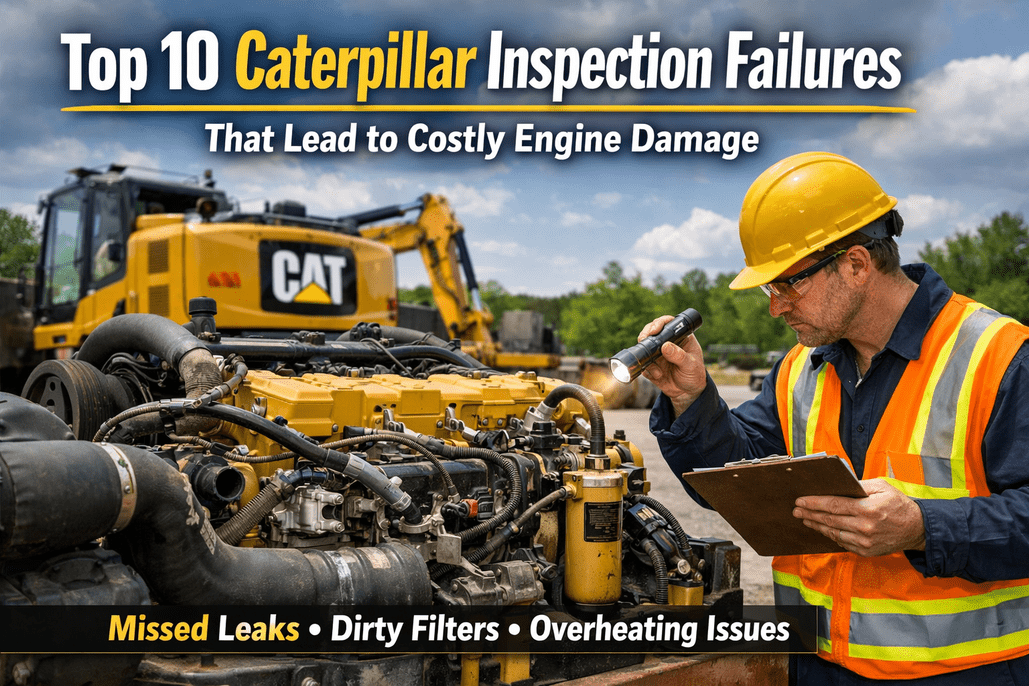
Every catastrophic Caterpillar engine failure has a story—and it usually starts with a missed inspection point. These 10 inspection failures account for 89% of preventable engine damage on Cat equipment. A $15 air filter indicator ignored for a week. A coolant level that "looked fine" but wasn't. An oil sample that never got sent. Each one leads to the same place: five-figure repair bills and weeks of downtime. Start catching these failures early with digital inspections, or schedule an assessment to identify gaps in your current inspection process.
The Top 10 Inspection Failures
Ranked by frequency and cost impact. These are the inspection points most commonly missed—and most expensive when ignored.
Ignoring Air Filter Restriction Indicator
$15K-$45K damageThe red indicator means the filter is clogged and engine is pulling unfiltered air around seals. Dust particles destroy turbochargers within 50-100 hours and score cylinder walls. Takes 5 seconds to check. Most operators don't know where to look or what red means.
Not Checking Coolant Level Properly
$85K-$175K damageOperators glance at the overflow tank and assume "there's coolant in there." They don't verify it's between min/max marks, don't check for discoloration (oil mixing = head gasket failure), and miss slow leaks. Low coolant causes overheating that cracks blocks and destroys heads. Start tracking coolant checks digitally to ensure this critical item never gets missed.
Skipping Water Separator Drain
$12K-$28K damageWater in diesel destroys injectors ($800-$1,500 each × 6-8 per engine) and high-pressure fuel pumps ($3,000-$8,000). Takes 30 seconds to drain daily. Most operators skip it "because fuel looks fine" until engine starts misfiring and won't develop full power.
Missing Oil Level or Condition Issues
$45K-$125K damageOil that's low, contaminated with coolant, or full of metal particles signals developing failure. Operators check "oil is on the dipstick" but don't look at color, smell, or consistency. Milky oil = coolant leak. Metal flakes = bearing failure in progress. Gray film = fuel dilution.
Ignoring Small Coolant Leaks
$35K-$95K damage"It's just a small drip" is how six-figure repairs start. Small leaks become big leaks. Hose seeps become hose bursts. What started as a $45 clamp replacement becomes a $95,000 engine rebuild because nobody addressed the warning sign when it was cheap to fix. Schedule a fleet assessment to identify leak tracking gaps in your inspection process.
Running Through Temperature Warnings
$65K-$175K damageTemperature gauge climbs into yellow or red and operator continues working "to finish the task." Every minute of overheating causes cumulative damage. Head gaskets fail. Pistons expand and score cylinders. Bearings overheat and seize. 8-15 minutes of severe overheating = total engine destruction.
Not Inspecting Belt Condition
$8K-$45K damageSerpentine and accessory belts drive water pumps, alternators, and A/C compressors. Cracked, glazed, or loose belts slip or break without warning. Water pump stops = instant overheating. Alternator belt breaks = battery dies, machine strands mid-job. Visual check takes 20 seconds.
Ignoring Exhaust Smoke Color
$15K-$65K damageExhaust smoke tells you exactly what's failing. Black smoke = too much fuel (injector issues). Blue smoke = burning oil (rings, valve seals, turbo seals). White smoke = coolant burning (head gasket). Most operators don't look at exhaust or know what colors mean. Sign up for Fleet Rabbit to get operator training resources and visual inspection guides included with your account.
Skipping Oil Analysis
$25K-$85K damageOil analysis detects internal wear 500-1,000 hours before external symptoms appear. Metal particles show bearing wear. Coolant presence shows gasket failure. Fuel dilution shows injector problems. Costs $25-$40 per sample. Most fleets skip it until engine failure proves they shouldn't have.
Not Reporting Unusual Sounds
$20K-$75K damageOperators hear knocking, clicking, whining, or grinding and don't report it. "It's always made that noise." New or changed sounds indicate developing failures. Bearing knock = 50-200 hours until failure. Injector tick = fuel system problems. Turbo whine = seal failure starting.
Catch All 10 Failures With Digital Inspections
Standardized checklists ensure every critical point gets checked. Photo documentation proves condition. Automatic alerts escalate problems before they become disasters.
Root Causes: Why These Failures Happen
The Core Problem
Operators aren't trained on what to look for or why it matters. They check boxes without understanding consequences. "Check coolant" becomes a glance at the tank, not verification of level, condition, and leak-free system. Schedule a demo to see how digital checklists with visual guides solve this problem.
No Visual Standards
What does "good" coolant look like? Where exactly is the air filter indicator? Without photos and clear standards, inspections become subjective.
Time Pressure
Production demands push operators to "get moving." A 15-minute inspection becomes 5 minutes, then 2 minutes, then nothing.
No Accountability
Paper forms disappear. Nobody verifies completion. Skipped inspections have no consequences until catastrophic failure.
Broken Escalation
Operators report problems but nothing gets fixed. After enough ignored reports, they stop reporting altogether.
Real Damage Examples
These inspection failures have real costs. Here's what happens when each failure goes unaddressed:
The Inspection Fixes
How to catch each of the 10 failures before they cause engine damage:
Air Filter Check
What to do: Locate restriction indicator (usually on air cleaner housing). Green = OK. Yellow = Monitor. Red = Replace immediately. Check daily before startup.
Coolant Verification
What to do: Check expansion tank level between min/max marks. Look for discoloration (milky = oil mixing). Inspect ground under engine for fresh leaks. Check daily.
Water Separator Drain
What to do: Open drain valve at bottom of separator until clear fuel flows (no water). Close valve. Check/drain daily, especially in humid conditions or after refueling.
Oil Condition Assessment
What to do: Pull dipstick, check level. Wipe on white cloth—look for milky color (coolant), metal flakes, gray film (fuel). Note any unusual smell. Check daily.
Leak Inspection
What to do: Walk around entire machine looking at ground underneath. Note any fresh fluid spots. Trace leaks to source. Report all leaks regardless of size. Check daily.
Temperature Monitoring
What to do: Note normal operating temp for your machine. Watch gauge during operation. Any climb into yellow = investigate immediately. Red = shut down instantly.
Belt Inspection
What to do: Visually inspect all visible belts for cracks, fraying, glazing. Check tension by pressing—should deflect 1/2" to 1". Listen for squealing at startup.
Exhaust Observation
What to do: Watch exhaust during warmup and under load. Clear/light gray = normal. Black = fuel issue. Blue = oil burning. White = coolant burning. Report color changes.
Oil Analysis Program
What to do: Sample every 250-500 hours. Send to lab. Review results for metal particles, coolant, fuel dilution. Trend over time. Act on any abnormal findings immediately.
Sound Awareness
What to do: Know your machine's normal sounds. Report any new knocking, clicking, whining, grinding, or hissing immediately. Don't assume "it's always done that."
Total Daily Inspection Time vs. Potential Savings
Frequently Asked Questions
Prevent All 10 Inspection Failures
Fleet Rabbit's digital inspection platform ensures every critical check gets completed with photo verification. Automatic alerts escalate problems before they become engine damage.