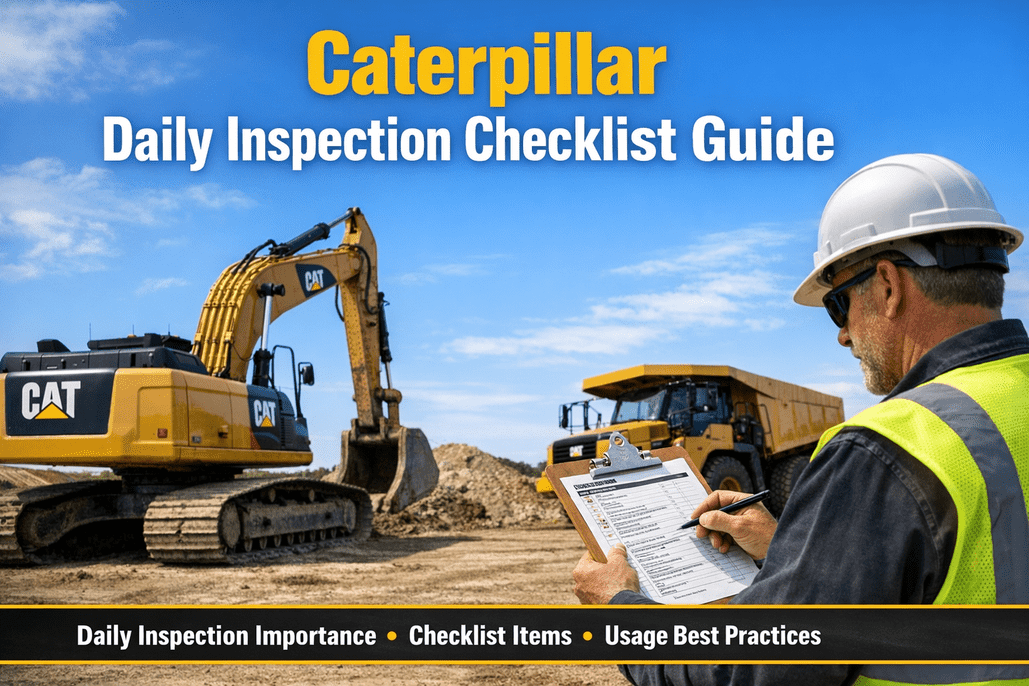
A consistent daily inspection routine is the single most effective way to prevent equipment failures on Caterpillar machines. Industry data shows that 10-15 minute pre-shift walk-arounds catch 80% of issues before they cause $15,000-$85,000 emergency repairs. Yet 72% of construction operations lack systematic inspection protocols. This guide breaks down the complete Cat daily inspection process—organized by inspection zones, system checks, and severity ratings—so your operators know exactly what to look for and when to escalate. Start using digital inspection checklists, or book a demo to see how standardized forms improve compliance across your fleet.
The Four Inspection Zones
Caterpillar organizes equipment inspections into four distinct zones. This systematic approach ensures nothing gets overlooked and creates a natural flow around and through the machine. For backhoe loaders alone, Cat specifies 60+ inspection points across these zones.
From the Ground
Complete a full circle around the machine before climbing on. This catches visible damage, leaks, and ground-level hazards.
- Frame, cab, and body for cracks or damage
- Ground under machine for fresh fluid leaks
- Tires/tracks for wear, damage, proper inflation/tension
- Steps, handrails, and access points
- Work tool attachments and coupler security
- Bucket teeth, cutting edges, side cutters
- Hydraulic hoses and fittings visible from ground
On the Machine
Climb onto the machine to inspect components not visible from ground level. Check pivot points and articulation areas.
- Center articulation area and driveline wear
- Lift arm pivot points and linkages
- Cylinder rods for damage or scoring
- Hydraulic couplings and hose connections
- Guards and covers properly secured
- Exhaust system and aftertreatment components
- DEF tank level (Tier 4 machines)
Engine Compartment
Open all access doors before starting. Check fluids with engine cold and machine on level ground for accurate readings.
- Engine oil level and condition (white towel test)
- Coolant level in reservoir or radiator
- Hydraulic oil level in sight glass
- Transmission/drive train fluid level
- Belts for cracks, fraying, proper tension
- Radiator, oil cooler, charge air cooler fins
- Air filter restriction indicator
- Battery connections and electrolyte level
Inside the Cab
Final checks before starting. Verify all controls, safety systems, and instruments function correctly.
- Seatbelt condition and operation
- Mirrors adjusted and clean
- Windows and windshield wipers
- All gauges and warning lights
- Horn, backup alarm, lights
- Brake pedal feel and parking brake
- Control levers and joystick operation
- HVAC and defrost operation
Walk-Around Inspection Process
Follow this sequence for an efficient, thorough daily inspection. Total time: 10-15 minutes when performed consistently.
Approach & Observe
Walk toward machine noting any visible leaks, damage, or debris. Check ground under and around machine for fresh fluid puddles.
1 minCircle Walk-Around
Complete full circuit inspecting tires/tracks, attachments, frame, hydraulics, and all exterior components from ground level.
3-4 minEngine Compartment Check
Open access doors. Check all fluid levels, belts, hoses, filters, and battery. Look for leaks and debris in compartment.
3-4 minCab Entry & Controls
Check access steps and handrails. Enter cab, verify seatbelt, mirrors, gauges, and all control positions before starting.
2 minStartup & Function Test
Start engine, check warning lights clear, test brakes, horn, lights, and all hydraulic functions at low speed before operation.
2-3 minSystem-by-System Checklist
Use this detailed breakdown when training new operators or performing thorough shift-start inspections. Each system has specific check points that experienced Cat technicians prioritize.
Hydraulic System
45% of major equipment failures| Hydraulic oil level in sight glass | Visual—should be between MIN and MAX marks |
| Oil condition (color/clarity) | Clear amber = normal; milky = water contamination |
| Hoses and fittings | Check for bulges, cracks, weeping at connections |
| Cylinder rods | Look for scoring, pitting, or chrome damage |
| Function test | All movements smooth, no jerking or delay |
Engine & Powertrain
Critical for machine operation| Engine oil level and condition | Use white towel—"bull's eye" pattern indicates fuel dilution |
| Coolant level | Check cold; never open hot radiator cap |
| Air filter indicator | Red zone = service required |
| Belts and tensioners | Check tension, cracks, fraying |
| Exhaust system | Leaks, damage, DPF condition (Tier 4) |
| DEF level | Tier 4 engines—low DEF limits engine power |
Tires, Tracks & Undercarriage
40-50% of total maintenance costs| Tire pressure (wheeled) | Check against door placard; 10 PSI low = 0.6% more fuel |
| Tire condition | Cuts, bulges, tread depth, sidewall damage |
| Track tension (tracked) | Per OMM specification; too tight or loose accelerates wear |
| Track condition | Missing or damaged pads, worn pins and bushings |
| Undercarriage debris | Clean packed mud/debris that adds weight and wear |
| Idlers, rollers, sprockets | Excessive wear, leaks, damage |
Safety Systems & Controls
OSHA requires before each shift| Seatbelt | Latches properly, webbing not frayed or cut |
| ROPS/FOPS structure | No cracks, damage, or unauthorized modifications |
| Service brakes | Firm pedal feel, no spongy response |
| Parking brake | Holds machine on grade |
| Horn and backup alarm | Audible and functioning |
| Lights | Head, tail, work, warning lights operational |
| Warning gauges/lights | All illuminate at startup, then clear |
Condition Rating System
Cat Inspect and most digital inspection systems use a three-level rating system. This creates clear, consistent communication about equipment condition across all operators and sites.
Common Issues Found During Inspections
Experienced Cat technicians report these as the most frequently discovered problems during daily walk-arounds. Catching these early prevents the costly consequences shown.
Fluid Leaks
Hydraulic, engine oil, coolant, or transmission fluid leaking from hoses, seals, or fittings.
Low Fluid Levels
Engine oil, hydraulic fluid, coolant, or DEF below minimum marks indicating consumption or leaks.
Tire/Track Wear
Uneven wear patterns, low tread, improper tension, or visible damage to rubber and steel components.
Clogged Filters
Air filter restriction indicator in red zone, or visible debris blocking radiator and cooler fins.
Damaged Hoses
Bulging, cracked, chafed, or abraded hydraulic and coolant hoses indicating imminent failure.
Safety System Failures
Inoperative backup alarms, lights, horns, or damaged seatbelts and access points.
Digital vs. Paper Inspections
While paper checklists have been the standard for decades, digital inspection tools like Cat Inspect and HVI provide significant advantages for fleet-wide consistency and compliance tracking.
Paper Checklists
Digital Inspections
Frequently Asked Questions
Build a Culture of Daily Inspection Excellence
Consistent daily inspections are the foundation of equipment reliability, operator safety, and maintenance cost control. Digital checklists make it easy to standardize procedures across your entire fleet.
Start Free Trial Book a Demo