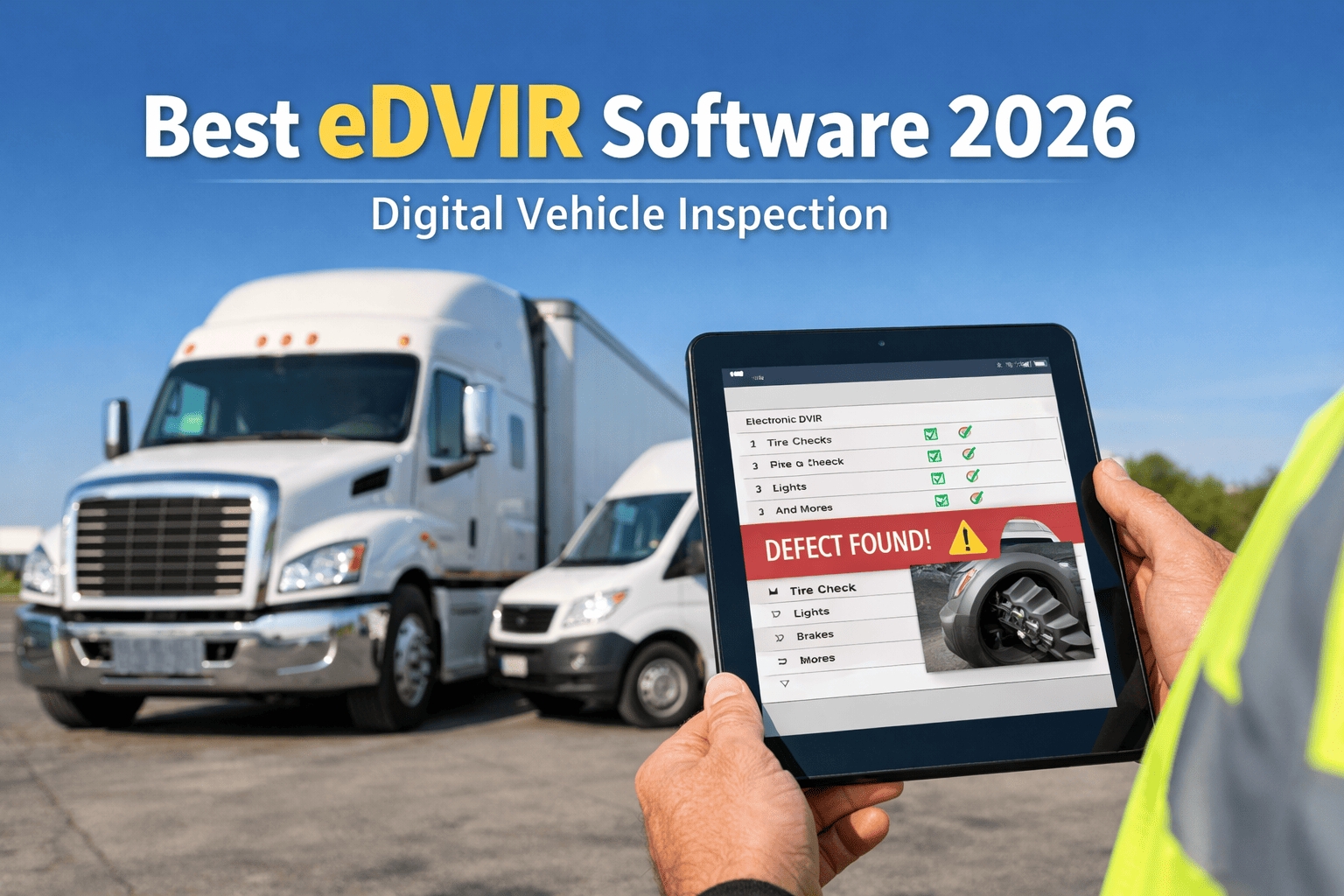
On February 19, 2026, FMCSA published a final rule explicitly authorizing electronic DVIRs — removing the last regulatory argument for paper inspections. The rule, effective March 23, 2026, adds explicit eDVIR language to 49 CFR 396.11 and 396.13. At the same time, the 2026 CSA overhaul created a separate "Driver Observed" Vehicle Maintenance category that scores items drivers should catch during walk-around inspections. Your DVIR quality is now a visible, scored factor in your carrier profile. Paper DVIRs — 73% of which never reach the office — cannot compete. The eDVIR market has matured from basic checklist apps into platforms that auto-generate work orders, enforce 3-signature chains, track defect trends, and produce audit-ready records with timestamps, GPS, and photo evidence. But not every platform is equal. Some are compliance checkboxes. Others are operational tools that connect inspections to maintenance workflows, CSA scoring, and fleet analytics. This guide helps you evaluate eDVIR software across the features that actually matter for fleet operations and DOT compliance. Book a demo to see HVI's eDVIR platform, or start your free trial.
Compare eDVIR platforms across compliance, defect workflows, photo capture, offline capability, and fleet integration — plus what the February 2026 FMCSA final rule means for your fleet.
Why 2026 Is the Year to Switch to eDVIR
Two regulatory changes in 2026 make the case for electronic DVIRs unambiguous — and make paper a competitive disadvantage.
Docket FMCSA-2025-0115, effective March 23, 2026. Adds explicit eDVIR authorization to 396.11 and 396.13. Electronic creation, maintenance, and signature of DVIRs is now unambiguously compliant. Supported by ATA, OOIDA, and NTTC. Paper remains legal but digitally disadvantaged during audits.
The 2026 CSA overhaul separates Vehicle Maintenance into "Standard" and "Driver Observed" categories. Roadside violations for items drivers should catch during walk-around — lights, tires, coupling, reflective tape — are now scored separately. Your DVIR thoroughness directly impacts a visible carrier metric.
8 Features That Separate Great eDVIR Software from Basic Apps
Every eDVIR app has checklists and photo capture. The features below are what separate compliance tools from operational platforms that actually reduce violations and downtime.
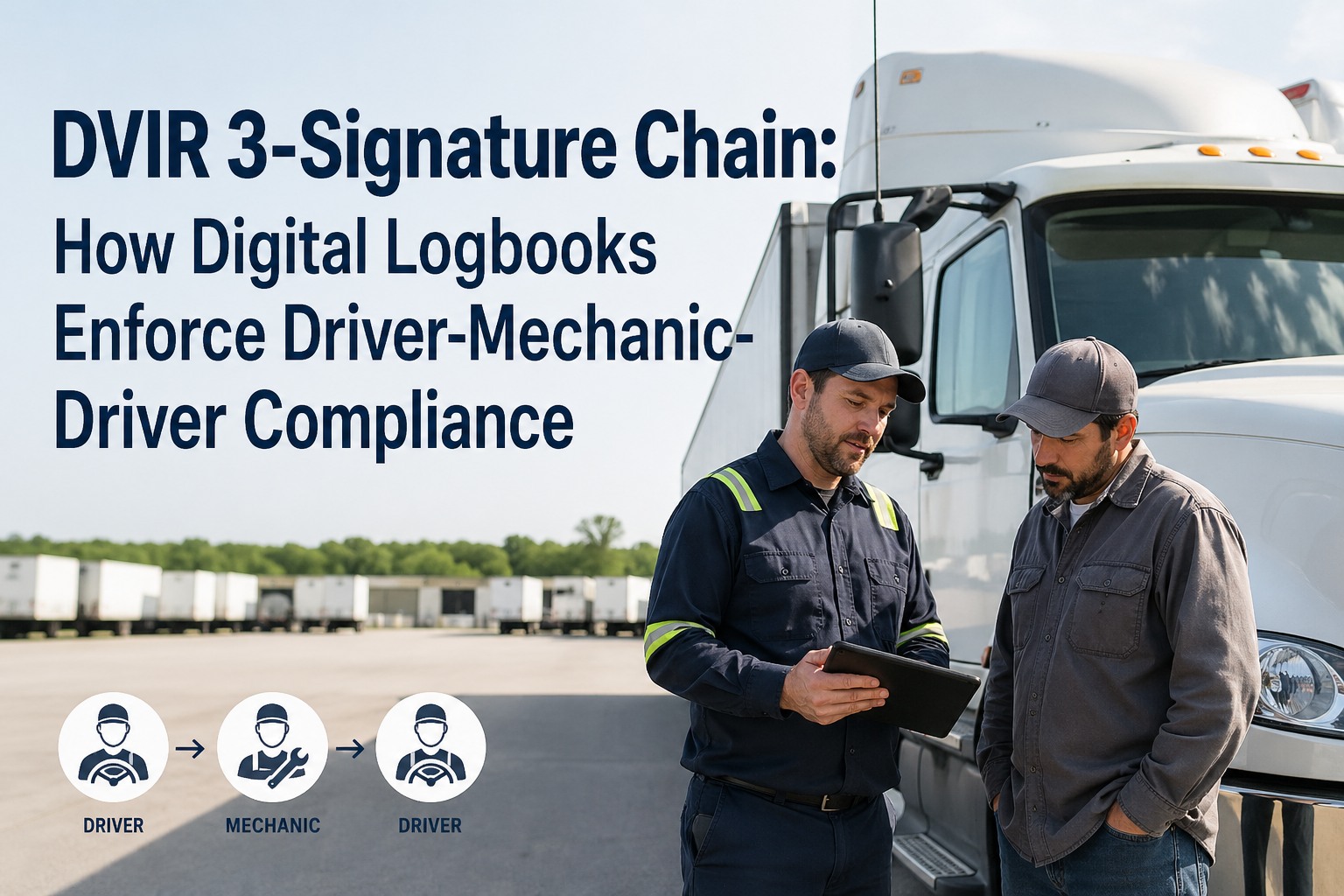
Driver report, mechanic repair certification, next-driver acknowledgment — all three must be captured and timestamped. The system should block progression until each signature is complete. Without enforcement, the chain breaks silently.
When a driver flags a defect, the platform should auto-create a maintenance work order linked to the original DVIR — no manual transfer, no separate system entry. This was a differentiator in 2024; by 2026, it is a minimum expectation.
Every inspection entry must include geotagged, timestamped photo evidence. This proves the inspection actually occurred at the vehicle's location, prevents backdating, and creates defensible records for audits and litigation.
Inspections must work without cell signal — complete with photo capture, GPS tagging, and digital signatures. Data syncs when connectivity returns. Non-negotiable for construction sites, mine pits, and rural operations.
Tractors, trailers, reefers, dump trucks, excavators, cranes — each has different inspection points. The platform should offer pre-built templates for every equipment type plus full customization for company-specific items and OEM requirements.
Tractor + trailer + reefer as a linked inspection set. Combinations change daily. The app must handle asset pairing seamlessly — not force drivers to complete three separate inspections every shift.
Track recurring defects by component, vehicle, driver, or site. Identify patterns before they become roadside violations. This transforms inspections from compliance checkboxes into predictive maintenance intelligence.
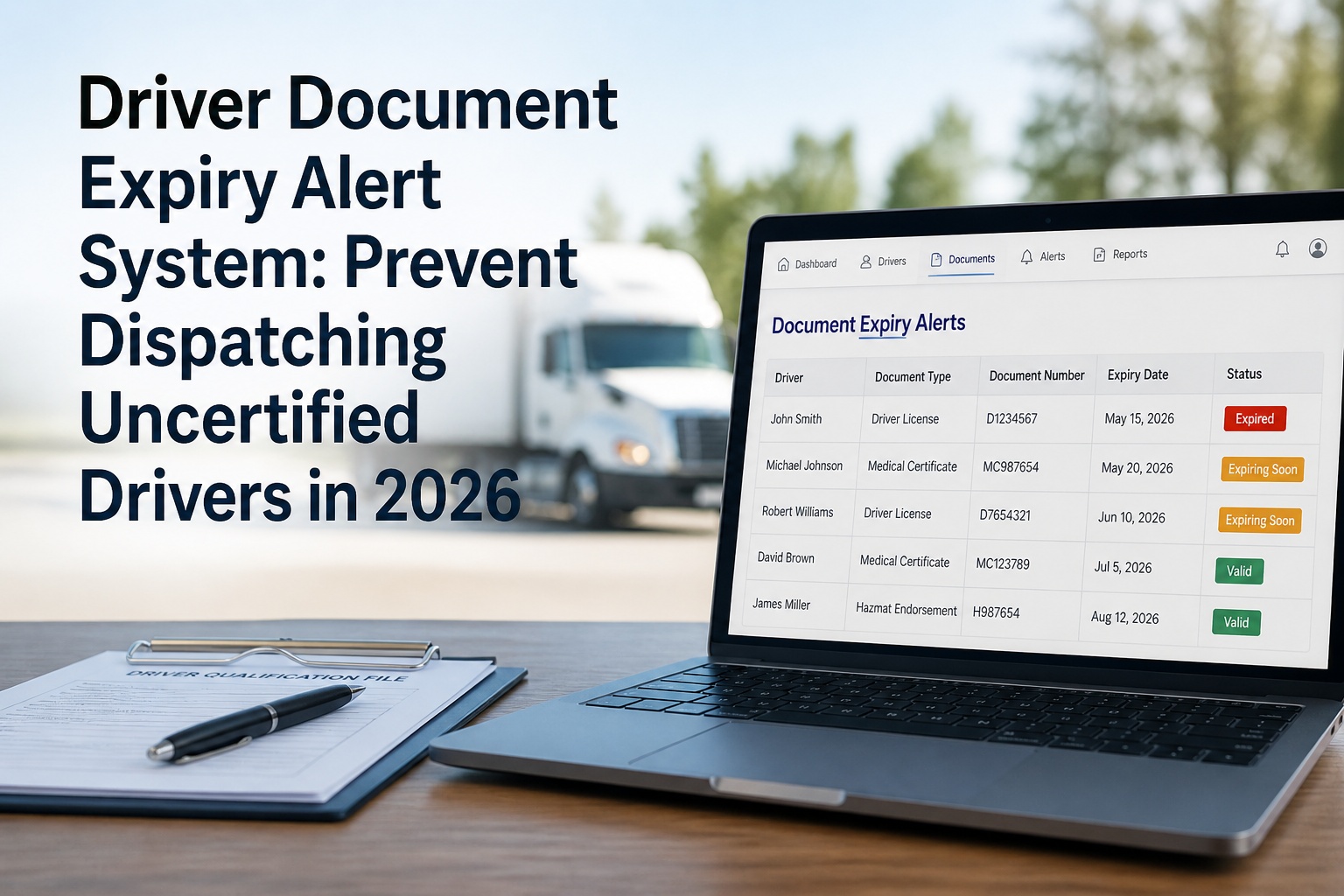
Dashboard showing which vehicles and drivers have not completed required inspections. Flag non-compliance before it becomes a violation. The 2026 "Driver Observed" BASIC makes this visibility critical.
Paper DVIR vs eDVIR: The Numbers
How to Evaluate eDVIR Software for Your Fleet
Not every fleet needs the same platform. Use this decision framework to match the right eDVIR software to your operation type.
Priority: Simple setup, low cost, mobile-first, DOT-compliant DVIRs. Avoid platforms with enterprise pricing or complex configurations. Look for per-vehicle pricing under $5/month with free trial available.
Priority: Defect-to-work-order automation, 3-signature enforcement, multi-site management. Driver adoption is the key challenge — test with actual drivers before committing.
Priority: API integration with existing CMMS and telematics, CSA score tracking, custom reporting, multi-division management, and enterprise-grade security.
Priority: Equipment-specific templates (excavators, cranes, loaders), OSHA compliance (not just FMCSA), offline capability for jobsites without cell signal, hour-based PM tracking.
Why Fleets Choose HVI
Guided walk-around order, large tap targets for gloved hands, minimal typing. Photo + tap severity. Drivers complete thorough inspections faster than paper because the app guides them through every step in logical sequence.
Defect flagged → maintenance alerted instantly → work order auto-created → mechanic signs repair → next driver acknowledges. The 3-signature chain is enforced digitally. No link can be missed. Every defect has a documented resolution.
Full inspection capability without internet. Photo capture, GPS tagging, digital signatures — all work offline. Data syncs when connectivity returns. Built for construction sites, mine pits, remote yards, and rural operations.
No hardware required. No setup fees. Free trial available. Works on any smartphone. 25-minute driver training. Scales from 5 vehicles to 500+ with the same platform. Per-vehicle pricing — you pay for what you use.
Pre-built checklists for tractors, trailers, reefers, dump trucks, excavators, loaders, dozers, cranes, and forklifts. Fully customizable for company-specific items. Add required photo points for critical components.
Covers both DOT/FMCSA requirements (commercial vehicles, 49 CFR 396) and OSHA requirements (construction equipment, 29 CFR 1926). One platform for fleet trucks and heavy equipment. Audit-ready records stored indefinitely.
Frequently Asked Questions
Yes — fully legal and now explicitly authorized. FMCSA published a final rule on February 19, 2026 (effective March 23, 2026, Docket FMCSA-2025-0115) adding explicit eDVIR language to 49 CFR 396.11 and 396.13. Electronic DVIRs were already permissible under 49 CFR 390.32 since 2018. Digital signatures, cloud storage, and mobile submission are all compliant. The rule was supported by ATA, OOIDA, and NTTC. Start your free trial.
Most fleets complete the transition in 2-4 weeks. Setup involves configuring templates per vehicle type, mapping checklist items to walk-around order, setting defect routing rules, and training drivers (typically a single 25-minute session). Driver adoption is typically high because eDVIR apps reduce inspection time compared to paper while producing better documentation. Book a demo to plan your transition.
Eight critical features: 3-signature chain enforcement, auto-generated work orders from defects, photo + GPS + timestamp on every entry, full offline capability, customizable templates by equipment type, multi-asset combination support, defect trend analytics, and missed inspection alerts. The platform should also integrate with your existing CMMS or maintenance system. Test with actual drivers before committing.
The 2026 CSA overhaul creates a separate "Driver Observed" Vehicle Maintenance category. Roadside violations for items drivers should catch during walk-around inspections (lights, tires, coupling, leaks) are now scored separately. This means your DVIR thoroughness directly impacts a newly visible carrier metric. Fleets with documented, thorough eDVIR programs demonstrate compliance. Fleets with rushed paper checkmarks will see it reflected in their scores.
Yes. HVI provides inspection templates for both DOT-regulated commercial vehicles (tractors, trailers, dump trucks) under FMCSA 49 CFR 396 and construction/heavy equipment (excavators, cranes, loaders, dozers) under OSHA 29 CFR 1926. One platform covers your entire fleet regardless of equipment type. Each template is fully customizable to match OEM-specific inspection requirements.
HVI starts at $2.99 per vehicle per month on annual billing. No hardware required. No setup fees. Free trial available with full platform access. Works on any smartphone — iOS or Android. Scales from 5 vehicles to 500+ with the same pricing structure. Includes unlimited inspections, photo capture, defect routing, work orders, and compliance dashboard. Start your free trial — no credit card required.
Under 2 minutes per inspection. Guided checklists. Photo evidence. Enforced 3-signature chain. Auto work orders. Offline capable. $2.99/vehicle/month. No hardware. Try it free — your drivers will tell you the rest.
No credit card • No hardware • Works offline • FMCSA eDVIR compliant