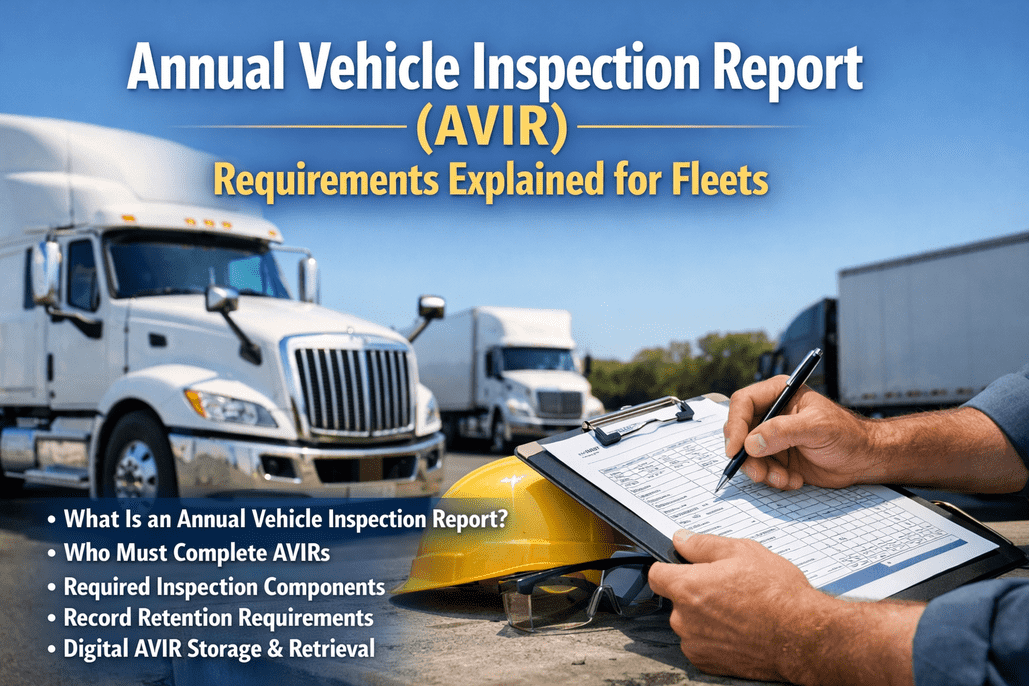
Every commercial fleet operating in interstate commerce faces a critical compliance requirement that directly impacts operating authority, insurance costs, and roadside inspection outcomes: the Annual Vehicle Inspection Report (AVIR). Under 49 CFR 396.17, all commercial motor vehicles exceeding 10,000 pounds GVWR must undergo comprehensive annual inspections documenting every safety-critical system—from brake components and steering mechanisms to lighting, tires, and emergency equipment. Missing, incomplete, or expired AVIRs result in immediate out-of-service orders, fines averaging $1,000-$4,000 per violation, and significant disruption to fleet operations.
Yet despite being a fundamental DOT requirement, many fleets struggle with AVIR management: paper forms get lost, inspection schedules slip, 14-month retention requirements create storage challenges, and proving compliance during roadside inspections or FMCSA audits becomes a scramble through file cabinets. In 2026, as enforcement intensity increases and digital recordkeeping becomes the industry standard, fleets that continue relying on manual AVIR processes face mounting compliance risk and operational inefficiency. This comprehensive guide explains AVIR requirements, identifies who must comply, details required inspection components, clarifies record retention rules, and demonstrates why digital AVIR management eliminates compliance gaps while streamlining audit preparation. Ready to modernize your fleet's annual inspection program? Sign up for HVI to digitize AVIR records with automatic retention tracking, or book a demo to see complete inspection-to-compliance workflows in action.
What Is an Annual Vehicle Inspection Report (AVIR)?
An Annual Vehicle Inspection Report (AVIR) is the official documentation certifying that a commercial motor vehicle has passed a comprehensive safety inspection meeting the minimum standards established in 49 CFR Part 396, Appendix A. This inspection—mandated by federal law for specific vehicle classes—verifies that all safety-critical components function properly and meet DOT specifications before the vehicle continues operating in commerce.
AVIR Regulatory Requirements
The AVIR requirement stems from 49 CFR 396.17 ("Periodic Inspection"), which mandates that motor carriers and intermodal equipment providers inspect or cause to be inspected all commercial motor vehicles subject to their control at least once every 12 months. The inspection must cover every component listed in Appendix A to Part 396, and documentation of the completed inspection must remain on the vehicle at all times—either as the full AVIR form or as a decal/sticker containing required certification information.
The AVIR serves as legal proof that a vehicle meets federal safety standards. Operating without current AVIR documentation violates 49 CFR 396.17 and results in immediate out-of-service orders during roadside inspections.
Annual inspections identify mechanical deficiencies before they cause breakdowns or accidents. Systematic component inspection catches wear, damage, and deterioration that daily pre-trip checks might miss.
AVIRs create documented maintenance history demonstrating that fleet operators prioritize vehicle safety. During FMCSA audits or post-accident investigations, complete AVIR records demonstrate regulatory compliance and duty of care.
Most commercial auto insurance policies require current annual inspections as a condition of coverage. Expired AVIRs can void insurance claims and expose carriers to significant liability in accident situations.
AVIR records track vehicle condition over time, revealing patterns in component wear, maintenance needs, and replacement cycles that inform better fleet management decisions and capital planning.
Complete, organized AVIR documentation increases vehicle resale value by demonstrating proper maintenance history. Buyers pay premiums for trucks with verifiable compliance records.
Critical AVIR Facts Every Fleet Must Know
Inspections must occur "at least once every 12 months" from the last day of the month the previous inspection was completed. Missing this deadline by even one day violates federal regulations.
A copy of the AVIR or an inspection decal containing required information must be carried on the vehicle at all times and produced on demand during roadside inspections or weigh station checks.
Motor carriers must maintain the original AVIR at their principal place of business or where the vehicle is housed for at least 14 months from the inspection date—covering the current and previous inspection cycles.
Who Must Complete Annual Vehicle Inspection Reports?
AVIR requirements apply to specific classes of commercial motor vehicles based on weight, cargo, and passenger capacity thresholds. Understanding which vehicles require annual inspections is critical for compliance—operating vehicles that should have AVIRs without them creates immediate regulatory exposure. Need help tracking inspection requirements across your fleet? Start your HVI trial to automate inspection scheduling and compliance tracking.
Interstate Commercial Vehicles Over 10,001 lbs
Applies to: Any commercial motor vehicle or combination vehicle with GVWR, GCWR, or actual weight exceeding 10,000 pounds operating in interstate commerce (crossing state lines or engaging in interstate trade).
Examples: Class 4-8 trucks, tractor-trailers, delivery trucks, utility trucks, dump trucks, boom trucks, box trucks, flatbeds, refrigerated trucks, and most construction equipment transported on public roads.
Hazardous Materials Vehicles (Any Weight)
Applies to: Any commercial vehicle transporting hazardous materials in quantities requiring placarding under 49 CFR Part 172, regardless of vehicle weight or interstate/intrastate operation.
Examples: Tanker trucks hauling fuel, propane, or chemicals; vehicles transporting explosives, radioactive materials, or corrosive substances; and any vehicle displaying hazmat placards.
Passenger-Carrying Vehicles (9+ Passengers)
Applies to: Vehicles designed or used to transport 9 or more passengers (including driver) for compensation, or 16 or more passengers (including driver) not for compensation.
Examples: Motor coaches, charter buses, airport shuttles, hotel shuttles, church buses, school activity buses (when used for interstate travel), and passenger vans used commercially.
Intrastate Commercial Vehicles Over 26,001 lbs
Applies to: Commercial vehicles operating exclusively within one state (intrastate commerce only) with GVWR, GCWR, or actual weight exceeding 26,000 pounds—subject to individual state requirements.
State Variation: Some states adopt federal AVIR standards for intrastate vehicles over 26,001 lbs; others have different thresholds, inspection intervals, or exemptions. Always verify state-specific requirements.
Vehicles Exempt from AVIR Requirements
The following vehicle categories are generally exempt from annual inspection requirements under 49 CFR 396.17:
- Personal-use vehicles: Private passenger vehicles, personal trucks, and RVs not used in commerce
- Farm vehicles (covered farm vehicles): Vehicles meeting the covered farm vehicle definition in 49 CFR 390.5 operating within 150 air miles
- Driveaway-towaway vehicles: Vehicles being transported as part of the shipment in driveaway-towaway operations
- Vehicles under 10,001 lbs: Light commercial vehicles below weight thresholds (unless hauling hazmat requiring placarding)
- Pipeline welding trucks: As defined in 49 CFR 390.38(b)
Caution: Exemptions are narrowly defined. When in doubt about whether a vehicle requires an AVIR, consult with compliance professionals or apply the inspection requirement to avoid violations.
Required AVIR Inspection Components
Federal regulations specify exactly which vehicle components must be inspected during annual inspections. 49 CFR Part 396, Appendix A ("Minimum Periodic Inspection Standards") establishes comprehensive criteria that qualified inspectors must follow. Every component listed must be examined, tested where applicable, and documented as meeting standards or requiring repair.
Brake Systems
Air Brake Systems: Air compressor operation, governor cutout settings (typically 120-125 psi), air pressure build time, applied and static leak rates, brake chamber condition and mounting, pushrod travel, slack adjuster operation, brake lining thickness (minimum 1/4" at thinnest point), drum/rotor condition, air lines and fittings, valves and moisture separator function.
Hydraulic Brakes: Master cylinder operation, fluid levels and condition, brake line integrity, caliper/wheel cylinder function, pad thickness, rotor condition, parking brake operation.
Steering Mechanisms
Inspection Points: Steering wheel free play (maximum 2 inches for manual steering systems without power assistance), steering column integrity, universal joints and couplings, steering gear box condition and mounting, power steering fluid level and leaks, tie rod ends and drag links, steering arm and knuckle, kingpin wear, alignment and wheel play.
Lighting Devices & Reflectors
Required Checks: Headlights (high and low beam operation), tail lights, stop lights, turn signals (front and rear), clearance lights, identification lights, side marker lights, reflectors (red rear, amber sides, white front), license plate lights, backup lights. All lamps must be properly aimed, securely mounted, and free from cracks or moisture intrusion.
Tires
Inspection Criteria: Tread depth minimums (4/32" on steering axle, 2/32" on all other positions), sidewall condition (no cuts, bulges, or exposed cords), proper size matching, load rating adequate for position, inflation to manufacturer specifications, no flat spots or irregular wear, valve stems and caps present, no tire-to-body contact.
Wheels, Hubs & Fasteners
Examination Points: Wheel cracks or damage, rust streaks indicating loose lug nuts, proper lug nut torque, hub oil seals (no leaks), bearing end play within specifications, rim integrity, spoke wheels properly tensioned, no missing or broken fasteners, proper wheel size and type for application.
Suspension System
Components Inspected: Springs (leaf or coil) for cracks, breaks, or missing leaves, spring hangers and shackles, U-bolts tight and intact, air suspension bags (no leaks or damage), shock absorbers mounted and functioning, torque arm and radius rod condition, axle alignment, no shifted spring or axle position.
Frame & Cargo Securement
Structural Checks: Frame rails for cracks or breaks, crossmembers secure and undamaged, body and cargo compartment integrity, fifth wheel (if equipped) properly mounted and lubricated, cargo securement points intact, tie-down anchors rated and positioned per 49 CFR 393, no modifications compromising structural integrity.
Fuel System
Safety Inspection: Fuel tank(s) securely mounted, no leaks at tank, lines, or connections, fill cap present and sealing properly, fuel lines not damaged or chafing, proper routing away from heat sources, no fuel system modifications violating federal standards, sufficient venting, overflow protection functional.
Vision Requirements: Windshield free from cracks longer than 11 inches or located in critical vision areas, no discoloration or damage obstructing driver's view, windshield wipers operational with functional blades, mirrors (both sides) properly mounted and providing required rearward vision, windows operational if designed to open.
Electrical Systems
System Check: Battery securely mounted with clean terminals, charging system functional, wiring harnesses properly secured and insulated (no exposed wires), all electrical connections tight and corrosion-free, fuses/circuit breakers appropriate ratings, no modifications creating hazards, ground connections solid.
Emergency Equipment
Required Items: Fire extinguisher(s) properly rated, mounted, and inspected within service date, spare fuses (unless equipped with circuit breakers), warning devices for stopped vehicles (3 reflective triangles or equivalent), emergency exit(s) on passenger vehicles operational and marked, first aid kit (if required by employer or state).
Exhaust System
Safety Standards: Exhaust system securely attached, no leaks allowing exhaust gas into cab or sleeper, proper discharge point (behind cab and not under fuel tank), catalytic converter and emissions equipment intact (if required), no excessive noise indicating leaks or damage, heat shields present where required.
Additional AVIR Components Inspected
- Fifth wheel integrity and securement
- Kingpin connection and safety latch
- Pintle hooks and drawbar condition
- Safety chains rated and attached
- Electrical and air connections
- Horn operational and audible
- Speedometer functional and accurate
- Heater/defroster operational
- Driver's seat secure and adjustable
- Rear impact guard (if required)
Tracking annual inspections across mixed fleets with varying schedules becomes complex quickly. Sign up for HVI to automate inspection due dates with proactive alerts, or schedule a demo to see complete DOT compliance workflows.
AVIR Record Retention Requirements
Creating accurate AVIRs is only half the compliance equation—maintaining proper records in accessible formats for mandated timeframes is equally critical. Federal regulations establish specific retention periods, storage requirements, and documentation standards that motor carriers must follow to avoid violations during audits or roadside inspections.
14-Month Minimum Retention
Regulation: 49 CFR 396.3(b) requires motor carriers to retain the original annual inspection report for at least 14 months from the date of the inspection. This timeframe ensures that the current inspection report AND the previous inspection report remain available throughout the entire annual cycle.
Storage Location: Records must be maintained at the motor carrier's principal place of business or at the location where the vehicle is regularly housed or maintained.
Practical Impact: For a 50-vehicle fleet conducting annual inspections year-round, this means maintaining 100+ AVIR documents (current + previous for each vehicle) at all times, accessible for audit or roadside verification.
Current AVIR or Decal On Vehicle
Regulation: 49 CFR 396.17(c) requires that documentation of the annual inspection be carried on the vehicle at all times. This can be either a copy of the full inspection report OR a decal/sticker containing required certification information.
Required Information (if using decal):
- Date of inspection
- Name and address of motor carrier or entity maintaining the inspection report
- Information identifying the specific vehicle inspected
- Certification that vehicle passed inspection per 49 CFR 396.17
Roadside Reality: During DOT inspections or weigh station checks, inspectors will ask to see proof of annual inspection. Missing or expired documentation results in immediate violations and potential out-of-service orders.
Inspector Credentials Documentation
Regulation: 49 CFR 396.19 requires motor carriers to retain evidence of inspector qualifications. Inspectors must be qualified through training, knowledge, experience, or certification to perform annual inspections.
Qualifying Credentials:
- State/Canadian Province commercial vehicle inspector certification
- Completion of federal or state safety inspection training programs
- ASE certification in relevant areas (brakes, steering/suspension, etc.)
- Documented training and experience performing commercial vehicle inspections
Audit Exposure: During FMCSA compliance reviews, auditors verify that inspectors performing annual inspections were actually qualified. Missing qualification documentation can invalidate all AVIRs performed by that inspector.
Common AVIR Record Management Challenges
Paper AVIRs get misplaced, damaged by weather, become illegible over time, or are inadvertently discarded when filing systems aren't rigorous. Lost records create compliance gaps that auditors treat as missing inspections—violations that carry significant penalties.
Manually tracking which AVIRs can be purged (those older than 14 months) versus which must be retained requires constant attention. Many fleets either keep everything indefinitely (creating storage burden) or accidentally discard records still within retention periods.
Fleets with vehicles and maintenance operations spread across multiple locations struggle to maintain centralized AVIR access. Auditors expect instant production of records—delays while searching branch offices reflect poorly on compliance culture.
When inspectors request annual inspection proof during roadside checks, drivers must produce it immediately. If the on-vehicle copy is missing, inspectors may contact the carrier—delays and inconvenience that negatively impact roadside inspection outcomes.
Digital AVIR Storage & Retrieval
The transition from paper-based AVIR management to digital systems eliminates most compliance challenges while dramatically improving efficiency, accessibility, and audit readiness. Modern fleet management platforms automate retention tracking, provide instant retrieval during inspections or audits, and create permanent, searchable records that can't be lost or damaged.
Automated Retention Compliance
Digital systems automatically track the 14-month retention requirement for every vehicle, flagging when inspection schedules approach due dates and archiving expired records appropriately. No manual calendar tracking, no accidental record destruction, no retention violations during audits.
- Automatic retention period calculation from inspection date
- Proactive alerts 60-30-15 days before inspection due dates
- Compliant archiving of records beyond retention periods
- Instant verification that all vehicles have current AVIRs
Instant Audit Retrieval
When FMCSA auditors or insurance inspectors request AVIR documentation, digital systems produce complete records instantly—searchable by vehicle, date range, inspector, or location. What takes hours or days with paper filing systems happens in seconds with digital management.
- Search entire fleet history in under 5 seconds
- Export audit packages with one click
- Filter by vehicle, date range, location, or inspector
- Demonstrate compliance culture through organized records
Mobile Access for Drivers
Drivers can access current AVIR documentation from their mobile devices during roadside inspections, eliminating the need to carry paper copies that get lost, damaged, or forgotten. Inspectors can verify compliance status without delays or phone calls to dispatch.
- Instant AVIR retrieval on driver smartphones
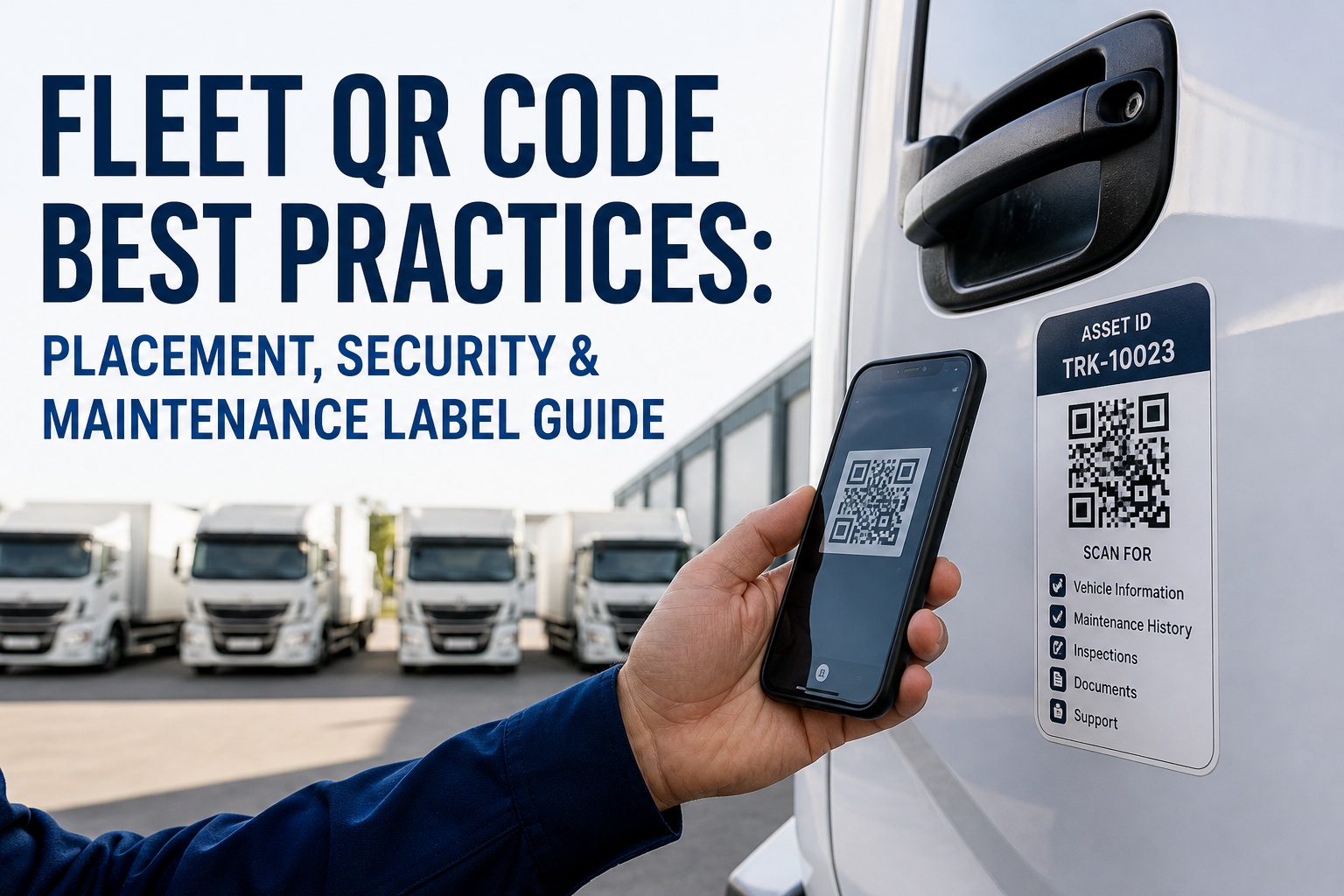
- QR codes linking to digital inspection records
- No lost paper copies or outdated decals
- Reduces roadside inspection time significantly
Secure Cloud Backup
Digital AVIR storage with redundant cloud backup protects against record loss from fire, flood, theft, or simple misplacement. Records remain accessible even if physical facilities are compromised, ensuring business continuity and compliance regardless of circumstances.
- Automatic cloud synchronization and backup
- Protection against physical document destruction
- Accessible from any authorized device
- Disaster recovery without record reconstruction
Fleet-Wide Analytics
Digital AVIR data enables fleet-wide analysis impossible with paper records: which vehicles generate most defect citations, which components fail most frequently, inspector performance patterns, seasonal maintenance trends, and predictive insights that inform better fleet management.
- Identify vehicles with recurring issues
- Track component failure patterns across fleet
- Compare inspector thoroughness metrics
- Predict maintenance needs based on historical data
Integrated Compliance Workflow
Premium platforms integrate AVIRs with broader fleet compliance systems: linking annual inspections to maintenance schedules, connecting with DVIR programs, tracking repair completion, coordinating with PM intervals, and creating comprehensive maintenance histories that demonstrate exemplary compliance culture.
- AVIR schedules sync with PM calendars
- Failed inspection items auto-generate work orders
- Repair completion certified before next dispatch
- Complete vehicle lifecycle documentation
Paper vs. Digital AVIR Management
- Manual tracking of inspection due dates per vehicle
- Physical filing systems requiring office space
- Risk of document loss, damage, or misfiling
- Slow retrieval during audits (minutes to hours)
- No automatic retention period enforcement
- Illegible handwriting complicates record review
- Multi-location access requires document copying/shipping
- No analytics or trend identification possible
- Drivers carry paper copies that get lost
- Difficult to verify inspector qualifications retroactively
- Automatic inspection scheduling with proactive alerts
- Cloud storage eliminates physical file cabinets
- Redundant backup prevents record loss
- Instant retrieval during audits (under 5 seconds)
- Automatic retention compliance and archiving
- Searchable typed text eliminates legibility issues
- Multi-location access from any authorized device
- Advanced analytics identify trends and patterns
- Mobile driver access to current documentation
- Inspector credentials linked to every AVIR
ROI of Digital AVIR Management
For a 50-vehicle fleet, transitioning from paper to digital AVIR management typically delivers:
Most fleets achieve complete ROI within 90-120 days through violation avoidance, reduced administrative overhead, and improved insurance audit outcomes. The larger the fleet, the more dramatic the savings.
Ready to eliminate AVIR compliance risk while streamlining record management? Start your HVI free trial to experience automatic retention tracking and instant audit retrieval, or book a personalized demo to see complete annual inspection workflows.
Frequently Asked Questions
Eliminate AVIR Compliance Risk with Digital Management
For commercial fleets, annual inspection compliance directly impacts operating authority, safety ratings, and audit outcomes. HVI delivers automated AVIR tracking, instant record retrieval, and complete documentation workflows that eliminate paper-based compliance gaps while reducing administrative burden by 80%+.
No credit card required • Automatic retention compliance • Setup in under 10 minutes • Instant audit readiness