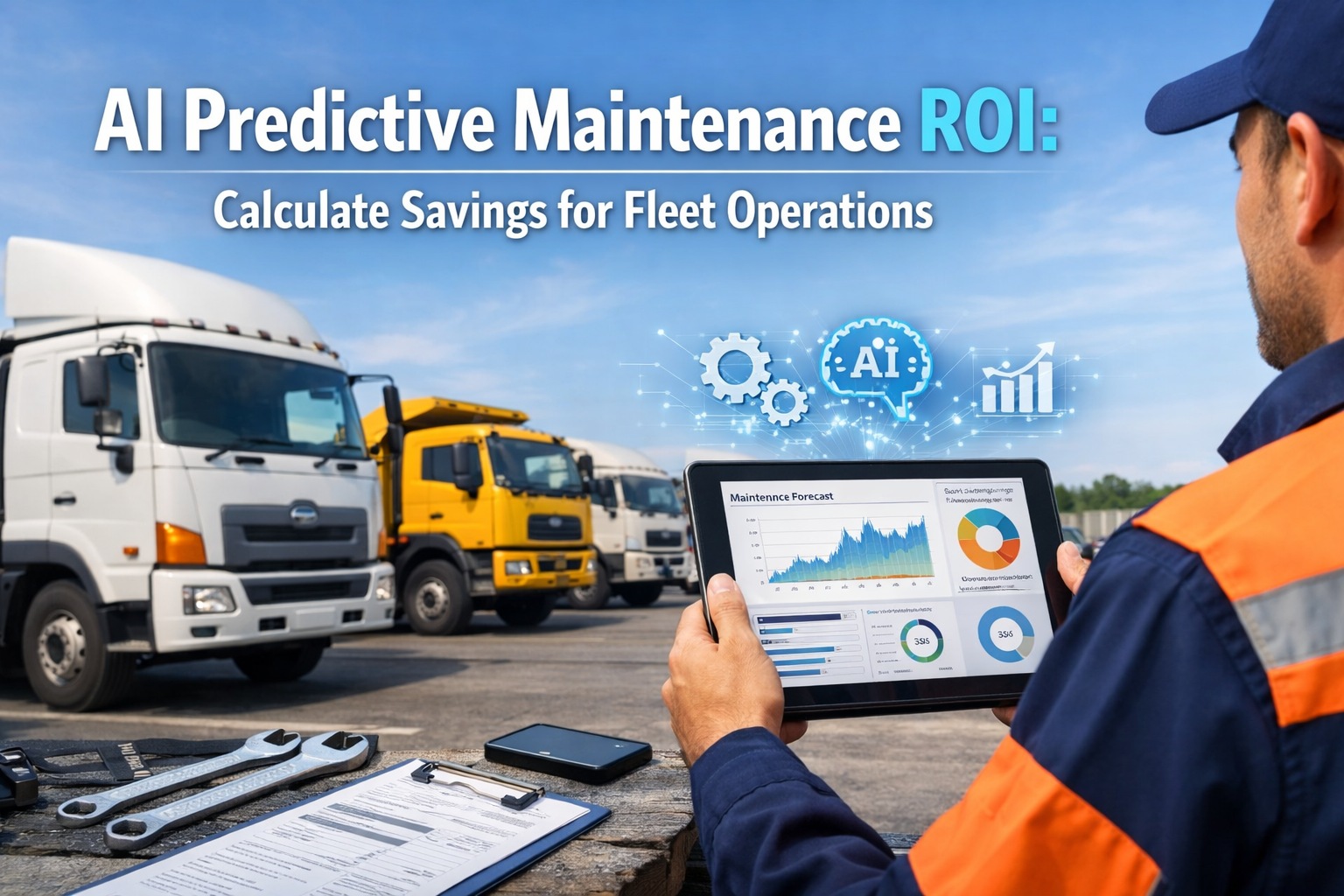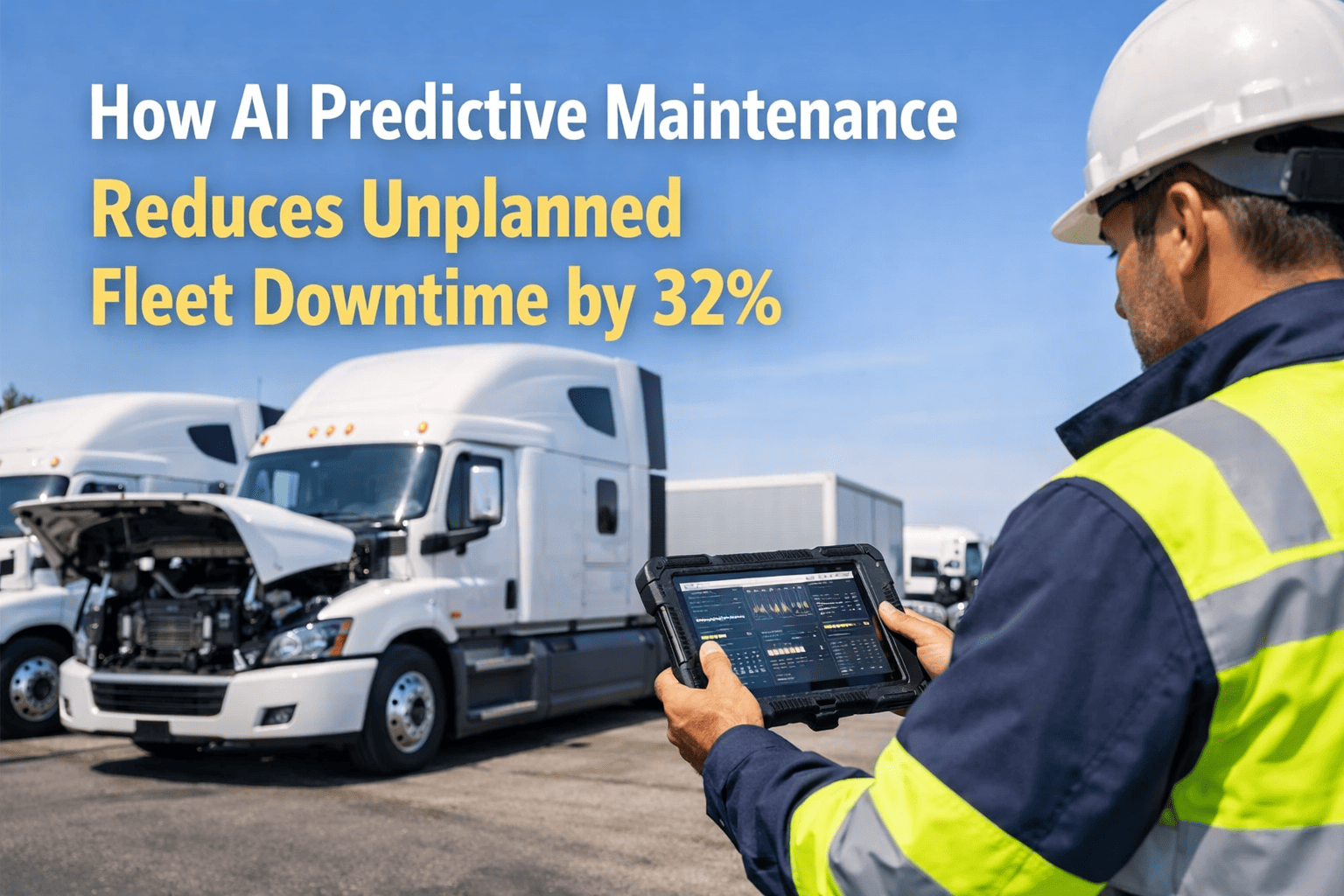
A refrigerated truck hauling $40,000 in perishable cargo throws a check-engine light 200 miles from the nearest depot. The alternator — which had been running 12°F hotter than baseline for two weeks — finally fails. Total damage: $2,100 in emergency repairs, $3,200 in spoiled cargo, a missed delivery window, and one very unhappy customer. The worst part? AI would have flagged that alternator three weeks ago. In 2026, fleets using AI predictive maintenance are cutting unplanned downtime by 32% or more — transforming breakdowns from inevitable disasters into scheduled repairs that cost a fraction of the emergency bill. Sign up for HVI to start building the inspection data foundation that powers predictive intelligence, or book a demo to see how it works.
What Unplanned Downtime Really Costs Your Fleet
Most fleet managers know breakdowns are expensive. But few realize just how much unplanned downtime costs when you add up every hidden expense. The direct repair bill is often the smallest part of the damage.
How AI Predicts Failures Before They Happen
AI predictive maintenance does not guess — it calculates. Machine learning models continuously analyze sensor data, inspection records, telematics, and repair history to identify the specific patterns that precede component failures. When those patterns appear on your vehicles, you get actionable alerts — weeks before the breakdown would have occurred.
AI surfaces failure risks weeks before traditional diagnostics raise any alarm. That is not a prediction window — it is a scheduling window. Enough time to order parts, assign a technician, and complete the repair during a planned maintenance slot instead of on the side of a highway.
The 32% Downtime Reduction — By the Numbers
The 32% figure is not a best-case scenario — it is what facilities and fleets consistently achieve within the first 12 months of implementing AI predictive maintenance. Here is exactly where that reduction comes from and how it compounds across your operation.
Unplanned breakdowns virtually eliminated for fleets running mature AI prediction
Eliminating both emergency premiums and unnecessary scheduled replacements
ML models trained on real fleet data — improving continuously with every data point
Three Maintenance Strategies Compared
Not all maintenance is equal. The strategy you choose determines how much you spend, how often trucks break down, and how predictable your operations become. Here is how the three approaches stack up.
Reactive
Fix When BrokenPreventive
Fixed SchedulePredictive (AI)
Condition-BasedThe 5 Failure Types AI Catches First
AI does not monitor everything equally — it focuses predictive power where the data is richest and the failures are most costly. These five component categories account for the majority of preventable breakdowns in commercial fleets.
Engine and Powertrain
Temperature trends, oil pressure drift, fuel efficiency drops, and fault code patterns signal turbo, injector, and alternator failures 2-4 weeks in advance.
Brake System Degradation
Photo analysis detects pad wear and drum cracks. Sensor data flags air pressure anomalies. Combined analysis predicts brake failures and prevents out-of-service orders.
Tire Wear Patterns
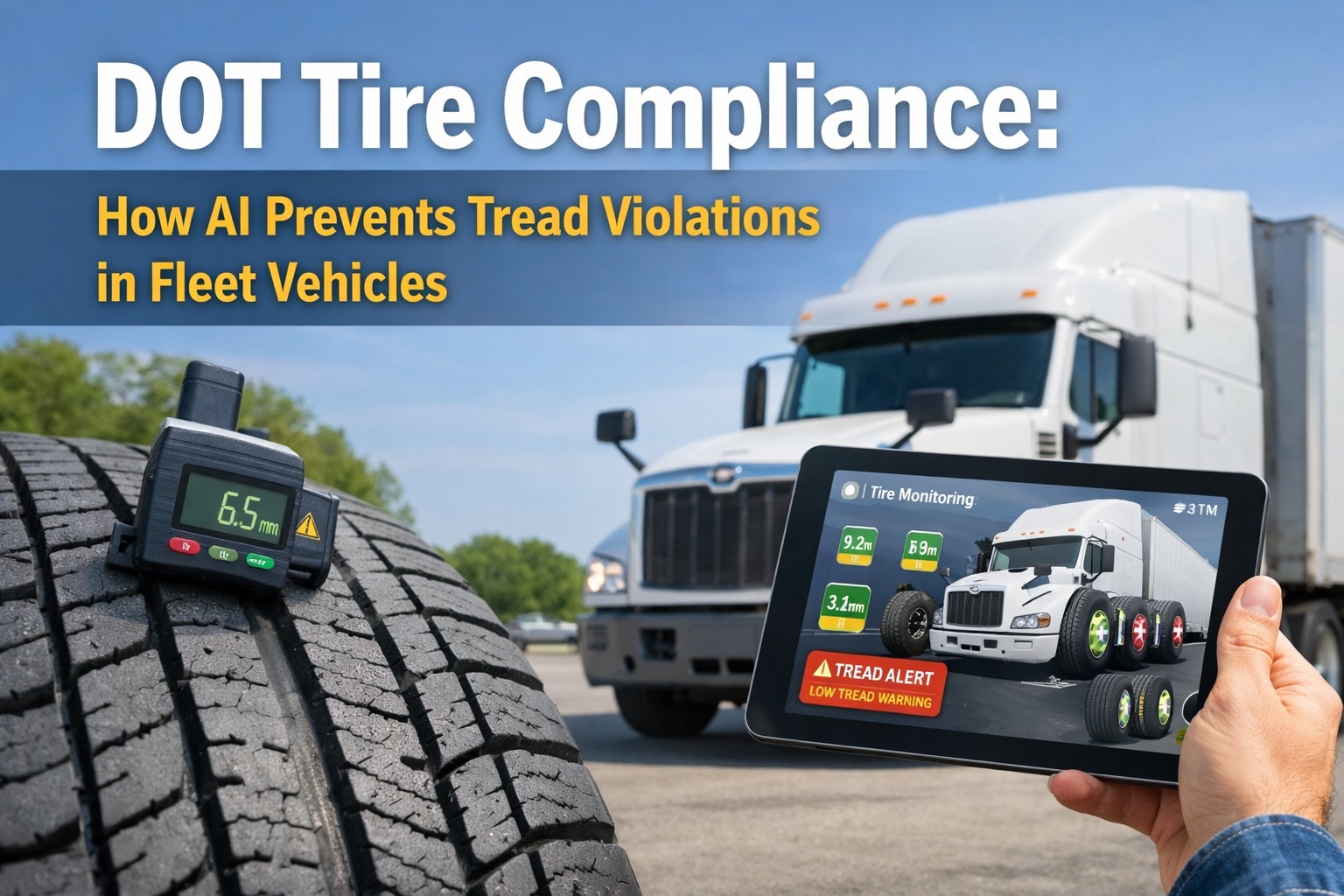
AI estimates tread depth from inspection photos, identifies uneven wear and mismatched sets, and flags tires approaching DOT minimums before they become violations.
Cooling System Stress
Sustained high coolant temperatures, declining cooling efficiency, and intake-vs-exhaust temperature mismatches reveal radiator, thermostat, and water pump degradation weeks early.
Hydraulic System Leaks
Gradual pressure drops indicate pump wear or filter clogging. Photo-based detection spots oil saturation and hose degradation invisible during brief walkarounds.
Getting Started: 4 Weeks to Predictive
Implementing AI predictive maintenance does not require replacing your tech stack or running a months-long IT project. Most fleets go from reactive to predictive in about four weeks.
Replace paper DVIRs with guided digital inspections. Photo-verified, GPS-stamped, and audit-ready from day one. This creates the structured data foundation AI needs.
Turn on computer vision for inspection photos. AI starts catching defects that walkarounds miss — adding a layer of consistency to every inspection without changing driver workflows.
Link defect detection to your maintenance queue. Defects auto-generate work orders with photos, part names, severity ratings, and repair recommendations — zero manual data entry.
AI starts identifying patterns and predicting failures across your fleet. The longer you use the system, the smarter it gets about your specific vehicles, routes, and operating conditions.
Frequently Asked Questions
Predict It. Prevent It. Profit From It.
Every breakdown your fleet avoids is revenue preserved, customers kept happy, and drivers staying safe. AI predictive maintenance starts with the structured inspection data HVI collects — turning every walkaround into intelligence that prevents the next failure before it happens.
No credit card required · No hardware needed · Setup in under 10 minutes