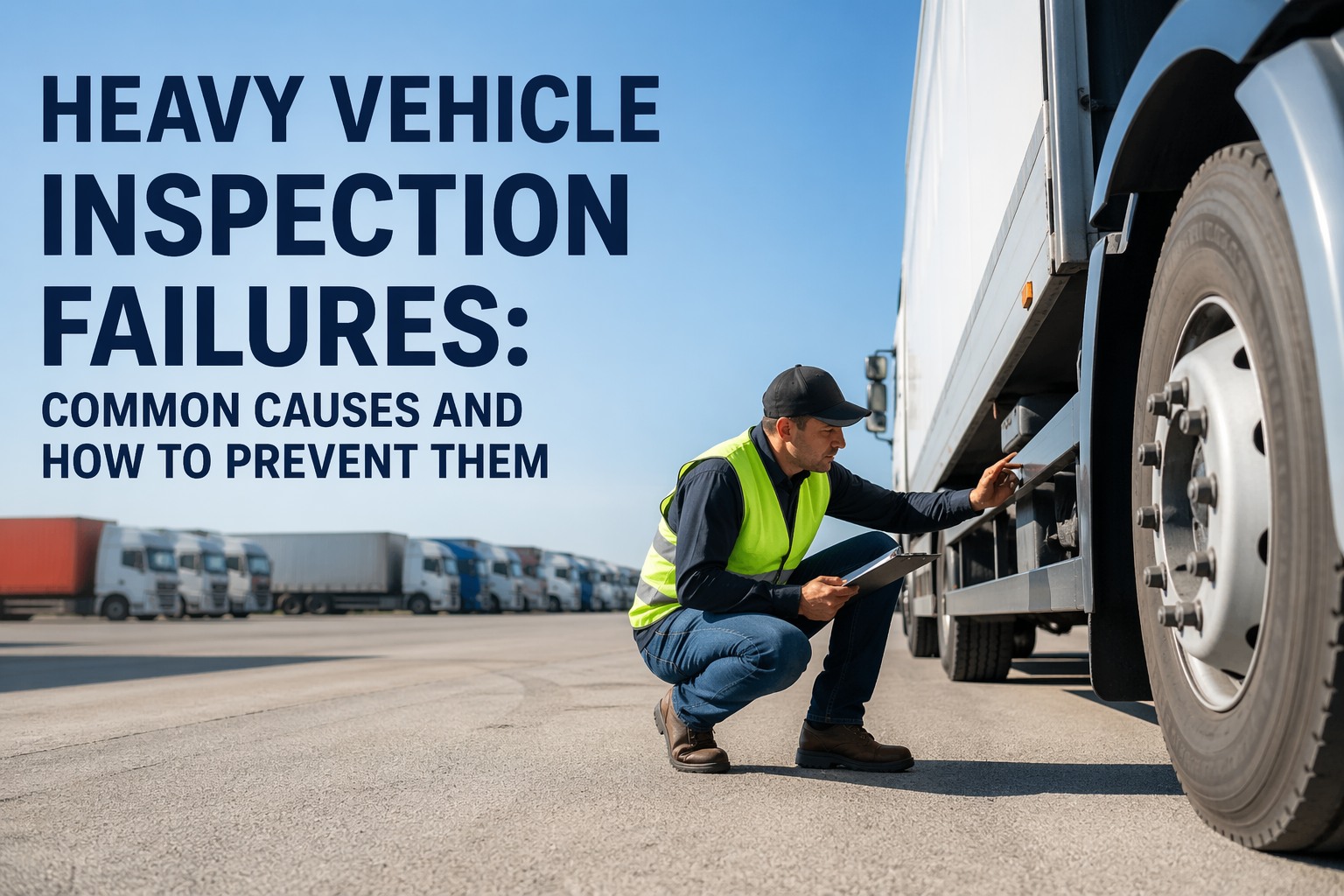
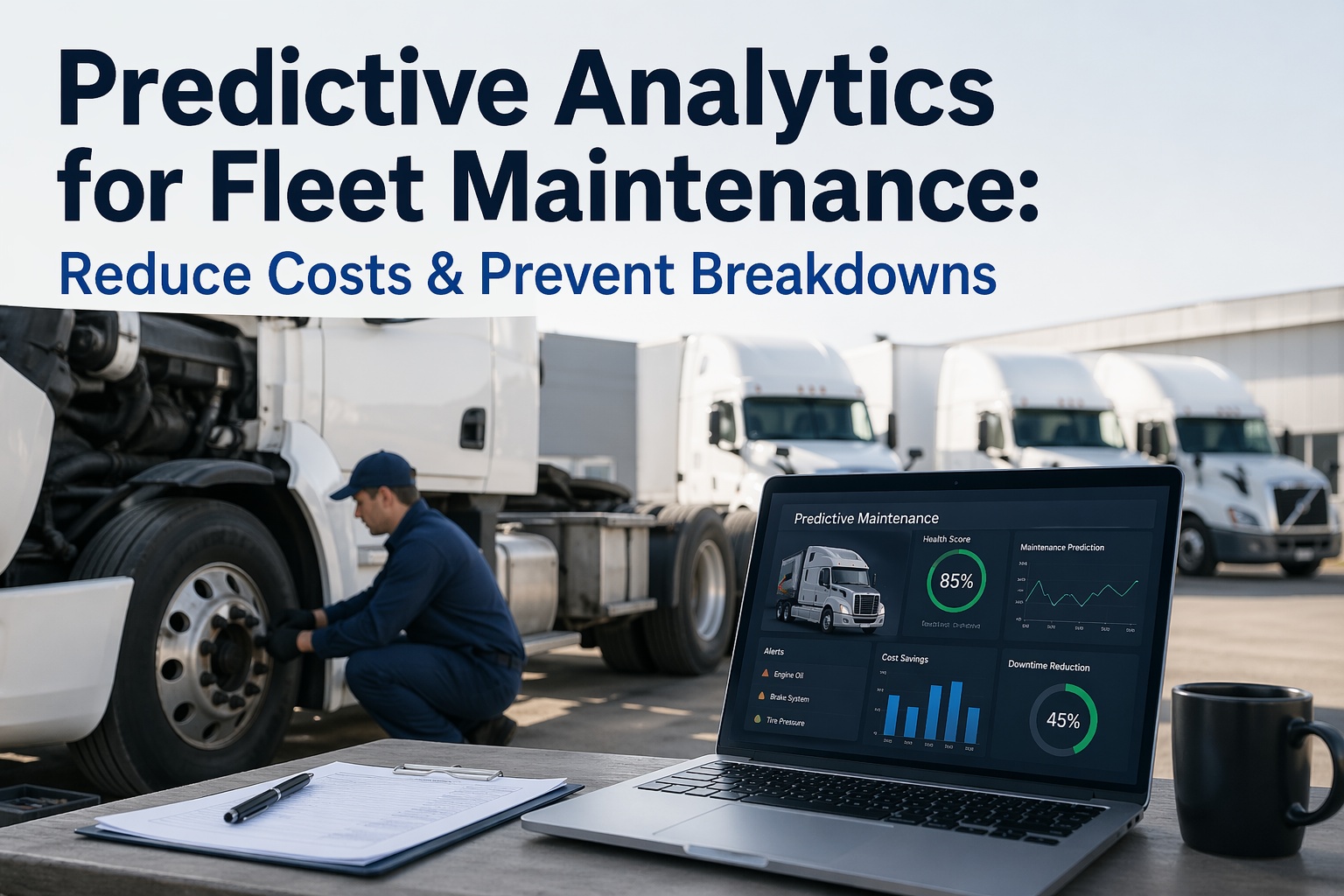
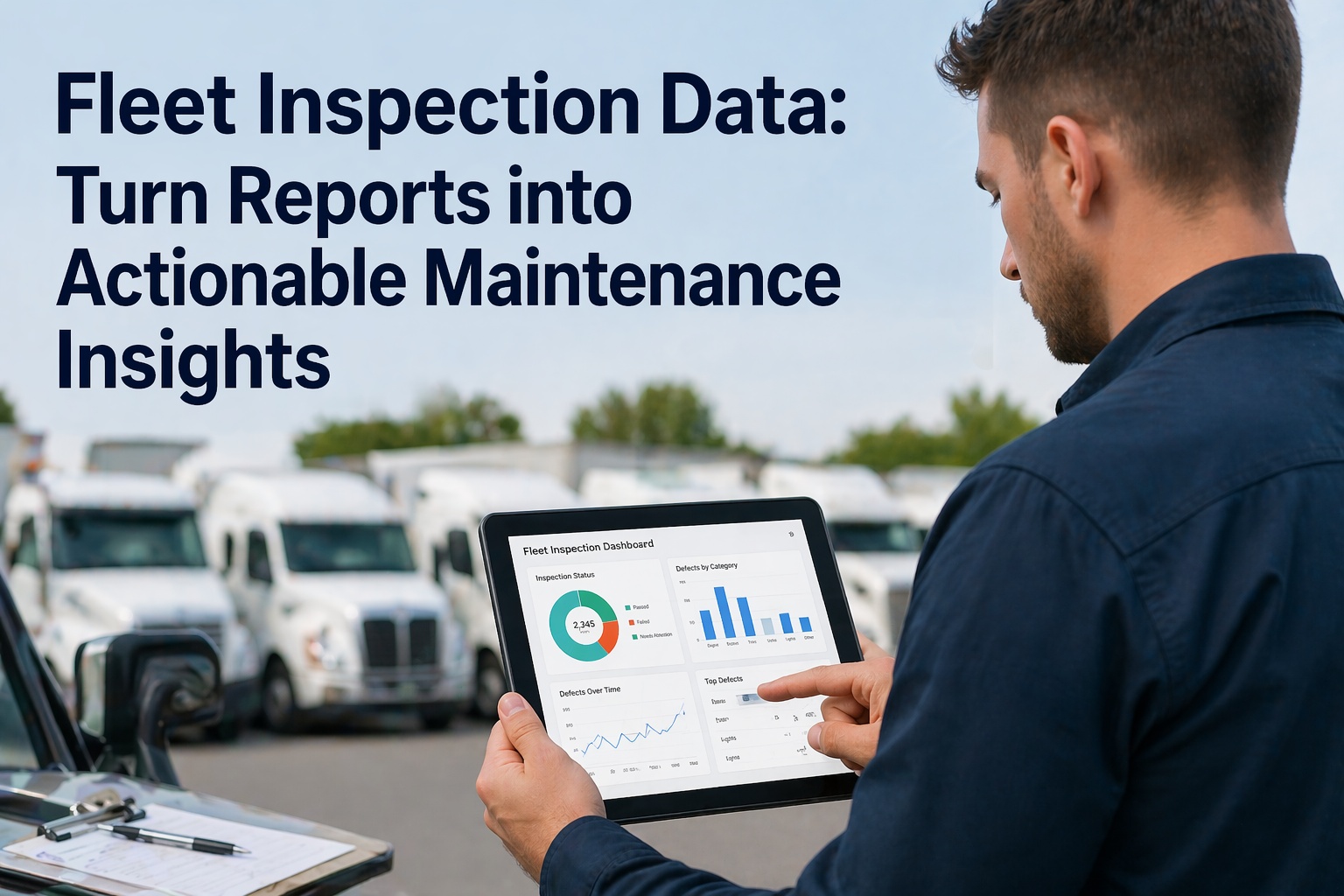
During the 2025 CVSA International Roadcheck, 22.6% of heavy vehicles inspected were placed out of service on the spot — 10,148 trucks shut down in 72 hours. Nationally, nearly 1 in 5 roadside inspections now result in an out-of-service order, and the trend is worsening: OOS violations jumped 12.1% between 2021 and 2025 while inspections only increased 5.6%. The majority of these failures are not catastrophic mechanical breakdowns — they are predictable, preventable defects that a proper pre-trip inspection would have caught before the truck left the yard. Brake adjustment out of spec. Tyres below DOT tread minimums. A burned-out clearance marker. An expired medical certificate. These are the defects that shut down vehicles, damage CSA scores, trigger audit interventions, and — in the worst cases — contribute to the crashes that produce $27.5 million average nuclear verdicts. This guide breaks down the most common inspection failure causes with current FMCSA data, explains why each one happens, and shows exactly how to prevent them — before a roadside inspector finds what your daily inspection missed. HVI's digital inspection platform is built to catch every one of these failures at the yard — not at the weigh station.
Catch Failures Before Inspectors Do
22.6% of trucks fail roadside inspections. HVI's guided digital inspections with AI defect detection catch the exact defects that cause OOS orders — at the yard, before dispatch.
The 6 Most Common Inspection Failure Categories
These six categories account for the vast majority of out-of-service violations year after year. The ranking has remained remarkably stable — meaning they are the most predictable and most preventable defects in any fleet.
#1
Brake Systems
29–30% of all OOS violations
Brake adjustment out of spec, defective linings, air leaks at connections, inoperative brakes, ABS malfunction. The 20% defective brake rule triggers OOS if 2+ out of 10 brakes exceed pushrod travel limits.
Why it happens: Automatic slack adjusters allow brake adjustment to drift between PM intervals. New brake shoes have a break-in period where adjustment changes rapidly. Mechanics adjust brakes during PM — then drift begins immediately.
Prevention: Daily pushrod travel check during pre-trip (2 minutes). Listen for air leaks at every connection. Verify ABS warning light cycles at startup. After brake service, heightened checks for 500 miles. HVI's guided checklist includes brake-specific photo verification at every walk-around.
#2
Tyres & Wheels
21.4% of vehicle OOS violations (2025 Roadcheck)
Insufficient tread depth (4/32" steer, 2/32" drive/trailer), underinflation, exposed cord, improper load rating, flat tyre, mismatched duals, loose lug nuts. Tyres cause 53.5% of all roadside breakdowns — the single largest breakdown category.
Why it happens: Visual tread checks are inaccurate — drivers overestimate tread depth by 30–40%. Slow leaks are invisible without pressure gauges. Inner duals hide damage that is only visible from underneath. Lug nuts loosen gradually with no visible warning.
Prevention: Use a tread depth gauge — not visual estimation. Check duals are not touching. Look for rust trails around lug nuts (indicates loosening). HVI's AI analyses tyre photos to estimate tread depth and flag approaching minimums automatically.
#3
Lighting & Reflectors
Top 3 vehicle violation category — "gateway" to deeper inspection
Inoperative clearance markers, tail lights, turn signals, brake lights, reflectors missing or not reflecting. One burned-out light often triggers a full Level I inspection — turning a minor issue into a comprehensive review.
Why it happens: Bulbs fail unpredictably. Vibration damages connections. Drivers walk around in daylight and cannot see whether all lights are functioning. Night-shift departures may skip exterior checks entirely.
Prevention: Walk the full perimeter with all lights on — every trip. Check turn signals, brake lights (have someone press the pedal), and every clearance marker. HVI's guided walk-around enforces the lighting check sequence and requires photos at 4+ angles with lights activated.
#4
Coupling & Securement
Common at both annual and roadside inspections
Fifth-wheel cracks, worn kingpin, defective locking mechanism, missing safety chains, pintle hook wear, excessive play. Coupling failures cause the most catastrophic roadside incidents — complete trailer separation.
Why it happens: Coupling components wear gradually. Drivers tug-test but do not inspect the locking mechanism visually. Fifth-wheel cracks develop in areas hidden by the trailer plate. Safety chain conditions are rarely documented.
Prevention: Visual and physical inspection of fifth-wheel locking jaw after coupling. Check for cracks along fifth-wheel mounting bolts. Verify safety chains are present, properly attached, and not worn. HVI includes coupling-specific photo checkpoints that create a visual record of lock engagement.
#5
Driver Credential Violations
98.7% OOS rate for invalid CDL; 55.2% for medical certificate
Operating without valid CDL (60,609 violations, 98.7% OOS), expired medical certificate (68,643 violations, 55.2% OOS), failing to maintain HOS logs (37,421 violations, 92.7% OOS). These violations result in immediate shutdown — no warnings, no grace period.
Why it happens: Medical certificates expire on random dates. Paper MEC waiver expired January 10, 2026 — carriers must now verify certification through MVR. Clearinghouse queries are missed. CDL renewals are tracked manually with no alerts.
Prevention: Automated expiration tracking with 60/30/7-day alerts. Dispatch restriction at expiration. HVI's compliance dashboard monitors CDLs, medical certificates, Clearinghouse queries, and MVRs — flagging expirations before they become roadside shutdowns.
#6
Exhaust & Fuel Systems
Immediate OOS for fuel leaks or exhaust leaks in cab area
Fuel leaks (any leak = OOS), exhaust system leaks in cab area, DPF condition issues, unsecured fuel cap, damaged fuel tank mounting. Exhaust leaks in the cab create carbon monoxide exposure risk — treated as immediate safety hazard.
Why it happens: Fuel tank mounts and brackets loosen from vibration. Exhaust connections corrode and develop pinhole leaks. DPF systems create back-pressure that stresses upstream connections. Fuel cap seals degrade and get lost.
Prevention: Visual check underneath for any fluid drips at every pre-trip. Verify fuel cap is present and sealed. Check exhaust connections at manifold and along routing for soot residue (indicates leak). HVI's under-vehicle photo checkpoint captures fuel and exhaust system conditions with AI analysis for leak detection.
HVI's guided inspection covers all 6 failure categories with photo-required checkpoints, AI defect detection, and severity classification — catching the exact defects that cause 22.6% of trucks to fail roadside.
Sign up free and run your first inspection today. Or
schedule a demo to see the walk-around on your vehicle types.
Why Inspections Fail Even with Active PM Programs
The uncomfortable truth: fleets with active preventive maintenance programs still fail roadside inspections at alarming rates. PM and inspections solve different problems.
Brake Drift
Brakes adjusted at PM — then slack adjusters allow drift within days. Truck passes the shop but fails roadside 2,000 miles later.
Daily pushrod travel check catches drift before it exceeds spec — 2 minutes, every walk-around.
Infant Mortality
68% of component failures occur immediately after installation (NASA/Navy data). New parts fail in first 500–2,000 miles — long after the truck leaves the shop.
Heightened inspection for 7 days after any PM service. Check all replaced components for leaks, noise, and secure mounting.
Tyre Degradation
Tyres pass PM at adequate depth but wear accelerates from alignment drift, overloading, or road conditions between services.
Daily tread depth and inflation check. AI photo analysis tracks wear rate across inspections — flags accelerating degradation.
Environmental Damage
Road salt corrodes connections. Heat cycles crack hoses. Vibration loosens fittings. These develop between PM intervals unpredictably.
Daily visual check of fluid lines, connections, and exposed components. Photo comparison between inspections shows progressive damage.
Documentation Gap
Good maintenance happened but was not documented properly. Auditor sees no record = no maintenance occurred. 73% of paper DVIRs never reach the office.
Digital inspections create timestamped, GPS-verified, photo-evidenced records automatically — audit-ready from completion.
What Every Failure Costs Your Fleet
Inspection failures are not just compliance annoyances — they trigger a financial cascade that compounds across every metric. Schedule a demo to see how HVI prevents each cost category.
$19,277
Max Civil Penalty Per Violation
Operating with known safety defect — per occurrence
$32,208
Operating After OOS Order
Maximum penalty for operating after being placed out of service
$1,900
Per Unplanned Breakdown
Direct repairs + driver downtime + towing + lost productivity
$27.5M
Average Nuclear Verdict
Average trucking verdict 2020–2024 when poor inspection records are exposed
18–24%
Insurance Premium Increase
From poor CSA scores driven by inspection violations
2x
OOS Severity Weight (2026 CSA)
OOS violations now hit CSA scores twice as hard under new scoring
Every one of these costs is preventable with consistent digital inspections that catch defects at the yard.
Start free with HVI — setup takes under 10 minutes, drivers are proficient in 25 minutes, and your first inspections can be running today.
Prevention Is the Only Strategy That Works
The 6 failure categories in this guide — brakes, tyres, lighting, coupling, credentials, exhaust/fuel — have topped the FMCSA violation list for years. They are not changing. What is changing is the consequence: the 2026 CSA overhaul scores OOS violations at 2x severity, the new "Driver Observed" category makes your daily inspection quality visible on your carrier profile, and nuclear verdicts averaging $27.5 million have made inspection records the first evidence plaintiff attorneys examine. The only effective strategy is catching every one of these defects at the yard — before an inspector, an auditor, or a jury finds them. HVI's guided digital inspections with AI defect detection, photo-required checkpoints, and 3-signature DVIR enforcement are built for exactly this: turning the 6 most common failure categories into the 6 things your fleet never fails on. Sign up free today — or schedule a demo and see HVI catch real defects on your vehicles during the call.
Stop Failing Inspections. Start Preventing Them.
Guided walk-arounds. AI defect detection. Photo-verified checkpoints. 3-signature DVIR enforcement. CSA score integration. Trusted by 25,000+ users worldwide.
Frequently Asked Questions
Q: What is the most common cause of heavy vehicle inspection failures?
Brake system defects are the #1 cause of out-of-service violations every year — accounting for 29–30% of all vehicle OOS findings. Brake adjustment out of spec is the single most cited defect. Tyres and wheels are #2 at 21.4% of OOS violations, followed by lighting and reflectors. Together, brakes, tyres, and lighting account for over 60% of all vehicle inspection failures.
Q: What percentage of trucks fail roadside inspections?
During the 2025 CVSA International Roadcheck, 22.6% of vehicles inspected were placed out of service. The national OOS rate is approximately 20% (19.98% in FY2025), meaning roughly 1 in 5 roadside inspections ends with an immediate shutdown. This rate has been increasing — OOS violations grew 12.1% between 2021 and 2025.
Start free with HVI and reduce your roadside exposure.
Q: How does the 2026 CSA scoring change affect inspection failures?
The February 2026 CSA overhaul made three critical changes: OOS violations now carry a severity weight of 2 (vs. 1 for non-OOS), Vehicle Maintenance is split into "Standard" and "Driver Observed" categories making your daily inspection quality directly visible, and violations only count for 12 months instead of 24. This means every OOS violation hits your score twice as hard — but clean inspections improve your score faster.
Schedule a demo to see CSA integration.
Q: Can daily inspections actually prevent roadside failures?
Yes — the majority of roadside OOS violations are for defects that develop between PM intervals and are detectable during a proper daily pre-trip inspection. Brake adjustment drift, tyre wear, burned-out lights, fluid leaks, and loose coupling components are all visual or physical checks that take minutes but prevent the most common shutdowns. Fleets using digital inspections with guided checklists and AI defect detection report 40% fewer violations within the first year.
Q: What does an out-of-service order cost?
Direct costs: roadside repair ($760 average) + towing if needed ($300–$1,500) + driver waiting time. Indirect costs: lost revenue ($500–$2,000/day), load delay penalties, customer relationship damage. Regulatory costs: OOS violation on CSA record for 12 months, severity weight of 2 under 2026 scoring, potential audit trigger if pattern emerges. Legal risk: OOS violations become evidence of systemic negligence in litigation — nuclear verdicts averaged $27.5 million from 2020–2024.