A single truck breakdown does not just stop one delivery — it fractures a supply chain. The shipment that was supposed to arrive at the distribution centre by 6 AM does not. The production line waiting for that delivery idles. The outbound loads scheduled against that dock slot get delayed. And the cascade continues downstream — each hour of unplanned vehicle downtime costing $500–$2,000 in direct lost revenue while triggering $15,000–$75,000 in supply chain disruption costs that never appear on the fleet maintenance budget. In 2026, with just-in-time logistics leaving zero buffer between delivery windows, and shippers increasingly selecting carriers based on on-time reliability metrics rather than rate alone, vehicle availability is no longer a fleet maintenance KPI — it is a supply chain continuity metric. Digital vehicle inspections transform this equation by catching the defects that cause breakdowns before trucks leave the yard, keeping vehicles in service at 95%+ availability, and providing the operational visibility that supply chain partners now require. HVI's digital inspection platform delivers this reliability — connecting inspection data to the maintenance workflows that keep your trucks moving and your supply chain unbroken.
Keep Your Supply Chain Moving
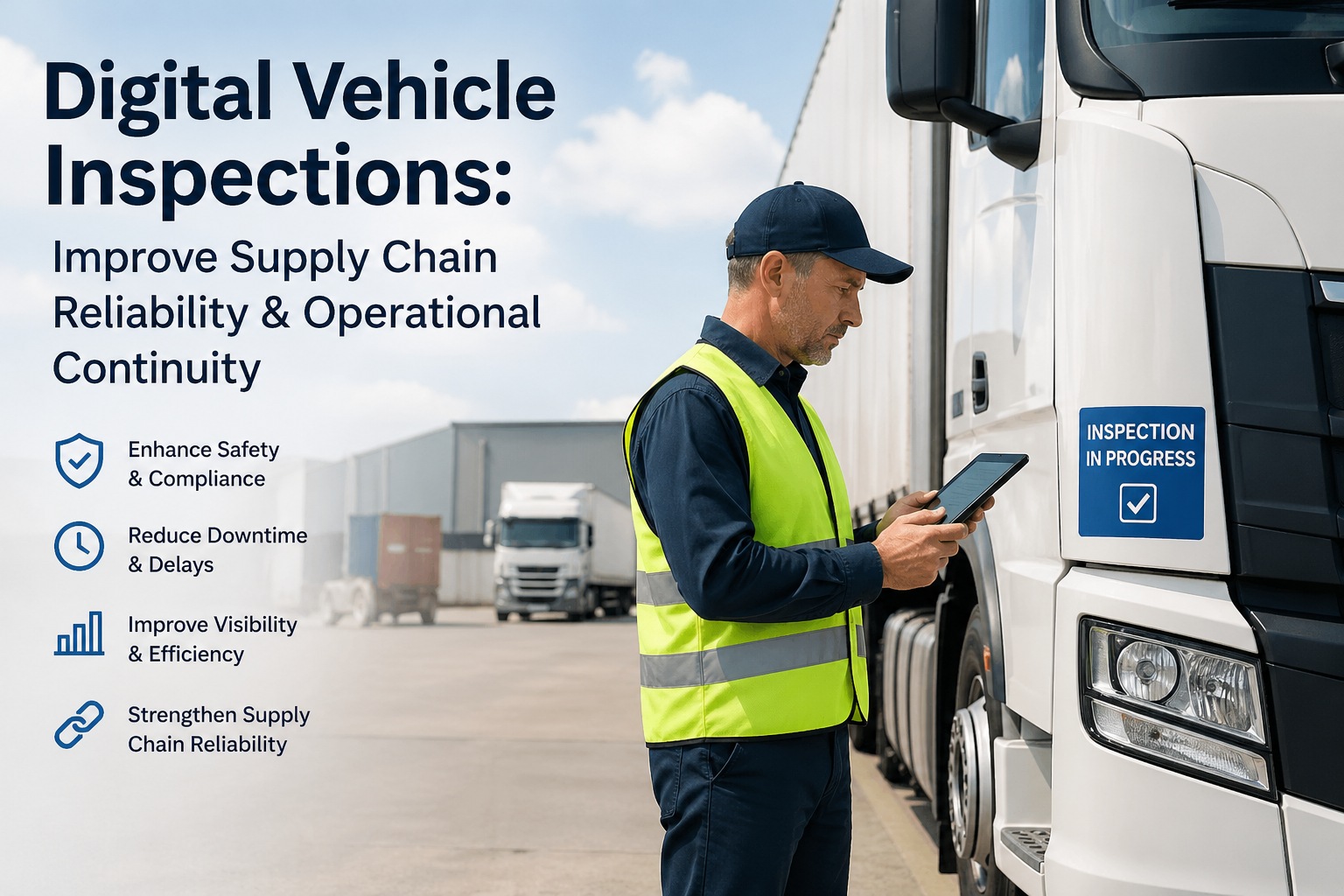
Every breakdown fractures your supply chain downstream. HVI's digital inspections catch 89% of defects that cause unplanned failures — keeping vehicles in service and deliveries on time.
The Ripple Effect: How One Breakdown Fractures a Supply Chain
Fleet managers see a breakdown as a maintenance event. Supply chain managers see it as a cascade that amplifies at every node downstream.
Trigger Event
Truck breaks down at mile marker 142 — alternator failure that a pre-trip inspection would have caught from belt wear and charging voltage drop.
Hour 0–2
Driver stranded. Towing dispatched. Replacement vehicle sourced — if available. Shipment is now 3+ hours behind schedule.
Hour 2–6
Receiving facility misses its dock appointment. Inbound freight sits. Outbound loads that depended on that delivery slot are delayed. Warehouse labour scheduled for unloading idles at cost.
Hour 6–24
Production line waiting for components pauses. Retail stores miss restocking windows. End customers experience stockouts. Penalty clauses may activate — $500–$5,000 per late delivery in some contracts.
Total Supply Chain Impact
One alternator failure: $1,900 direct repair cost + $15,000–$75,000 in downstream disruption + shipper confidence erosion + potential contract penalties. All from a defect visible during a 10-minute inspection.
89% of breakdowns that fracture supply chains are preventable with consistent digital inspections.
Schedule a demo to see how HVI catches the defects that cause disruption — before the truck leaves the yard.
Where Digital Inspections Protect Supply Chain Reliability
Digital inspections do not just prevent breakdowns — they create the operational visibility and documentation that supply chain partners increasingly require. Sign up free and add this layer to your operation today.
Pre-Dispatch Defect Catch
Guided photo-verified inspections with AI defect detection catch the brake wear, tyre condition, fluid leaks, and electrical issues that cause en-route breakdowns — at the yard, before the truck enters the supply chain.
Supply chain impact: 89% fewer unplanned failures. Vehicles that pass digital inspection complete their runs.
Faster Defect Resolution
When a defect is found, the auto-generated work order with parts pre-checked gets the vehicle repaired and back in service in 2–4 hours instead of 18–30 hours. Same-shift resolution means the load still makes its window.
Supply chain impact: Defects delay dispatches by hours, not days. The delivery schedule absorbs the repair window.
Fleet-Wide Availability Visibility
Real-time dashboard shows how many vehicles are in service, in maintenance, and out of service — across every terminal. Dispatchers know exactly what is available before making commitments to shippers.
Supply chain impact: No more promising capacity that does not exist. Dispatch accuracy improves. Shipper trust increases.
Predictive Failure Prevention
Inspection data over time reveals vehicles whose defect rates are accelerating — the ones trending toward failure. Schedule maintenance proactively during planned windows instead of reacting to roadside breakdowns.
Supply chain impact: Maintenance becomes scheduled, not surprising. Capacity planning becomes reliable, not reactive.
Shipper-Ready Compliance Documentation
Major shippers and 3PLs now require carriers to demonstrate inspection programs, CSA score thresholds, and safety documentation before tendering freight. Digital inspection records provide this evidence instantly.
Supply chain impact: Win and retain shipper contracts. Meet the compliance prerequisites that gate access to premium freight.
The Reliability Gap: Paper vs. Digital Inspections
Supply chain reliability depends on vehicle availability. Vehicle availability depends on catching defects before they cause breakdowns. Here is how paper and digital inspections compare on the metrics that drive supply chain continuity.
Vehicle Availability
87.6% average
95%+ with proactive defect catch
Unplanned Breakdowns
11% of annual operating hours
89% fewer preventable failures
Defect-to-Repair Time
18–30 hours (paper delay)
2–4 hours (auto-routed)
On-Time Delivery Impact
Every breakdown = missed delivery window
Defects caught at yard — before dispatch
Dispatch Visibility
No real-time view of vehicle readiness
Live dashboard: in-service, maintenance, OOS
Shipper Compliance Proof
Filing cabinets — days to assemble
Instant export — minutes to share
Annual Cost per Vehicle
$3,200–$5,800 in preventable waste
$8,500 in documented savings
The gap between 87.6% and 95%+ vehicle availability equals 27 extra operating days per vehicle per year. For a 50-truck fleet, that is 1,350 additional delivery days annually.
Start free with HVI and close the availability gap. Or
schedule a demo to see how digital inspections improve your fleet's reliability metrics.
What Supply Chain Partners Now Expect from Carriers
In 2026, inspection programs are no longer internal fleet operations — they are supply chain qualification criteria that shippers, 3PLs, and brokers evaluate before tendering freight.
Major Shippers
CSA score thresholds, documented inspection programs, vehicle availability metrics, on-time reliability data. Carriers above violation rate thresholds lose tender access.
3PLs & Brokers
Compliance documentation on demand, insurance certificates linked to safety scores, breakdown frequency data. Carriers with higher reliability get more consistent lane assignments.
Insurance Underwriters
Digital inspection records, CSA trends, defect-to-repair metrics, driver quality scoring. Carriers with documented inspection programs receive 15–20% premium reductions.
End Customers
On-time delivery consistency, service-level agreement adherence, zero tolerance for repeated delays from the same carrier. Reliability is now the primary carrier selection criterion — above rate.
Reliability Is the New Competitive Advantage
In a supply chain where every hour of delay cascades downstream, vehicle reliability is not a fleet maintenance metric — it is the foundation of carrier competitiveness. The fleets winning shipper contracts, maintaining insurance terms, and growing in 2026 are the ones that can demonstrate 95%+ vehicle availability, sub-4-hour defect resolution, and audit-ready documentation on demand. Digital inspections are the infrastructure that makes this demonstrable — catching defects at the yard, routing repairs in real time, and producing the visibility and documentation that supply chain partners now require. HVI delivers this infrastructure purpose-built for heavy vehicle fleets — with guided inspections, AI defect detection, automated work order generation, and the supply chain reliability metrics that keep your trucks moving and your customers satisfied. Start free today — or schedule a demo to see how HVI improves your fleet's supply chain reliability metrics.
Protect Your Supply Chain with Digital Inspections
Pre-dispatch defect catch. 2–4 hour repair resolution. 95%+ vehicle availability. Shipper-ready documentation. Trusted by 25,000+ users worldwide.
Frequently Asked Questions
Q: How do vehicle inspections affect supply chain reliability?
Every unplanned vehicle breakdown disrupts the supply chain downstream — missed dock appointments, delayed production lines, stockouts, and contract penalties. Digital inspections catch 89% of the defects that cause breakdowns before the truck enters the supply chain, keeping vehicles in service at 95%+ availability and deliveries on schedule.
Q: What does a single breakdown actually cost the supply chain?
Direct cost: $1,900 average (repair + towing + driver downtime). Supply chain disruption: $15,000–$75,000 in downstream costs including missed dock slots, idle warehouse labour, production delays, and contract penalties. The ratio is staggering — the supply chain cost is 8–40x the direct repair cost.
Start free with HVI and prevent the cascades.
Q: What vehicle availability should a reliable carrier achieve?
Industry average is 87.6%. Top-quartile fleets achieve 95%+. The 7.4% gap represents 27 extra operating days per vehicle per year. Fleets using digital inspections with automated defect-to-repair workflows consistently achieve the 95%+ threshold — primarily by eliminating the 18–30 hour defect resolution delays that keep vehicles out of service.
Schedule a demo to see availability tracking.
Q: Do shippers really check carrier inspection programs?
Yes — increasingly. Major shippers now set CSA score thresholds for carrier access, require documented safety programs, and track carrier on-time reliability as a primary selection criterion above rate. Amazon and Walmart-scale operations enforce violation rate metrics that directly connect to inspection programs. Carriers without digital inspection documentation are losing access to premium freight.
Q: How quickly does HVI improve supply chain reliability metrics?
Most fleets see measurable improvement within 30 days: defect-to-repair time drops from 18–30 hours to 2–4 hours, unplanned breakdowns decrease, and vehicle availability begins climbing toward 95%+. Full reliability gains (predictive failure prevention, capacity planning accuracy) build over 60–90 days as inspection data history accumulates.
Start free today.