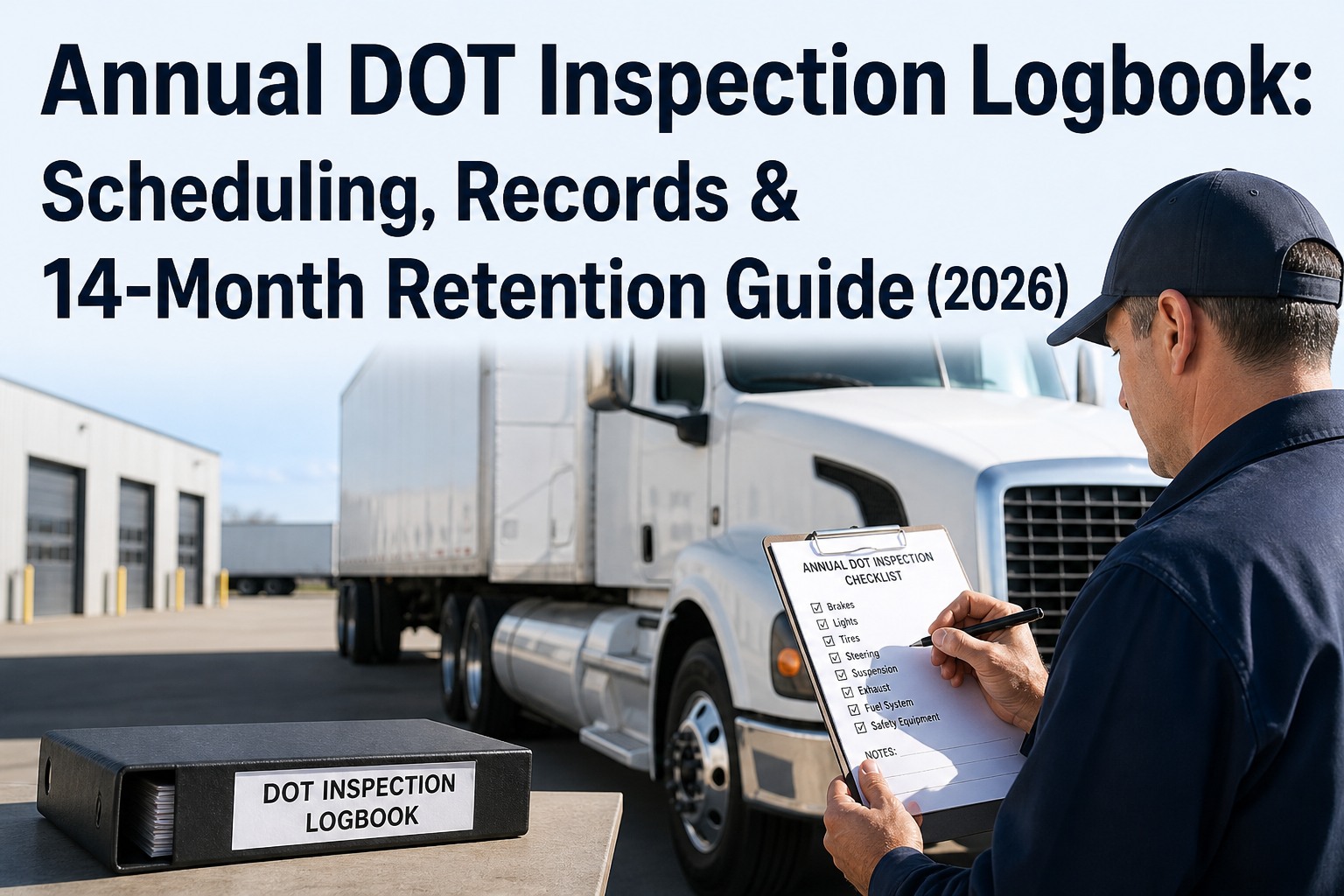
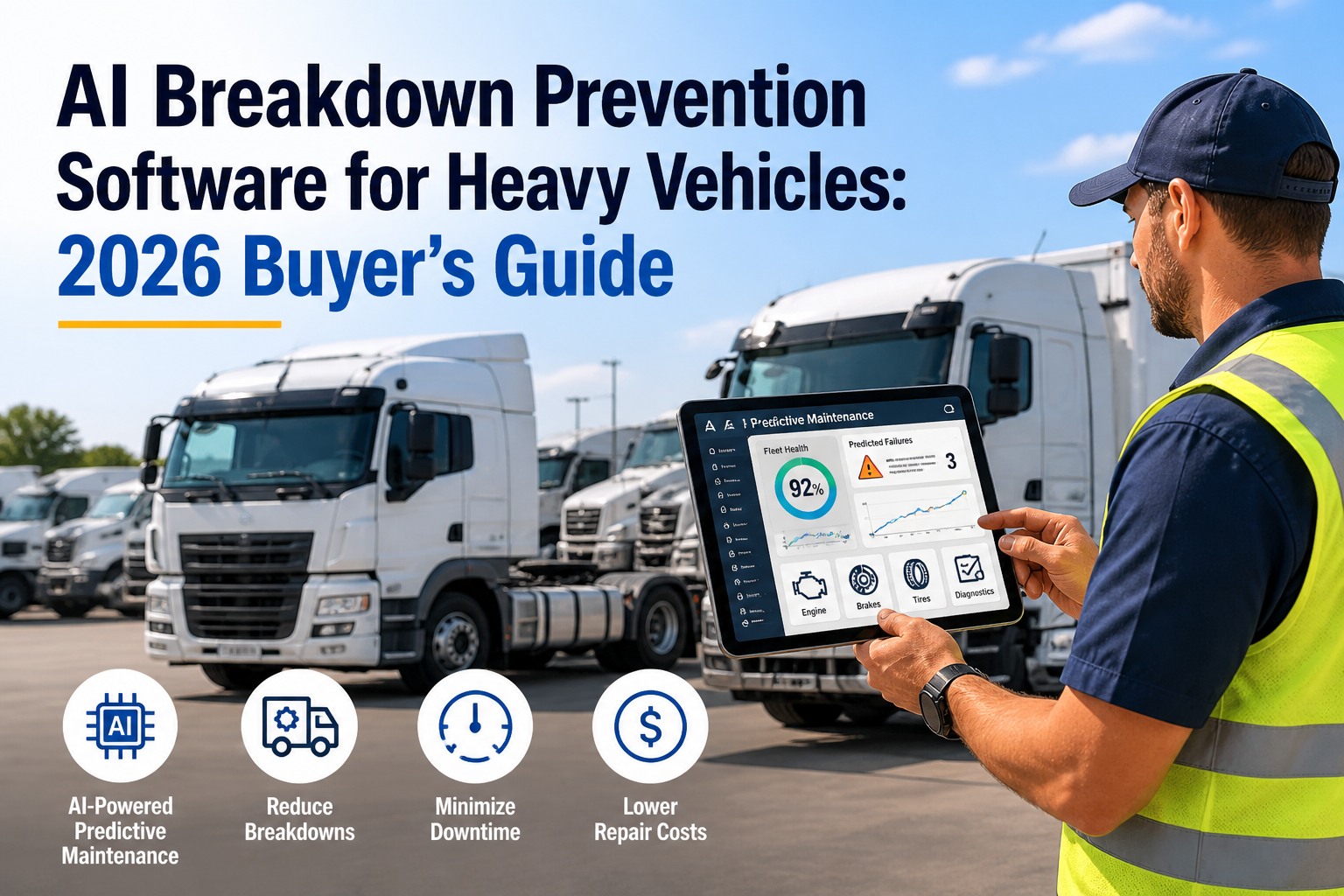
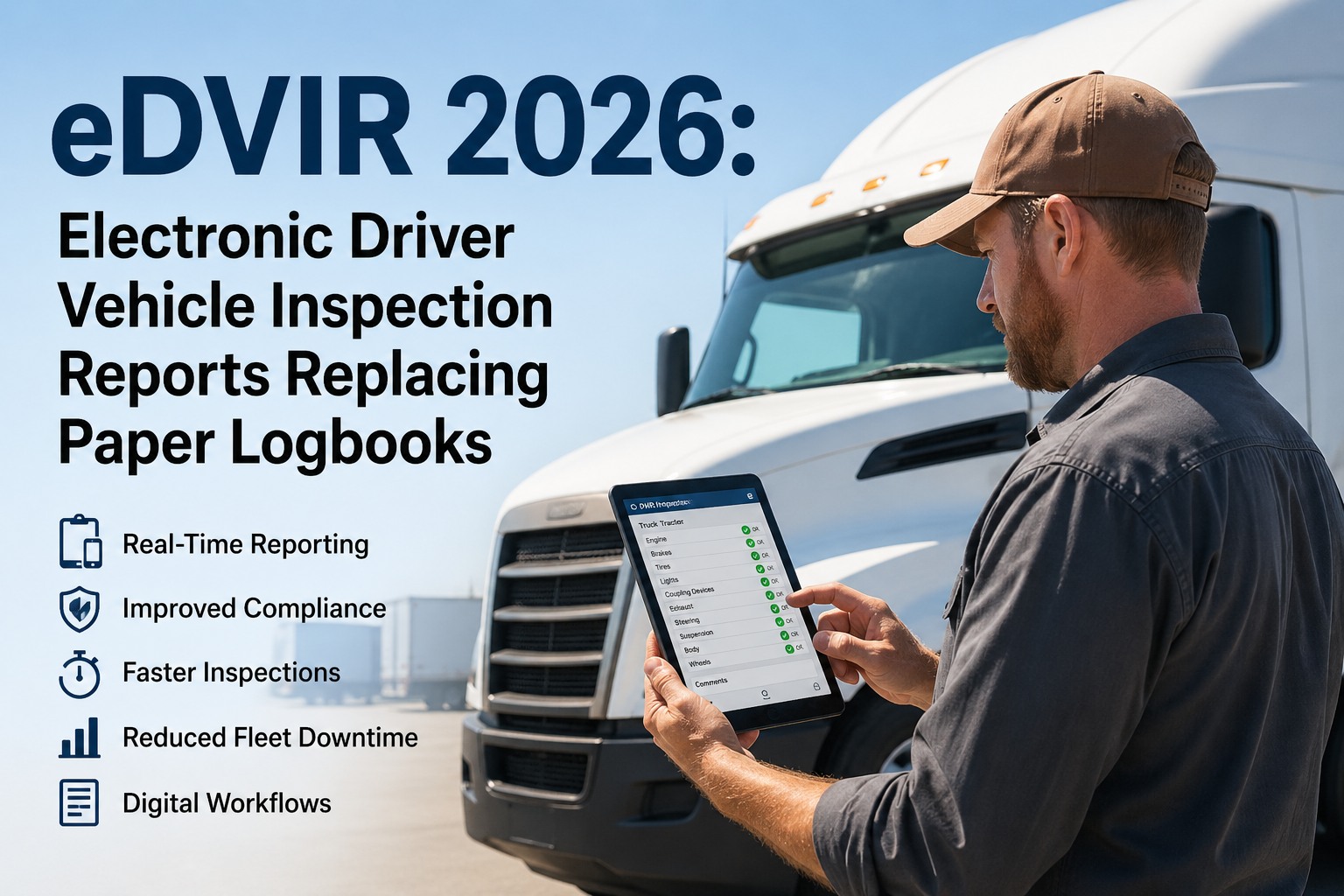
133,000 vehicles are cited annually for operating without a current annual DOT inspection — making it the second most common FMCSA vehicle maintenance violation. Under 49 CFR 396.17, every commercial motor vehicle must pass a comprehensive inspection covering 15 component categories at least once every 12 months. The inspection report must be retained for 14 months. Each vehicle in a combination — tractor, semitrailer, full trailer, converter dolly — counts separately. Miss one, and the penalty is immediate: out-of-service order, fines up to $23,048 per incident, and a CSA severity weight of 2 under the 2026 scoring methodology. The most common reason fleets fail is not that vehicles are unsafe — it is that tracking, scheduling, and retaining records across 50, 100, or 200+ vehicles overwhelms manual systems. HVI's annual inspection management solves this: automated scheduling with 60/30/7-day alerts, digital Appendix A templates with pass/fail gates, photo-verified documentation, and 14-month cloud retention that produces audit-ready records in under 5 minutes.
Never Miss an Annual Inspection Again
HVI tracks every vehicle's annual inspection due date, fires alerts at 60/30/7 days, and archives completed reports with 14-month retention — automatically.
What the Annual DOT Inspection Covers
The inspection must cover all 15 component categories defined in Appendix A to Part 396 — performed by a qualified inspector under 49 CFR 396.19. HVI provides digital Appendix A templates with pass/fail gates for every item.
1
Brake System
Adjustment, linings, drums, hoses, air leaks, ABS
29–30%
2
Coupling Devices
Fifth-wheel, kingpin, locking jaw, safety chains
High
3
Exhaust System
Leaks in cab area, routing, mounting
Immediate
4
Fuel System
Tank mounting, leaks, cap seal, lines
Any leak = OOS
5
Lighting
Head/tail/brake/turn/clearance/markers/reflectors
14% of OOS
6
Safe Loading
Cargo securement, tie-downs, load distribution
2026 focus
7
Steering
Tie rods, drag links, pitman arm, power steering
High
8
Suspension
Springs, U-bolts, air bags, torque arms
High
9
Frame
Cracks, loose/missing fasteners, welds
Critical
10
Tyres & Wheels
Tread depth, inflation, lug nuts, duals
21.4%
11
Windshield
Cracks in wiper area, glazing, tinting
Moderate
12
Windshield Wipers
Operational, blade condition
Moderate
13
Horn
Audible from 200 feet
Low
14
Rear Impact Guard
Height, width, mounting (trailers)
Moderate
15
Defroster/Heater
Functional — driver visibility
Low
HVI provides digital templates for all 15 Appendix A categories with pass/fail gates, measurement fields, and photo capture — so inspectors follow guided prompts and nothing gets skipped.
Schedule a demo to see the annual inspection workflow.
The 14-Month Retention Rule: What HVI Automates
Under 49 CFR 396.21, the inspection report must contain six required elements and be retained for 14 months — even for vehicles that leave your fleet.
What the Report Must Include
Inspector name and qualification evidence
Motor carrier operating the vehicle
Date of inspection
Vehicle identification (VIN and/or unit number)
All components inspected with pass/fail results
Inspector certification of accuracy and completeness
How HVI Handles Retention
Reports stored in tamper-evident cloud storage automatically
14-month retention enforced — no manual tracking required
Sold/disposed vehicle records remain retrievable per requirement
Inspector qualification documentation archived alongside reports
Any report exportable in under 5 minutes for any date range
Complete audit packages generated with one click
How HVI Manages the Annual Inspection Cycle
Annual inspections fail not because the vehicle is unsafe — but because tracking expiration dates across every vehicle manually overwhelms the process. HVI automates the entire cycle. Sign up free and never miss an annual inspection again.
60 Days Before
Work Order Auto-Generated
HVI creates a scheduled work order for the upcoming annual inspection — assigned to the correct shop with the full Appendix A template. Parts and scheduling can begin immediately.
30 Days Before
Escalation Alert
If the inspection has not been scheduled, HVI escalates to the fleet manager with a dashboard flag. The vehicle moves from "green" to "amber" on the compliance dashboard.
7 Days Before
Critical Warning
Final alert to fleet manager and maintenance supervisor. Vehicle flagged as "approaching non-compliance." If not acted on, the vehicle moves to dispatch-restricted status at expiration.
Inspection Day
Guided Digital Inspection
Qualified inspector follows HVI's Appendix A template — every component, every pass/fail gate, every measurement field, every defect photo. Nothing gets skipped. Report auto-generates upon completion with all 6 required elements.
Post-Inspection
Archive + Next Cycle Begins
Completed report stored with 14-month retention. Sticker date logged. Next annual inspection due date calculated and 60/30/7-day alert cycle resets automatically. Zero manual calendar entries.
HVI manages annual inspection scheduling across your entire fleet — from work order creation through inspection completion to 14-month retention and next-cycle scheduling.
Start free today — or
schedule a demo to see it configured for your fleet size.
The Inspection Is Not the Hard Part. The Tracking Is.
The annual DOT inspection itself takes 1–2 hours per vehicle. The hard part is making sure every vehicle gets inspected before its due date, every report contains all 6 required elements, every defect found is corrected before certification, every inspector's qualifications are documented, and every report is retrievable for 14 months — including for vehicles you no longer own. For a 100-vehicle fleet with staggered due dates, this is 100 separate deadlines, 100 report packages, and 100 qualification records — every year. HVI reduces this to one dashboard: colour-coded compliance status across every vehicle, automated alerts at 60/30/7 days, guided Appendix A templates that ensure completeness, and cloud retention that produces any record in under 5 minutes. Sign up free and make annual inspections something your fleet manages — not something it scrambles to survive.
Annual Inspections — Scheduled, Tracked, Retained
60/30/7-day alerts. Appendix A templates. Pass/fail gates. Photo capture. 14-month cloud retention. One-click audit export. Trusted by 25,000+ users.
Frequently Asked Questions
Q: How long must annual inspection records be retained?
14 months from the inspection date under 49 CFR 396.21. This applies even for vehicles that have been sold or disposed of — the record must remain retrievable. HVI enforces 14-month retention automatically in tamper-evident cloud storage with one-click retrieval for audits.
Start free.
Q: Does a clean roadside inspection count as an annual inspection?
No. Since a 2016 rule change, a violation-free roadside inspection no longer satisfies the annual periodic inspection requirement. You must have a separate periodic inspection meeting the Appendix A standards performed by a qualified inspector under 49 CFR 396.19. Some state inspection programs may satisfy the federal requirement — check FMCSA's approved program list.
Q: Can I perform annual inspections myself?
Yes — if your inspectors meet the qualification requirements under 49 CFR 396.19: understanding of Part 393 and Appendix A criteria, ability to identify defective components, mastery of inspection methods and tools, and documented training or experience (Federal/State program, ASE certification, or 1+ year equivalent). You must maintain qualification records for employment duration plus 1 year. HVI archives inspector qualification documentation alongside inspection reports.
Schedule a demo.
Q: What happens if my annual inspection expires?
Operating a CMV without a current annual inspection results in an immediate out-of-service order at roadside, fines up to $23,048 per incident, and a CSA violation carrying 2x severity weight under the 2026 scoring methodology. Approximately 133,000 vehicles are cited annually — it is the 2nd most common FMCSA vehicle maintenance violation. HVI prevents this with automated alerts and dispatch restriction at expiration.
Q: How does HVI help with annual inspection scheduling?
HVI tracks every vehicle's annual inspection due date and runs a 60/30/7-day alert cycle automatically. Work orders are generated 60 days out, escalation alerts fire at 30 days, and critical warnings at 7 days. Vehicles approaching expiration are colour-coded on the compliance dashboard. At expiration, dispatch restriction activates. After inspection completion, the next due date calculates and the cycle resets — zero manual calendar entries.
Start free today.