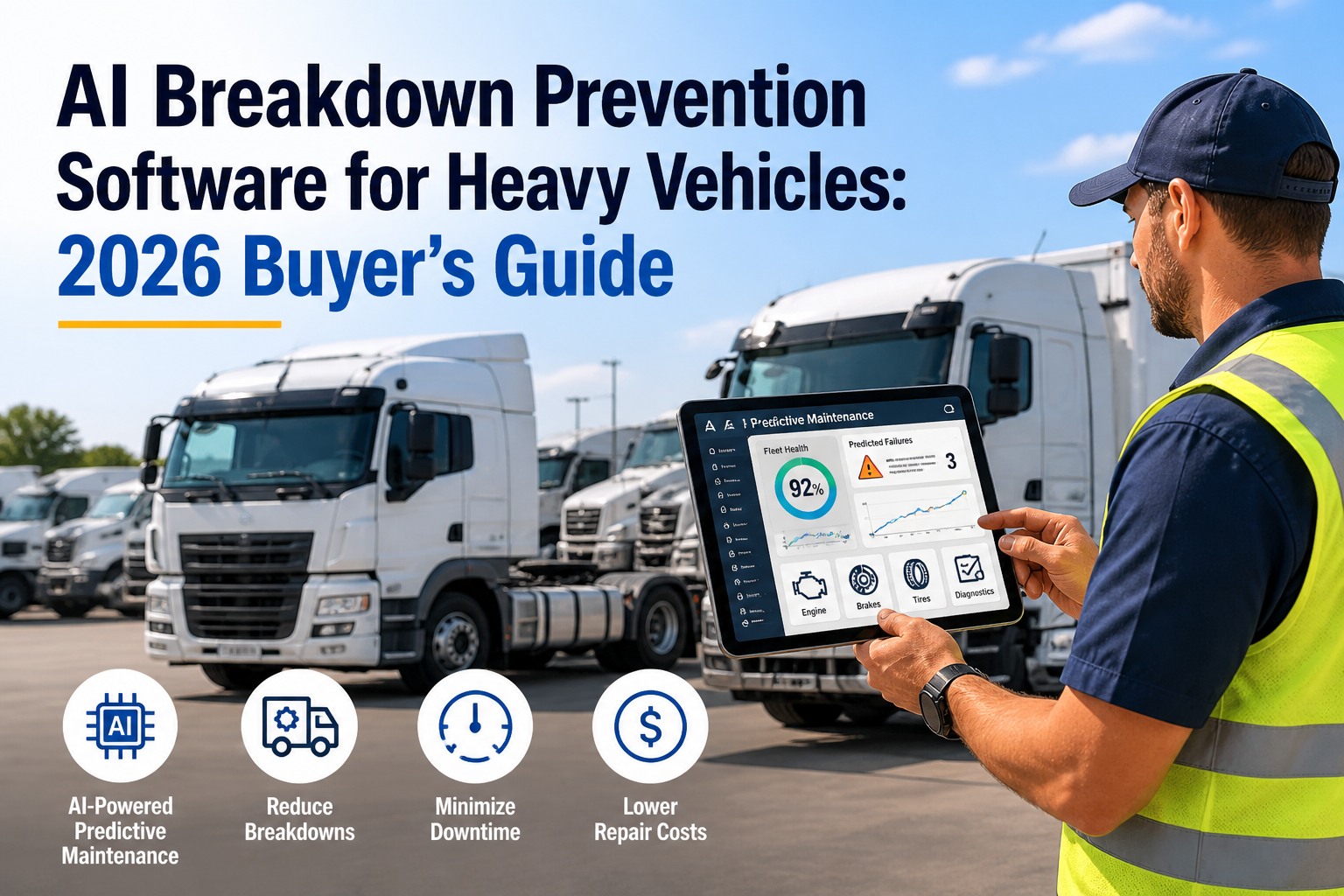
The average unplanned heavy vehicle breakdown costs $1,900 in direct expenses — but the real damage runs $15,000–$75,000 when you add downstream supply chain disruption, missed deliveries, driver downtime, and emergency parts at 35–60% premiums. In 2026, AI breakdown prevention software can predict 75–85% of these failures 2–4 weeks before they happen — yet 73% of fleets still run reactive maintenance programs that cost 3–5x more than planned repairs. This buyer's guide cuts through the marketing noise: what AI breakdown prevention software actually does, which features matter for heavy vehicles specifically, how to evaluate ROI before you buy, and why the combination of sensor data plus physical inspection data produces predictions that neither layer achieves alone. HVI's AI breakdown prevention platform is built on this dual-layer approach — combining telematics diagnostics with daily DVIR inspection intelligence across 163+ components to deliver the most accurate failure predictions available for heavy vehicle fleets.
Predict Breakdowns Before They Cost You
HVI predicts 75–85% of failures 2–4 weeks ahead — combining AI sensor analysis with daily inspection data for accuracy sensor-only platforms cannot match.
What AI Breakdown Prevention Software Does
AI breakdown prevention is not a single feature — it is four capabilities working together to shift maintenance from reactive to predictive.
01
Continuous Condition Monitoring
AI tracks engine temperature, oil pressure, transmission behaviour, vibration patterns, and fuel trim from telematics — plus tyre wear, fluid leaks, brake condition, and visible damage from daily inspection photos. Combined, this creates a complete vehicle health profile updated every mile and every walk-around.
HVI advantage: Dual-layer monitoring (sensors + inspections) catches physical defects that telematics alone misses — tyre tread approaching minimum, coolant hose bulging, fluid seepage at connections.
02
AI Failure Prediction
Machine learning compares current data against historical failure patterns across millions of data points. An engine trending 12 degrees hotter than baseline with declining oil pressure follows a trajectory that preceded hundreds of engine failures in the training set — and the AI flags it weeks before a fault code fires.
HVI advantage: Inspection data adds physical condition context that improves prediction precision by 15–25% over sensor-only models — brake pad measurement, visual crack detection, corrosion assessment.
03
Risk Scoring & Prioritisation
Each component receives a failure probability score: 15% = monitor at next PM, 45% = schedule repair this week, 80% = immediate action. Maintenance teams see a prioritised queue — highest-risk vehicles first — instead of treating every alert equally.
HVI advantage: Risk scores integrate with HVI's work order queue — predicted failures auto-generate work orders with severity, parts requirements, and scheduling windows pre-calculated.
04
Automated Preventive Action
When failure probability crosses the threshold, the system auto-generates a work order, checks parts inventory, identifies the optimal service window, and routes the job to the appropriate technician — converting what would have been a $1,900 roadside emergency into a $400 scheduled shop repair.
HVI advantage: Full integration with HVI's inspection-to-maintenance chain — predicted failures feed the same work order system that handles daily DVIR defects, PM scheduling, and parts management.
HVI's AI breakdown prevention is not a standalone add-on — it is integrated with your daily inspections, maintenance workflows, and compliance documentation on one platform.
Schedule a demo to see predictions running on sample fleet data. Or
start free and begin building your prediction baseline today.
Buyer's Checklist: 8 Features to Evaluate
Not all AI breakdown prevention platforms are equal. Use this checklist when evaluating any solution — including HVI.
Sensor + Inspection Dual-Layer
Sensors cannot detect tyre wear, fluid leaks, or visible cracks. Platforms using only telematics data miss physical defects that precede sensor alerts by 2–3 weeks.
HVI: Yes — telematics API + daily DVIR photos analysed by AI across 163+ components
Heavy Vehicle Component Coverage
Generic fleet AI may cover engine and transmission but miss air brake systems, fifth-wheel coupling, hydraulic circuits, and equipment-specific components critical to heavy vehicles.
HVI: 163+ heavy vehicle components including brakes, coupling, hydraulics, and heavy equipment systems
Prediction Accuracy & Transparency
Ask for documented precision and false positive rates. 85–95% precision on major components is the current benchmark. High false-positive rates create alert fatigue that undermines adoption.
HVI: 85–95% precision on major failures, 5–15% false positive rate, confidence scores on every prediction
Work Order Integration
Predictions without automated action are just warnings. The platform must auto-generate work orders with severity, parts, and scheduling — not just send email alerts that get buried.
HVI: Auto-generated work orders with parts pre-checked, severity routing, and technician assignment
No Proprietary Hardware Lock-In
Some platforms require $100–$200 per vehicle in proprietary hardware plus multi-year contracts. A 100-truck fleet pays $10K–$20K upfront before seeing a single prediction.
HVI: No proprietary hardware. Works with existing telematics (Samsara, Geotab, Motive) + smartphone inspections
ROI Documentation
Demand documented fleet case studies with specific savings numbers — not theoretical projections. Proven platforms show 10:1–30:1 ROI within 12–18 months.
HVI: 44-day avg ROI payback. $210K saved (35-vehicle fleet). $8,500/vehicle annual savings documented
Compliance Integration
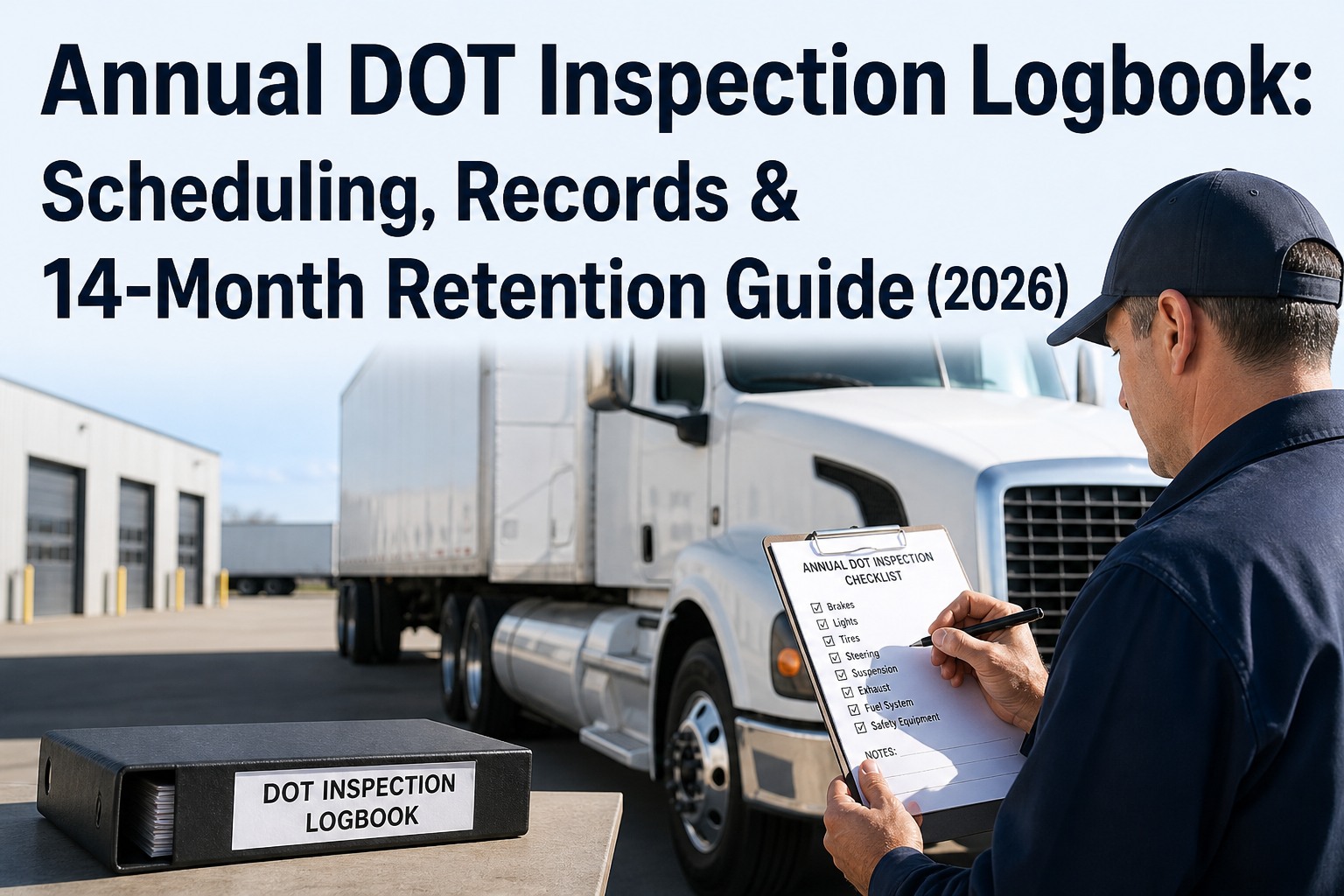
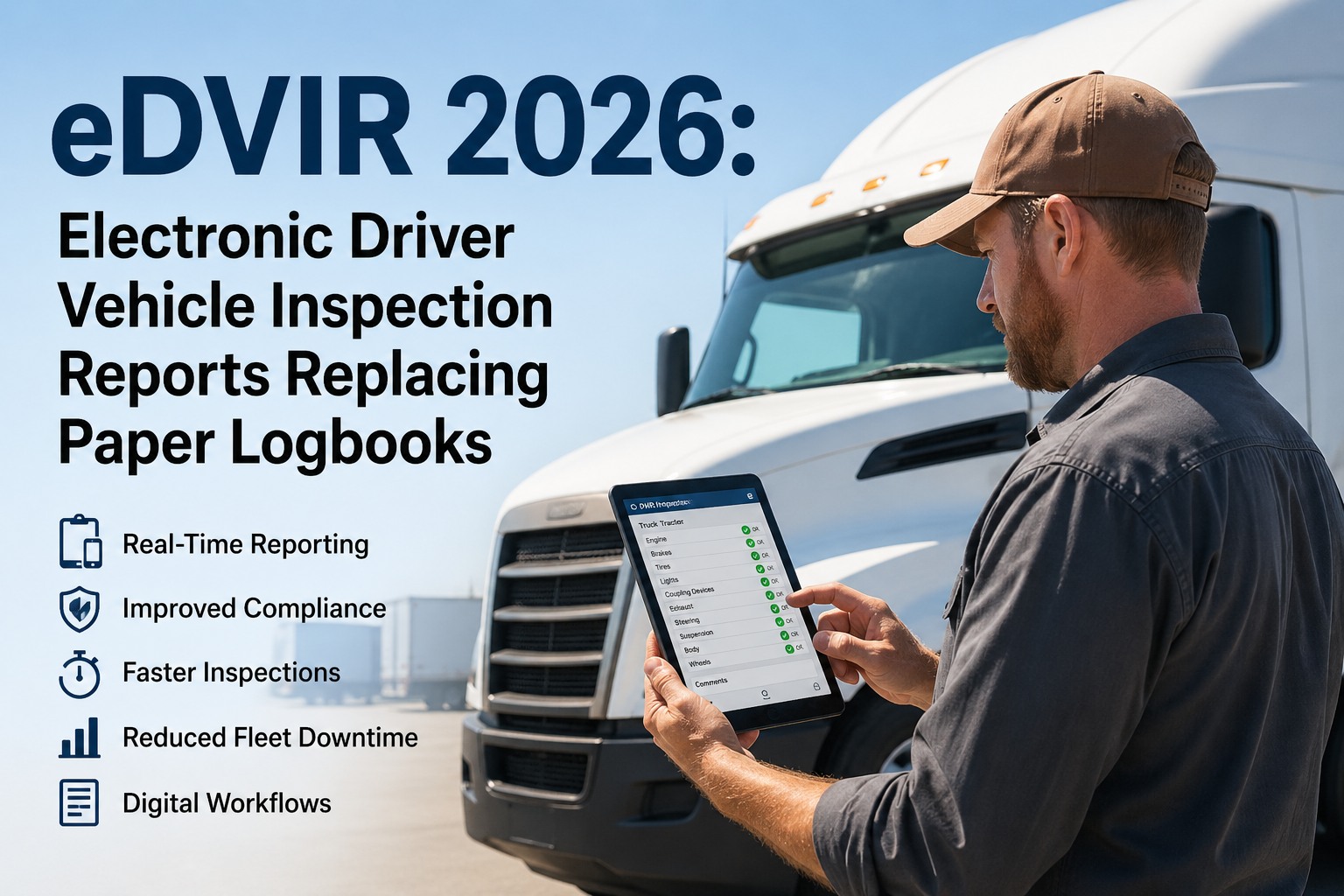
Breakdown prevention is half the value. The platform should also produce audit-ready DVIR records, track CSA scores, and manage the compliance documentation that DOT audits require.
HVI: Full FMCSA compliance — eDVIR, 3-signature chain, CSA "Driver Observed" mapping, audit export
Time to Value
How fast from sign-up to first useful prediction? Enterprise platforms take months. The best platforms generate initial predictions within 72 hours and meaningful accuracy within 60–90 days.
HVI: First predictions within 72 hours. Meaningful accuracy at 60 days. Full optimisation at 6 months
The ROI: What Breakdown Prevention Saves
The financial case is documented — not theoretical. Start free with HVI and begin building toward these results from your first inspection.
30%
Lower Maintenance Costs
Planned repairs at shop rates vs emergency repairs at 3–5x premium
45%
Fewer Breakdowns
AI surfaces failure risks 20–45 days before traditional diagnostics
44 days
Average ROI Payback
First prevented breakdown typically covers months of platform cost
$8,500
Saved Per Vehicle Annually
Combined: prevented breakdowns + right parts + extended component life
95%+
Vehicle Availability
Up from 87.6% avg — 27 extra operating days per vehicle per year
15–20%
Insurance Premium Reduction
Better CSA scores from fewer violations and documented prevention
Want your fleet-specific ROI projection?
Schedule a free ROI assessment — we will calculate projected savings based on your fleet size, vehicle mix, and current maintenance data. Or
start free and let the data build from your first inspection.
Why HVI's Dual-Layer Approach Wins
Most AI maintenance platforms rely on telematics sensor data alone. This creates a critical blind spot that HVI closes.
Sensor-Only Platforms
Engine temp, oil pressure, transmission data, fault codes
Cannot detect: tyre wear, fluid leaks, brake pad thickness, visible cracks, corrosion, loose fittings
Physical defects precede sensor alerts by 2–3 weeks
Blind spot: The most dangerous failures start as visible defects before becoming sensor-detectable
+
HVI: Sensor + Inspection
All telematics data via API (Samsara, Geotab, Motive, 40+)
Plus: daily DVIR photos analysed by AI across 163+ components
Physical condition tracking between PM intervals — every walk-around
Result: 95–99% identification accuracy. Catches failures that sensor-only platforms miss entirely
Buy the System That Sees Everything
AI breakdown prevention software is only as good as the data it analyses. Platforms that rely solely on telematics sensors miss the physical defects — tyre wear, fluid leaks, visible cracks, brake pad measurement — that precede sensor alerts by weeks and cause the breakdowns that cost $1,900+ in direct expenses and $15,000–$75,000 in supply chain disruption. HVI is the only heavy vehicle platform that combines AI sensor analysis with daily physical inspection data from DVIRs — creating a dual-layer prediction model that catches what sensor-only platforms cannot see. Add to that the integrated inspection-to-maintenance chain (defect → work order → repair → certification), FMCSA compliance documentation (eDVIR, 3-signature, CSA mapping), and transparent pricing with no hardware lock-in — and the buyer's decision is clear. Start free today — or schedule a demo and see AI breakdown prevention running on your fleet data.
AI Breakdown Prevention — Built for Heavy Vehicles
Dual-layer predictions. 163+ components. 44-day ROI. No hardware lock-in. Integrated with inspections, maintenance, and compliance. Trusted by 25,000+ users.
Frequently Asked Questions
Q: How accurate is AI breakdown prediction in 2026?
Modern machine learning models achieve 85–95% precision on major component failures with 5–15% false positive rates. Accuracy improves over time as the AI trains on your fleet-specific patterns. HVI's dual-layer approach (sensors + inspections) delivers higher accuracy than sensor-only platforms because physical defects provide earlier warning signals. Initial predictions begin within 72 hours of data connection.
Q: Do I need to replace my telematics to use HVI?
No. HVI integrates with your existing telematics via API — Samsara, Geotab, Motive, Verizon Connect, and 40+ other providers. Your telematics continues handling GPS, ELD, and driver behaviour. HVI adds the inspection data layer, predictive analytics, work order automation, and compliance documentation. For fleets without telematics, HVI works with driver-reported data from daily inspections.
Start free.
Q: What heavy vehicle components does HVI cover?
163+ components across commercial trucks (Class 3–8), trailers, and heavy equipment (excavators, loaders, cranes). Coverage includes: brake systems, tyres, coupling devices, steering, suspension, engine, transmission, exhaust, electrical, hydraulic circuits, air systems, and equipment-specific components (undercarriage, boom, winch).
Schedule a demo to confirm coverage for your specific vehicle types.
Q: What is the difference between HVI and sensor-only platforms?
Sensor-only platforms (telematics-based prediction) monitor engine parameters, transmission, and fault codes — but cannot see physical defects. A coolant hose bulging, a brake pad at 3mm, or a tyre with inner tread at DOT minimum are all invisible to sensors but clearly visible in inspection photos. HVI's dual-layer approach combines both data sources, catching failures that sensor-only platforms miss by 2–3 weeks and producing 15–25% higher prediction precision.
Q: How quickly will I see ROI?
Industry average: 44-day payback. The first prevented breakdown — typically within 30 days — covers the system cost for months. By month 3, most fleets see measurable monthly savings from reduced emergency repairs, eliminated rush parts costs, and improved vehicle availability. 12–18 month ROI ratio: 10:1–30:1. A 35-vehicle fleet documented $210K in year-one savings.
Start free today.