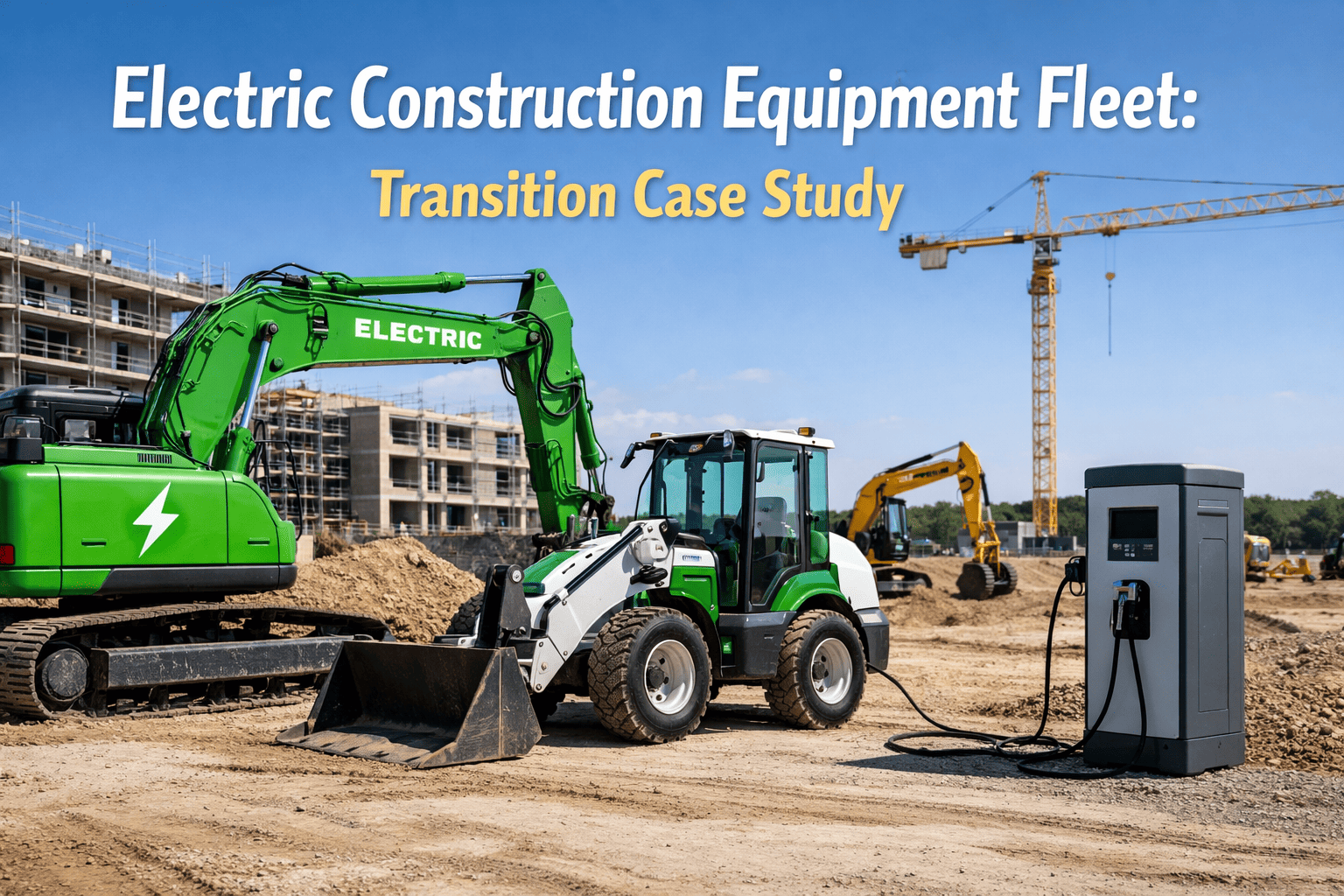
Discover how a multi-state construction company transformed equipment inspection compliance from a paperwork burden into a streamlined safety system—achieving 96% inspection compliance, reducing OSHA-recordable incidents by 64%, and cutting equipment-related delays by 45% without adding time to daily operations.
Improving Compliance and Safety in a Construction Equipment Fleet
Construction Fleet Environment
Managing equipment inspections in construction presents unique challenges that office-based fleet managers rarely encounter. Machines move between jobsites daily, operators change frequently, and the pressure to keep projects on schedule often pushes safety documentation to the bottom of priorities.
Equipment Fleet
Excavators, dozers, loaders, graders, skid steers, compactors, cranes, and support equipment
Operations Footprint
Highway construction, site development, utilities, and commercial building projects
Workforce
Mix of company operators and union labor across project sites
This regional construction company had grown rapidly over five years, acquiring smaller contractors and inheriting a patchwork of inspection practices. Each acquired company brought different forms, different standards, and different expectations—creating compliance chaos that put projects and people at risk.
Safety & Compliance Risks
A comprehensive risk assessment revealed serious gaps in equipment inspection practices that were exposing the company to regulatory penalties, project delays, and—most importantly—worker safety hazards.
Risk Severity Assessment
Inspection Documentation Gaps
Only 43% of equipment had current inspection records. Paper forms lost, damaged, or never completed.
Crane Inspection Non-Compliance
Annual and monthly crane inspections inconsistently documented. Lift plans lacking equipment verification.
Pre-Shift Inspection Shortcuts
Operators rushing or skipping inspections due to production pressure. "Check all OK" without actual checks.
Equipment Transfer Blind Spots
Machines moving between sites without inspection handoff. Receiving sites unaware of existing issues.
Inconsistent Defect Response
No standard process for defect severity assessment. Critical vs. minor defects treated identically.
Audit Trail Weakness
Unable to produce inspection history for specific equipment on demand. GC audits causing scrambles.
Inspection Process Redesign
The company redesigned their entire inspection workflow around three core principles: make it faster than paper, make it impossible to skip critical items, and make compliance visible to everyone. Schedule a consultation to see how this approach works for construction fleets.
Equipment-Specific Digital Checklists
Created tailored inspection templates for each equipment type. An excavator checklist focuses on undercarriage, boom, and hydraulics. A crane checklist includes load charts, wire rope, and outrigger verification. Operators see only what's relevant to their machine.
Defect Severity Classification
Implemented a three-tier defect classification system that automatically routes issues based on severity. Critical defects lock out equipment until resolved. Major defects alert supervisors. Minor defects queue for scheduled maintenance.
Site Transfer Protocol
When equipment moves between jobsites, both the sending and receiving site complete transfer inspections. The receiving operator acknowledges equipment condition before accepting responsibility—eliminating "it came that way" disputes.
Real-Time Compliance Dashboard
Every project superintendent can see inspection status for all equipment on their site. Corporate safety team sees fleet-wide compliance in real-time. No more surprises during audits or site visits.
The digital platform integrated with mobile devices operators already carried, eliminating the need for additional hardware. Average inspection time actually decreased from 8 minutes (paper) to 6 minutes (digital) because operators weren't hunting for forms or deciphering previous handwriting. Start your free trial to experience streamlined construction inspections.
Jobsite Implementation
Rolling out new inspection processes across 23 active jobsites required careful change management. The company used a phased approach that turned skeptical operators into advocates.
Pilot Sites
- Selected sites with supportive superintendents
- Hands-on training with operators
- Daily feedback collection and adjustments
- Refined checklists based on field input
Regional Expansion
- Pilot site operators became peer trainers
- Superintendent dashboard training
- Mechanic workflow integration
- First compliance reports generated
Full Deployment
- Remaining sites brought online
- Paper forms officially retired
- Recognition program launched
- Compliance targets established
"The guys who pushed back hardest in week one became our biggest champions by week four. Once they realized the app was faster than paper and stopped the 'why didn't you catch this' arguments with mechanics, they were sold."
— Safety DirectorCompliance Outcomes
Within 12 months of full deployment, the construction fleet achieved measurable transformation across every compliance and safety metric—while actually reducing the time burden on operators and supervisors.
Up from 43% before implementation
Additional Business Impact
"In construction, everyone says safety is the priority—but when you're behind schedule and the GC is breathing down your neck, inspections are the first thing that gets cut. What changed for us was making inspections faster and more visible. When a superintendent can see on his phone that two machines haven't been inspected yet, he handles it before I ever have to make a call. That visibility changed the culture more than any safety meeting ever could."
Transform Your Construction Fleet Compliance
Stop choosing between production schedules and inspection compliance. Digital inspection platforms designed for construction make compliance faster, easier, and more visible—protecting your projects, your people, and your bottom line. Start your free trial and see results on your first project.
Ready to Improve Your Equipment Compliance?
See how construction-focused inspection tools can transform compliance across all your jobsites without slowing daily operations.
Start Free Trial Schedule Site Assessment