PM Schedule C is the annual comprehensive service — the deepest maintenance event most commercial vehicles receive each year. It combines every item from PM-A and PM-B with major fluid services, wheel alignments, component replacement evaluation, complete electrical system testing, emission system service, and the critical DOT annual inspection required by 49 CFR 396.17. This is the service where transmission fluid gets changed, differentials get serviced, brake systems get overhauled, and every system gets measured against both OEM specifications and federal minimum standards. Nearly 133,000 trucks are cited annually for operating without proof of periodic inspection — making it the second most common vehicle maintenance violation in the entire FMCSA CSA system. A properly executed PM-C eliminates that risk while simultaneously catching component wear that would otherwise become mid-year breakdowns. This guide provides the complete PM-C checklist organized by service area, explains exactly how the DOT annual inspection integrates with your PM-C, covers scheduling strategy, and shows how to document everything for audit-ready compliance.
Where PM-C Fits: The Annual Deep Dive
PM-C is the third tier in a four-level preventive maintenance framework. It inherits everything from PM-A (safety inspection) and PM-B (intermediate service) and adds major component services, fluid replacements, alignment, and the DOT annual inspection. Typical interval: every 50,000-60,000 miles or annually — whichever comes first. Service time: 4-8 hours. Cost: $1,500-$3,500.
A
Safety Inspection
Brakes, tires, lights, fluids, belts, air system
5-15K mi | 1-2 hr | $250-$500
B
Intermediate Service
All A + engine diagnostics, driveline, ECM, oil analysis, electrical
10-20K mi | 2-3 hr | $500-$1,200
C
Comprehensive / Annual
All B + transmission, differential, brake overhaul, alignment, DOT annual, emissions
50-60K mi / annual | 4-8 hr | $1,500-$3,500
D
Major Overhaul
All C + engine/transmission/axle rebuild, frame, cab refurbishment
100K+ mi | 1-5 days | $5,000-$25,000+
PM-C Scheduling Best Practice: The 11-Month Rule
Schedule at 11 months
Schedule PM-C at 11-month intervals, not 12. This builds a buffer that ensures the DOT annual inspection never lapses past the 12-month deadline.
Track from last day of month
DOT counts 12 months from the last day of the month the inspection was performed — not the exact date. An inspection on March 3 is valid through March 31 of the following year.
Mileage OR time trigger
Schedule at 50,000-60,000 miles or 11 months — whichever comes first. Low-mileage or seasonal vehicles still need annual PM-C even without hitting the mileage threshold.
Qualified inspector required
The DOT annual portion requires a qualified inspector per 49 CFR 396.19 — documented training in Part 393 and Appendix A/G standards.
Complete PM-C Checklist: Maintenance + DOT Annual
PM-C is two services in one: comprehensive preventive maintenance and the federally required DOT annual inspection per 49 CFR 396.17 / Appendix A. Items flagged as DOT Annual must pass federal minimum standards for the vehicle to be certified. PM-C additions are service items that go beyond DOT requirements to optimize component life. Total: 8 system sections, 70+ items, 4-8 hours.
Brake System
DOT Annual + PM-C
Service brakes — full measurement, lining thickness all positions
Parking brake — hold test on grade
Brake drums and rotors — measure thickness, check cracks/scoring
Brake hoses and tubing — leaks, chafing, restrictions
Low pressure warning device — functional test
Tractor protection valve — functional test
Air compressor — buildup time, governor cut-in/cut-out
ABS — lamp check, stored codes, functional test
Automatic brake adjusters — travel and adjustment verification
Brake overhaul evaluation — reline/replace decision per position
Air dryer rebuild or cartridge replacement
Brake chamber diaphragm inspection/replacement
Steering & Suspension
DOT Annual + PM-C
Steering wheel free play — measure against FMCSA limits
Steering column — looseness, binding
Steering gear — leaks, mounting, adjustment
Pitman arm, drag link, tie rod ends — play and wear
Power steering — fluid, pump, hose condition
Springs — cracked, broken, shifted, missing leaves
Shocks/air bags — leaking, damaged, mounting
Full wheel alignment — front, rear axle, thrust angle
King pin repack and wear measurement
U-bolt retorque all spring packs
Wheel bearing repack and adjustment
Tires & Wheels
DOT Annual + PM-C
Tread depth all positions (steer 4/32", drive/trailer 2/32" min)
Tire condition — sidewall damage, bulges, exposed cord
Inflation pressure — calibrated gauge, all positions
Wheel/rim condition — cracks, bends, missing clamps
Fasteners — lug nuts torqued, studs intact
Tire age evaluation — DOT date code, replace if 6-10+ years
Retread candidate assessment all positions
Hub seal replacement evaluation
Engine & Drivetrain
PM-C Comprehensive
Oil and filter change (per PM-B cycle)
ECM download — all stored codes, performance data
Oil analysis sample — wear metals, contamination
Transmission service — fluid and filter change
Differential fluid change — front and rear axle
Coolant system service — flush/replace per OEM
DPF service — cleaning or replacement evaluation
Turbocharger — shaft play, wastegate operation
Injector performance test
All filters — fuel, air, crankcase ventilation
Belt replacement evaluation
Hose replacement evaluation
Electrical & Lighting
DOT Annual + PM-C
All required lamps — head, tail, clearance, markers, signals
Reflectors and reflective tape — condition, placement
Windshield wipers — operation and blade condition
Complete electrical test — alternator, starter, battery load
Wiring harness full inspection — chafing, corrosion, heat
All sensors and control modules — diagnostic scan
Ground connections — clean, tighten, corrosion protection
Coupling Devices
DOT Annual
Fifth wheel — mounting, locking, plate wear, pivot
Pintle hooks — condition, latch, mounting
Drawbars — condition, securing, eye integrity
Safety chains/cables — condition, attachment, length
Fifth wheel top plate measurement
Fuel & Exhaust
DOT Annual + PM-C
Fuel system — tank, cap, lines, no leaks
Exhaust system — leaks, damage, discharge location
DPF backpressure measurement vs. baseline
DEF system — tank, dosing valve, injector, SCR
EGR system — valve, cooler, connections
Exhaust clamp and hanger replacement evaluation
Frame, Body & Other
DOT Annual + PM-C
Frame — cracks, loose fasteners, sagging
Body — insecure panels, sharp edges, mud flaps
Windshield/glass — cracks, defroster operation
Horn — functional test
Chassis lubrication — all grease fittings
HVAC — heating, defrost, A/C refrigerant check
Cab mount inspection and tightening
Hydraulic system service (if equipped)
Checklist Legend
DOT Annual — must pass Appendix A/G minimum standards
PM-C addition — comprehensive service beyond DOT HVI provides PM-C templates with DOT annual items pre-loaded and compliance-flagged. Photo requirements, measurement fields, and pass/fail gates ensure audit-ready documentation.
Book a demo to see PM-C templates. Or
start free.
DOT Annual Inspection: Integration with PM-C
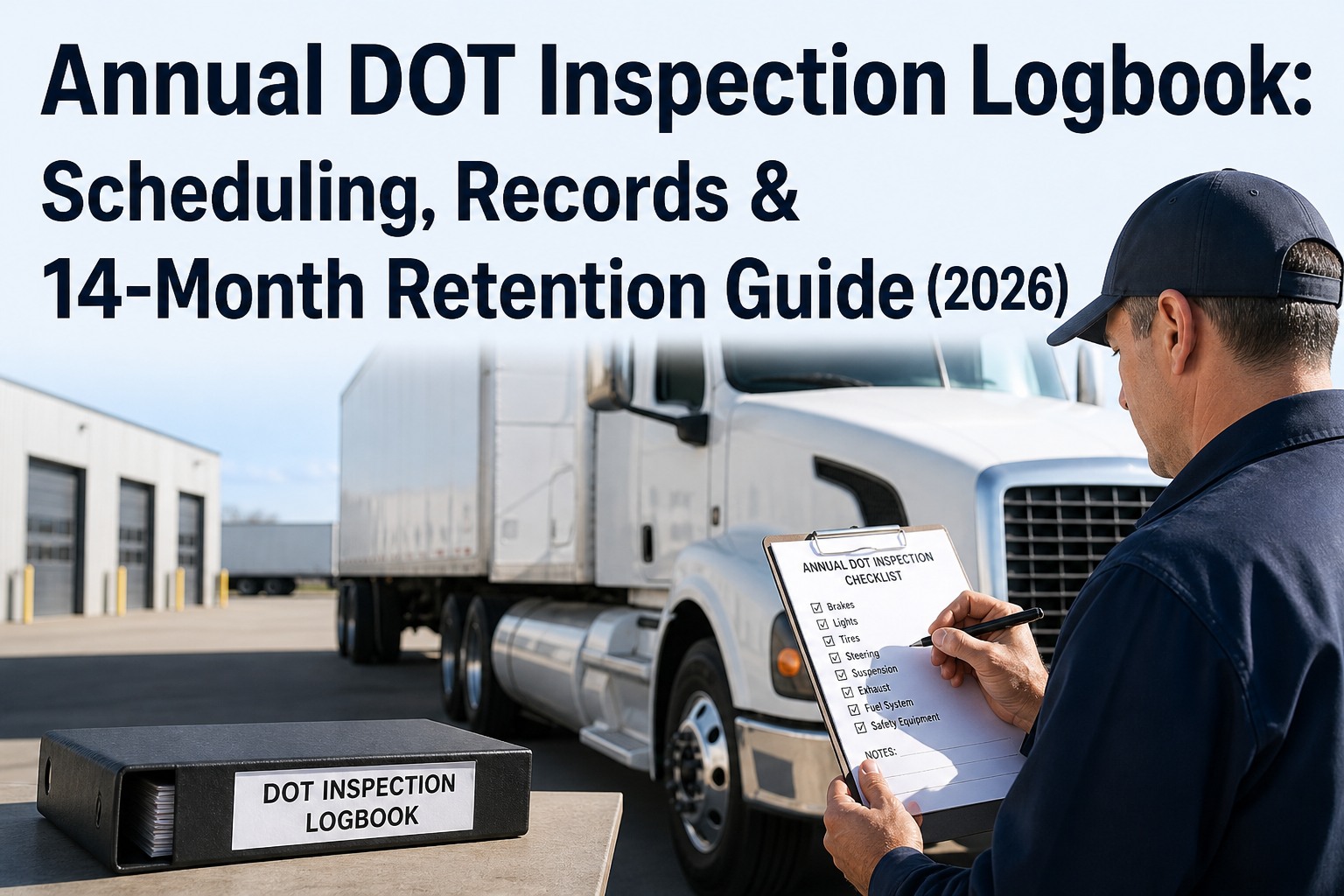
The DOT annual inspection (49 CFR 396.17) is not a separate event — it's a component of your PM-C. Combining both in a single appointment reduces downtime, ensures consistency, and eliminates lapsed-inspection risk. The key difference: PM-C covers maintenance optimization, while the DOT annual is a binary compliance determination — every Appendix A/G item must pass or be repaired before the vehicle can operate.
DOT Annual Requirements
Who: Qualified inspector per 49 CFR 396.19 — Part 393, Appendix A/G knowledge, documented training
What: All Appendix A items — brakes, steering, suspension, tires, lighting, coupling, fuel, exhaust, frame, body, windshield, horn
When: At least once every 12 months per vehicle — tractor, trailer, dolly each inspected separately
Record: Signed report per 396.21 — inspector, carrier, vehicle, date, items inspected, defects found
Retention: 14 months from inspection date, available on demand
Proof on vehicle: Report or sticker/decal with date, inspector/carrier info, vehicle ID
What Happens Without It
~133,000 trucks cited annually for missing periodic inspection
2nd most common vehicle maintenance violation in FMCSA CSA
~12,000 trucks cited per month
Out-of-service order — vehicle cannot move until inspected
$19,277 maximum civil penalty for operating OOS vehicle
CSA severity weight 2 for OOS violations under 2026 scoring
PM-C Component Replacement Decision Framework
PM-C is the primary decision point for component replacement. Rather than waiting for failure, PM-C evaluates each wear item against remaining useful life — replacing components that won't survive to the next PM-C while leaving items with adequate life in service.
Replace During PM-C
Brake linings below 50% — won't reach next annual
Belts with visible cracks, glazing, or chunks missing
Hoses showing softness, bulging, or surface cracking
Tires below 6/32" steer or 4/32" drive
Battery failing load test or under 12.4V static
Wiper blades streaking, chattering, deteriorated
U-joints with any measurable play
Monitor Until Next PM-B or PM-C
Brake linings above 50% — sufficient life remaining
Belts with minor surface crazing only
Hoses weathered but firm, no bulging
Tires above 6/32" steer / 4/32" drive, even wear
Battery passing load test, good terminals
DPF backpressure elevated but below regen threshold
Oil consumption trending within acceptable range
HVI tracks measurements across PM-B and PM-C — your technician sees last service's brake lining and tread depth right on screen. Replace/monitor decisions become data-driven.
Book a demo.
PM-C Documentation and Audit Readiness
PM-C produces more documentation than any other service tier because it includes the DOT annual report. This documentation is both compliance proof and operational intelligence — complete, accurate, and retrievable on demand.
DOT Annual Report (396.21)
Inspector identity and qualifications, carrier name/address, vehicle ID (unit, VIN, plate), date, all items inspected, defects found, certification. Retain 14 months. Must be on or in vehicle at all times.
PM-C Service Record
Vehicle ID, work performed, parts replaced (part numbers), fluids (type/quantity), technician, date, odometer/hours. Retain 1yr + 6mo minimum per 396.3(b) — best practice 3+ years.
Measurement Records
Brake lining all positions, tread depth all tires, steering free play, air system tests, battery voltage/CCA. Build trend data for condition-based replacement at future services.
Inspector Qualifications File
Per 396.19: Part 393/Appendix A-G knowledge, documented training (state/federal program or 1+ year experience). Retain while active + 1 year after.
CSA Vehicle Maintenance Split: PM-C Under the Microscope
The 2026 CSA overhaul splits Vehicle Maintenance into "Standard" and "Driver Observed." PM-C quality drives your Standard score — brake condition, steering wear, exhaust integrity, lighting defects found at roadside score here. OOS violations carry severity weight 2.
Book a demo to see CSA tracking.
eDVIR Integration: Driver Findings Feed PM-C Queues
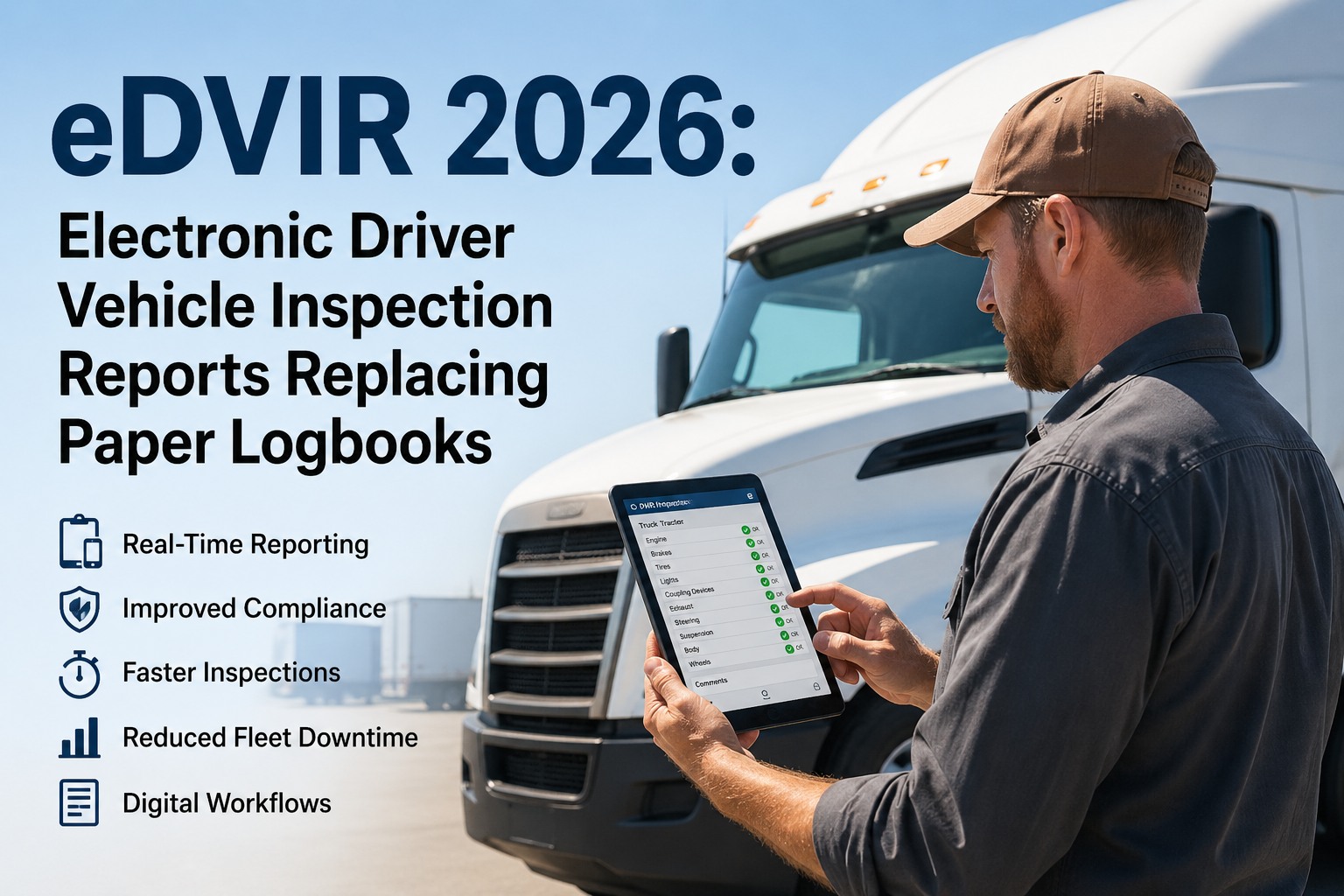
With eDVIRs authorized effective March 23, 2026, driver-reported defects flow digitally into PM-C work orders. A transmission concern reported in January auto-appears on the April PM-C checklist.
FMCSA Audit Intensity: 93% of Carriers Cited
Only 7% pass DOT audits clean. Average penalty: $7,155 per violation. Auditors verify tiered PM schedules, DOT annual records with inspector qualifications, and systematic maintenance per 396.3. Carriers without documented PM-C face harshest scrutiny.
2026 Roadcheck May 12-14: Schedule PM-C Before April
CVSA International Roadcheck 2026 focuses on cargo securement including tire load ratings. Expired or missing DOT annuals during Roadcheck mean immediate OOS. Complete PM-C by April to ensure full coverage before Roadcheck season.
PM-C: One Service, Complete Annual Coverage
PM-C combines all PM-A and PM-B items with comprehensive fluid services, alignment, component evaluation, and the DOT annual inspection in a single 4-8 hour appointment. The $1,500-$3,500 investment replaces multiple visits, eliminates lapsed-inspection risk (the 2nd most common CSA violation), and produces audit-ready documentation. Schedule at 11-month intervals, use qualified inspectors, retain records 14 months, and keep proof on every vehicle.
Build PM-C Into Your Annual Cycle
HVI provides PM-C templates with DOT annual items pre-loaded, compliance flags, guided workflow, photo requirements, measurement fields, and automatic 14-month record retention.
Frequently Asked Questions
Q: How often should PM-C service be performed?
Every 50,000-60,000 miles or annually — whichever comes first. Because it includes the DOT annual inspection, it must occur at least every 12 months. Best practice: schedule at 11-month intervals. Low-mileage or seasonal vehicles still need PM-C annually regardless of miles driven.
Q: Can the DOT annual inspection be done separately from PM-C?
Yes — the DOT annual is a standalone regulatory requirement. But combining it with PM-C reduces downtime, ensures consistency, and saves cost. The DOT portion takes 30-90 minutes; the full PM-C takes 4-8 hours. One appointment covers both maintenance optimization and compliance certification.
Q: Who is qualified to perform the DOT annual inspection?
Per 49 CFR 396.19: must understand Part 393 and Appendix A/G, identify defective components, and have documented training — state/federal program, qualifying certificate, or 1+ year combined experience. Carriers must retain qualification evidence while the inspector is active and for one year after.
Q: What records must be kept from a PM-C service?
Two sets: the DOT annual report (per 396.21, 14-month retention, must be on/in vehicle) and the PM-C maintenance record (per 396.3b, 1yr + 6mo minimum, 3+ years recommended). DOT report must identify inspector, carrier, vehicle, date, items, and defects. PM record must include vehicle ID, work, parts, date, and odometer.
Q: What's the penalty for a missing DOT annual inspection?
Roughly 133,000 citations per year, about 12,000 per month. Penalties: out-of-service order, CSA severity weight 2 under 2026 scoring, civil penalties up to $19,277. One carrier was ordered to cease all operations and fined $25,000+ for operating uninspected vehicles.
Start free with HVI to auto-track deadlines.
Q: Does each trailer need its own PM-C and DOT annual?
Yes. 49 CFR 396.17 requires each segment of a combination vehicle to be inspected separately — tractor, semitrailer, full trailer, and converter dolly each need their own annual inspection and documentation. Fleets often bulk-schedule trailer inspections by yard or region. Same 12-month cycle and 14-month retention rules apply to every unit.