Fleet managers hear "inspection" and "maintenance" used interchangeably every day — in safety meetings, vendor pitches, even regulatory documents. But they're not the same thing. An inspection is the diagnosis. Maintenance is the treatment. One finds the problem. The other fixes it. And the gap between them — the time, process, and accountability that connects a driver spotting a worn brake pad to a technician replacing it — is where most fleets lose money, uptime, and compliance. Understanding and tightening that gap is the single most impactful operational improvement a fleet can make in 2026. Here's how the two functions work, how they differ, and how connecting them transforms your operation.
What Is a Vehicle Inspection?
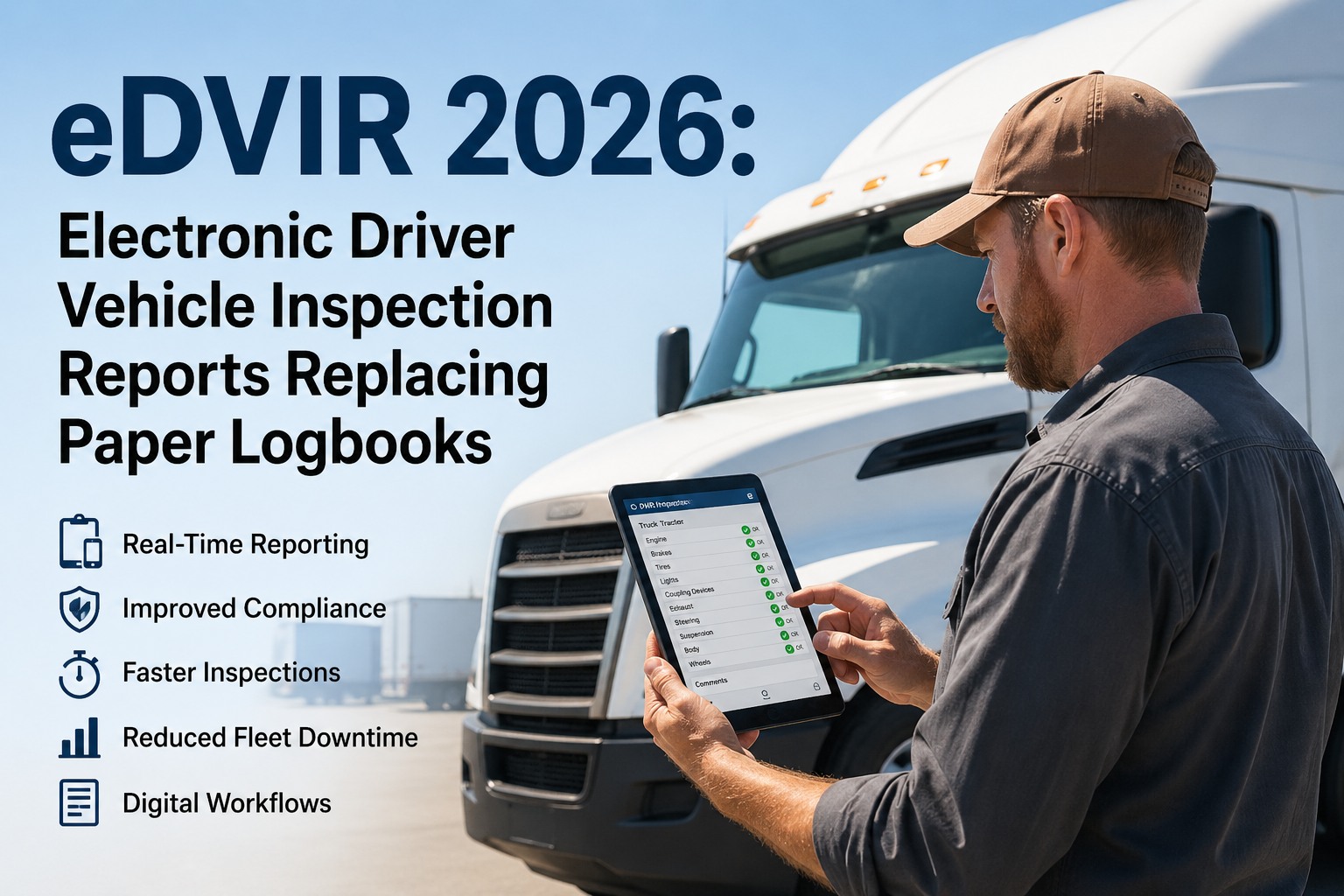
A vehicle inspection is a structured evaluation of a vehicle's condition — performed by a driver, technician, or inspector — to identify defects, verify safety, and create a documented record. In regulated fleets, the most common form is the DVIR (Driver Vehicle Inspection Report), required under 49 CFR §396.11 for commercial motor vehicles. But inspections aren't just a compliance checkbox. They're the early warning system that feeds everything downstream: maintenance scheduling, parts ordering, compliance documentation, and safety management. Without accurate inspections, your entire maintenance operation is flying blind.
Pre-Trip Inspection
Performed before the vehicle enters service each day. Confirms it's safe to operate. Covers brakes, tires, lights, steering, coupling, mirrors, and fluid levels. Required by FMCSA for CMVs.
Post-Trip Inspection
Completed at the end of the shift. Documents any defects or concerns discovered during operation. Gives maintenance teams advance notice to schedule repairs before next dispatch.
Periodic / PM Inspection
Scheduled at fixed intervals (mileage, hours, or calendar). Deeper evaluation by qualified technicians covering engine, transmission, electrical, suspension, and emissions systems.
Roadside Inspection
Conducted by DOT / CVSA inspectors at weigh stations or on the road. Ranges from Level 1 (full vehicle + driver) to Level 5 (vehicle-only without driver). Results feed CSA scores directly.
What Is Vehicle Maintenance?
Maintenance is the hands-on work that keeps vehicles operational: replacing brake pads, rotating tires, changing oil, repairing electrical faults, rebuilding engines. Where inspection asks "what's wrong?", maintenance answers "here's the fix." Maintenance falls into three categories, and the most effective fleets use all three — with inspections as the trigger that ties them together.
Reactive Maintenance
Fix it when it breaks. The most expensive approach — an unplanned roadside repair costs 3-5x more than a scheduled shop repair. Reactive maintenance means tow trucks, emergency parts sourcing, missed loads, and CSA violations.
Preventive Maintenance
Service at scheduled intervals based on time, mileage, or engine hours — regardless of current condition. Oil changes, filter replacements, brake adjustments, tire rotations. Prevents most failures before they happen.
Inspection-Driven Maintenance
Repairs triggered by real findings — a driver spots a cracked drum, a technician measures worn pads, a photo shows sidewall damage. The inspection creates the work order. The most targeted, cost-effective approach available.
Connect your inspections to your maintenance workflow. Start your free trial of HVI — defects reported by drivers auto-generate work orders and notify your maintenance team instantly. Or book a demo to see the full inspection-to-repair pipeline.
Inspection vs. Maintenance: Key Differences at a Glance
The confusion between inspection and maintenance isn't just semantic — it causes real operational problems. When drivers think "I inspected it" means the issue is handled, defects slip through. When maintenance teams don't receive inspection findings, repairs get delayed. Here's exactly where the two functions differ.
How Inspections Trigger Maintenance: The Workflow That Matters
The real value of inspections isn't the checklist — it's what happens next. In a well-connected operation, a driver's defect report doesn't sit in a folder or get mentioned verbally at shift change. It creates an immediate, trackable chain of events that ends with a repaired vehicle and a documented resolution. That chain is where most fleets break down — not mechanically, but operationally.
Driver Reports Defect
During pre-trip or post-trip, driver identifies an issue — worn tire tread, cracked mirror, air leak — and documents it with notes and photos via digital DVIR.
Work Order Auto-Created
The defect triggers an automatic work order in the maintenance system. Severity level determines priority: safety-critical items get flagged for immediate attention.
Maintenance Team Notified
Shop supervisors and technicians receive real-time alerts with defect details, photos, and vehicle location. No verbal hand-offs. No lost paperwork.
Vehicle Held if Critical
Safety-critical defects prevent the vehicle from being dispatched until resolved. Non-critical items are scheduled into the next PM window to minimize downtime.
Repair Completed & Certified
Technician completes the repair, documents parts and labor, and signs off. The driver reviews the completed work order and confirms resolution before next trip.
Audit Trail Complete
Every step is timestamped and stored — from defect report to repair sign-off. Full compliance documentation ready for DOT audits, insurance claims, or litigation.
Close the loop between finding defects and fixing them. Sign up free for HVI's closed-loop inspection-to-repair platform — or schedule a demo to see the automated workflow in action.
Common Fleet Confusion (And Why It's Dangerous)
These misunderstandings show up in fleets of every size. Each one creates a gap between inspection and maintenance — a gap where defects survive long enough to cause violations, breakdowns, or worse.
"If the driver inspected it, it's good to go."
An inspection identifies the condition — it doesn't fix anything. A driver can correctly report a defect, but if no one acts on the report, the vehicle rolls out with the same problem. Inspection without maintenance follow-through is documentation without safety.
"We do PM schedules, so we don't need daily inspections."
Preventive maintenance runs on a schedule. Defects don't. A tire can pick up a nail on Tuesday. A light can burn out on Wednesday. PM won't catch either until the next scheduled service window — but a daily inspection will catch them the same day.
"Drivers report defects verbally — that's enough."
Verbal reports get forgotten, misheard, or deprioritized. Without a written or digital record, there's no audit trail, no accountability, and no proof of compliance. Under 49 CFR §396.11, defects must be documented in writing — and carriers must certify repairs before the vehicle returns to service.
"Inspections and maintenance are the maintenance team's job."
Inspections are primarily the driver's responsibility. Maintenance is the shop's responsibility. Under the 2026 CSA system, these are now scored separately — Driver Observed vs. Inspector Detected — making it critical that both sides own their part of the process.
The 2026 Factor: Why This Distinction Matters More Than Ever
The February 2026 CSA overhaul makes the inspection-maintenance distinction operationally visible for the first time. Vehicle Maintenance is now scored in two separate compliance categories: "Driver Observed" tracks defects a driver should catch during walk-arounds, while "Vehicle Maintenance" covers issues found by mechanics during scheduled service or Level 1 roadside inspections. This split means FMCSA can now pinpoint exactly where your problems originate — and so can shippers, brokers, and insurers evaluating your safety profile.
Defects reasonably observable during pre/post-trip or Level 2 walk-around inspections. Flat tires, broken lights, visible leaks, worn wipers, loose cargo, cracked mirrors.
Issues identified during routine maintenance or Level 1 full inspections. Internal brake wear, suspension fatigue, frame cracks, exhaust leaks, electrical faults.
Two Functions, One Goal: Vehicles That Are Safe to Operate
Inspections and maintenance aren't competing priorities — they're sequential steps in the same safety system. Inspections generate the intelligence. Maintenance acts on it. When the handoff between them is fast, documented, and accountable, defects get caught early, repairs happen before breakdowns, compliance stays clean, and drivers trust that their reports actually matter. The fleets that thrive in 2026 won't be the ones with the biggest shops or the newest trucks — they'll be the ones with the tightest connection between finding a problem and fixing it.
Bridge the Gap Between Inspection & Maintenance
HVI connects driver inspections directly to your maintenance workflow. Defects trigger instant work orders. Photo evidence gives technicians what they need before they touch the truck. Every step is documented for compliance. One platform, zero gaps.