In 2026, fleet driver logbook requirements span three distinct compliance domains — Hours of Service, Driver Vehicle Inspection Reports, and driver medical records — each governed by different FMCSA regulations, different retention periods, and different enforcement mechanisms. Miss one HOS entry and face a $16,000 civil penalty. Let a medical certificate lapse and the driver faces a 55.2% chance of an immediate out-of-service order at roadside. Skip a DVIR repair certification and your defect-to-repair chain breaks — a violation auditors cite under 49 CFR 396.13 and plaintiff attorneys feature in nuclear verdict litigation. This guide consolidates every logbook requirement into one reference: what you must record, how long you must keep it, what changed in 2026, and how to automate the entire compliance chain so nothing falls through the cracks. HVI's digital compliance platform integrates HOS tracking, eDVIR management, and driver credential monitoring on one system — keeping your fleet audit-ready every day of the year.
HOS + DVIR + Medical Records — One Platform
HVI integrates all three logbook compliance domains with automated alerts, digital records, and one-click audit export. Setup takes under 10 minutes.
The Three Pillars of Driver Logbook Compliance
Every driver logbook obligation falls into one of three pillars. Each has its own regulations, its own retention period, and its own failure consequences.
Pillar 1: HOS
49 CFR Part 395
Driving time, duty status, rest periods
Retention: 6 months
Penalty: Up to $16,000 per violation
Pillar 2: DVIR
49 CFR 396.11 / 396.13
Vehicle condition, defects, repair certification
Retention: 3 months minimum
Penalty: OOS order + CSA score impact
Pillar 3: Medical
49 CFR Part 391
CDL, medical certificate, DQF, Clearinghouse
Retention: 3 years post-termination
Penalty: 98.7% OOS rate for invalid CDL
Pillar 1: Hours of Service Requirements
HOS rules govern how long a driver can operate a CMV before mandatory rest. Violations account for 62% of all DOT citations — the single largest category.
11-Hour Driving
11 hrs max
After 10 consecutive hours off duty, a driver may drive up to 11 hours
14-Hour Window
14 hrs max
All driving must occur within 14 hours of starting duty — cannot be extended with off-duty time
10-Hour Off-Duty
10 hrs min
Must take 10 consecutive hours off duty before next driving period
30-Minute Break
30 min
Required after 8 cumulative hours of driving — can be on-duty not driving or off-duty
60/70-Hour Limit
60/70 hrs
Cannot drive after 60 hours on duty in 7 days (or 70 in 8 days). Resets with 34-hour restart
Sleeper Berth Split
7/3 or 8/2
Qualifying drivers can split 10-hour off-duty into 7/3 or 8/2 sleeper berth combinations
Required HOS Supporting Documents
Bills of lading, fuel receipts, toll records, dispatch records, and delivery receipts — all must align with ELD data. Mismatches indicate potential falsification — a severe finding. 2026 Roadcheck driver focus: ELD tampering and manipulation.
Pillar 2: DVIR Requirements
DVIRs document the physical condition of every vehicle operated under your DOT number. FMCSA estimates DVIRs help prevent approximately 14,000 accidents annually. Start free with HVI and make every DVIR audit-ready from the moment it is completed.
Pre-Trip DVIR
Driver inspects vehicle before operating. Reports any defects or certifies "no defects found." Photo-verified walk-around with HVI covers 37+ items for tractors, 28+ for trailers.
Post-Trip DVIR
Driver completes inspection report at end of day. Under 2014 rescission: defect-free DVIRs are no longer required for property-carrying CMVs — but defect-noted DVIRs must always be filed.
Repair Certification
When defects are reported, the carrier must repair and certify the repair before the vehicle returns to service. Mechanic signs the certification. This is the most commonly broken chain link.
Next-Driver Acknowledgment
The next driver must review the defect report and repair certification, then sign before operating. Completes the FMCSA 3-signature chain. HVI blocks dispatch until captured.
2026: eDVIR Authorised
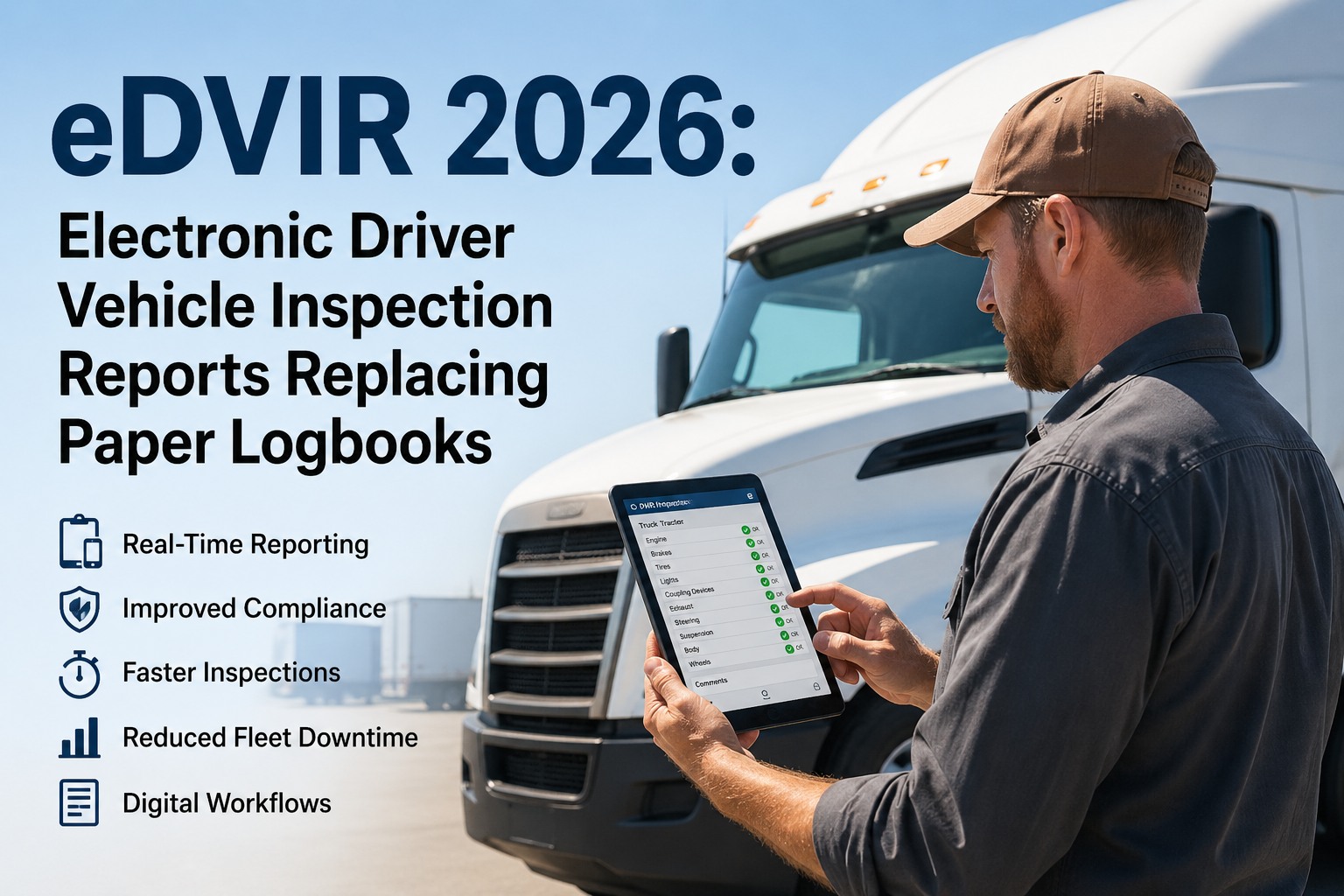
FMCSA Final Rule FMCSA-2025-0115 (effective March 23, 2026) explicitly authorises electronic DVIRs. Digital records must contain all required information, signatures, and be producible for audits. No remaining legal ambiguity.
HVI enforces the complete DVIR chain digitally — photo-verified pre-trip, auto-routed defect work orders, mechanic certification, and next-driver acknowledgment — with dispatch restriction until all signatures are captured.
Schedule a demo to see the 3-signature chain in action.
Pillar 3: Driver Medical & Credential Requirements
Every CDL driver must maintain a complete Driver Qualification File. Credential violations have the highest OOS rates of any category — 98.7% for invalid CDL.
Medical Examiner's Certificate
49 CFR 391.45
Every 1–2 years
DQF duration
CDL Copy
49 CFR 391.11
At hire + every renewal
DQF duration
Annual MVR Review
49 CFR 391.25
Annually
3 years
Pre-Employment Clearinghouse Query
49 CFR 382.701
Before first safety-sensitive duty
3 years
Annual Limited Clearinghouse Query
49 CFR 382.701
Annually (rolling 12-month)
3 years
Employment Application (3-year history)
49 CFR 391.21
At hire
3 years post-termination
Drug & Alcohol Testing Records
49 CFR Part 382
Per program requirements
5 yrs (positive) / 1 yr (negative)
2026 change: Paper Medical Examiner's Certificates are no longer accepted as of January 10, 2026. Medical certification must be verified through MVR from the state licensing agency. Delays between exam completion and state reporting create gaps — automated tracking catches these transitions.
Complete Retention Quick Reference
One table showing every document type and how long you must keep it — print this or save it for reference. Or sign up free for HVI and let the system enforce retention automatically.
HOS / ELD Records
6 months
DVIRs (defect + no-defect)
3 months minimum
Annual Inspection Reports
14 months
Maintenance Records
Vehicle service life + 6 months
Driver Qualification Files
Employment + 3 years post-termination
Drug Testing (positive)
5 years
Drug Testing (negative)
1 year
Clearinghouse Queries
3 years
HVI enforces retention automatically — records are stored, timestamped, and retrievable for the correct period without manual tracking.
Start free or
schedule a demo to see automated retention in action.
Three Pillars. One System. Zero Gaps.
Fleet driver logbook compliance in 2026 spans HOS (driving time, duty status, ELD records), DVIRs (vehicle condition, defect-to-repair chain, 3-signature enforcement), and driver medical records (CDL, medical certificate, Clearinghouse, MVR, DQF). Each has different regulations, different retention periods, and different enforcement consequences — but they share one thing: they all fail when managed manually across spreadsheets, filing cabinets, and separate systems. HVI integrates all three pillars on one platform: ELD data integration for HOS compliance, guided eDVIR inspections with photo verification and 3-signature enforcement, and automated credential monitoring with 60/30/7-day alerts and dispatch restriction. One system. One dashboard. One audit export. Start free today — or schedule a demo and see all three pillars running on your fleet data.
All Three Logbook Pillars. One Platform.
HOS tracking. eDVIR compliance. Credential monitoring. Automated alerts. One-click audit export. Trusted by 25,000+ users worldwide.
Frequently Asked Questions
Q: Are electronic DVIRs legal in 2026?
Yes — unambiguously. FMCSA Final Rule Docket FMCSA-2025-0115, effective March 23, 2026, explicitly authorises electronic DVIRs under 49 CFR 396.11 and 396.13. Digital records that capture all required information (vehicle ID, defects or no-defects certification, driver signature, repair verification) are fully compliant. Paper DVIRs remain legal but are an operational disadvantage — 73% never reach the office.
Start free with HVI's eDVIR platform.
Q: Do I need to file a DVIR when no defects are found?
For property-carrying CMVs: no — the 2014 DVIR Requirement Rescission eliminated the obligation to submit a DVIR when no defects or deficiencies are found. However, many fleets still require defect-free DVIRs as best practice because they create a positive compliance record showing inspections were performed. For passenger-carrying vehicles: defect-free DVIRs are still required.
Q: What are the HOS rules for property-carrying drivers in 2026?
The core rules have not changed structurally since 2020: 11-hour driving limit within a 14-hour window after 10 consecutive hours off duty, 30-minute break after 8 hours of driving, and 60/70-hour weekly limit with 34-hour restart. ELD enforcement is tightening — the 2026 Roadcheck focuses on ELD tampering and manipulation. FMCSA is also studying potential changes through pilot programs testing 14-hour pause and expanded sleeper berth splits.
Schedule a demo to see HOS integration.
Q: What changed about medical certificates in 2026?
The paper Medical Examiner's Certificate waiver expired January 10, 2026. CDL drivers must now have their medical certification verified through the MVR from their state licensing agency — not a paper card. Delays between exam completion and state reporting create gaps where drivers appear unqualified even though their physical is current. Automated credential tracking catches these transition periods.
Start free with HVI.
Q: How long must I keep each type of logbook record?
HOS/ELD records: 6 months. DVIRs: 3 months minimum. Annual inspection reports: 14 months. Maintenance records: vehicle service life + 6 months after disposal. Driver qualification files: employment duration + 3 years post-termination. Drug testing records: 5 years for positive, 1 year for negative. Accident register: 3 years. Clearinghouse queries: 3 years. HVI enforces all retention periods automatically.