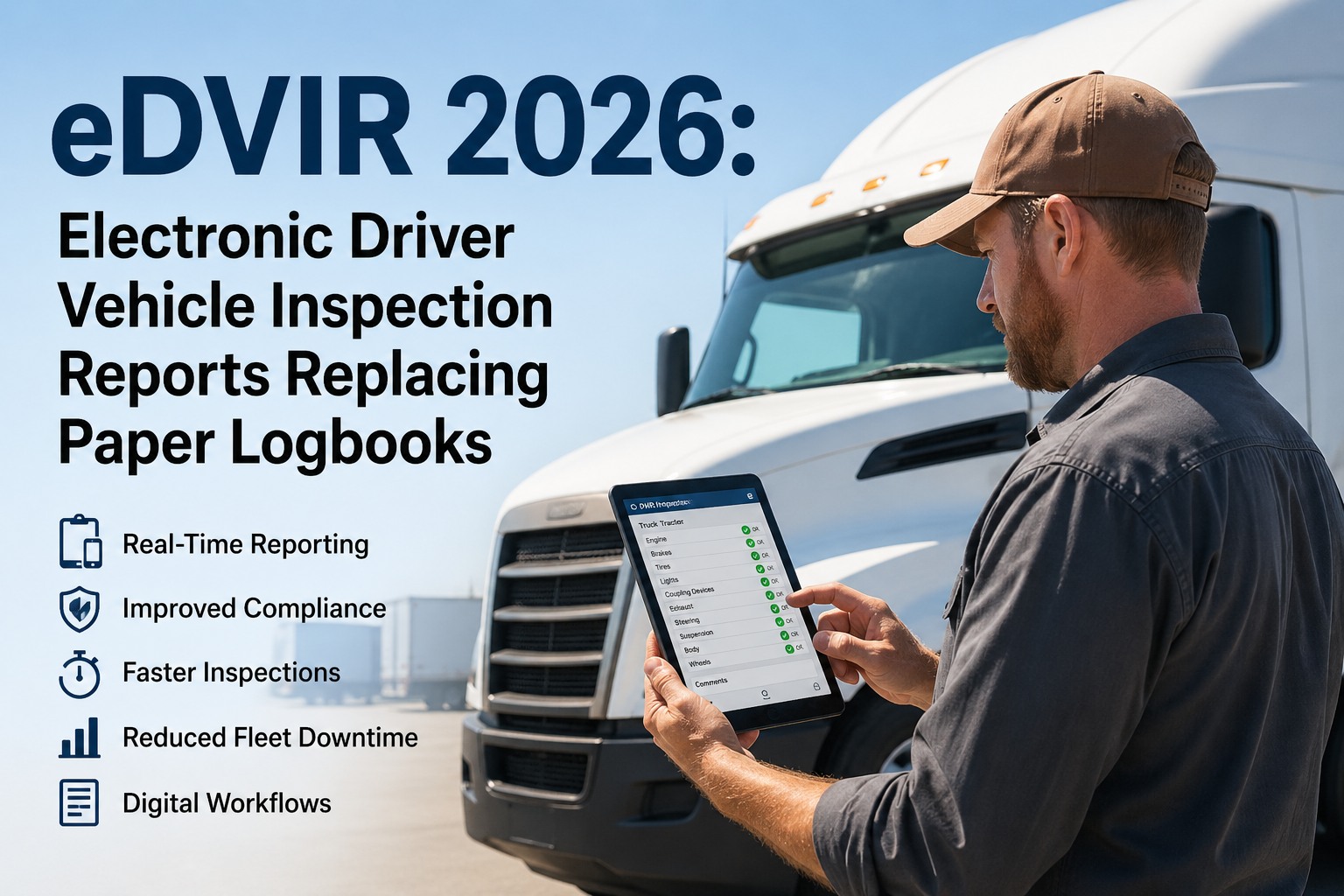
Inspection records aren't just paperwork—they're your fleet's legal protection, audit defense, and maintenance history all in one. With 94% of DOT audits resulting in at least one violation, and 60% of critical violations related to recordkeeping failures, keeping accurate, accessible inspection records is essential to staying compliant and avoiding costly penalties. This guide covers exactly what inspection records you must maintain, how long to keep them, what happens during audits, and why digital records outperform paper every time. Start organizing your inspection records with HVI.
Required Inspection Records
Under FMCSA regulations (49 CFR Parts 396 and 390), motor carriers must maintain specific inspection and maintenance documentation for every commercial motor vehicle. Here's what you're required to keep:
Driver Vehicle Inspection Reports (DVIRs)
Daily inspection reports documenting pre-trip and post-trip vehicle checks. Required when defects or deficiencies are discovered.
- Vehicle identification (unit number, license plate)
- Date and time of inspection
- Driver's name and signature
- List of any defects or deficiencies found
- Certification that repairs were made (if applicable)
- Next driver's acknowledgment of repairs
- Service brakes and trailer connections
- Parking brake and steering
- Lights and reflectors
- Tires, horn, windshield wipers
- Mirrors, coupling devices
- Wheels, rims, and emergency equipment
Annual Inspection Reports
Comprehensive vehicle inspections performed by qualified inspectors at least once every 12 months per 49 CFR 396.17.
- Motor carrier and inspector identification
- Date, vehicle identification (VIN, license)
- Components inspected and results
- Inspector's signature and qualifications
- Certification vehicle passed inspection
Maintenance & Repair Records
Documentation of all inspection, maintenance, lubrication, and repair work performed on each vehicle.
- Date and nature of each maintenance activity
- Parts replaced or repaired
- Odometer/hour meter reading
- Technician identification
- Labor and parts costs (recommended)
Vehicle Identification Records
Basic identifying information for each vehicle in your fleet, forming the foundation of your maintenance file.
- Company/unit number
- Make, model, year
- Vehicle identification number (VIN)
- Serial number, tire size
- Owner identity (if leased)
- PM schedule with due dates
Roadside Inspection Reports
Copies of inspection reports received during roadside inspections, with carrier certification of repairs made.
- Copy of inspection report
- Carrier official signature
- Documentation of repairs made
- Date repairs completed
Inspector Qualification Records
Evidence that individuals performing annual inspections meet FMCSA qualification requirements (49 CFR 396.19).
- Training certificates or programs completed
- At least 1 year of training/experience
- State or Canadian province certifications
Retention Timeframes
Different inspection records have different retention requirements. Here's a quick reference guide:
Best Practice: Keep Records Longer
While FMCSA sets minimum retention periods, smart fleets keep records longer. Why?
- Litigation protection: Accident lawsuits can arise years after an incident—maintenance records prove your fleet was properly maintained
- Trend analysis: Historical data helps identify recurring issues and optimize PM schedules
- Warranty claims: Detailed records support parts warranty claims
- Resale value: Complete maintenance history increases vehicle resale value
With digital records, storage costs nothing—keep everything indefinitely.
Audit Scenarios
Understanding what happens during a DOT audit—and what triggers one—helps you stay prepared. Here's what you need to know:
What Triggers a DOT Audit?
High scores in any BASIC category, especially Vehicle Maintenance, increase audit likelihood
DOT-recordable accidents trigger investigation into safety practices
Frequent out-of-service orders signal systemic maintenance problems
Citizen or employee complaints can trigger targeted reviews
New entrants and carriers may be randomly selected for review
Failing initial safety audit leads to increased monitoring
The Audit Process
Notification
You'll receive notice by phone or mail specifying the audit type (on-site, off-site, or focused). On-site audits are most common (80%+ of all audits).
Document Request
Auditor requests specific records. You have 48 business hours to produce documents (excludes weekends and federal holidays).
Review & Inspection
Auditor examines records, interviews staff, and may inspect vehicles. Comprehensive audits can take several days.
Findings & Rating
You receive written notification of findings and proposed safety rating (Satisfactory, Conditional, or Unsatisfactory).
Response Period
Rating becomes effective in 60 days (45 for passenger carriers). You can contest or submit a corrective action plan.
Consequences of Audit Failures
Immediate Failures (Acute Violations)
- Operating without required insurance
- Using unqualified drivers
- Failing to maintain HOS records
- Operating OOS vehicles before repair
- Drug/alcohol testing violations
Financial Penalties (2025 Rates)
- Recordkeeping violations: Up to $1,584/day, max $15,846
- OOS order violations: $2,304-$29,221
- General FMCSR violations: Up to $19,277
- Pattern violations: Up to $22,587 per occurrence
Operational Impacts
- Operating authority revocation (if Unsatisfactory not upgraded in 60 days)
- Increased insurance premiums
- Lost shipper contracts (many require Satisfactory rating)
- Increased liability in accident litigation
- Ongoing monitoring and follow-up audits
Stay Audit-Ready Every Day
HVI keeps all your inspection records organized, searchable, and accessible in seconds—exactly what auditors want to see.
Start Free Trial Book a DemoPaper vs Digital Records
FMCSA explicitly allows electronic records (49 CFR 390.31), and digital documentation has become the industry standard. Here's why:
FMCSA Requirements for Electronic Records
Per 49 CFR 390.31, electronic records must:
Inspection Data Security
Protecting your inspection records isn't just good practice—it's a compliance requirement. Here's what fleets need to consider:
Access Control
Limit who can view, edit, or delete records. FMCSA requires drug/alcohol and driver investigation files be kept in "secure locations with controlled access." If combined with other files, the entire file must be secured.
Data Backup
Regular automated backups protect against data loss. Cloud-based systems with redundant storage ensure records survive hardware failures, natural disasters, or cyberattacks.
Audit Trail
Track who accessed, modified, or deleted records and when. This protects against tampering allegations and proves document integrity during litigation.
Record Location
Records can be kept at your principal place of business, satellite locations, or with third parties—but must be produced within 48 business hours of an FMCSA request.
Inspection Data Security Checklist
Ready for Audit-Proof Record Keeping?
HVI provides digital inspection records that meet all FMCSA requirements—complete, secure, and instantly accessible when auditors come calling.
Sign Up Free Schedule a DemoJoin 1,000+ fleets already using HVI for compliant recordkeeping