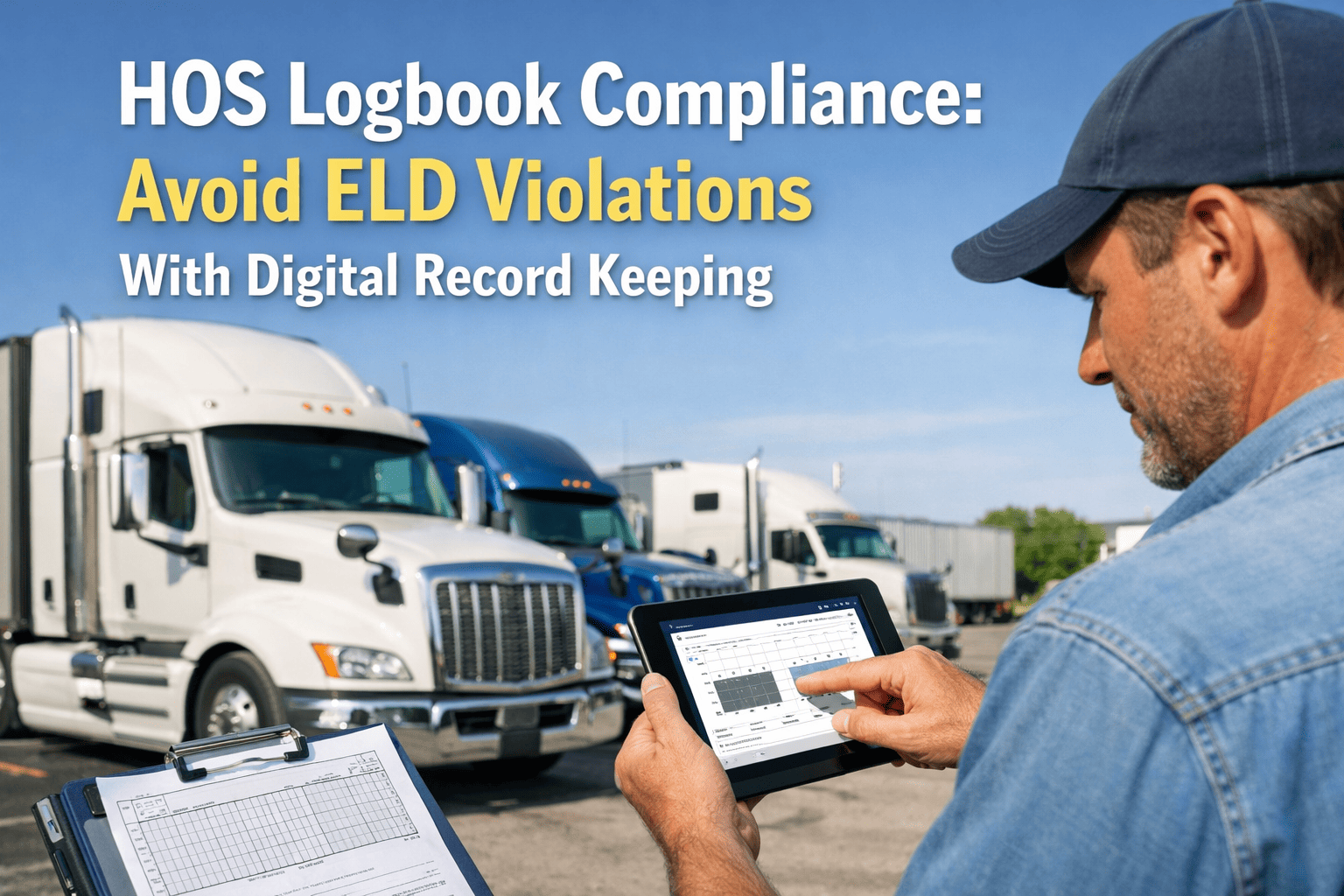
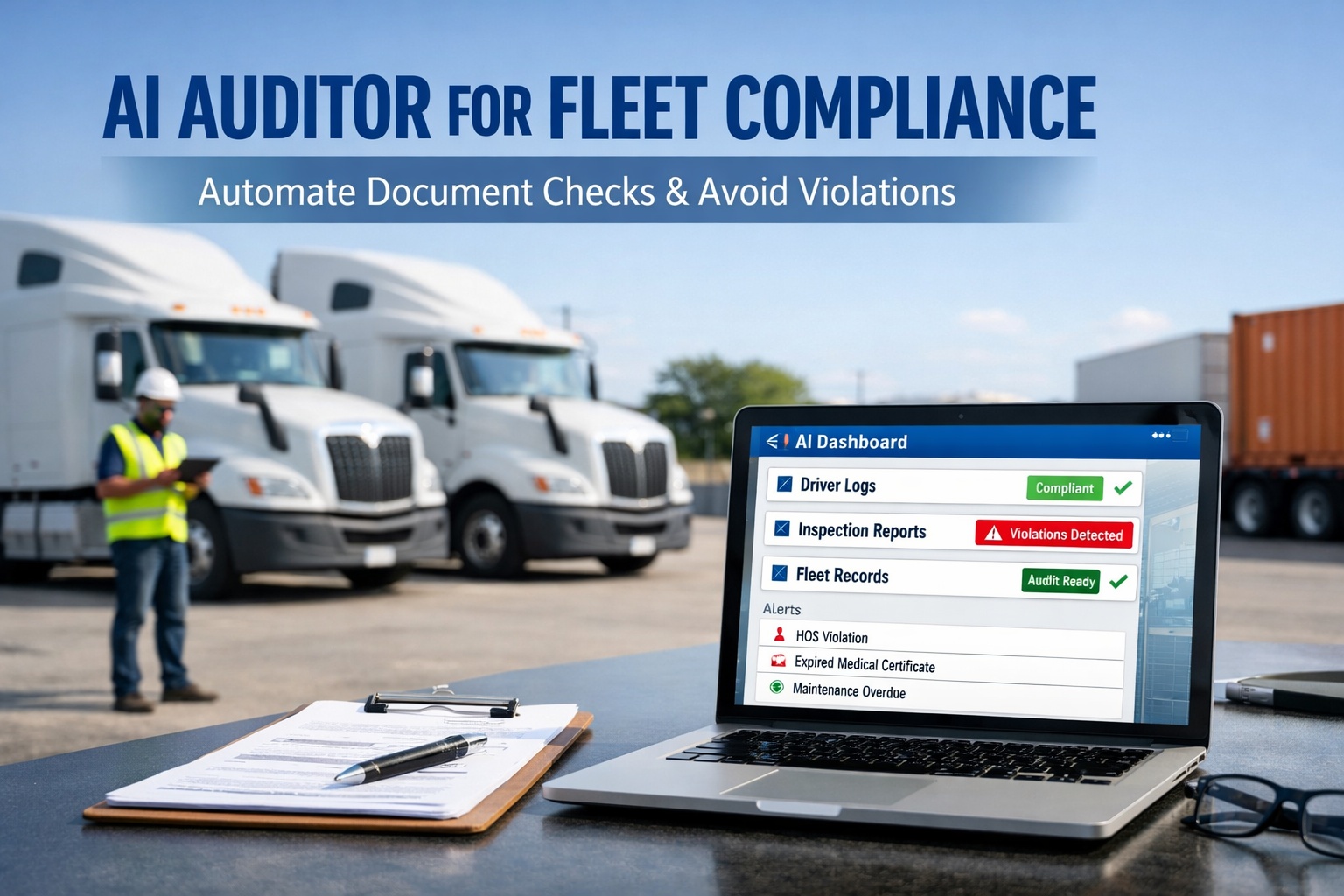
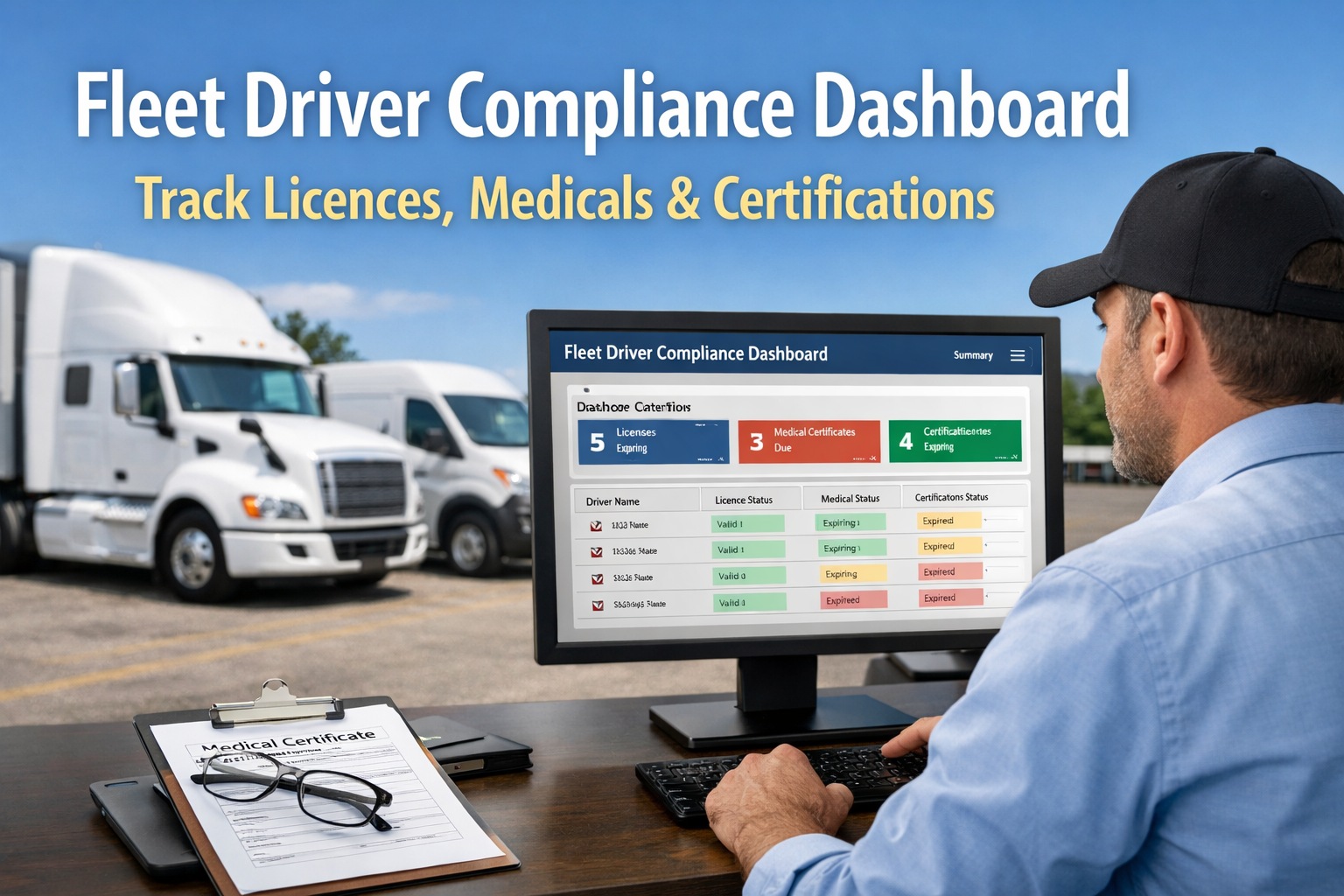
Over 200,000 hours-of-service violations were cited during roadside inspections in 2024 alone — many tied directly to ELD non-compliance, incomplete driver logs, and record-keeping gaps that digital systems would have prevented. In 2026, FMCSA enforcement is sharper than ever: inspectors cross-check logbook entries against GPS tracking, fuel transactions, and weigh-station data in minutes, making falsified or incomplete logs easier to detect than at any point in history. ELD violations carry fines from $1,000 to $16,000+ per occurrence, immediate out-of-service orders, CSA score damage that raises insurance premiums, and operational shutdowns that cost $264 per driver per day in lost revenue. HVI's inspection and maintenance platform integrates digital record keeping with your fleet's inspection, DVIR, and maintenance workflows — giving you the connected compliance documentation that keeps drivers moving and auditors satisfied.
The 2026 HOS Rules Every Fleet Must Follow
Hours-of-service regulations exist to prevent driver fatigue — the cause of thousands of crashes annually. FMCSA enforcement in 2026 leaves zero room for ambiguity, and every rule below is verified through ELD data during roadside inspections and audits.
11
Hours
Daily Driving Limit
Maximum driving time after 10 consecutive hours off-duty. Every minute beyond this limit is an automatic HOS violation recorded by your ELD.
14
Hours
On-Duty Window
All driving must occur within 14 hours of coming on duty. This window cannot be extended with off-duty time — once it starts, it runs continuously until a full reset.
10
Hours
Required Off-Duty
Consecutive off-duty time before driving resumes. Sleeper berth splits (7/3 or 8/2) permitted under specific conditions. ELDs track this automatically.
30
Minutes
Required Break
Mandatory 30-minute break after 8 hours of driving. Can be satisfied by any non-driving period — on-duty not driving, off-duty, or sleeper berth.
60/70
Hours
Weekly Cycle Limit
Maximum on-duty hours in 7 or 8 consecutive days. A 34-hour restart resets the cycle. ELD data provides a rolling calculation visible to inspectors at any time.
HVI's digital record-keeping platform connects your inspection, DVIR, and maintenance documentation to a single compliance system — so every record supports your HOS compliance picture during audits.
Schedule a 30-minute compliance walkthrough to see how it works for your fleet.
The 10 Most Costly ELD Violations
FMCSA designates 22 ELD-related violations that count against your CSA scores. These ten are the most frequently cited, the most expensive, and the most damaging to your fleet's operational standing. Sign up for HVI free and start building the documentation trail that prevents these violations.
1
No ELD When Required
Immediate out-of-service order (minimum 10 hours). Fines up to $16,000 for carriers. Includes using a device removed from FMCSA's registered list — 9 devices were removed in early 2026 alone.
Severity: 5/10
$1,000–$16,000
2
Failure to Provide Supporting Documents
Highest severity weight of any ELD violation. Inspectors expect fuel receipts, dispatch records, and vehicle condition reports to match ELD data. Missing documentation = audit failure.
Severity: 7/10
$1,000–$16,000
3
Log Falsification or ELD Tampering
Inspectors now cross-check ELD entries against GPS, fuel transactions, and weigh-station records. Tampering can result in driver disqualification, fines up to $16,000, and criminal prosecution in severe cases.
Severity: 5/10
Up to $16,000
4
Exceeding 11-Hour Driving Limit
Driving beyond 11 hours after 10 consecutive hours off-duty. Exceeding by more than 3 hours triggers maximum penalties even for first-time offenders. ELDs record this automatically with no override possible.
Severity: 7/10
$1,307–$16,000
5
Unassigned Driving Time Not Resolved
Unidentified driving events recorded by the ECM must be reviewed and assigned within 13 days. Excessive unassigned time suggests HOS circumvention and triggers deeper audit scrutiny from FMCSA investigators.
Severity: 5/10
$1,000–$10,000
6
Failure to Certify Daily Logs
Drivers must review and certify their logs every 24 hours. Uncertified logs are treated as incomplete records during inspections — one of the most common and most easily preventable violations.
Severity: 3/10
$500–$2,867
7
ELD Data Transfer Failure
Inability to transfer logs electronically to an inspector via web services, email, Bluetooth, or USB. Drivers must be trained and tested on the transfer process before every dispatch — not during the inspection.
Severity: 3/10
$500–$1,584
8
ELD Malfunction Not Addressed
When an ELD shows a diagnostic or malfunction indicator, drivers must notify the carrier, begin recording on paper, and arrange repair within 8 days. Active malfunctions without documented follow-up are cited on the spot.
Severity: 3/10
$500–$1,584
9
Incomplete or Missing Annotations
Every edit to a driving log requires an annotation explaining why. Edits without annotations look like falsification attempts. Small violation individually, but patterns of missing annotations trigger targeted FMCSA investigations.
10
Improper ELD Mounting or Display
ELD must be mounted visibly to the driver in normal seated position. Devices hidden, unmounted, or displaying incorrectly are cited. Includes failure to maintain a user manual (though FMCSA may relax the paper manual requirement in 2026).
How ELD Violations Compound: The Real Cost
A single violation rarely stays single. ELD and HOS violations create a cascade of financial and operational damage that extends far beyond the initial fine.
Stage 1
Immediate Fine
$1,000–$16,000
Per-violation fine assessed at roadside or during audit. Average fine for missing ELD records: $2,867. Willful violations (tampering, falsification) trigger maximum penalties.
Stage 2
Out-of-Service Order
$264/driver/day lost revenue
Minimum 10-hour shutdown per driver. Vehicle may require towing (average $344 for 40-mile tow). Missed deliveries, penalty charges from shippers, and customer relationship damage.
Stage 3
CSA Score Damage
Long-term cost multiplier
Every violation is weighted (1–10 severity) and stays on your record. Scores above 65% trigger FMCSA warning letters and targeted inspections. Higher scores = higher insurance premiums, lost contracts, and closer scrutiny on every roadside stop.
Stage 4
Insurance & Business Impact
Ongoing revenue loss
Insurance actuaries use CSA data to calculate risk. Carriers with ELD violations see premium increases or non-renewal. Shippers and brokers check CSA scores before awarding contracts — violations cost you loads you never even bid on.
Every violation in this cascade is preventable with proper digital record keeping. HVI's platform connects your DVIRs, inspection records, maintenance logs, and compliance documentation into one audit-ready system.
Schedule a demo to see how HVI protects your CSA scores. Or
start your free trial now.
How HVI's Digital Record Keeping Prevents Violations
ELD compliance is not just about the device in the cab — it is about the complete documentation ecosystem around it. HVI's inspection and maintenance platform fills the record-keeping gaps that cause most ELD-related violations during audits and inspections. Start free and close your fleet's compliance gaps today.
Violation: Missing supporting documents (Severity 7/10)
HVI Solution: Every DVIR, inspection report, and vehicle condition report is captured digitally with photos, GPS, timestamps, and digital signatures — stored in the cloud and exportable in seconds during any audit or roadside inspection.
Violation: Incomplete vehicle condition reports
HVI Solution: Vehicle-specific guided checklists (37+ items for Class 8 tractors, 28+ for trailers, 70 for cranes) prevent incomplete submissions. Required fields, mandatory photo capture, and 3-signature DVIR chain enforcement ensure every record is complete and defensible.
Violation: Maintenance records not matching ELD data
HVI Solution: Inspection defects auto-generate work orders with repair documentation. Maintenance history is linked to each vehicle — creating the audit trail that shows inspectors your fleet is maintained, not just logged.
Violation: 48-hour audit — can't produce records
HVI Solution: Every record — DVIRs, maintenance logs, inspection reports, compliance documents — searchable by vehicle, driver, date, or keyword. Export complete compliance packages in minutes, not days. FMCSA offsite audits surged 400% — HVI keeps your fleet audit-ready 24/7.
2026 Enforcement: What's New This Year
FMCSA enforcement in 2026 has shifted from checking whether you have an ELD to verifying the accuracy and completeness of the data behind it. Here is what changed and what your fleet needs to know.
NEW 2026
CVSA Roadcheck 2026: ELD Tampering Is the Primary Driver Focus
The May 12–14, 2026 International Roadcheck specifically targets ELD tampering and log falsification. Inspectors will cross-reference logbook entries against GPS, fuel receipts, and telematics data. Fleets with incomplete supporting documentation will face heightened scrutiny.
Schedule a compliance review before Roadcheck.
NEW 2026
eDVIR Authorization Effective March 23, 2026
FMCSA's February 2026 final rule adds explicit eDVIR language to §396.11 and §396.13 — removing the last regulatory hesitation for digital DVIRs. HVI's platform enforces the complete 3-signature DVIR chain digitally, exceeding FMCSA minimum requirements.
NEW 2026
Multiple ELD Devices Removed from FMCSA Registry
FMCSA removed 9 ELD devices from the registered list in early 2026 for failing minimum requirements. Carriers using removed devices face the same penalties as having no ELD — out-of-service orders and fines up to $16,000. Check FMCSA's registered ELD list quarterly.
ONGOING
CSA 2026: "Driver Observed" Category Reflects DVIR Quality
Compliance Is the Floor, Not the Ceiling
HOS logbook compliance and ELD violation avoidance are baseline requirements — the minimum to keep your fleet operating legally. The fleets that turn compliance into competitive advantage go further: they connect their ELD data to digital DVIRs, link inspection defects to automated work orders, build per-vehicle maintenance histories that prove fleet condition during audits, and use analytics to identify patterns before they become violations. HVI's inspection and maintenance platform provides this connected compliance layer — purpose-built for heavy vehicle fleets that need every record to support every other record.
Keep Your Fleet Compliant, Every Record, Every Day
HVI connects digital DVIRs, inspection records, maintenance logs, and compliance documentation on one platform — trusted by 25,000+ users worldwide to stay audit-ready around the clock.
Frequently Asked Questions
Q: What are the most common ELD violations in 2026?
The most frequently cited violations include failure to provide supporting documents (severity 7/10), failure to certify daily logs, unassigned driving time not resolved, ELD data transfer failures, and operating without a registered ELD device. FMCSA removed 9 devices from its registered list in early 2026 — carriers using removed devices face the same penalties as having no ELD at all.
Q: How much can ELD violations cost my fleet?
Direct fines range from $1,000 to $16,000+ per violation. But the real cost compounds: out-of-service orders ($264/driver/day in lost revenue), towing fees ($344 average), CSA score damage (higher insurance premiums, lost contracts), and targeted FMCSA investigations. A single violation can cost $5,000–$20,000+ in total business impact.
Start free with HVI and protect your bottom line.
Q: How does HVI help with HOS compliance?
HVI provides the supporting documentation ecosystem that ELD compliance requires — digital DVIRs with 3-signature chain enforcement, vehicle condition reports with photos and GPS, maintenance records linked to each vehicle, and instant audit exports. When inspectors cross-check your ELD data against supporting documents, HVI ensures every record matches.
Q: What changed with FMCSA's 2026 eDVIR rule?
FMCSA's February 2026 final rule (effective March 23, 2026) adds explicit eDVIR language to §396.11 and §396.13, giving full regulatory backing to digital DVIRs with electronic signatures. This means fleets using platforms like HVI now have explicit authorization to replace paper DVIRs entirely — with better documentation quality and instant compliance verification.
Book a demo to see eDVIR compliance in action.
Q: What is the CVSA Roadcheck 2026 focus?
The May 12–14, 2026 International Roadcheck focuses on ELD tampering and log falsification for the driver segment, and cargo securement for the vehicle segment. Inspectors will specifically look for log edits without annotations, gaps in records, and supporting documents that do not match ELD data.
Q: How do ELD violations affect CSA scores?
All 22 FMCSA-designated ELD violations count against your HOS Compliance BASIC score, weighted by severity (1–10 points) and recency. Scores above 65% trigger FMCSA warning letters, targeted inspections, and compliance investigations. Insurance companies use CSA data to calculate premiums — violations directly increase your operating costs even after fines are paid.