Getting pulled over for a DOT roadside inspection can feel high-stakes—but it doesn't have to be. Nearly 4 million commercial vehicle inspections happen every year across North America, and the vast majority of drivers pass without issue. During the 2025 CVSA International Roadcheck, 94.1% of drivers cleared inspection with zero out-of-service violations. The difference between a smooth stop and a costly one comes down to knowing what inspectors look for, having the right documents ready, and responding the right way. This guide gives you the practical, driver-focused tips that keep inspections fast, clean, and stress-free in 2026.
What Happens During a DOT Roadside Inspection
DOT roadside inspections are conducted by CVSA-certified enforcement officers at weigh stations, during roving patrols, or at temporary inspection sites. Inspections can be triggered randomly, by visible vehicle defects, following an accident, or because a carrier's safety record flags it for closer scrutiny. The process follows standardized procedures established by the Commercial Vehicle Safety Alliance, and the specific inspection you receive falls into one of several defined levels.
The most common and comprehensive inspection. A 37-step procedure covering both driver credentials and full vehicle condition—including under-vehicle components like brakes, suspension, and frame. Takes 30-60 minutes. Passing earns a CVSA decal valid for 3 months.
Covers everything in Level I except under-vehicle components. The inspector walks around the exterior checking lights, tires, and visible mechanical items, plus reviews all driver documents and credentials. Faster than Level I but still thorough.
Focuses entirely on the driver—CDL, medical certification, HOS records, ELD compliance, and seat belt use. No vehicle components are checked. Takes about 15-20 minutes. The most common level to be "bumped up" if an officer spots a visible defect.
Levels IV through VI cover special-purpose inspections—specific component studies, vehicle-only checks without the driver, and enhanced inspections for radioactive cargo. Most drivers will only encounter Levels I, II, or III during their career.
Roadside Inspection: Step by Step
Officer signals you to stop. Pull over to a safe location, turn on hazards, and set parking brake. Stay in the cab until instructed.
Inspector reviews your CDL, medical certification (now verified via MVR for CDL holders), registration, insurance, ELD/logs, and shipping papers.
Inspector checks brakes, tires, lights, steering, suspension, coupling devices, frame, exhaust, fuel system, and cargo securement—exterior and under-vehicle.
You receive a Driver Vehicle Examination Report (DVER). If clean, you may get a CVSA decal. If violations are found, OOS items must be fixed before moving; non-OOS items within 15 days.
How Drivers Should Respond
How you handle the first 60 seconds of a roadside inspection sets the tone for the entire stop. Inspectors are trained professionals—not adversaries. A calm, organized, cooperative driver often completes the process faster and with fewer issues than one who is flustered, defensive, or unprepared.
- Pull over promptly and safely — use hazards, set the parking brake, and stay seated until approached
- Have documents organized and accessible — keep a designated folder or pouch with CDL, registration, insurance, shipping papers, and ELD instructions
- Be polite and professional — greet the inspector, answer questions clearly, and maintain a cooperative demeanor
- Know your ELD — be ready to generate an inspection display or printout within seconds, not minutes
- Step out when asked — some inspectors ask drivers to exit the cab during the vehicle check
- Ask questions if unclear — if you don't understand a finding, politely ask the inspector to explain
- Don't argue with the inspector — disputing findings on the spot doesn't help; use DataQs to challenge violations later
- Don't fumble for documents — scrambling through a messy cab signals disorganization and invites closer scrutiny
- Don't volunteer unnecessary information — answer what's asked, but don't offer details that could raise additional flags
- Don't panic over minor findings — not every violation results in an out-of-service order; many are correctable notices
- Don't refuse or delay the inspection — refusal can escalate the situation and result in additional enforcement action
- Don't drive away before receiving your DVER — the report must be delivered to your carrier within 24 hours
Want to make every inspection effortless? Start your free trial of HVI's digital inspection platform — or book a demo to see it in action.
Documents Inspectors Ask For
The fastest way to slow down an inspection is to not have your paperwork ready. Inspectors follow a specific checklist, and missing or expired documents are among the easiest violations to avoid—yet they remain some of the most common reasons drivers are placed out of service. Here's exactly what you should have accessible in the cab at all times.
Valid, non-expired, with correct class and endorsements for the vehicle and cargo you're operating. Inspectors will verify the license status electronically.
For CDL holders, medical certification is now verified electronically via your Motor Vehicle Record (MVR). Paper MECs are no longer accepted as of January 2026. Non-CDL drivers must still carry a physical Medical Examiner's Certificate.
Current registration for both power unit and trailer. Valid proof of insurance (minimum liability coverage). Must be readily accessible—not buried in a glovebox.
Current 7-day (or 8-day) record of duty status via an FMCSA-registered ELD. You must also have the ELD user manual, data transfer instructions, and blank paper logs in case of ELD malfunction.
Accurate description of cargo being transported, including weight and destination. Hazmat shipments require additional placarding, marking, and emergency response documentation.
Proof that the vehicle passed a periodic (annual) inspection within the last 12 months. Missing inspection documentation was cited over 20,000 times in 2025—the single most common vehicle violation.
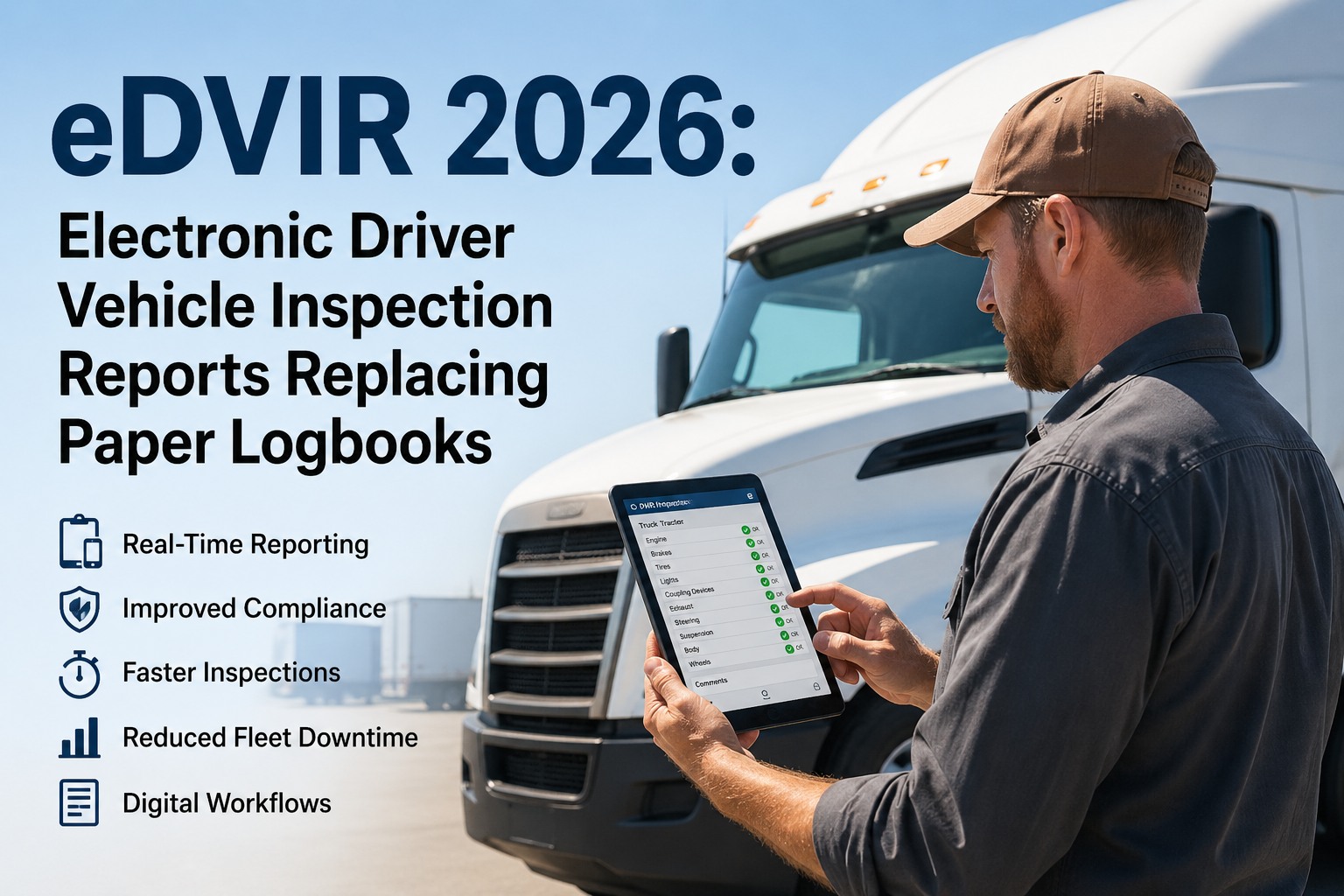
Pre-trip and post-trip inspection reports showing the driver verified vehicle condition. While not always checked during roadside stops, having current DVIRs demonstrates due diligence and can work in your favor.
Common Roadside Inspection Mistakes
Year after year, CVSA data reveals the same patterns. Most out-of-service violations fall into a handful of predictable categories—and nearly all of them are preventable with basic preparation. Understanding where other drivers fail is the fastest way to make sure you don't.
Top Violation Categories — 2025 Roadcheck Data
Skipping or Rushing Pre-Trip Inspections
The most common root cause of vehicle OOS violations. A thorough pre-trip catches brake issues, tire wear, light failures, and loose cargo securement before an inspector finds them. Budget 15-20 minutes minimum—it's cheaper than the alternative.
Ignoring Brake System Maintenance
Brakes account for over 40% of all vehicle OOS violations—year after year. Check slack adjusters, air lines, brake pads, and drums during every pre-trip. Report any brake issues immediately, even if the truck "still stops fine."
HOS / ELD Compliance Gaps
Hours of service violations are the top driver OOS cause at 32.4%. Know your ELD inside out—how to generate reports, handle malfunctions, and transfer data. False log entries were a 2025 Roadcheck focus, with 332 drivers placed out of service for falsification alone.
Expired or Missing Documents
No valid CDL (24.4%) and no medical certificate (14.9%) are the second and third top driver violations. With the 2026 shift to electronic medical verification, make sure your MVR reflects your current status—don't assume the system updated automatically.
Neglecting Tires and Lights
Tire defects are the second-most common vehicle violation category. Check tread depth, inflation, sidewall damage, and load ratings. Non-working lights—including marker lights, turn signals, and brake lights—are quick-fix items that still generate thousands of violations each year.
Not Knowing Your Rights
Drivers can challenge inaccurate inspection findings through FMCSA's DataQs system. If you believe a violation was recorded in error, you have the right to request a review. Your carrier should certify that all violations were corrected and return the signed report within 15 days.
Catching violations before inspectors do starts with better pre-trips. Sign up free for digital inspection checklists that guide drivers through every critical item — or book a demo to see HVI's guided workflows.
How Inspections Protect Drivers
It's easy to see roadside inspections as obstacles—another delay on an already tight schedule. But the data tells a different story. DOT inspections exist because they work, and the people they protect most are the drivers themselves.
Safety Net for Equipment Failures
Brake failures, tire blowouts, and steering defects cause catastrophic crashes. Inspections catch these problems before they reach critical failure. In 2025, inspectors identified over 13,500 vehicle OOS violations during a single 72-hour Roadcheck event—each one a potential accident prevented.
Documentation That Defends You
A clean CVSA decal and documented inspection history protect drivers after incidents. If an accident occurs, proof that your vehicle was properly inspected and maintained can be the difference between liability and defense. Clean records also lower your carrier's insurance premiums.
Level Playing Field for All Carriers
Inspections prevent unsafe carriers from undercutting responsible operators. When every fleet is held to the same safety standards, drivers working for compliant companies aren't competing against trucks that shouldn't be on the road. Stronger enforcement raises the bar for everyone.
Better CSA Scores, Better Opportunities
Every clean inspection improves your carrier's CSA profile. Strong safety scores attract better contracts, lower insurance costs, and reduce the likelihood of future audits. Drivers who consistently pass inspections become more valuable to quality carriers—and have more leverage in their careers.
2026 Regulatory Updates Affecting Roadside Inspections
Paper Medical Certificates No Longer Accepted
CDL holders' medical certification is now verified electronically through Motor Vehicle Records. The temporary waiver allowing paper MECs expired January 10, 2026. Non-CDL drivers must still carry physical certificates. Make sure your medical exam results were uploaded to the National Registry and your MVR reflects current status.
CSA Safety Measurement System Overhaul
The biggest change to CSA scoring since 2010. Vehicle Maintenance now splits into two categories—standard maintenance issues and driver-observed defects. This means your pre-trip inspection performance directly impacts your carrier's compliance category scores. Severity weights simplify to 2 (OOS) vs. 1 (non-OOS), and over 2,000 violation codes consolidate to ~100 groups.
Fentanyl Added to Drug Testing Panel
DOT proposed adding fentanyl and norfentanyl to both urine and oral fluid testing panels. Once finalized, all safety-sensitive employees will be subject to expanded testing. The morphine cutoff level will also increase from 2,000 ng/ml to 4,000 ng/ml. Random testing rates are expected to remain at 50% for drugs and 10% for alcohol.
ELD Registry Changes & English Proficiency Enforcement
Several ELD models were removed from the FMCSA registry in 2025—drivers using deregistered devices face immediate violations. Verify your ELD is still on the approved list. Additionally, CVSA approved enforcement of English language proficiency requirements, meaning drivers who cannot communicate effectively with inspectors may be placed out of service.
The Bottom Line
Passing a DOT roadside inspection isn't about luck—it's about routine. Drivers who do thorough pre-trip inspections, keep documents organized, maintain their ELD knowledge, and treat inspectors professionally clear stops faster and with fewer violations. The 94% of drivers who passed the 2025 Roadcheck weren't special—they were prepared. With new CSA scoring, electronic medical verification, and expanded drug testing taking effect in 2026, the margin for error is shrinking. The good news is that every change rewards the same thing: consistent, documented compliance.
Make Every Inspection a Non-Event
HVI's digital inspection platform guides drivers through every pre-trip and post-trip item, captures photo evidence, flags defects in real time, and keeps documentation audit-ready. When the inspector pulls you over, you'll already know you're clean.