Every year, approximately 4 million commercial motor vehicles are inspected at roadside by CVSA-certified enforcement officers across North America. During the 2025 International Roadcheck alone, 56,178 inspections produced a 22.6% vehicle out-of-service rate and a 5.9% driver OOS rate — meaning roughly 1 in 5 trucks failed on the spot. What determines the scope and depth of that inspection is the CVSA inspection level: a standardized system ranging from Level I (the most comprehensive) through Level VI (radioactive materials), plus a Level VII for jurisdictional programs. Understanding what each level covers — and what inspectors specifically look for — is the difference between rolling through and getting parked. This guide breaks down all six federal inspection levels with 2025-2026 violation data, preparation strategies, and the CSA scoring impact that follows every inspection.
Overview of All 6 DOT Inspection Levels
The CVSA North American Standard Inspection Program defines six inspection levels, each with a distinct scope. Levels I and II account for the vast majority of roadside inspections — over 90% combined. Levels III through VI serve specialized enforcement purposes. The level you receive is determined by the inspector based on time, location, vehicle type, and the specific enforcement campaign in progress.
I
North American Standard
Full driver + full vehicle (under-vehicle included)
45-60 min
Yes
II
Walk-Around Driver/Vehicle
Full driver + vehicle exterior (no under-vehicle)
15-30 min
No
III
Driver-Only
Driver credentials and compliance only
10-20 min
No
IV
Special Inspection
One-time exam of specific item (e.g., Brake Safety Week)
Varies
No
V
Vehicle-Only
Full vehicle inspection — driver not required
30-60 min
Yes
VI
Radioactive Materials
Enhanced Level I + radiological requirements
60-90 min
Special Blue
Level I: North American Standard Inspection
The Level I is the most comprehensive and most consequential roadside inspection. It covers every aspect of the driver and vehicle, including components that require the inspector to get underneath the vehicle. If your vehicle passes a Level I without critical violations, the inspector may issue a CVSA decal good for up to three months — which generally exempts the vehicle from re-inspection during that period. This is the inspection performed during the annual International Roadcheck blitz.
LEVEL I
Driver Items Checked
CDL — valid, correct class, proper endorsements
Medical Examiner's Certificate (or MVR verification)
Skill Performance Evaluation certificate (if applicable)
Hours of Service / Record of Duty Status
ELD compliance and data display
Seatbelt usage
Drug and alcohol indicators (observable)
Vehicle inspection report (DVIR) review
Shipping papers / hazmat documentation
Vehicle Items Checked
Brake system — adjustment, components, air loss
Brake drums, linings, hoses, tubing (under vehicle)
Coupling devices — fifth wheel, kingpin, glad hands
Exhaust system
Frame — cracks, loose fasteners
Fuel system — tank, lines, caps
Lighting — all required lamps and reflectors
Steering — free play, components
Suspension — springs, U-bolts, air bags
Tires — tread, inflation, condition
Wheels and rims — cracks, lugs, seals
Windshield, wipers, mirrors, horn
Cargo securement
45-60
minutes
Typical duration
22.6%
vehicle OOS
2025 Roadcheck rate
5.9%
driver OOS
2025 Roadcheck rate
3 mo
CVSA decal
If passed clean
Level II: Walk-Around Driver/Vehicle Inspection
The Level II is the most common roadside inspection at weigh stations and during routine enforcement stops. It covers everything in a Level I except items requiring the inspector to physically get under the vehicle. If an inspector starts a Level I but cannot safely access undercarriage components — due to weather, terrain, or vehicle configuration — they may downgrade to a Level II. No CVSA decal is issued for Level II inspections.
LEVEL II
Same as Level I
All driver credential and compliance items
Brake system (external checks — push rod travel, air leaks)
Lighting, tires, wheels, cargo securement
Coupling devices (visual / external)
Steering, mirrors, wipers, horn
Not Included in Level II
Under-vehicle brake drum / lining inspection
Under-vehicle frame inspection
Under-vehicle exhaust system check
Suspension component access requiring crawling under
Prepare your fleet for any inspection level with guided digital checklists.
Start your free HVI trial — Level I-ready inspection workflows, photo documentation, and compliance tracking. Or
book a demo to see fleet-wide inspection readiness.
Level III-VI: Specialized Inspections
Levels III through VI serve specific enforcement purposes and account for a smaller percentage of total roadside inspections. Understanding them prevents surprises when you encounter something beyond the standard Level I or II stop.
III
Driver-Only Inspection
Covers driver credentials and compliance only — no mechanical inspection. Inspector checks CDL, medical certificate, HOS/ELD, seatbelt, and observable impairment. Vehicle mechanical violations should not be cited during a Level III.
When: Routine stops, traffic violations, or when inspector lacks time/facilities for vehicle check
Key: Traffic violations and infractions may be included on Level III reports
A one-time examination of a specific item, normally conducted to support a study or verify a suspected trend. These are the targeted enforcement campaigns like CVSA Brake Safety Week and Operation Safe Driver.
When: During CVSA enforcement campaigns or FMCSA research initiatives
Key: Any vehicle can be selected, even with a valid CVSA decal from a recent Level I
V
Vehicle-Only (No Driver)
Full vehicle inspection identical to Level I vehicle items, but driver is not required to be present. Conducted at terminals, maintenance yards, or during post-crash investigations. Can serve as a valid annual inspection if performed by a qualified inspector.
When: Carrier facility visits, post-crash investigation, impound yard, terminal audit
Key: Vehicles passing Level V can receive a standard CVSA decal (3 months)
Enhanced Level I inspection plus radiological-specific requirements for select shipments of radioactive material. Follows higher standards than any other level — any brake out of adjustment results in OOS (vs. other levels which allow some tolerance). Required since January 1, 2005 for all HRCQ radioactive material shipments.
When: Required for Highway Route Controlled Quantities (HRCQ) of radioactive material and transuranic waste
Key: Issues a special blue CVSA decal valid for the specific trip only, plus a standard CVSA decal
Most Common Violations by Level
The 2025 CVSA International Roadcheck and FMCSA's year-round inspection data reveal consistent patterns in what inspectors find. These top violations have remained remarkably stable year over year — meaning they're also the most predictable and preventable defects in your fleet.
1
Brake Systems
40%+ of all vehicle OOS
Adjustment out of spec, defective linings, air leaks, inoperative brakes. #1 OOS category every year.
2
Tires
21.4% of vehicle OOS
2,899 OOS violations at 2025 Roadcheck. Flat, underinflated, insufficient tread, exposed cord, improper load rating.
3
Lighting
Top 5 vehicle violation
Inoperative clearance markers, tail lights, reflectors. "Gateway violation" — triggers deeper inspection.
4
Cargo Securement
18,108 violations in 2025
Cargo not secured to prevent leaking/spilling/blowing/falling. 2026 Roadcheck vehicle focus area.
1
Hours of Service
32.4% of driver OOS
Driving beyond allowed hours, insufficient off-duty time, 60/70-hour violations. 1,076 OOS at 2025 Roadcheck.
2
False Logs / RODS
58,382 violations in 2025
Falsification of record of duty status. 10% of all driver OOS at 2025 Roadcheck. 2026 Roadcheck driver focus area.
3
No Valid CDL / Wrong Class
Immediate OOS
Operating without valid CDL, wrong class for vehicle type, missing required endorsements.
4
No Medical Certificate
Common citation
Paper MEC waiver expired January 10, 2026. MVR verification now required. Drivers without valid med cert on MVR = OOS.
How to Prepare for Each Level
The most effective preparation strategy is simple: if you're always ready for Level I, you're ready for every level. But each level has specific areas where drivers and carriers can focus their preparation to avoid the most common citations.
I & II
Vehicle + Driver Preparation
1 Complete a thorough pre-trip using a Level I checklist — not just the minimum §392.7 items. Check brake adjustment, measure push rod travel, verify all lights.
2 Inspect tires with a gauge — tread depth (4/32" steer, 2/32" others) and inflation (minimum 50% of rated). This eliminates the #2 OOS violation.
3 Walk the full perimeter with all lights on. Every clearance marker, reflector, brake light, turn signal. One burned-out light triggers a full Level I stop.
4 Verify cargo securement meets FMCSA standards — proper number of tiedowns, no shifting potential, load not exceeding rated capacity.
5 Keep the cab clean and organized. Inspectors notice — clutter suggests carelessness. Have all documents accessible.
III
Driver Documentation Readiness
1 CDL in possession, correct class and endorsements for vehicle being operated. Check expiration date.
2 Medical certificate current on MVR (paper waiver expired Jan 10, 2026). Verify with your state DMV.
3 HOS/ELD current and accurate. Ensure last 7/8 days of logs are available for display. No unresolved edits.
4 Shipping papers accessible and correct — especially for hazmat loads.
IV-VI
Specialized Preparation
1 Brake Safety Week (Level IV): Measure every brake on every vehicle before the event. Check ABS indicator function. Any adjustment out of spec = OOS.
2 Level V terminal visits: Ensure all vehicles at your yard — including parked trailers — would pass a full inspection. Inspectors can check any vehicle on-site.
3 Level VI radioactive: Meet all Level I requirements plus radiological placarding, documentation, and packaging standards. Zero tolerance on brake adjustment.
Level I-ready inspection checklists that cover every CVSA item.
Start your free HVI trial — guided workflows, photo-verified inspections, and fleet-wide compliance dashboards. Or
book a demo to see how HVI prepares your fleet for any inspection level.
CSA Score Impact
Every roadside inspection — regardless of level — feeds data into FMCSA's Safety Measurement System. With the CSA overhaul fully enforced as of February 2026, the scoring methodology has changed significantly. Understanding the new system helps carriers prioritize which violations to eliminate first.
Old System
7 BASICs
1-10 severity scale
2,000+ violation codes
24-month violation window
Single Vehicle Maintenance BASIC
vs
New System (Feb 2026)
6 Compliance Categories
2-tier weights: OOS = 2, others = 1
~116 consolidated violation groups
12-month violation window for percentile
Split: Vehicle Maintenance + Driver Observed
What This Means for Inspections
Driver Observed Split
Violations a driver should catch during walk-around (lights, tires, coupling, visible leaks) now score in a separate "Vehicle Maintenance: Driver Observed" category. This makes thorough pre-trip and post-trip inspections directly visible in your CSA profile.
OOS Weight Doubled
Out-of-service violations receive a severity weight of 2 (vs. 1 for non-OOS). This means an OOS brake violation hits your score twice as hard as a non-OOS brake adjustment warning. Prevention is worth double under the new system.
12-Month Reset
If your carrier has zero violations in a compliance category for 12 months, the percentile is removed entirely. A clean year of inspections with no Vehicle Maintenance violations resets that score — rewarding carriers who invest in inspection quality.
Consolidated Violations
Multiple violations from the same group during a single inspection now count as one violation in scoring. A Level I that finds 3 different brake issues in the same group = 1 violation, not 3. This reduces the impact of a single bad inspection.
2026 Roadcheck: May 12-14
Scheduled for May 12-14, 2026 across North America. Driver focus: ELD tampering and falsification — inspectors will look for suspicious log edits near HOS limits, "ghost driving" (vehicle movement while logged Off Duty), and mismatched ELD data vs. supporting documents. Vehicle focus: Cargo securement — 18,108 violations issued in 2025 for unsecured cargo.
Brake Safety Week: August 23-29
Annual Level IV enforcement campaign targeting brake system condition and maintenance documentation. Unannounced Brake Safety Day also planned for sometime during 2026 with no advance notice.
Operation Safe Driver Week: July 12-18
Focus on driver behavior violations — speeding, distracted driving, seatbelt use, following distance. Violations feed directly into the Unsafe Driving compliance category.
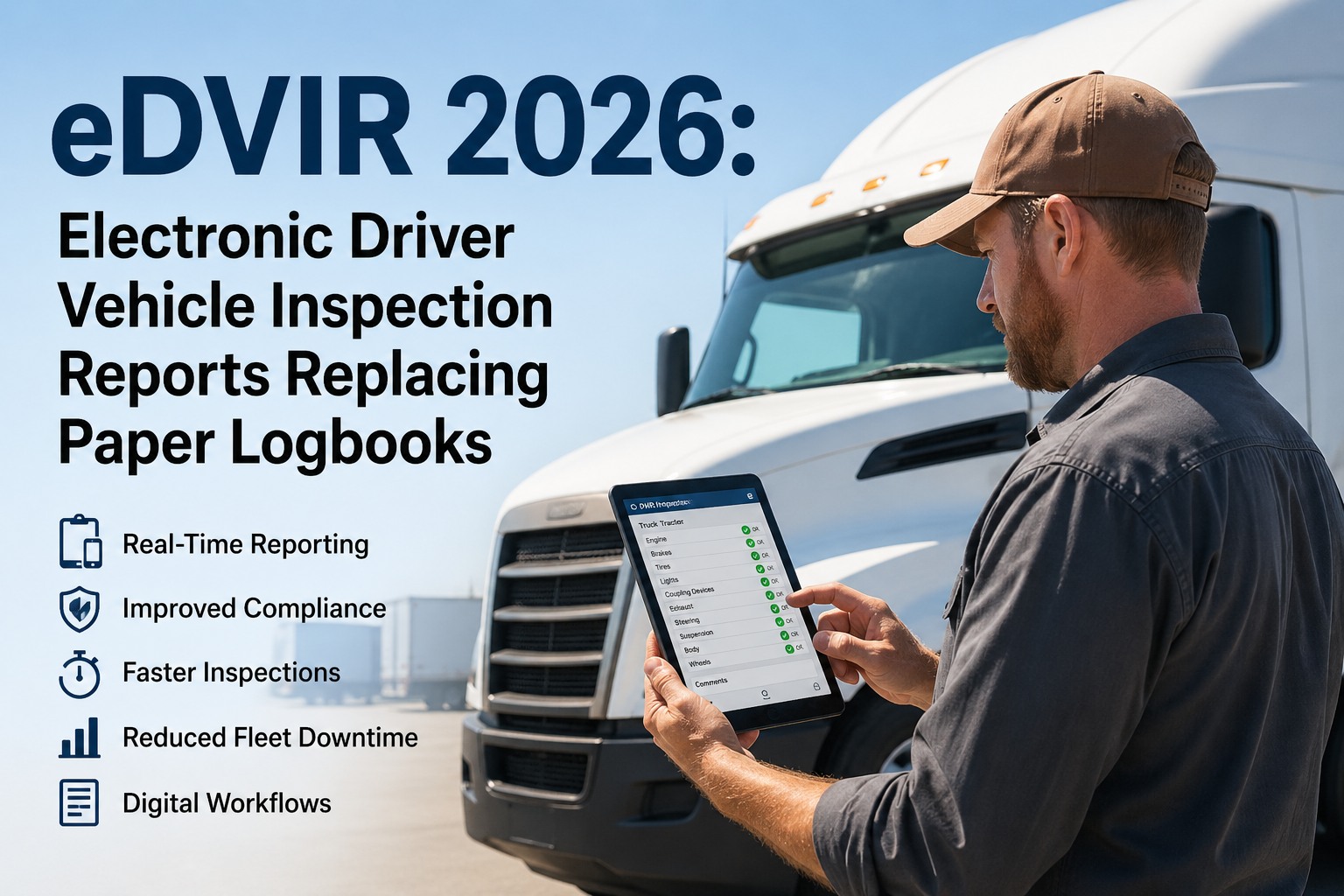
eDVIR Rule Finalized
FMCSA has officially finalized electronic DVIR creation, maintenance, and signature — removing ambiguous paper-based language. Also removed: spare fuse and liquid-burning flare requirements. Digital inspection documentation is now unambiguously compliant.
One Standard: Always Ready for Level I
The six CVSA inspection levels exist because enforcement needs vary by situation — but your preparation standard shouldn't. A fleet that's always Level I-ready passes every level by default. With the 2026 CSA overhaul splitting Driver Observed violations into a separate scoring category and Roadcheck focusing on ELD tampering and cargo securement, the connection between daily inspection quality and your enforcement outcomes has never been more direct. Check every brake. Verify every light. Secure every load. Document everything digitally.
Stay Inspection-Ready at Every Level
HVI's digital platform delivers Level I-equivalent checklists for pre-trip, post-trip, and DVIR workflows. Photo-verified inspections, instant defect routing, and fleet-wide compliance dashboards — so you know every truck's inspection status before any officer does.
Frequently Asked Questions
Q: What is the most common DOT inspection level?
Level I and Level II combined account for over 90% of all roadside inspections. Level II (Walk-Around) is the most frequently performed at weigh stations because it's faster and doesn't require under-vehicle access. Level I (North American Standard) is the most comprehensive and is the primary inspection type during the annual International Roadcheck.
Q: What happens if I fail a DOT inspection?
If critical violations are found, the vehicle and/or driver can be placed out of service (OOS). An OOS vehicle cannot move until the defect is repaired — either on-site or by tow to a repair facility. An OOS driver cannot drive until the condition is resolved (e.g., HOS rest period completed). All violations are reported to FMCSA and affect your carrier's CSA scores. The carrier must sign and return the completed inspection report within 15 days verifying violations were corrected.
Q: What is a CVSA decal and how do I get one?
A CVSA decal is issued when a vehicle passes a Level I, Level V, or Level VI inspection with no critical violations. The standard decal is valid for up to 3 months and generally exempts the vehicle from re-inspection during that period (the decal covers the vehicle, not the driver). Level VI issues a special blue decal valid only for the specific trip. Having a current CVSA decal on your vehicle reduces your chances of being pulled in for inspection.
Q: Can I refuse a DOT roadside inspection?
No. CVSA-certified enforcement officers are authorized under 49 CFR 396.9 to enter upon and inspect any CMV in operation. Refusing an inspection can result in an immediate out-of-service order and additional penalties. Cooperate fully, present documents when asked, and remain professional throughout the process.
Q: How does a roadside inspection affect my CSA score?
Every inspection — clean or with violations — is reported to FMCSA and factors into your carrier's SMS percentile. Under the February 2026 CSA overhaul, OOS violations carry a severity weight of 2 (vs. 1 for non-OOS), violations only count for 12 months (down from 24), and Vehicle Maintenance is split into standard and "Driver Observed" categories. A clean inspection with no violations helps your score.
Start free with HVI to track your fleet's inspection outcomes.
Q: What is the 2026 International Roadcheck focusing on?
The 2026 Roadcheck is scheduled for May 12-14. The driver focus is ELD tampering, falsification, and manipulation — inspectors will look for suspicious log edits, ghost driving, and mismatched records. The vehicle focus is cargo securement, following 18,108 violations in 2025. All inspections still cover the full range of Level I items beyond the focus areas.